If you’re looking for the best greenhouse hydronic heaters for hot water in 2026, I recommend considering models like the ALECOIL Hydronic Hot Water Heater with remote control and another highly efficient unit that offers easy installation, quiet operation, and reliable temperature control. These heaters are designed to match your heating needs, source compatibility, and ease of use. Keep going to discover detailed insights that will help you pick the perfect system for your greenhouse.
Key Takeaways
- Select heaters with sufficient capacity to maintain stable temperatures for the specific greenhouse size and insulation.
- Ensure compatibility with existing hot water sources like outdoor wood boilers and proper flow rates.
- Prioritize units with Bluetooth remote controls for convenient temperature adjustments from a distance.
- Favor models with easy installation features, including clear mounting options and pre-wired connections.
- Consider noise levels, opting for whisper-quiet blowers and adjustable airflow deflectors to minimize disruption.
| ALECOIL Hydronic Hot Water Heater with Remote Control | 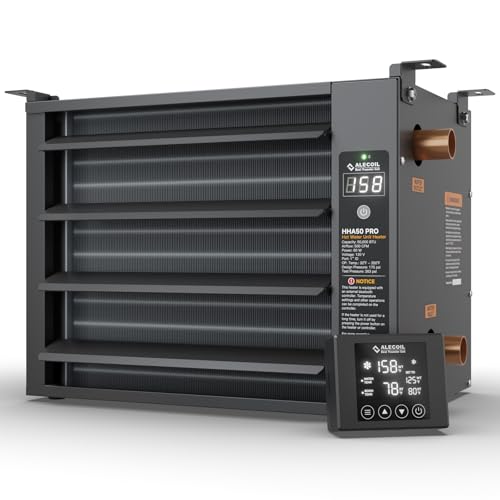 | Quiet Efficiency | Remote Control: Bluetooth-enabled, range up to 33 feet | Installation Hardware: Includes mounting brackets, hardware, and pre-installed power cable | Power Supply: Operates at 120V | VIEW LATEST PRICE | See Our Full Breakdown |
| ALECOIL Hydronic Hot Water Heater with Remote Control |  | Remote Convenience | Remote Control: Bluetooth-enabled, range up to 33 feet | Installation Hardware: Includes mounting brackets and power cord | Power Supply: Operates at 120-240V~ | VIEW LATEST PRICE | See Our Full Breakdown |
More Details on Our Top Picks
-
ALECOIL Hydronic Hot Water Hanging Unit Heater with Remote Temperature Control 100,000 BTU Water to Air Heat Exchanger with Fan for Outdoor Wood Furnaces and Garage Heating, HHA100-Pro, Blue
【Outstanding Performance】ALECOIL hot water hanging unit heater uses the energy from a building's hot water source(outdoor wood boilers)...
As an affiliate, we earn on qualifying purchases.
ALECOIL Hydronic Hot Water Heater with Remote Control
If you’re looking for an efficient and quiet way to heat outdoor spaces or large areas like garages and warehouses, the ALECOIL Hydronic Hot Water Heater with Remote Control is an excellent choice. It delivers 50,000 BTUs of water-to-air heat exchange, using hot water from your building sources like outdoor wood boilers. The unit operates whisper-quiet thanks to a centrifugal blower and features adjustable louver deflectors for directional airflow. With Bluetooth remote control, you can easily set the temperature, switch modes, and adjust airflow from up to 33 feet away. Its compact design, easy installation, and maintenance-free operation make it a smart and versatile heating solution.
- Remote Control:Bluetooth-enabled, range up to 33 feet
- Installation Hardware:Includes mounting brackets, hardware, and pre-installed power cable
- Power Supply:Operates at 120V
- Airflow Adjustment:Adjustable louver deflectors
- Use Environment:Suitable for indoor, outdoor wood boilers, garages, warehouses
- Noise Level:Whisper-quiet centrifugal blower
- Additional Feature:Bluetooth range up to 33 ft
- Additional Feature:Adjustable louver deflectors
- Additional Feature:Whisper-quiet centrifugal blower
ALECOIL Hydronic Hot Water Heater with Remote Control
The ALECOIL Hydronic Hot Water Heater with Remote Control is an excellent choice for outdoor enthusiasts and homeowners seeking efficient, quiet heating solutions for garages or outdoor spaces. It uses hot water from outdoor wood boilers to deliver reliable, whisper-quiet heat. The unit features a centrifugal blower that provides high-pressure airflow with minimal noise and low maintenance. Its adjustable louver deflector lets you direct airflow exactly where you need it. The remote control, with Bluetooth connectivity, allows you to easily set temperatures and switch modes from up to 33 feet away. Designed for quick installation and compatibility with existing hot water sources, it’s a versatile, user-friendly heating option.
- Remote Control:Bluetooth-enabled, range up to 33 feet
- Installation Hardware:Includes mounting brackets and power cord
- Power Supply:Operates at 120-240V~
- Airflow Adjustment:Adjustable louver deflector
- Use Environment:Suitable for outdoor wood boilers, garages
- Noise Level:Quiet operation with centrifugal blower
- Additional Feature:High-pressure airflow blower
- Additional Feature:Easy installation with mounting brackets
- Additional Feature:Designed for outdoor/garage use
Factors to Consider When Choosing Greenhouse Hydronic Heater Hot Water
When choosing a greenhouse hydronic heater, I consider factors like heating capacity to match my space’s needs and water source compatibility for easy setup. I also look at remote control features for convenience, installation simplicity to save time, and noise levels to guarantee a comfortable environment. These points help me select the best heater to keep my greenhouse efficient and comfortable.
Heating Capacity Needs
To choose the right greenhouse hydronic heater, I start by calculating the total heat output needed based on your greenhouse’s size, insulation quality, and the temperature increase you want to achieve. This helps determine the heater’s BTU or wattage rating that will deliver efficient, adequate heat. It’s important to select a heater capable of meeting seasonal or variable demands, ensuring your plants stay warm even during the coldest periods. I also check that the heater’s flow rate and water temperature match your existing hot water source and plumbing setup to avoid compatibility issues. Having a heater with enough capacity prevents temperature drops that could stress or damage your plants, keeping your greenhouse environment stable year-round.
Water Source Compatibility
Selecting a greenhouse hydronic heater that matches your existing hot water source is vital to guaranteeing smooth operation and energy efficiency. First, verify that the heater is compatible with your current system, whether it’s an outdoor wood boiler or another hydronic setup. Check the maximum water temperature the heater can handle to avoid damage and maintain efficiency. It’s also essential to confirm that the heater supports your system’s water pressure and flow rate, preventing potential issues. Additionally, ensure the water source’s temperature remains stable enough for the heater’s operational needs, guaranteeing consistent heating performance. Finally, consider how easily the heater can connect to your water supply—ideally, it should integrate seamlessly without requiring extensive modifications. This compatibility helps maximize efficiency and minimizes installation headaches.
Remote Control Features
Remote control features considerably enhance the convenience and safety of operating a greenhouse hydronic heater. They let me adjust settings from a distance, which is especially helpful in large or hard-to-reach areas. Bluetooth remote controls usually work within about 33 feet with line-of-sight, giving me flexibility without needing to access the unit directly. Many remotes offer multiple modes, like Water Temperature, Room Temperature, or Dual Mode, allowing for tailored comfort. They typically include essential functions such as temperature adjustments, on/off controls, and sometimes scheduling options. This remote access reduces manual intervention, making it easier to maintain ideal conditions without frequent trips to the heater, especially during outdoor or hard-to-reach installations. Overall, remote controls boost usability and safety greatly.
Installation Ease
When choosing a greenhouse hydronic heater, ease of installation should be a top priority. I look for units with clear, straightforward mounting options that include all necessary hardware, which simplifies the process. Pre-wired power connections and simple remote setup are vital to minimize wiring complexity and save time. Adjustable airflow deflectors are helpful, allowing flexible positioning during installation. I also prefer models with user-friendly control systems, ideally featuring remote controls with Bluetooth connectivity, making adjustments easy without extra tools. Finally, comprehensive installation instructions are essential—they help ensure quick setup and reduce the effort involved. Prioritizing these factors means I can install my heater efficiently, with less hassle and more confidence in its operation from the start.
Noise Levels
Noise levels are a critical factor to take into account because they directly affect the comfort and tranquility of your greenhouse environment. Hydronic heaters with whisper-quiet centrifugal blowers operate at low noise levels, ensuring minimal disruption during operation. Adjustable louver deflectors can help direct airflow away from sensitive areas, further reducing perceived noise. The overall noise impact depends on the blower type and fan speed; units with variable speed fans tend to be quieter and more adaptable. To make an informed choice, I recommend measuring decibel levels before purchasing. This helps ensure you select a hydronic heater that maintains a peaceful atmosphere, which is essential for both plant health and your own comfort while working in the greenhouse.
Energy Efficiency
Choosing an energy-efficient greenhouse hydronic heater involves evaluating how well it transfers hot water heat to the air with minimal heat loss. Look for models that maximize heat transfer while reducing waste, such as those with good insulation and adjustable airflow controls. Using hot water from an outdoor wood boiler can greatly cut energy consumption compared to electric heaters. Targeted heating features like louver deflectors help direct warmth precisely where needed, avoiding unnecessary energy use. Additionally, heaters with whisper-quiet operation and maintenance-free components maintain consistent performance over time, lowering long-term costs. Proper water temperature settings also play a vital role. By optimizing these factors, you can guarantee your greenhouse stays warm efficiently, reducing energy bills while maintaining ideal growing conditions.
Frequently Asked Questions
How Energy-Efficient Are Greenhouse Hydronic Heaters?
Greenhouse hydronic heaters are pretty energy-efficient because they use water to transfer heat effectively, reducing waste. I’ve found that they consume less energy compared to traditional heating systems, especially when paired with a good insulation setup. Plus, they can be powered by renewable energy sources, making them even greener. Overall, I’d say they’re a smart choice if you want reliable warmth without a huge energy bill.
Can These Heaters Be Used for Other Applications Besides Greenhouses?
Absolutely, these heaters aren’t just for greenhouses. I’ve used them in workshops and even for radiant floor heating at home. It’s like having a versatile tool that adapts to different needs. They efficiently provide hot water and warmth, making them handy for various applications. So, if you’re looking for a flexible heating solution, these hydronic heaters can definitely handle more than just greenhouses.
What Is the Typical Lifespan of a Hydronic Heater?
A hydronic heater typically lasts around 15 to 20 years with proper maintenance. I’ve found that regular inspections, flushing the system, and replacing worn parts can extend its lifespan. The quality of the unit and how often you service it also play essential roles. If you keep up with maintenance, you can enjoy efficient, reliable heating for many years, making it a worthwhile investment.
Are There Eco-Friendly Options for Greenhouse Hydronic Heating?
Imagine a gentle river flowing through your greenhouse, nourishing plants with eco-friendly warmth—that’s what green hydronic heating offers. Yes, there are sustainable options like solar-powered systems and biomass boilers that reduce carbon footprints. I’ve found these solutions not only help protect our planet but also create a healthier environment for your plants. Embracing eco-friendly hydronic heaters is like planting seeds for a greener, more sustainable future.
How Do Maintenance Requirements Vary Among Different Models?
Maintenance requirements vary among models, and I’ve found that simpler designs often need less upkeep. For example, electric hydronic heaters require minimal maintenance—mainly periodic inspections and cleaning—while gas or oil-fired models may need regular servicing, filter changes, and vent checks. I recommend checking each model’s manual and choosing one that matches your maintenance capacity, ensuring reliable operation with minimal effort.
Conclusion
Choosing the right greenhouse hydronic heater can boost your growing season markedly. Did you know that proper heating can increase crop yields by as much as 20%? The ALECOIL models stand out for their reliability and remote control convenience. By considering factors like capacity and installation, you’ll find the perfect fit. Investing in a quality heater not only extends your growing window but also ensures energy efficiency—making your greenhouse more productive and eco-friendly.