The best evergreen shrubs depend on your climate, available space, and how much pruning you want to do. I rank Needlepoint Holly as the best overall for its classic evergreen structure and broad landscape use, while Blue Pacific Juniper stands out for spreading groundcover and Tater Tot Arborvitae for a compact, rounded form. The main tradeoffs are mature size, regional suitability, water needs, and whether you want an upright, mounding, or spreading plant. A shrub that thrives in one climate can struggle in another, so match hardiness and sun exposure to your site before choosing. Read on for the full comparison and guidance on which pick fits your garden.

Get garden gear delivered free with Prime
- Fast, free delivery on millions of items
- Prime Video, Amazon Music and more included
- Member-only deals all year
Complete the kit


Key Takeaways
- Needlepoint Holly leads the lineup for buyers seeking a versatile, upright evergreen, but its eventual size and pruning needs make it less suitable for tight spaces.
- Blue Pacific Juniper is the standout for low, spreading coverage; its growth habit is a poor match for gardeners who want a neat vertical screen.
- Tater Tot Arborvitae and Purple Daydream Loropetalum offer compact forms, but their different foliage and climate preferences make them choices for distinct garden styles.
- Green Cloud Texas Sage and Podocarpus Maki broaden the selection for warm-climate planting, yet neither should be chosen without checking local winter conditions.
- Wintergreen Boxwood arrives in the largest listed container, which can provide a more substantial starting plant, while the smaller one-gallon options generally require more time to fill their space.
| Needlepoint Holly Evergreen Shrub, Dark Green, 3-Gallon Pot |  | Best for Classic, Year-Round Structure | Plant type: Evergreen shrub | Foliage color: Dark green | Container size: 3-gallon pot | VIEW LATEST PRICE | See Our Full Breakdown |
| Podocarpus Maki Live Plant, 1 Gallon |  | Best for Narrow Privacy Screens | Scientific name: Podocarpus macrophyllus | Common names: Podocarpus Maki, Japanese Yew, Buddhist Pine | Plant size: 1 gallon | VIEW LATEST PRICE | See Our Full Breakdown |
| Southern Living Obsession Nandina Shrub, 2 Gallon |  | Best for Seasonal Foliage Color | Plant type: Nandina shrub | Container size: 2 gallon | USDA hardiness zones: 6–10 | VIEW LATEST PRICE | See Our Full Breakdown |
| Green Cloud Texas Sage Live Plant, 1-Gallon |  | Best for Hot, Sunny, Dry Sites | Scientific name: Leucophyllum frutescens ‘Green Cloud’ | Container size: 1 gallon | Foliage: Evergreen, deep green | VIEW LATEST PRICE | See Our Full Breakdown |
| Blue Pacific Juniper, 3-Gallon Evergreen Shrub |  | Best Low-Growing Groundcover | Plant type: Evergreen shrub | Container size: 3 gallons | Foliage: Blue-green needles | VIEW LATEST PRICE | See Our Full Breakdown |
| Proven Winners Tater Tot Arborvitae Shrub, 2-Gallon |  | Best for Naturally Rounded, Compact Planting | Plant type: Arborvitae shrub | Container size: 2 gallons | Mature size: 2–3 ft tall × 3–4 ft wide | VIEW LATEST PRICE | See Our Full Breakdown |
| Purple Daydream Loropetalum, 1-Gallon Compact Evergreen Shrub |  | Best for Year-Round Foliage Color | Plant type: Evergreen shrub | Container size: 1 gallon | Expected height: About 2 feet | VIEW LATEST PRICE | See Our Full Breakdown |
| Wintergreen Boxwood Live Evergreen Shrub, 7-Gallon Container |  | Best for Hedges and Formal Structure | Container size: 7 gallons | Mature size: 3–4 ft tall × 3–4 ft wide | USDA hardiness zones: 6–10 | VIEW LATEST PRICE | See Our Full Breakdown |
| evergreen shrub | USDA hardiness zones | Container size | Plant type | Foliage |
|---|---|---|---|---|
| Needlepoint Holly Evergreen Sh | 6–10 | 3-gallon pot | Evergreen shrub | — |
| Podocarpus Maki Live Plant | 7–11 | — | — | — |
| Southern Living Obsession Nand | 6–10 | 2 gallon | Nandina shrub | — |
| Green Cloud Texas Sage Live Pl | 8–11 | 1 gallon | — | Evergreen, deep green |
| Blue Pacific Juniper | 6–10 | 3 gallons | Evergreen shrub | Blue-green needles |
| Proven Winners Tater Tot Arbor | 3a–8b | 2 gallons | Arborvitae shrub | Green, evergreen, fragrant and fan-like |
| Purple Daydream Loropetalum | 7–10 | 1 gallon | Evergreen shrub | — |
| Wintergreen Boxwood Live Everg | 6–10 | 7 gallons | — | Glossy, dark green; evergreen |
More Details on Our Top Picks
Needlepoint Holly Evergreen Shrub, Dark Green, 3-Gallon Pot
I’d choose Needlepoint Holly for a planting that needs a substantial, dark-green evergreen presence rather than a low groundcover or a flowering accent. Its listed mature height of 10 feet gives it more screening potential than the spreading Blue Pacific Juniper, while its Zones 6–10 range overlaps a broad set of climates. The 3-gallon pot also gives buyers a larger starting container than the 1-gallon Podocarpus Maki. The tradeoff is that the description calls it compact but still lists a tall expected height, so I wouldn’t place it where a small, permanently contained shrub is required. It needs regular watering while establishing and well-draining soil; after that, moisture needs are low to medium, not zero.
Pros:- Dark-green evergreen foliage supplies year-round visual structure.
- Listed 10-foot height offers more screening potential than low, spreading juniper.
- Hardiness range covers USDA Zones 6–10.
- Moisture needs drop to low or medium after establishment.
Cons:- Requires regular watering until established.
- Well-draining soil is needed.
- Its listed 10-foot height may outgrow tight planting spaces.
Best for: Gardeners in USDA Zones 6–10 who want dark, year-round foliage and room for a taller shrub to add structure or screening.
Not ideal for: Small-space gardeners who need a reliably low-growing plant, or anyone without well-draining soil and time to water during establishment.
- Plant type:Evergreen shrub
- Foliage color:Dark green
- Container size:3-gallon pot
- USDA hardiness zones:6–10
- Expected plant height:10 feet
- Light exposure:Shade to partial shade
- Soil type:Well-draining
- Moisture needs:Low to medium after establishment
Our verdict“Choose Needlepoint Holly for a taller, dark-green evergreen in Zones 6–10, but skip it if you need a compact plant that stays small.”
Podocarpus Maki Live Plant, 1 Gallon
Podocarpus Maki is the most screen-oriented choice here: its naturally upright form reaches 8–10 feet tall but only 3–4 feet wide, making it a better fit for a narrow hedge than the spreading Blue Pacific Juniper. Compared with Needlepoint Holly, it also has a specified narrow mature width, which helps when planning a row beside a boundary or foundation. Once established, it tolerates drought and needs little pruning, though a 1-gallon starting plant calls for patience before it fills a screen. Its Zones 7–11 range is less suitable for colder sites than the holly’s Zones 6–10, and it cannot ship to California or Arizona. I’d rule it out if either restriction applies or the soil does not drain well.
Pros:- Upright growth and 3–4-foot mature width suit narrow hedges and foundation plantings.
- Mature height of 8–10 feet can provide privacy.
- Drought-tolerant once established and requires minimal pruning.
- Listed as resistant to deer, rabbits, and pests.
Cons:- Ships only outside California and Arizona.
- The 1-gallon plant may take time to form a full screen.
- Its Zones 7–11 range excludes some colder gardens.
Best for: Gardeners in USDA Zones 7–11 who can wait for a 1-gallon plant to grow and want a narrow, upright privacy hedge.
Not ideal for: Buyers in California or Arizona, gardeners in colder zones, or anyone seeking a broad groundcover rather than a vertical screen.
- Scientific name:Podocarpus macrophyllus
- Common names:Podocarpus Maki, Japanese Yew, Buddhist Pine
- Plant size:1 gallon
- Mature height:8–10 feet
- Mature width:3–4 feet
- USDA hardiness zones:7–11
- Sunlight:Full sun to partial shade
- Shipping restriction:Does not ship to California or Arizona
Our verdict“Pick Podocarpus Maki for a narrow evergreen screen in a compatible shipping area and climate, not for quick coverage or cold-zone planting.”
Southern Living Obsession Nandina Shrub, 2 Gallon
Obsession Nandina suits buyers who want an evergreen-shrub planting with more seasonal color than the consistently dark-green Needlepoint Holly. Its foliage is described as colorful throughout the seasons, giving it a livelier role in a mixed border, while its Zones 6–10 range matches the holly’s. It also accepts full sun to partial shade, so it can fit sites where light varies during the day. The supplied information does not specify mature size, foliage colors, or a detailed soil preference, so I would not choose it when precise spacing or a particular color effect is central to the plan. Its watering schedule is more explicit than the other options: twice weekly until established, then weekly.
Pros:- Foliage offers seasonal color rather than a single dark-green appearance.
- Suitable for full sun to partial shade.
- Hardiness range spans USDA Zones 6–10.
- Two-gallon container provides a specified starting size.
Cons:- Mature height and width are not provided, making spacing harder to plan.
- Requires twice-weekly watering until established, then weekly watering.
- The supplied product details do not specify soil type or moisture tolerance.
Best for: Gardeners in USDA Zones 6–10 who want seasonal foliage color in a sunny or partly shaded border and can follow a regular watering schedule.
Not ideal for: Buyers who need a known mature height and width for tight spacing, or who want the uniform dark-green look of Needlepoint Holly.
- Plant type:Nandina shrub
- Container size:2 gallon
- USDA hardiness zones:6–10
- Light requirements:Full sun to part shade
- Watering until established:Twice per week
- Watering after establishment:Once per week
Our verdict“Choose Obsession Nandina for seasonal foliage interest, but favor Needlepoint Holly if predictable dark-green structure and listed mature height matter more.”
Green Cloud Texas Sage Live Plant, 1-Gallon
Green Cloud Texas Sage earns its place for a different kind of evergreen planting: it pairs deep-green foliage with purple-magenta summer and fall blooms, often appearing after rain. Unlike the shade-tolerant Needlepoint Holly, this shrub needs full sun, so it makes more sense for an exposed, bright site than a partly shaded foundation. Its low moisture needs and drought tolerance after establishment suit dry landscapes, but that advantage depends on well-drained soil and regular watering while young. The 1-gallon container is a modest starting size compared with the 3-gallon holly and juniper, so it may take longer to fill a border. Its Zones 8–11 range also makes it less versatile in colder regions.
Pros:- Evergreen deep-green foliage provides year-round coverage.
- Purple-magenta blooms add seasonal color in summer and fall.
- Low moisture needs and drought tolerance after establishment suit dry sites.
- Can serve as a hedge, border, or accent planting.
Cons:- Requires full sun, unlike the more shade-tolerant Needlepoint Holly.
- Needs well-draining soil.
- Must be watered regularly until established and comes in a 1-gallon container.
Best for: Gardeners in USDA Zones 8–11 with a sunny, well-drained site who want drought-tolerant evergreen foliage and seasonal blooms.
Not ideal for: Gardeners in colder zones, shaded yards, or sites with poorly draining soil; also less suited to buyers seeking a larger starting plant.
- Scientific name:Leucophyllum frutescens ‘Green Cloud’
- Container size:1 gallon
- Foliage:Evergreen, deep green
- Bloom color:Purple-magenta
- Blooming period:Summer and fall
- Sun exposure:Full sun
- USDA hardiness zones:8–11
- Soil and moisture:Well-draining soil; low moisture needs
Our verdict“Pick Green Cloud Texas Sage for a sunny, dry Zone 8–11 garden where blooms are welcome, not for shade or colder climates.”
Blue Pacific Juniper, 3-Gallon Evergreen Shrub
Blue Pacific Juniper is the lineup’s clear choice for covering ground rather than building a tall screen. Its spreading habit and blue-green needles suit borders, slopes, and low-maintenance groundcover, while Needlepoint Holly and Podocarpus Maki are better suited to upright structure and privacy. The 3-gallon container gives it a larger starting size than the 1-gallon Podocarpus and Texas Sage, though the listed expected height of just 5 inches signals that it is not a vertical focal point. It keeps foliage year-round and tolerates drought after establishment, but still needs regular watering while young and well-draining soil. The listed partial-shade exposure may help it fit less exposed sites, though the description also says it grows best with sun.
Pros:- Spreading growth suits groundcover, borders, and slopes.
- Blue-green needles add a distinct color contrast to dark-green shrubs.
- Retains foliage year-round and tolerates drought after establishment.
- 3-gallon container offers a larger starting size than the 1-gallon options.
Cons:- Listed expected height is only 5 inches, so it will not provide screening.
- Needs regular watering until established.
- Requires well-draining soil; the description says it grows best with sun despite the partial-shade spec.
Best for: Gardeners who need a low, spreading evergreen for a border, slope, or groundcover planting in USDA Zones 6–10.
Not ideal for: Anyone seeking a privacy screen, upright accent, or shrub that tolerates poorly draining soil.
- Plant type:Evergreen shrub
- Container size:3 gallons
- Foliage:Blue-green needles
- Expected plant height:5 inches
- USDA hardiness zones:6–10
- Sunlight exposure:Partial shade listed; description says best growth with sun
- Soil type:Well-draining
- Moisture needs:Low to medium
Our verdict“Choose Blue Pacific Juniper for low, blue-green groundcover, but pick Podocarpus Maki or Needlepoint Holly when you need height or privacy.”
Proven Winners Tater Tot Arborvitae Shrub, 2-Gallon
Tater Tot Arborvitae earns its place for gardeners who want a tidy evergreen shape without relying on frequent pruning. Its naturally rounded form matures to 2–3 feet tall and 3–4 feet wide, making it a good fit for a low border or foundation planting where a taller hedge would overwhelm the space. Compared with the Wintergreen Boxwood, it offers a similarly compact footprint but a softer, fan-like foliage texture rather than a plant selected for shaping into formal lines. Its tolerance for partial shade also gives it more placement flexibility than a full-sun-only choice. The tradeoff is that it needs regular watering, and its mature width may exceed what buyers expect from the listed 10–14-inch shipping height. I’d skip it for a dry site or a spot that needs a reliably narrow plant.
Pros:- Naturally rounded habit can reduce the need for shaping
- Evergreen foliage supplies year-round structure
- Tolerates full sun to partial shade
- Hardy across USDA zones 3a–8b
Cons:- Requires regular watering
- Mature width of 3–4 feet may exceed expectations based on its small shipping size
Best for: Gardeners seeking a low, rounded evergreen for a foundation bed or border, especially where the planting area gets full sun or partial shade.
Not ideal for: Buyers with dry, low-water beds or narrow spaces that cannot accommodate a mature width of 3–4 feet.
- Plant type:Arborvitae shrub
- Container size:2 gallons
- Mature size:2–3 ft tall × 3–4 ft wide
- Shipping height:10–14 inches
- USDA hardiness zones:3a–8b
- Sun exposure:Full sun to partial shade
- Foliage:Green, evergreen, fragrant and fan-like
- Watering:Regular
Our verdict“Choose Tater Tot for a naturally rounded, cold-hardy evergreen when you can provide regular water and room for its mature spread.”
Purple Daydream Loropetalum, 1-Gallon Compact Evergreen Shrub
Purple Daydream Loropetalum is the standout for buyers who want an evergreen shrub to add color, not just background structure. Its dark purple foliage stays on display through the year, with dark pink, string-like flowers in spring adding a seasonal accent. At about 2 feet tall, its compact, mounding habit suits borders and smaller gardens; it can also work in a container where the climate fits. Compared with the green Tater Tot Arborvitae, this shrub brings a bolder color contrast but has a narrower hardiness range: USDA zones 7–10. It is drought-tolerant once established and naturally deer-resistant, yet still needs moderate moisture and well-draining, acidic soil. I’d pass if your winters fall outside its zone range or you want a large, fast-filling screen.
Pros:- Dark purple foliage provides year-round color
- Compact form fits borders and smaller planting areas
- Tolerates full sun to partial shade
- Drought-tolerant once established and naturally deer-resistant
Cons:- Hardiness is limited to USDA zones 7–10
- Needs moderate moisture and well-draining, acidic soil
Best for: Gardeners in USDA zones 7–10 who want a compact evergreen with purple foliage for a border, small garden, or suitable container.
Not ideal for: Gardeners in colder climates or anyone seeking a tall privacy screen rather than a roughly 2-foot mounding shrub.
- Plant type:Evergreen shrub
- Container size:1 gallon
- Expected height:About 2 feet
- USDA hardiness zones:7–10
- Sun exposure:Full sun to partial shade
- Foliage color:Dark purple
- Flower color and bloom period:Dark pink; spring
- Growth habit:Compact, mounding
- Soil and water needs:Well-draining, acidic soil; moderate water
Our verdict“Pick Purple Daydream for compact, colorful evergreen interest in a warm-climate garden with suitable soil.”
Wintergreen Boxwood Live Evergreen Shrub, 7-Gallon Container
Wintergreen Boxwood is the lineup’s strongest fit for gardeners who want a dense evergreen that can anchor a hedge, border, or foundation planting. Its glossy dark green foliage holds its color year-round, while the slow growth makes shaping more manageable than choosing a shrub that quickly outgrows its space. At a mature 3–4 feet tall and wide, it offers more substance than the 2-foot Purple Daydream Loropetalum, though it takes up more room than Tater Tot Arborvitae at the shorter end of its mature height range. This 7-gallon option is also supplied in a larger container than the other two picks here. The tradeoffs are its need for well-draining soil and regular watering while it establishes; it is not the choice for a cramped bed or a planting spot that stays waterlogged.
Pros:- Glossy dark green foliage stays evergreen year-round
- Dense growth suits hedges, borders, and foundation plantings
- Slow growth allows more controlled shaping
- Drought-tolerant once established
Cons:- Requires well-draining soil
- Needs regular watering until established
- Mature size of 3–4 feet in both height and width may crowd smaller beds
Best for: Gardeners planning a compact hedge, shaped border, or foundation planting who want a dense, dark-green evergreen and can provide well-draining soil.
Not ideal for: Buyers with a small planting area, poorly drained soil, or no willingness to water during establishment.
- Container size:7 gallons
- Mature size:3–4 ft tall × 3–4 ft wide
- USDA hardiness zones:6–10
- Sunlight exposure:Partial shade to full sun
- Foliage:Glossy, dark green; evergreen
- Soil type:Well-draining
- Moisture needs:Low to medium; regular watering during establishment
- Growth habit:Dense, slow-growing; adaptable to pruning and shaping
- Planting period:Spring or fall
Our verdict“Choose Wintergreen Boxwood for a dense, shapeable evergreen hedge or accent if your site drains well and has room for its mature spread.”
How We Picked
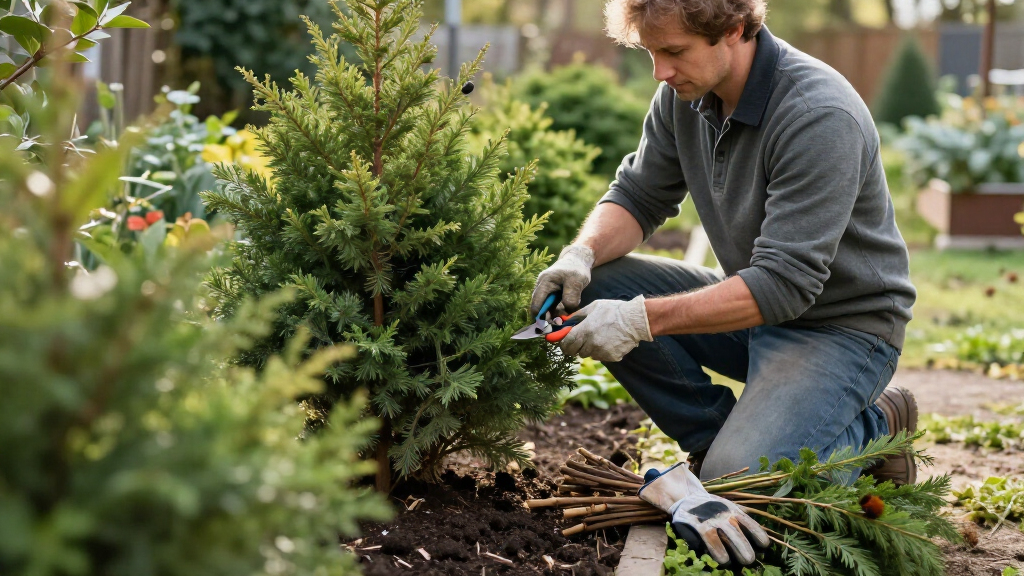
I compared these eight shrubs by the jobs gardeners commonly need an evergreen to do: provide year-round structure, fill a bed, form a low groundcover, create a compact accent, or support a more formal planting. I weighed each plant’s stated growth habit and container size against likely space needs, pruning expectations, and the value of getting a larger or smaller starting plant. Because climate and drainage strongly affect evergreen performance, I also treated regional fit as a major part of the decision rather than assuming any shrub will thrive everywhere.
The ranking favors options with a clear use case and broad landscape usefulness, then places more specialized or climate-dependent picks lower—not because they are poor plants, but because they suit narrower conditions or goals. A larger container can be useful when a buyer wants a more established starting point, but it does not outweigh a mismatch in mature size or growing conditions. I have not treated the products as interchangeable: upright holly, spreading juniper, compact arborvitae, and warm-climate shrubs solve different problems.
| evergreen shrub | Plant type | Foliage |
|---|---|---|
| Needlepoint Holly Evergreen Sh | Evergreen shrub | — |
| Podocarpus Maki Live Plant | — | — |
| Southern Living Obsession Nand | Nandina shrub | — |
| Green Cloud Texas Sage Live Pl | — | Evergreen, deep green |
| Blue Pacific Juniper | Evergreen shrub | Blue-green needles |
| Proven Winners Tater Tot Arbor | Arborvitae shrub | Green, evergreen, fragrant and fan-like |
| Purple Daydream Loropetalum | Evergreen shrub | — |
| Wintergreen Boxwood Live Everg | — | Glossy, dark green; evergreen |
Factors to Consider When Choosing Best Evergreen Shrubs
I would choose an evergreen by starting with the planting site, not the plant label. These factors help narrow the field before you decide between a broad-use shrub, a compact accent, or a plant suited to a particular climate.
Match Mature Shape to the Job
Decide whether you need height, width, or a rounded focal point before settling on a shrub. Upright plants can support a screen or anchor a border, while spreading types cover ground but do not create privacy. Compact varieties may fit a small bed yet leave a larger area looking sparse if you expect them to act as a hedge. Check mature dimensions from a reliable plant source and allow room for airflow around the foliage. A common mistake is planting by the size of the pot rather than the eventual footprint. If space is limited, choosing a naturally compact shrub usually takes less work than repeatedly pruning a larger one.
Check Climate Fit Before Buying
Evergreen does not mean winter-proof in every region: cold, heat, wind, and sudden temperature swings can all affect foliage. Compare your local winter lows and summer conditions with the plant’s regional hardiness guidance, then check whether your site has exposure that differs from the rest of your yard. A sheltered courtyard, for example, may hold heat, while an open corner can face drying wind. Do not rely on a plant’s common name alone to establish its climate range. If you are near the edge of a shrub’s suitable range, consider a protected location or a better-adapted alternative. This check matters more than buying a larger container.
Judge Sun, Soil, and Drainage Together
Sunlight recommendations are only part of a planting site’s conditions; soil texture and drainage can change how well a shrub settles in. A sunny bed with waterlogged soil may be harder on roots than a slightly shaded bed with good drainage. Before planting, notice where water collects after rain and whether nearby plants dry quickly in summer. Amend the planting area based on soil needs rather than filling only the planting hole with a very different mix. That contrast can affect how water moves around the roots. When the site and shrub’s preferred conditions do not match, choose a different plant rather than expecting extra watering to solve every problem.
Account for Maintenance and Toxicity
Maintenance includes more than trimming: fallen foliage, watering during establishment, and the shrub’s response to pests or weather all affect the work involved. Formal hedges call for regular shaping, while naturally compact or spreading plants may need less routine pruning but can still outgrow their boundaries. Ask whether the shrub is suitable around children and pets, and verify toxicity details for the specific plant before placing it near play areas or grazing animals. Also check whether local guidance flags a plant as invasive or unsuitable. A lower-maintenance choice is not automatically the one with the slowest growth; it is the one whose natural shape fits the space you can maintain.
Balance Container Size Against Planting Plans
Container size gives a rough sense of the starting plant, not a guarantee of faster establishment or eventual performance. A larger plant may create a more immediate visual effect, but it can also need careful watering after planting and may be awkward to position. Smaller plants often take longer to fill a bed, giving you more flexibility to space them correctly and manage the planting budget. Avoid crowding shrubs to achieve instant coverage, since close spacing can lead to competition and extra pruning later. Compare the plant’s expected mature spread with the number of specimens you plan to use. Buy for the long-term layout rather than the appearance of the delivery container.
Choose Foliage and Seasonal Interest Deliberately
Evergreen foliage can range from deep green to blue-toned or purple-tinged, and those colors affect how a planting reads through the year. A uniform hedge may benefit from one foliage type, while a mixed border can use contrasting color and shape to create definition. Do not assume every shrub will keep the same appearance in every season; temperature, sunlight, and plant maturity can influence foliage color. Consider how the chosen evergreen will look beside nearby flowers, hardscape, and other shrubs when blooms are absent. If consistent color is your priority, check the plant’s seasonal behavior for your region. Select a distinctive foliage color for a specific design purpose rather than treating it as a substitute for climate fit.
Frequently Asked Questions
Which of these shrubs is the safest choice if I am unsure what will fit my garden?
I would start with the planting site and intended shape before calling any shrub a safe choice. Needlepoint Holly is the broadest-use pick in this comparison, but it still needs enough room and conditions suited to holly. For a smaller footprint, compare Tater Tot Arborvitae or Purple Daydream Loropetalum, checking climate suitability first. If your site has unusual shade, drainage, or winter exposure, ask a local nursery or extension service to confirm the match. No evergreen is reliably low-risk when its mature size or growing needs conflict with the site.
Can I use Blue Pacific Juniper or another low evergreen for privacy?
Blue Pacific Juniper is a spreading groundcover, so it is better for covering soil and slopes than blocking views at eye level. For privacy, look for a shrub with enough mature height and a growth habit that fills the space vertically. An upright holly may suit some screening plans, but you will need to confirm its mature dimensions and spacing. Avoid placing low, spreading shrubs in a row and expecting them to behave like a hedge. If privacy is the main goal, plan for the desired screen height as well as width.
Should I choose the largest container if I want the garden to look finished sooner?
A larger container, such as the listed Wintergreen Boxwood, can give a planting a more substantial starting appearance, but it does not promise quicker establishment. The shrub still needs a suitable site, careful watering, and room for its mature size. Smaller containers can be a better choice for a larger planting where correct spacing matters more than instant fullness. Avoid buying a large specimen that is difficult to place or mismatched to the site. Choose container size after deciding where the shrub will grow and how quickly you need visual coverage.
How do I choose between Texas Sage, Podocarpus, and the other shrubs if my winters are mild?
Mild winters make some warm-climate choices more plausible, but they do not settle the decision on their own. Compare local heat, rainfall, soil drainage, and the amount of sun at the planting site with reliable regional growing guidance for each plant. Green Cloud Texas Sage and Podocarpus Maki have different forms and should not be treated as substitutes simply because both may suit warmer areas. Also check whether occasional cold snaps are common where you live. If the planting is exposed or important to a landscape plan, confirm regional suitability with a local horticulture source before ordering.
Which evergreen is best for a small garden where I want color as well as year-round foliage?
For a limited space, begin by checking mature width, since a colorful shrub that outgrows its position can become a pruning problem. Purple Daydream Loropetalum offers a compact form and distinctive foliage, while Tater Tot Arborvitae provides a rounded green accent. Their visual roles differ, so choose based on whether you want foliage contrast or a more restrained evergreen shape. Verify sun and climate needs before treating either as a fit for a small garden. In a tight bed, one well-placed accent can be easier to manage than several shrubs planted close together.
Conclusion
For the broadest landscape role, I recommend Needlepoint Holly as best overall, provided you have room for its eventual growth. Blue Pacific Juniper is my best value-style pick for groundcover needs, while Wintergreen Boxwood is the premium starting-point choice for buyers who want the largest listed container. For a more approachable compact shape, I would point beginners toward Tater Tot Arborvitae after checking local climate suitability. Choose Green Cloud Texas Sage or Podocarpus Maki for specific warm-climate needs, and look to Purple Daydream Loropetalum when compact foliage color matters. The right pick is the one whose mature shape, growing conditions, and maintenance demands match your site—not simply the shrub with the most striking label.
Fall yard work Picks
leaf blowers
As an affiliate, we earn on qualifying purchases.