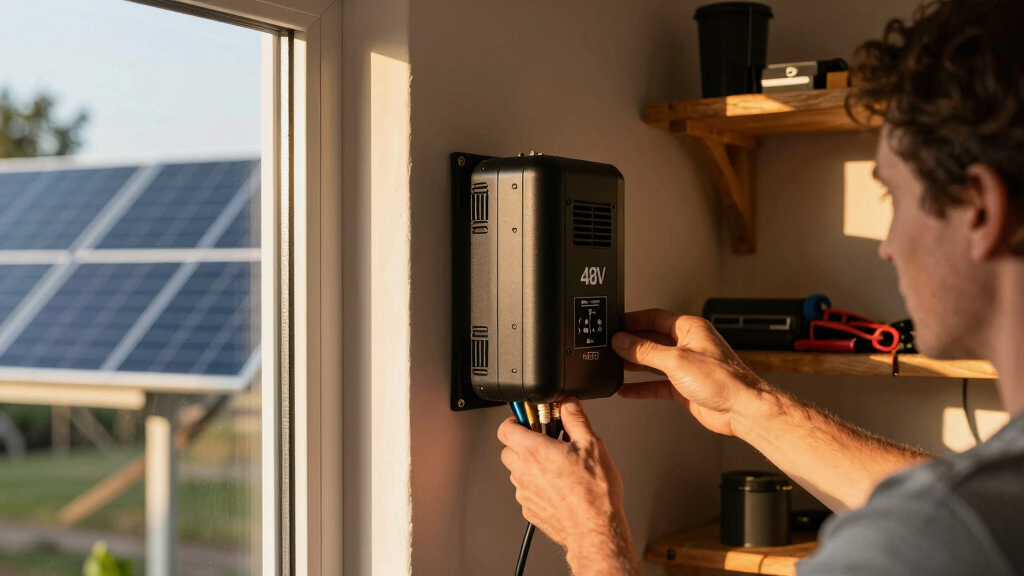

Finding the best 48V inverter for off grid homes requires balancing power capacity, efficiency, and flexibility. The top pick, the ECO-WORTHY Powermega 48V 314Ah LiFePO4 System, stands out for its robust energy storage and hybrid inverter capabilities, ideal for reliable backup. The AMPI NT 5000W Off Grid Inverter Charger offers high power output suited for larger systems but comes with increased complexity. Many options in this category struggle with tradeoffs between price, capacity, and user-friendliness. Continue reading to see how these inverters compare and which one fits your off-grid setup best.

Get garden gear delivered free — and shop member deals
- Fast, free delivery on millions of items
- Access to Prime Big Deal Days deals on October 6–7
- Prime Video, Amazon Music and more included
Key Takeaways
- Higher wattage inverters provide more power but often come with increased size and cost.
- Hybrid inverters with built-in MPPT controllers simplify system design and improve solar efficiency.
- Energy storage capacity and BMS features are critical for long-term reliability in off-grid systems.
- Ease of installation and user interface vary considerably, impacting suitability for beginners.
- Price does not always correlate with quality; evaluating build and feature set is essential.


More Details on Our Top Picks
ECO-WORTHY Powermega 48V 314Ah LiFePO4 Energy Storage System with 10kW Hybrid Inverter, Smart Active Balancing BMS, Built-in Bluetooth&WiFi, 7″ LCD, RS485/CAN/RS232 for Off-Grid&Home Backup
This comprehensive setup combines a robust 10kW hybrid inverter with two 48V 314Ah LiFePO4 batteries, delivering over 30kWh of usable energy, making it ideal for entire-home backup, solar storage, and off-grid use. Compared to smaller inverters, such as the 3600W Hybrid Solar Inverter, this system provides greater capacity and longer cycle life—9000+ at 80% DoD—ensuring reliable long-term operation. Its smart communication features, including Bluetooth, WiFi, and multiple communication ports, allow for detailed monitoring and seamless integration, though the large size and weight require truck delivery, which might be inconvenient for some. The active balancing BMS, built-in circuit breaker, and fire suppression enhance safety and stability. The LCD display offers real-time system data, aiding maintenance and troubleshooting. While the setup is ideal for those seeking a high-capacity, durable energy storage solution, it involves a higher initial investment and installation complexity.
Pros:- High capacity with over 30kWh usable energy
- Long cycle life of 9000+ cycles at 80% DoD
- Advanced smart communication including Bluetooth and WiFi
- Multi-layer safety protections and active balancing BMS
Cons:- Large size and weight requiring truck delivery
- Higher upfront cost compared to smaller systems
- Installation may require professional assistance
Best for: Homeowners needing a complete, scalable backup system with advanced monitoring and long cycle life.
Not ideal for: Small off-grid cabins or users with limited space or budget constraints, due to its size and cost.
- Power Source:Solar and Battery Powered
- Wattage:10000 watts
- Battery Capacity:314 Amp Hours
- Voltage:51.2 Volts
- Input Voltage:48 Volts (DC)
- Output Power:10000 Watts
- Display Type:LCD
- Peak Output Power:20000 Watts
Bottom line: This system is best suited for off-grid or backup applications where high capacity and long-term durability justify the investment.
ECO-WORTHY Powermega 48V 314Ah LiFePO4 Energy Storage System with 10kW Hybrid Inverter, Active Balancing BMS, Built-in Bluetooth&WiFi, Communication Support for Home Backup, Emergency Power, Off-Grid
This 16.1kWh system pairs a 10kW hybrid inverter with a 48V 314Ah LiFePO4 battery, supporting broad communication protocols and providing reliable backup for off-grid cabins, emergency power, and solar storage. Unlike smaller inverters like the 3600W Hybrid Solar Inverter, it offers a longer cycle life—over 9,000 cycles—and a smart active balancing BMS for safer, more efficient operation. The built-in LCD and WiFi/Bluetooth enable convenient remote monitoring, though the large truck-shipment size may limit installation options. Its compatibility with various communication ports ensures ease of integration with many batteries, making it suitable for users seeking a durable, scalable solution. The system’s safety features, including aerosol fire suppression and multi-layer protection, add peace of mind. However, the higher initial cost and complex setup may deter casual users.
Pros:- Long cycle life of over 9,000 cycles at 80% DoD
- Supports multiple communication protocols for broad compatibility
- Smart active balancing BMS and safety features
- Real-time monitoring via app
Cons:- Large size requiring truck shipment and space
- Higher initial investment than smaller systems
- Installation complexity for non-professionals
Best for: Off-grid enthusiasts and emergency prepper households prioritizing long-term battery durability and remote monitoring.
Not ideal for: Budget-conscious buyers or small-scale setups with limited space or lower power needs.
- Power Source:Solar and Battery Powered
- Wattage:10000 watts
- Battery Capacity:314 Amp Hours
- Voltage:51.2 Volts
- Input Voltage:48 Volts (DC)
- Output Power:10000 Watts
- Display Type:LCD
- Peak Output Power:20000 Watts
Bottom line: Ideal for off-grid or backup applications demanding longevity, safety, and remote system control, with a focus on durability.
ECO-WORTHY 3500W Pure Sine Wave Solar Inverter Charger, All-in-One 48V Solar Inverter 48V DC-120V AC, 80A MPPT Solar Controller, for LiFePO4/Lead Acid Battery, Off-Grid, Home Energy Storage
This 3.5kW inverter combines pure sine wave output with an integrated MPPT charge controller, supporting multiple battery types including lithium and lead-acid, making it suitable for small off-grid homes or solar backup. Compared to larger systems like the 3600W Hybrid Solar Inverter, it offers a more compact form factor and simplified installation, ideal for limited spaces. Its versatile modes—PV, utility, and hybrid—allow flexible power management, though its lower wattage capacity limits its use in high-demand scenarios. The remote monitoring via LCD and app adds convenience, but the system’s 3-in-1 design may lack some advanced safety features found in high-capacity setups. Not suitable for large power loads or extensive grid-tie applications, this pick is best for small-scale, DIY off-grid projects or emergency backup where space and simplicity matter.
Pros:- Compact and space-efficient design
- Supports multiple battery types including LiFePO4 and lead-acid
- Integrated MPPT solar controller with 80A capacity
- Flexible operating modes and remote monitoring
Cons:- Limited 3.5kW power output for high-demand applications
- Less advanced safety protections compared to larger inverters
- Not suitable for grid-tie or large-scale installations
Best for: Small off-grid homes or solar enthusiasts seeking a space-saving, all-in-one inverter with flexible battery options.
Not ideal for: Large households or high-power commercial off-grid systems needing over 3.5kW capacity.
- Power Source:Solar Powered
- Wattage:3500 watts
- Voltage:48 Volts
- Input Voltage:48 Volts (DC)
- Output Power:3500 Watts
- Display Type:LCD
Bottom line: Best for small-scale, space-constrained off-grid setups requiring versatility and ease of installation.
3600W Hybrid Solar Inverter 48V,DC to 110V AC,Built in 80A MPPT Controller,Multi 6 Unit Parallel,Pure Sine Wave,Off-Grid+On-Grid Systems with WiFi 120V Output for Home Backup Support Li Battery BMS
This 3.6kW inverter supports both off-grid and on-grid systems, with built-in 80A MPPT and support for up to six units in parallel, making it highly adaptable for larger or expanding solar setups. Its pure sine wave output ensures clean power for sensitive appliances, and WiFi connectivity enables remote monitoring, comparable to the Powermega 48V 314Ah system. While the Powermega offers longer cycle life and higher capacity, this inverter’s modular design allows for scalable power, up to 21.6kW, ideal for users planning future expansion. Its compact size and simple wall-mounting facilitate installation in limited spaces. However, its capacity is lower than some larger systems, and it requires proper configuration for parallel operation. This inverter makes the most sense for users who anticipate increasing their energy needs over time or want a flexible, space-saving solution.
Pros:- Supports up to six units in parallel for scalable power
- Pure sine wave output suitable for sensitive loads
- WiFi monitoring for remote system management
- Flexible off-grid and grid-tie operation
Cons:- Lower capacity compared to larger systems like Powermega
- Requires proper installation and configuration for parallel setup
- Initial cost can increase with multiple units
Best for: Off-grid or grid-tied users planning to expand their solar capacity over time with flexible system architecture.
Not ideal for: Users with immediate high-demand needs or those seeking a turnkey, high-capacity backup solution, as capacity maxes out at 3.6kW per unit.
- Power Source:Solar and Battery Powered
- Wattage:3600 watts
- Voltage:48 Volts
- Input Voltage:120V DC
- Output Power:3600 Watts
- Display Type:WiFi accessible
Bottom line: Ideal for expanding solar systems with modular, scalable inverters that can grow alongside energy needs.
AMPINVT Off Grid Inverter Charger 5000W Peak 15000W DC 48V to 120V/240V AC Split Phase Output, with Battery AC Charger, Low Frequency Pure Sine Wave Inverter for Solar Home
This 5kW inverter with a peak of 15kW provides reliable power for larger off-grid homes, with support for split-phase 120V/240V output and a variety of battery types, including LiFePO4 and lead-acid. Its low-frequency design offers high surge capacity and stability, comparable to the AMPINVT 5000W Peak inverter. It’s well-suited for high-demand appliances and systems requiring split-phase power, making it a good choice for bigger households or small farms. The adjustable charging current (up to 35A) and comprehensive protections—over-temperature, overload, and short circuit—ensure safe operation. While it lacks some advanced communication features of the Powermega, its robust build and high surge support make it ideal for demanding loads. The installation complexity and size are considerations, but for users needing significant power capacity and split-phase output, this inverter delivers.
Pros:- Supports split-phase 120V/240V output
- High surge capacity of 15kW peak
- Compatible with multiple battery types
- Reliable low-frequency design for heavy loads
Cons:- Size and installation may require professional help
- Limited communication features compared to Powermega
- Less suitable for small or simple systems
Best for: Larger off-grid homes with high power demands, especially those requiring split-phase output for heavy appliances.
Not ideal for: Small cabins or users seeking simple plug-and-play solutions, due to its installation complexity and size.
- Power Source:Battery Powered
- Wattage:5000 Watts
- Peak Power:15000 Watts
- Voltage:48 Volts
- Output Voltage:120V/240V
- Waveform:Pure Sine Wave
- Frequency:60 Hz
Bottom line: Best suited for large off-grid systems with high load requirements and split-phase power needs.
OAE Off Grid Inverter Charger 5000W Peak 15000W DC 48V to 110V AC, Low Frequency Pure Sine Wave, Support for Solar and Battery Backup
This 5kW inverter offers a reliable low-frequency pure sine wave output, supporting a peak of 15kW, suitable for medium-sized off-grid homes and backup systems. Its support for various battery types, including Li-ion and lead-acid, coupled with a 1-year manufacturer warranty, makes it accessible for users seeking affordability without sacrificing essential features. While it doesn’t include advanced communication or remote monitoring like the Powermega systems, its robust surge capacity and low-frequency design ensure stable operation for critical loads. Its moderate size allows for easier installation, but the absence of detailed safety features or extensive safety protections suggests it’s better suited for users with some electrical experience. For those prioritizing budget-conscious high load capacity, this inverter is a practical choice.
Pros:- Supports 15000W peak surge capacity
- Low-frequency pure sine wave for stability
- Supports multiple battery types
- Affordable compared to premium systems
Cons:- Limited safety protections and monitoring features
- One-year warranty may be less durable long-term
- Lacks advanced communication for remote control
Best for: Budget-conscious off-grid homeowners requiring a high surge capacity for medium loads.
Not ideal for: Large, complex systems or users needing extensive remote monitoring and safety features.
- Power Source:Battery
- Wattage:5000 Watts
- Peak Power:15000 Watts
- Voltage:48 Volts
- Output Voltage:110V
- Waveform:Pure Sine Wave
- Frequency:60 Hz
Bottom line: A solid budget option for high-demand off-grid applications where basic safety and monitoring are acceptable.
12000W Hybrid Solar Inverter 48V DC to 120V/240V AC Pure Sine Wave, 240V Split Phase, 200A MPPT Controller, Supports Grid-Tie/Off-Grid, Battery & Solar Charging for Home, RV, Backup Power
This inverter stands out for its powerful 12,000W continuous output coupled with dual MPPT controllers, making it ideal for large off-grid homes or backup systems that need reliable, high-capacity energy management. Compared with the 3600W Hybrid Solar Inverter, it offers significantly more power, but this comes with increased size, weight, and cost. Its support for multiple battery types and seamless grid connection makes it highly versatile, especially for those wanting a hybrid setup. However, the complexity of installation and higher price tag may be a barrier for smaller or less experienced users. The integrated WiFi and app monitoring provide real-time oversight, helping optimize system performance. This pick makes the most sense for large households or those with high energy demands who want a flexible, scalable solution.
Pros:- Exceptional 12,000W continuous and 24,000W surge capacity for demanding loads
- Dual MPPT controllers increase solar charging efficiency and flexibility
- Supports a wide range of batteries and hybrid grid connection
Cons:- Large physical size and weight make installation more challenging
- Higher cost may be prohibitive for smaller or budget-conscious setups
- Complex configuration process could be overwhelming for beginners
Best for: Homeowners with high energy needs, large off-grid cabins, or backup systems requiring substantial power capacity
Not ideal for: Small cabins or RV setups where 12,000W exceeds actual power requirements and added complexity is unnecessary
- Power Output:12000W continuous, 24000W surge
- Input Voltage:48V DC
- Output Voltage:120V/240V split phase
- MPPT Controllers:Dual, 200A
- Efficiency:99.9%
- Dimensions:28″L x 20″W x 8.5″H
- Weight:27 kg
- Battery Support:AGM, GEL, Lead-acid, Li-ion, LiFePO4
- Protection Features:Over/under voltage, short-circuit, overload, reverse polarity
Bottom line: This inverter is best suited for large off-grid or backup systems where high capacity and flexibility justify the investment.
3600W Hybrid Solar Inverter 48V DC to 110V AC, Pure Sine Wave, Built-in 80A MPPT Controller, 98% Efficiency, Support Parallel 6 Units, Solar & Generator Input, for Home On/Off-Grid Systems
This inverter offers a reliable 3,600W continuous power with the ability to support up to six units in parallel, making it a flexible choice for expanding solar setups or medium-sized off-grid homes. Its built-in 80A MPPT controller maximizes solar harvesting efficiency compared to simpler inverters like the OLTEANP 2500W Inverter, which lacks parallel support and has a lower power ceiling. The LCD remote allows full system monitoring, and its IP65-rated enclosure makes it suitable for indoor and semi-outdoor environments. Nevertheless, its maximum 3,600W output limits larger households or high-demand appliances, and parallel installation adds complexity and cost. This inverter makes the most sense for users who want a scalable, reliable inverter for moderate off-grid or backup applications.
Pros:- Supports up to 6 units in parallel for increased capacity
- Built-in 80A MPPT maximizes solar input efficiency
- IP65 dustproof and water-resistant enclosure for durability
Cons:- Limited to 3,600W single-unit continuous power, restricting larger loads
- Parallel installation increases system complexity and cost
- Requires more detailed setup and configuration for optimal operation
Best for: Medium-sized off-grid homes, RVs, or cabins needing scalable power with easy monitoring
Not ideal for: Large households or high-power applications where 12,000W is required, or users seeking plug-and-play simplicity without parallel setup
- Power Output:3600W continuous, 7200W peak
- Input Voltage:48V DC
- Output Voltage:110V AC
- MPPT Controller:80A built-in
- Efficiency:98%
- Parallel Support:Up to 6 units
- Protection Features:Over/under voltage, short circuit, overload
- Enclosure:IP65
- Display:LCD remote
Bottom line: This inverter is ideal for users wanting a modular, expandable system for medium off-grid setups with good monitoring features.
48V 2500W Pure Sine Wave Inverter 48V DC to 110V AC, 5000W Peak Power, 4 AC Outlets, USB & Type-C Port, Adjustable Input for Lithium Battery, Solar/Off-Grid Backup with LCD Remote
This inverter provides a practical 2,500W continuous output with a high 5,000W surge, making it suitable for small off-grid setups and backup power. Compared to larger models like the 12000W Hybrid Inverter, it offers a more affordable and space-efficient solution, ideal for small homes or supplemental power for critical appliances. The inclusion of multiple outlets, USB, and Type-C ports adds versatility, while the adjustable low-voltage protection makes it compatible with various lithium batteries. However, its limited 2,500W continuous power restricts use with high-demand appliances, and the absence of parallel support reduces scalability. Its remote LCD offers straightforward system monitoring, but it’s best for smaller systems where simplicity and affordability are priorities.
Pros:- Compact size with 2,500W continuous output and 5,000W surge
- Multiple outlets, USB, and Type-C ports increase versatility
- Adjustable low-voltage protection for lithium batteries
Cons:- Limited to smaller power loads, not suitable for high-demand appliances
- No parallel support limits future expansion
- Lower overall capacity compared to high-power inverters
Best for: Small off-grid homes, emergency backup, or portable solar systems needing reliable, compact power
Not ideal for: Large households or high-power loads that exceed 2,500W continuously, or users requiring system expansion
- Power Output:2500W continuous, 5000W peak
- Input Voltage:48V DC
- Output Voltage:110V AC
- Additional Ports:USB & Type-C
- Efficiency:98%
- Protection:Adjustable low-voltage shutdown
- Remote Monitoring:LCD remote
- Support for Batteries:Lithium, AGM, Lead-acid
Bottom line: This inverter fits well for small off-grid applications or backup systems where space and budget are limited, and high power is not required.
How We Picked
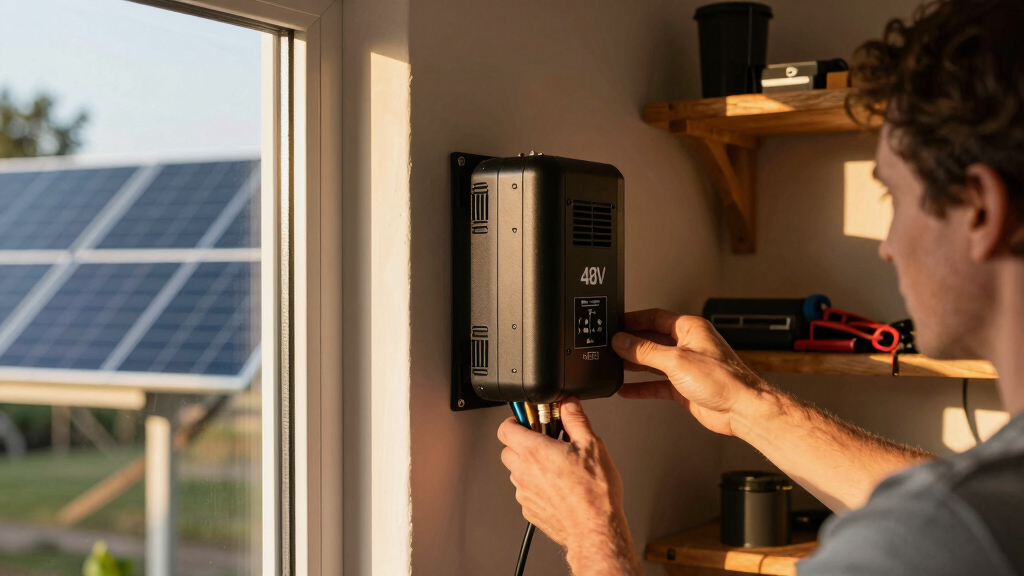
These products were evaluated based on performance, build quality, and usability tailored to off-grid homes. Key criteria included inverter wattage capacity, compatibility with lithium batteries, presence of MPPT solar charge controllers, and overall system flexibility. We prioritized models that combine reliable power output with user-friendly interfaces, while also considering expandability and integration options. The rankings reflect a balance between power, features, and value, helping buyers identify options best suited for various off-grid needs and budgets.Factors to Consider When Choosing Best 48v Inverter For Off Grid Homes
Choosing the right 48V inverter for an off-grid home involves more than just wattage. It’s essential to consider compatibility with your existing battery bank, system expandability, and the inverter’s efficiency. Understanding these factors helps avoid common pitfalls, such as underestimating power needs or selecting an inverter incompatible with your solar panels or batteries. Let’s explore the key considerations in detail.Power Capacity and Scalability
Assess your total energy consumption to determine the appropriate inverter wattage. Overestimating capacity ensures your system can handle peak loads, while underestimating can cause system shutdowns or damage. Consider future expansion—many inverters support parallel connections, allowing growth as your energy needs increase. Balancing initial cost with future-proofing is crucial, especially if you plan to add more solar panels or batteries later.
Compatibility with Batteries and Solar
The inverter must be compatible with your battery chemistry, especially if using lithium-based storage like LiFePO4. Look for models supporting your battery’s voltage and chemistry to avoid costly mismatches. Additionally, integrated MPPT controllers can enhance solar charging efficiency, saving money over time. Avoid inverters that require external controllers unless you prefer a modular system, which can be more complex to set up.
Efficiency and Waveform Quality
Efficiency directly affects how much solar energy is converted into usable power, influencing system size and cost. High efficiency reduces energy losses, making your off-grid setup more economical over time. Pure sine wave inverters produce cleaner power suitable for sensitive electronics, preventing damage and ensuring reliable operation. Lower-cost modified sine wave inverters may seem attractive but can cause issues with certain appliances and reduce longevity.
Ease of Use and Maintenance
User-friendly interfaces and remote monitoring capabilities simplify system management, especially for those new to off-grid setups. Consider models with clear displays, mobile app support, or Bluetooth/WiFi connectivity. Maintenance requirements vary; units with robust build quality and accessible components will save time and money long-term. Avoid overly complex systems if you lack technical experience or prefer minimal upkeep.
Price and Overall Value
While higher-priced inverters often offer advanced features and greater durability, they may not be necessary for smaller setups. Conversely, budget options might lack critical features like high efficiency or expandability. Prioritize models that provide the best combination of features, reliability, and price for your specific needs. Remember, investing in quality upfront often reduces total ownership costs and prevents premature failures.
Frequently Asked Questions
Can I run my entire off-grid home with a 48V inverter?
Running an entire off-grid home depends on your total energy consumption and the inverter’s capacity. A 48V inverter can handle most household appliances if it has sufficient wattage. To ensure reliable operation, calculate your peak load and select an inverter that exceeds this value. For larger homes or high-energy appliances, you might need a system with higher capacity or multiple inverters working together.
Is a hybrid inverter better than a simple inverter for off-grid use?
Hybrid inverters combine inverter functions with integrated solar charge controllers and battery management, offering greater system efficiency and flexibility. They streamline installation and reduce complexity, making them ideal for off-grid setups that rely on solar power and batteries. However, they tend to be more expensive upfront. If you prefer a straightforward setup with less automation, a basic inverter might suffice but could limit future expansion or efficiency.
What size inverter do I need for my off-grid solar system?
The ideal inverter size depends on your peak power needs. Add up the wattage of all appliances you expect to run simultaneously, then choose an inverter rated at least 20-25% above that total to handle surges. For example, if your peak load is 3000W, opt for a 3600W or higher inverter. Proper sizing ensures your system remains reliable without being unnecessarily expensive or oversized.
Should I prioritize inverter efficiency or features?
Both matter, but efficiency can have a bigger impact on long-term performance and energy savings, especially in off-grid systems where every watt counts. Look for inverters with 95% or higher efficiency, which minimizes energy losses. Features like remote monitoring, expandability, and multiple AC outputs enhance usability but should not come at the expense of core performance metrics. Balance your needs based on your technical comfort and budget.
How important is wave form quality in an inverter?
Waveform quality influences the longevity and safety of your appliances. Pure sine wave inverters produce power that closely mimics utility-supplied electricity, making them suitable for sensitive electronics, medical devices, and modern appliances. Modified sine wave inverters are cheaper but can cause humming, reduce appliance lifespan, or damage certain devices. For a reliable, long-term off-grid system, investing in a pure sine wave inverter is usually the better choice.
Conclusion
For most off-grid homeowners seeking a balance of power, reliability, and ease of use, the ECO-WORTHY Powermega 48V 314Ah LiFePO4 System stands out as the best overall choice. Those prioritizing high capacity and expandability might prefer the 12000W Hybrid Solar Inverter, especially for larger systems. Beginners or those on a budget will find the 48V 2500W Pure Sine Wave Inverter offers solid performance at a lower price point. For premium setups with advanced features, the AMPI NT 5000W Off Grid Inverter Charger provides robust power and flexibility. Ultimately, matching your energy needs, future plans, and budget will lead you to the best fit. As an affiliate, we earn on qualifying purchases.Fall Picks
fall essentials