When protecting a greenhouse from freeze damage, having a reliable remote thermometer with freeze alerts is essential. The YoLink Smart Freezer Thermometer stands out as the best overall choice thanks to its long-range wireless connectivity and robust alert system. The Govee Smart Thermometer Hygrometer offers excellent app notifications for those who want detailed environmental data, while the MOCREO WiFi Freezer Thermometer Alarm provides a versatile, no-subscription option with multiple sensors. The main tradeoffs in this category revolve around range, alert customization, ease of setup, and price. Continue reading for a full breakdown of the top options and what to consider before making your choice.
Key Takeaways
- Range is a defining factor; top picks offer at least 300 feet, with some exceeding 1 mile for large greenhouses.
- Multi-sensor setups provide better coverage, especially for bigger or more complex greenhouse layouts.
- WiFi connectivity tends to be more flexible but can introduce setup complexity compared to LoRa or RF options.
- Battery life varies significantly; longer-lasting models reduce maintenance but often come at a higher cost.
- Alert customization and app integration are key for timely freeze warnings, but some options lack detailed data export features.



More Details on Our Top Picks
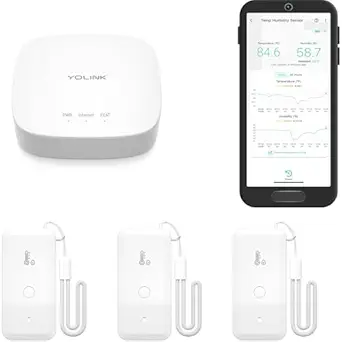
YoLink Smart Freezer Thermometer, LoRa Wireless Fridge Temperature Sensor 3-Pack, Ideal for Refrigerator, Freezer, Greenhouse, Pet Cage, App & SMS Alerts, 5-Year Battery, Hub Included
This YoLink model stands out for its long-range LoRa protocol, allowing monitoring in areas far beyond WiFi range—up to 1/4 mile in open air—making it a top choice for large greenhouses or multi-building setups. Compared with the GoveeLife WiFi sensors, it doesn’t rely on your home WiFi, reducing network congestion and increasing reliability in remote locations. Its 5-year battery life minimizes maintenance, and customizable notifications via SMS or app keep you informed of temperature fluctuations. However, its setup is more complex, requiring a hub and understanding LoRa technology, which might be a barrier for casual users. The device offers precision accuracy of ±0.36°F, suitable for sensitive environments, but the need for a hub and its limited app integration with voice assistants (no direct Alexa routines) are tradeoffs. This pick makes the most sense for large-scale or remote monitoring where WiFi stability is a concern.
Pros:- Long-range LoRa connectivity up to 1/4 mile outdoors
- Battery life extends up to 5 years, reducing replacements
- Customizable alerts via SMS, email, and app notifications
- Commercial-grade temperature accuracy of ±0.36°F
Cons:- Requires a separate hub and some technical setup
- Limited direct voice control or Alexa routine support
- Bulkier installation compared to simpler WiFi sensors
Best for: Farmers, large greenhouse operators, or facilities needing extensive range and reliable alerts in difficult-to-wire areas
Not ideal for: Home growers or hobbyists with small setups who prefer simple WiFi-based solutions without extra hubs
- Wireless Protocol:LoRa
- Temperature Range:-4°F to 129°F
- Battery Life:Up to 5 years
- Temperature Accuracy:±0.36°F
- Monitoring Range:Up to 1/4 mile
- Power Source:2 AA batteries
Bottom line: Ideal for large, dispersed environments where WiFi is unreliable, but less suited for casual or small-scale users.
Govee Smart Thermometer Hygrometer, WiFi Humidity Temperature Sensor with App Notification Alert, 2 Years Free Data Storage Export, Wireless Remote Monitor for Room Greenhouse Incubator Wine Cellar
This Govee model makes the list for its easy WiFi connectivity and fast 2-second refresh rate, providing real-time updates on temperature and humidity—perfect for small greenhouses or indoor grow spaces. Compared with the YoLink sensor, it’s more straightforward to set up, requiring only WiFi and the Govee app, and offers free 2-year data export for trend analysis. Its Swiss-made sensor ensures precise readings with ±0.54°F accuracy, but it relies solely on WiFi, which can be less reliable in areas with weak signal. The app’s alert system is flexible, but it only supports Bluetooth for local setup, limiting remote notifications if WiFi drops. The device is ideal for users seeking easy installation and comprehensive indoor monitoring, but it’s less suited for large or outdoor environments where WiFi stability is compromised. This pick is best for hobbyists and small-scale growers.
Pros:- Fast refresh rate of 2 seconds for real-time data
- WiFi and Bluetooth connection options
- Includes 2-year free data export and trend analysis
- Accurate to ±0.54°F with Swiss-made sensor
Cons:- Limited WiFi range and reliance on home WiFi stability
- No voice control or direct Alexa routines
- Indoor use only, not suitable for outdoor environments
Best for: Home gardeners, hobbyists, or small greenhouse operators needing reliable WiFi alerts with easy setup
Not ideal for: Large-scale farms or outdoor setups with inconsistent WiFi coverage or requiring long-range monitoring
- Connectivity:WiFi & Bluetooth
- Temperature Range:±0.54°F, 32°F to 140°F
- Data Storage:2 years free export
- Response Time:2 seconds
- Measurement Units:Fahrenheit & Celsius
- Power Source:3 AA batteries
Bottom line: Best suited for indoor or small greenhouse settings where WiFi is stable and easy setup is preferred.
MOCREO LS1 Long Range Thermometer Freezer Alarm, IP66 Waterproof, App Email Alert, 2 Years Data Logging, Remote Temperature Sensor for Fridge, RV, Greenhouse, Animals (H5Pro or H6Pro Hub Required)
This MOCREO LS1 excels for industrial waterproofing (IP66 rating) and its extended open-air range of up to 1/3 mile with the H5Pro or H6Pro hub, making it ideal for outdoor or humid environments like greenhouses or animal enclosures. When compared with WiFi-only devices like GoveeLife, it offers reliable long-distance monitoring without WiFi dependency, which is critical in remote or outdoor settings. Its ±0.9°F accuracy covers most greenhouse needs, and the 2-year battery life minimizes upkeep. However, setup requires the specific hub model, and the device caters more to technical users comfortable with LoRa technology. Its app alerts, email notifications, and 95dB buzzer are robust, but the need for extra hardware and less intuitive interface are tradeoffs. This is best for users requiring durable outdoor sensors with long-range communication.
Pros:- IP66 waterproof and weather-resistant design
- Up to 1/3 mile open-air range with compatible hub
- Long-lasting 2-year battery life
- Accurate to ±0.9°F in humid environments
Cons:- Requires a specific hub model (H5Pro or H6Pro)
- More complex setup for tech-savvy users
- Less user-friendly interface compared to WiFi-only devices
Best for: Large outdoor greenhouses, farms, or animal habitats needing waterproof, long-range sensors with reliable alerts
Not ideal for: Small indoor growers or hobbyists who prefer plug-and-play WiFi sensors without extra hubs
- Waterproof Rating:IP66
- Temperature Range:-4°F to 131°F
- Accuracy:±0.9°F
- Monitoring Range:up to 1/3 mile
- Power Source:3 AAA batteries
- Connectivity:LoRa with hub
Bottom line: Best for outdoor or humid environments where long-distance and waterproof durability are priorities, but less suited for casual indoor setups.
MOCREO WiFi Freezer Thermometer Alarm with Digital Monitor Hub, App and Email Alerts, 2-Year Data Export, No Subscription Fee, 2 Remote Temperature Sensors for Home Refrigerator, Fridge, Freezer
This MOCREO WiFi model makes the list through its comprehensive hub and sensor package, including 2 remote temperature sensors, and the ability to monitor multiple zones simultaneously. Compared with single-sensor devices like GoveeLife, this setup is ideal for larger or segmented refrigerators and freezers. Its easy-to-use LCD hub display provides quick readings, and the 2-year free data export supports detailed analysis. The device’s ±0.9°F accuracy covers typical freezer and fridge needs, but it’s limited to WiFi-only, making it vulnerable to network issues. The setup is straightforward, but the device’s size and need for multiple sensors may be overkill for small or simple applications. This option is best for users managing multiple zones or needing multi-sensor monitoring in a WiFi environment.
Pros:- Supports 2 remote sensors for multi-zone monitoring
- Large LCD display for quick readings
- 2-year free data export and trend analysis
- No subscription fee
Cons:- Requires WiFi connection, less reliable in poor networks
- Larger unit size may be cumbersome for small spaces
- Limited voice control integration
Best for: Large households or commercial settings with multiple freezers or fridges requiring simultaneous temperature monitoring
Not ideal for: Small-scale hobbyists or users without a reliable WiFi connection needing simple single-zone alerts
- Number of Sensors:2
- Temperature Range:-40°F to 158°F
- Accuracy:±0.9°F
- Connectivity:WiFi
- Data Export:2 years free
- Display Type:LCD
Bottom line: Best for users needing multi-zone WiFi monitoring without extra costs, but less suitable for WiFi-challenged locations or small setups.
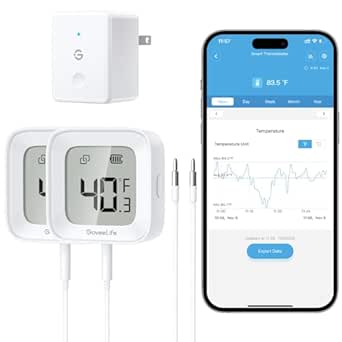
GoveeLife WiFi Refrigerator Thermometer with Alarm, Wireless Digital Freezer Temperature Gauge with App Control, LCD Display, 2 Years Free Data Export, for Home Kitchen Fridge Hot Tub 2 Pack
This GoveeLife 2-pack offers a cost-effective solution for small or budget-conscious users needing reliable WiFi alerts in home kitchens or small greenhouses. Its easy setup and 2-year free data export make it appealing for hobbyists, and the app provides instant alerts for temperatures outside preset ranges. While its ±0.9°F accuracy is suitable for most non-critical environments, it’s limited to WiFi, which can be less dependable in areas with weak signals. Compared with the YoLink, it’s simpler but less suitable for outdoor or large-scale environments due to WiFi constraints. Its compact size and straightforward interface make it ideal for small-scale use, but it lacks the long-range or waterproof features needed for outdoor or industrial settings. This makes it perfect for small indoor setups or as an affordable backup sensor.
Pros:- Affordable 2-pack for budget-conscious buyers
- 2 years of free data export and trend tracking
- Simple WiFi setup with app alerts
- Compact and easy to install
Cons:- Limited WiFi range and reliance on home WiFi
- No waterproof or outdoor durability
- No voice assistant integration
Best for: Home users, small greenhouses, or hobbyists needing affordable, WiFi-based temperature alerts
Not ideal for: Outdoor or large-scale operations where WiFi stability and range are critical, or environments with high humidity or water exposure
- Number of Sensors:2
- Temperature Range:±0.9°F, -40°F to 158°F
- Data Export:2 years free
- Connectivity:WiFi
- Response Time:2 seconds
- Display Type:LCD
Bottom line: Excellent for small indoor environments and budget-focused setups, but less suitable for outdoor or industrial use.
MOCREO WiFi Remote Thermometer Freezer Alarm, 1/3 Mile Long Range, IP66 Waterproof, App Email Alert, with Digital Monitor Hub, 2 Smart Wireless Temperature Sensors for Fridge, RV, Greenhouse
This MOCREO system stands out for its extensive range—up to 1/3 mile outdoors—and its ability to connect multiple sensors to a central hub, making it ideal for large greenhouses or multi-zone storage. The app provides real-time alerts via push notifications and emails, giving you proactive control over critical temperatures. Compared with the YoLink’s LoRa protocol, this WiFi-based system offers easier initial setup and integration with existing home networks, though it may be more vulnerable to WiFi disruptions. Its detailed data export and charting support long-term trend analysis, making it suitable for serious growers or bulk storage facilities. However, the setup can be complex for absolute beginners, and signal interference can occur if sensors are placed inside metal enclosures or fully sealed containers. This pick makes the most sense for users who need reliable, long-range remote monitoring with detailed historical data and flexible alert options.
Pros:- Long-range wireless connectivity up to 1/3 mile outdoors
- Supports multiple sensors with a comprehensive digital hub
- Detailed data export and online charting for trend analysis
- Customizable alert options including app, email, and sound alarms
Cons:- Initial setup can be complex for non-technical users
- Signal interference possible if sensors are placed inside metal enclosures
- Requires WiFi connection, which may be unstable in some environments
Best for: Greenhouse operators, large-scale storage facilities, and those needing detailed data tracking and remote control
Not ideal for: Small home gardeners or hobbyists who prefer simple, plug-and-play solutions without extensive data management
- Range:up to 1/3 mile outdoors
- Temperature Range:-4°F to 131°F
- Accuracy:±0.9°F
- Sensors Included:2 wireless sensors
- Connectivity:Wi-Fi and long-range protocol
- Power Source:3 AAA batteries, 2-year lifespan
- Waterproof Rating:IP66
- Data Storage:2 years exportable CSV
- App Features:Real-time alerts, historical charts, remote mute
Bottom line: Ideal for users who need a robust, long-range remote monitoring system with detailed data capabilities and flexible alerts.
YoLink Smart Wireless Thermometer Hygrometer, 3-Pack, Wide Temp Range for Freezer, Fridge, Green House, Pet Cage, App Alerts, Emails, Text/SMS alerts, 5 Years Battery Life- Hub Included
The YoLink thermometer excels in environments where WiFi isn’t reliable or available—thanks to its LoRa-based protocol, it can monitor across several floors or outdoor areas without network congestion. Its five-year battery life means minimal maintenance, ideal for hard-to-reach spots like freezers or outdoor greenhouses. The app provides customizable alerts via text, email, and push notifications, with additional IFTTT and Alexa integrations that enhance automation. Compared to the WiFi-centric models like the MOCREO, this device offers superior range and less network impact, though it requires a hub and is less straightforward to set up initially. Its high-precision temperature and humidity monitoring makes it suitable for sensitive environments like pet cages or nurseries. The main drawback is the limited number of SMS alerts—up to five per device per month—which might be restrictive for large operations. This sensor makes sense for users prioritizing long-term, low-maintenance monitoring in challenging locations.
Pros:- Operates independently of WiFi, using LoRa protocol for extended range
- Battery life up to 5 years minimizes replacements
- Wide temperature (-4°F to 129°F) and humidity (0-100%) range
- Multiple alert options including SMS, email, and app notifications
Cons:- Requires a separate hub for operation, adding complexity
- Limited free SMS alerts—up to 5 messages per device monthly
- Initial setup may be less intuitive for non-technical users
Best for: Users needing reliable, long-term environmental monitoring in areas with poor WiFi or outdoor locations
Not ideal for: Home users seeking simple, WiFi-based setup with extensive data export or detailed trend charts
- Range:up to 1/4 mile in open air
- Temperature Range:-20°C to 54°C (-4°F to 129°F)
- Accuracy:±0.36°F
- Sensors Included:3 wireless sensors
- Connectivity:LoRa protocol, hub required
- Power Source:2 AA batteries, 5-year lifespan
- Waterproof Rating:Not specified but rated for outdoor use
- App Features:Custom alerts, IFTTT, Alexa
- Additional:Humidity monitoring, multi-location support
Bottom line: Perfect for those who need durable, long-range monitoring in environments where WiFi is unreliable or absent.

How We Picked
I evaluated these products based on their wireless range, alert reliability, ease of setup, build quality, and value for the price. Long-range connectivity was prioritized because greenhouses often span large areas, requiring stable communication over hundreds of feet or more. I also considered user-reported reliability of alerts, especially during power outages or network disruptions. Additional factors included the flexibility of alert types, app usability, and whether the device supports multiple sensors for comprehensive coverage. Products were ranked to balance performance, affordability, and ease of use, aiming to recommend options suited for different greenhouse sizes and user tech preferences.Factors to Consider When Choosing Best Remote Thermometer For Greenhouse Freeze Alerts
Choosing the right remote thermometer for greenhouse freeze alerts involves understanding several key factors. The best device should reliably detect temperature drops, send timely alerts, and be easy to install and maintain. It’s also important to consider your greenhouse size, the type of connectivity you prefer, and whether you need multiple sensors to cover different zones. By weighing these factors, you can select a thermometer that protects your plants efficiently and with minimal fuss.Wireless Range and Connectivity
The primary consideration is how far the sensor can communicate with your receiver or smartphone. Longer ranges, such as those offered by LoRa or RF systems, are ideal for larger greenhouses or outdoor setups, ensuring alerts are received no matter where you are. WiFi-based devices are simpler but may struggle with signal strength in some environments, especially if your network isn’t robust. Understanding your greenhouse’s size and layout helps determine the right connectivity type to prevent missed alerts.
Sensor Accuracy and Reliability
Accurate temperature readings are vital for timely freeze alerts. Look for devices with proven accuracy within 1 degree or better and positive user feedback on consistency. Relying on a sensor that drifts or gives false alarms can lead to unnecessary worry or, worse, missed freeze events. Additionally, assess how well the device maintains functionality during power outages or network disruptions to avoid critical gaps in monitoring.
Alert Customization and Notification Options
Flexible alerts—such as SMS, app notifications, or emails—are important for ensuring you receive warnings promptly. Consider whether the device allows setting specific temperature thresholds and how customizable these are. Devices with multiple alert channels reduce the risk of missing critical freeze warnings, especially if you’re often away from your phone or computer.
Ease of Installation and Maintenance
Devices that are straightforward to set up and require minimal ongoing maintenance save time and reduce frustration. Features like long-lasting batteries, simple mounting options, and clear instructions matter. Also, check if the device supports remote data logging or exporting, which can be helpful for tracking trends over time to improve your greenhouse management.
Price and Value
While investing in a high-quality device can be worthwhile, balance cost against features like range, alert options, and sensor quantity. Cheaper options may lack long-range connectivity or reliable alerts, risking crop damage. Conversely, premium models with extensive features might be unnecessary for small greenhouses. Consider your specific needs and pick a device that offers the best value for your setup.
Frequently Asked Questions
Can I use these remote thermometers for outdoor greenhouses?
Many of these devices are suitable for outdoor use, especially those with waterproof ratings like IP66 or IP65. Waterproofing protects the sensors from rain, snow, and humidity, which are common outdoors. However, ensure that the device’s temperature range covers the outdoor conditions you expect, and verify that the wireless connection remains stable over your greenhouse’s distance. Choosing a model with long-range capabilities further improves outdoor performance.
What is the best way to ensure alerts are not missed during power outages?
Opt for devices with long-lasting batteries and backup power options if available. Many models include battery life spanning several years, reducing the risk of losing monitoring during outages. Also, selecting a device that supports SMS alerts can be crucial, as these often operate independently of your home WiFi or internet connection. Regular maintenance and battery replacements help keep your freeze alerts reliable at all times.
How many sensors should I install for a large greenhouse?
The number of sensors depends on the size and layout of your greenhouse. For small setups, one or two sensors might suffice, but larger or segmented greenhouses benefit from multiple sensors placed in different zones. This ensures early detection of temperature drops in specific areas. Multi-sensor systems that can connect to a central hub or app make managing multiple zones easier and more effective.
Are WiFi-enabled thermometers more reliable than LoRa or RF options?
WiFi thermometers are generally easier to set up but can be less reliable if your network is unstable or has poor coverage. LoRa and RF systems are designed for longer-range, more resilient communication, especially in outdoor or large-area environments. They often require more initial setup but provide more consistent alerts over extensive distances. Your choice should depend on your greenhouse size and existing network infrastructure.
Is it worth paying more for a thermometer with data logging and export features?
If you want to track temperature trends over time or analyze environmental data, investing in a thermometer with data logging and export capabilities can be valuable. These features help identify patterns that might predict future issues, allowing for better planning. However, for basic freeze alerts, simpler models with reliable notifications often suffice, so consider your monitoring needs and budget before opting for advanced data features.