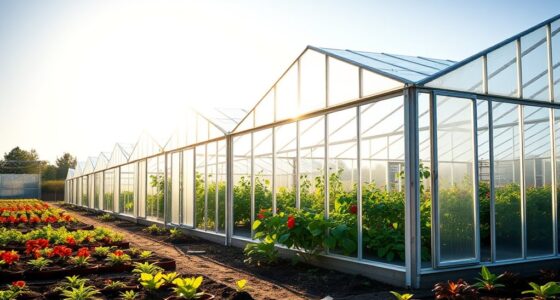
Walk-in greenhouse kits range from flimsy zippered canopies to rigid polycarbonate structures that can handle snow, and the gap between those tiers is bigger than most buyers expect. After comparing 15 of the most popular options, the WELYAS 32 × 10 ft Polycarbonate Greenhouse stands out as the best overall pick for its sheer growing area, lockable swing door, and rigid panel construction. If you want a premium long-term structure instead, the BlueWish 8 × 12 ft Cedar Greenhouse brings a wood-and-polycarbonate build that looks at home in a landscaped yard, while the EAGLE PEAK 10×10 ft Pop-Up is the easiest entry point for beginners who want to skip tools entirely. The main tradeoff in this category is almost always rigidity versus convenience and price: rigid panel kits take hours to assemble but last years, whereas soft-sided tunnel kits set up in an afternoon but need anchoring and wind planning. Keep reading for the full breakdown, including which kits include irrigation, hygrometers, and shelving — and which ones quietly cut corners.

Get garden gear delivered free — and shop member deals
- Fast, free delivery on millions of items
- Access to Prime Big Deal Days deals on October 6–7
- Prime Video, Amazon Music and more included
Complete the kit


Key Takeaways
- Rigid polycarbonate kits (WELYAS, Sannwsg, BlueWish, Garvee aluminum models) dominated the top of the ranking because panel construction and metal or wood framing held up dramatically better than PE fabric covers under wind and UV exposure.
- Bundled extras created real separation: PHONDIKO and AMERLIFE include irrigation systems, and several kits (Sylviera, the 6 × 6 ft model, both larger aluminum greenhouses) include hygrometers or thermometers — small additions that save separate purchases and daily guesswork.
- Size overlaps hide big differences: three kits sit in the 6 × 10 ft class but differ in frame material and panel thickness, so the Garvee aluminum versions outlast similarly sized soft-sided alternatives even at the same footprint.
- The two largest kits (WELYAS 32 ft and AMERLIFE 34 ft tunnels) are the strongest value per square foot but demand flat, well-anchored sites — neither forgives sloppy placement.
- Shelved compact models like the 3-tier 56 x 55-inch kit blur the line between walk-in and shelf greenhouse; it only suits propagation and small plants, not tall crops like tomatoes.
| WELYAS 32 × 10 ft Walk-In Greenhouse with Polycarbonate Panels and Lockable Swing Door |  | Best for Large Growing Spaces | Dimensions: 32 × 10 × 10 ft | Growing area: At least 200 sq ft | Panel material: Twin-wall polycarbonate | VIEW LATEST PRICE | See Our Full Breakdown |
| Garvee 6 × 10 ft Walk-In Greenhouse with Aluminum Frame |  | Best for Anchored Stability | Dimensions: 6 × 10 ft | Frame material: Aluminum | Panel material: Polycarbonate | VIEW LATEST PRICE | See Our Full Breakdown |
| Sylviera 6 x 4 ft Polycarbonate Greenhouse with Hygrometer | 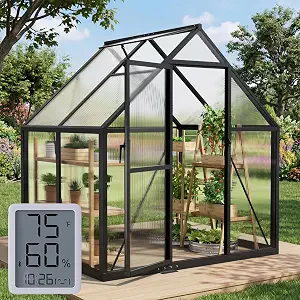 | Best for Beginners | Dimensions: 6 × 4 ft | Frame: Reinforced aluminum alloy | Panel material: Double-wall polycarbonate | VIEW LATEST PRICE | See Our Full Breakdown |
| PHONDIKO 15 × 7 × 7 ft Walk-In Greenhouse with Irrigation System | 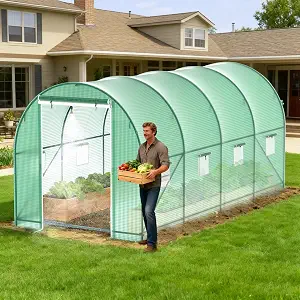 | Best for Built-In Watering | Dimensions: 178 × 78 × 78 in (15 × 7 × 7 ft) | Frame: Galvanized steel | Cover material: Polyethylene (PE), 140 g/m² | VIEW LATEST PRICE | See Our Full Breakdown |
| Sannwsg 10×10 ft Walk-In Polycarbonate Greenhouse |  | Best for Included Accessories | Dimensions: 96 × 96 × 96 in (10 × 10 ft) | Frame material: Aluminum alloy | Base material: Galvanized steel | VIEW LATEST PRICE | See Our Full Breakdown |
| INTER HUT 12×6 Walk-In Cedar Greenhouse with Polycarbonate Roof |  | Best Premium Wood Build | Size: 6 × 12 ft | Dimensions: 12.0 × 6.2 × 7.0 ft | Frame material: Cedar wood | VIEW LATEST PRICE | See Our Full Breakdown |
| Grezone Walk-In Greenhouse with Dual Zippered Doors and 6 Screen Windows, 10 x 7 x 7 ft |  | Best Ventilation on a Budget | Dimensions: 10 x 7 x 7 ft | Frame: Powder-coated heavy-duty steel | Cover: 140 g/m² PE grid cover | VIEW LATEST PRICE | See Our Full Breakdown |
| EAGLE PEAK 10×10 ft Pop-Up Walk-In Greenhouse with Gable Roof, Green |  | Best for Quick Seasonal Setup | Size: 10 × 10 ft | Roof design: Gable | Cover material: PE, water- and UV-resistant | VIEW LATEST PRICE | See Our Full Breakdown |
| 6 × 6 ft Walk-In Greenhouse with Hygrometer |  | Best Compact Rigid-Panel Pick | Dimensions: 6 × 6 ft | Frame: Reinforced aluminum alloy with strengthened corners | Panel material: UV-resistant double-wall polycarbonate | VIEW LATEST PRICE | See Our Full Breakdown |
| Walk-In Outdoor Greenhouse, 56 x 55 x 78 Inches, 3 Tiers, 8 Shelves |  | Best Shelf-Ready Starter Greenhouse | Dimensions: 56 x 55 x 78 inches | Shelves: 8 | Tiers: 3 | VIEW LATEST PRICE | See Our Full Breakdown |
| Garvee 6 x 10 ft Polycarbonate Greenhouse with Aluminum Frame |  | Best Compact Rigid-Panel Pick | Dimensions: 6 x 10 ft | Panel material: Polycarbonate, 720 g/m² | Frame: Aluminum steel | VIEW LATEST PRICE | See Our Full Breakdown |
| 8 × 10 ft Aluminum Greenhouse with Thermometer and Hygrometer |  | Best for Remote Climate Monitoring | Dimensions: 8 × 10 ft | Frame material: Aluminum alloy | Panel material: 4 mm twin-wall polycarbonate | VIEW LATEST PRICE | See Our Full Breakdown |
| AMERLIFE 34 x 10 x 7 ft Walk-In Tunnel Greenhouse with Watering System |  | Best for Large-Scale Growing | Dimensions: 34 x 10 x 7 ft | Cover material: 120 g waterproof PE fabric | Watering system: Adjustable nozzles for flow, droplet size, and spray range | VIEW LATEST PRICE | See Our Full Breakdown |
| BlueWish 8 x 12 ft Outdoor Greenhouse with Cedar Frame and 6 mm Polycarbonate Panels |  | Best Premium Aesthetic | Overall dimensions: 101.97 W x 144.7 D x 90.55 H in | Frame material: Cedar wood | Panel material: 6 mm multi-layer polycarbonate | VIEW LATEST PRICE | See Our Full Breakdown |
| 8 × 14 ft Aluminum Greenhouse with Thermometers |  | Best Large Rigid-Panel Value | Dimensions: 8 × 14 ft | Frame material: Aluminum alloy | Panel material: 4 mm twin-wall polycarbonate, 720 g | VIEW LATEST PRICE | See Our Full Breakdown |
| walk-in greenhouse kit | Dimensions | Ventilation | Panel material | Frame |
|---|---|---|---|---|
| WELYAS 32 × 10 ft Walk-In Gree | 32 × 10 × 10 ft | Roof vents | Twin-wall polycarbonate | Reinforced aluminum with galvanized steel |
| Garvee 6 × 10 ft Walk-In Green | 6 × 10 ft | Adjustable windows | Polycarbonate | — |
| Sylviera 6 x 4 ft Polycarbonat | 6 × 4 ft | Adjustable roof vents | Double-wall polycarbonate | Reinforced aluminum alloy |
| PHONDIKO 15 × 7 × 7 ft Walk-In | 178 × 78 × 78 in (15 × 7 × 7 ft) | 8 screen windows | — | Galvanized steel |
| Sannwsg 10×10 ft Walk-In Polyc | 96 × 96 × 96 in (10 × 10 ft) | — | — | — |
| INTER HUT 12×6 Walk-In Cedar G | 12.0 × 6.2 × 7.0 ft | — | 6 mm twin-wall polycarbonate | — |
| Grezone Walk-In Greenhouse wit | 10 x 7 x 7 ft | Six screened vents | — | Powder-coated heavy-duty steel |
| EAGLE PEAK 10×10 ft Pop-Up Wal | — | — | — | Powder-coated, rust-resistant reinforced steel |
| 6 × 6 ft Walk-In Greenhouse wi | 6 × 6 ft | Adjustable roof vents | UV-resistant double-wall polycarbonate | Reinforced aluminum alloy with strengthened corners |
| Walk-In Outdoor Greenhouse | 56 x 55 x 78 inches | — | — | 16 mm diameter steel pipe |
| Garvee 6 x 10 ft Polycarbonate | 6 x 10 ft | Adjustable roof vent | Polycarbonate, 720 g/m² | Aluminum steel |
| 8 × 10 ft Aluminum Greenhouse | 8 × 10 ft | Adjustable windows | 4 mm twin-wall polycarbonate | — |
| AMERLIFE 34 x 10 x 7 ft Walk-I | 34 x 10 x 7 ft | — | — | — |
| BlueWish 8 x 12 ft Outdoor Gre | — | Two adjustable vents (21.7 x 21.7 in) | 6 mm multi-layer polycarbonate | — |
| 8 × 14 ft Aluminum Greenhouse | 8 × 14 ft | Adjustable windows | 4 mm twin-wall polycarbonate, 720 g | — |
More Details on Our Top Picks
WELYAS 32 × 10 ft Walk-In Greenhouse with Polycarbonate Panels and Lockable Swing Door
For growers who need room for long rows, work areas, and a broad mix of plants, the 32 × 10 ft footprint sets this WELYAS kit apart from the more compact Garvee 6 × 10 ft. Its twin-wall polycarbonate panels admit light while adding insulation, and the reinforced aluminum and galvanized steel frame is designed for exposure to wind and snow. Roof vents help manage heat, while a double-hinged, lockable door makes moving through the large interior easier. The tradeoff is the site and labor: this greenhouse needs a level foundation, and its modular assembly is described as a two-person job. It makes the most sense for gardeners ready to commit space and setup time to a substantial growing structure.
Pros:- At least 200 sq ft of growing space
- Twin-wall polycarbonate panels paired with a reinforced frame
- Roof vents and a lockable double-hinged door
- Pre-drilled, labeled parts and step-by-step instructions
Cons:- Requires a level foundation such as a slab or wood deck
- Assembly is specified as a two-person project
Best for: Gardeners with a level slab or deck who need a large, permanent growing area for multiple beds or rows
Not ideal for: Small-yard growers or solo builders who lack a prepared foundation and help for assembly
- Dimensions:32 × 10 × 10 ft
- Growing area:At least 200 sq ft
- Panel material:Twin-wall polycarbonate
- Frame:Reinforced aluminum with galvanized steel
- Door:6 × 6.5 ft double-hinged lockable swing door
- Ventilation:Roof vents
- Assembly:Pre-drilled modular parts; two people; basic tools
- Color:Black
Our verdict“Choose the WELYAS if growing area is your main priority and you have room, a prepared foundation, and a second person to help build it.”
Garvee 6 × 10 ft Walk-In Greenhouse with Aluminum Frame
The Garvee 6 × 10 ft is a more manageable footprint than the large WELYAS, while still giving gardeners room to walk in and tend plants. Its standout detail is the combination of four reinforced ground nails and two mid-post supports, which gives the frame specific anchoring and bracing provisions. Adjustable windows let growers respond to changing heat and humidity, and roof drainage with rainwater collection adds a practical way to direct runoff. The stated panel weight and load capacity also make this a more substantial option on paper than a simple covered frame. Assembly is still required, and the product details do not establish how it performs in a particular site or weather. Choose it for its stability features; skip it if you need the WELYAS’s much larger growing area.
Pros:- Four reinforced ground nails and two mid-post supports
- Adjustable windows and lockable doors
- Roof drainage includes rainwater collection
- Polycarbonate panels are UV-coated
Cons:- Assembly is required
- The listed specifications do not describe assembly time or staffing
Best for: Gardeners seeking a moderate-size polycarbonate greenhouse with included ground anchors and frame supports
Not ideal for: Growers who need more than 60 sq ft of floor area or want a kit with specified assembly support
- Dimensions:6 × 10 ft
- Frame material:Aluminum
- Panel material:Polycarbonate
- Panel weight:720 g/m²
- Weight capacity:Up to 110 lbs/sq ft
- Ventilation:Adjustable windows
- Stability features:4 reinforced ground nails and 2 mid-post supports
- Drainage:Roof drainage and rainwater collection
Our verdict“Pick the Garvee for its included anchoring and bracing in a compact walk-in footprint, and choose the WELYAS if you need substantially more room.”
Sylviera 6 x 4 ft Polycarbonate Greenhouse with Hygrometer
Among these walk-in kits, the Sylviera is the smallest rigid-panel option, which makes it a less demanding starting point than either the Garvee 6 × 10 ft or the WELYAS. Its 4 mm double-wall polycarbonate panels block UV rays while allowing light through, and adjustable roof vents give new growers a way to release excess heat. A lockable door and included hygrometer add useful everyday details: the meter helps monitor humidity without buying a separate accessory. The compact size limits how many plants or shelves can fit, however, and the product notes say a helping hand may be needed during assembly. Panel gaps may also call for glass glue reinforcement, so this is not the most hands-off choice. It suits beginners who value a smaller footprint and basic climate monitoring over capacity.
Pros:- Compact 6 × 4 ft footprint
- 4 mm double-wall polycarbonate panels block UV rays
- Adjustable roof vents and a lockable door
- Hygrometer and labeled assembly parts included
Cons:- Assembly may require a helping hand
- Glass glue may be needed to reinforce panel gaps
Best for: New greenhouse gardeners with limited yard space who want a compact polycarbonate kit and a humidity meter
Not ideal for: Growers planning multiple rows, large plants, or a broad workspace inside the greenhouse
- Dimensions:6 × 4 ft
- Frame:Reinforced aluminum alloy
- Panel material:Double-wall polycarbonate
- Panel thickness:4 mm
- Ventilation:Adjustable roof vents
- Door:Lockable
- Included accessory:Hygrometer
- Assembly:Labeled parts and instructions
Our verdict“Choose the Sylviera as a small-space entry point with a humidity meter, but look to the Garvee or WELYAS for more growing room.”
PHONDIKO 15 × 7 × 7 ft Walk-In Greenhouse with Irrigation System
PHONDIKO takes a different route from the rigid-panel Sylviera: a 140 g/m² PE cover over a galvanized steel frame creates a spacious tunnel, and the kit includes a 32-foot hose with three adjustable spray nozzles. That watering setup can reduce the need to carry a hose between beds, particularly in a long layout. Two roll-up doors and eight screen windows give growers multiple ways to manage access and airflow. The flexible covered design is less like a permanent polycarbonate house such as the Sannwsg, and the product notes say the extended base may need stones or sandbags for stability. Buyers should plan for that securing step and decide whether the included irrigation suits their bed arrangement. This pick favors growing convenience over rigid-panel construction.
Pros:- 32 ft trimmable hose with three adjustable spray nozzles
- Galvanized steel frame with crossbars and diagonal supports
- Eight screen windows for ventilation
- Two roll-up doors
Cons:- Extended base may need stones or sandbags for stability
- PE cover does not provide the rigid panel construction found in the Sannwsg
Best for: Gardeners with long outdoor beds who want an included hose and adjustable spray nozzles
Not ideal for: Buyers seeking rigid polycarbonate panels or a greenhouse that needs no added base securing
- Dimensions:178 × 78 × 78 in (15 × 7 × 7 ft)
- Frame:Galvanized steel
- Cover material:Polyethylene (PE), 140 g/m²
- Doors:2 roll-up doors
- Ventilation:8 screen windows
- Irrigation hose:32 ft, trimmable
- Spray nozzles:3 removable, adjustable nozzles
- Use:Outdoor
Our verdict“Choose PHONDIKO if the included watering kit and flexible tunnel layout matter more than rigid polycarbonate panels.”
Sannwsg 10×10 ft Walk-In Polycarbonate Greenhouse
The Sannwsg pairs a square 10 × 10 ft layout with polycarbonate panels, an aluminum alloy frame, and a galvanized steel base. Compared with the PHONDIKO tunnel, its rigid panel construction and built-in drainage channels make it the more structured option for a defined garden footprint; PHONDIKO instead includes a watering hose and nozzles. Sannwsg’s package adds an indoor thermometer, grow lights, and solar lights, which may help gardeners who want monitoring and supplemental lighting in one kit. The listed wind resistance is up to 31 mph, so buyers in exposed locations should account for that stated limit when choosing a site. It ships in two boxes and requires assembly. This makes sense for accessory-minded growers who can accommodate the square footprint and setup.
Pros:- 10 × 10 ft square layout
- Aluminum alloy frame with galvanized steel base
- Built-in drainage channels, skylights, and sliding door
- Thermometer, grow lights, and solar lights included
Cons:- Ships in two separate boxes
- Assembly is required
- Specified wind resistance is up to 31 mph
Best for: Gardeners who want a square polycarbonate greenhouse with included temperature monitoring and lighting accessories
Not ideal for: Buyers who need a higher stated wind limit, a compact footprint, or watering equipment included
- Dimensions:96 × 96 × 96 in (10 × 10 ft)
- Frame material:Aluminum alloy
- Base material:Galvanized steel
- Cover material:Polycarbonate
- Light transmission:92%+
- Wind resistance:Up to 31 mph
- Snow load:176 lb/m²
- Features:Adjustable skylights, sliding door, built-in drainage channels
- Included accessories:Indoor thermometer, grow lights, LED solar lights
Our verdict“Choose the Sannwsg for its included lighting and monitoring accessories in a rigid-panel layout, and choose PHONDIKO if integrated watering is more useful.”
INTER HUT 12×6 Walk-In Cedar Greenhouse with Polycarbonate Roof
Of all the wood-framed options in this roundup, the INTER HUT 12×6 stands out for pairing a cedar frame with 6 mm twin-wall polycarbonate — a combination that resists rot better than the powder-coated steel frames on the Grezone or EAGLE PEAK models, and that looks far more at home in a landscaped yard. Cedar also insulates differently than aluminum: the BlueWish 8×12 cedar greenhouse offers a similar wood aesthetic, but the INTER HUT’s adjustable roof vent with three opening levels up to 30 degrees gives finer temperature control than the fixed vents on most competitors.
The tradeoff is real, though. This is a large 12-foot structure that demands a serious foundation and a full weekend of assembly, and the 1-year warranty is thin for a premium build. Compared with the Sannwsg 10×10 polycarbonate model, you’re paying for beauty and longevity potential, not floor space.
Pros:- Cedar frame naturally resists rot and suits long-term outdoor placement
- 6 mm twin-wall polycarbonate transmits light while blocking harmful UV rays
- Three-level adjustable roof vent up to 30 degrees for precise airflow control
- Lockable door helps protect plants from animals
Cons:- Large 12-foot footprint requires outdoor space and careful site prep
- Only a 1-year limited warranty for a premium-priced build
Best for: Homeowners who want a greenhouse that doubles as a yard feature and plan to keep it in one spot for years
Not ideal for: Renters or anyone on a tight timeline — the large footprint and involved assembly make it a poor fit for temporary setups
- Size:6 × 12 ft
- Dimensions:12.0 × 6.2 × 7.0 ft
- Frame material:Cedar wood
- Panel material:6 mm twin-wall polycarbonate
- Roof vent:Adjustable, 3 levels up to 30°
- Door:Lockable
- Warranty:1-year limited
Our verdict“This pick makes the most sense for gardeners committing to a permanent, attractive greenhouse rather than a seasonal shelter.”
Grezone Walk-In Greenhouse with Dual Zippered Doors and 6 Screen Windows, 10 x 7 x 7 ft
Ventilation is where cheap greenhouses usually cut corners, and that’s exactly where the Grezone 10×7 breaks from the pack. With six screened vents plus dual zippered doors — one mesh, one PE — it moves air better than the smaller EAGLE PEAK pop-up or the basic shelf-style walk-in models in this guide. The heavy-duty steel frame with crossbars and reinforced diagonal bars addresses the wobble that plagues budget tunnels like the AMERLIFE 34×10, which relies more on its sheer length than structural reinforcement.
The compromise is the 140 g/m² PE cover. Unlike the rigid polycarbonate on the INTER HUT or the Sannwsg 10×10, a soft cover will degrade over seasons and flap in wind if not anchored well. Butterfly screw assembly is straightforward but still a real afternoon of work. Still, for airflow-per-dollar, few options here compete.
Pros:- Six screened vents plus two zippered doors create excellent cross-ventilation
- Crossbars and diagonal reinforcements add frame rigidity uncommon at this tier
- UV 80+ rated waterproof PE cover shields plants from sun and rain
- Butterfly screw assembly simplifies construction without special tools
Cons:- Soft PE cover is less durable than rigid polycarbonate panels and will need replacing sooner
- Assembly is required and takes considerably longer than pop-up alternatives
Best for: Ventilation-focused growers in warm or humid climates who need constant airflow to prevent mold and heat stress
Not ideal for: Gardeners in harsh winter regions — the PE cover insulates far less than twin-wall polycarbonate panels
- Dimensions:10 x 7 x 7 ft
- Frame:Powder-coated heavy-duty steel
- Cover:140 g/m² PE grid cover
- UV protection:UV 80+
- Doors:Two zippered (mesh and PE)
- Ventilation:Six screened vents
- Model:LZ-F455
Our verdict“Choose this if airflow matters more to you than panel durability, and skip it if you need serious winter insulation.”
EAGLE PEAK 10×10 ft Pop-Up Walk-In Greenhouse with Gable Roof, Green
Most walk-in greenhouses in this roundup assume a weekend of assembly. The EAGLE PEAK 10×10 throws that assumption out with its center-lock, one-person tool-free setup — a genuine advantage if you only need protection for spring seedlings or a fall harvest extension. The gable roof also does double duty: extra headroom makes working inside comfortable, and the peak improves airflow compared with the flatter profile of the Grezone.
Be honest about what you’re buying, though. A PE cover over a folding frame is a seasonal tool, not a permanent structure — it can’t match the year-round rigidity of the INTER HUT’s cedar-and-polycarbonate build or the Sannwsg 10×10. Stability genuinely depends on deploying every included rope, stake, and weight bag, which means budgeting time for anchoring before the first windstorm.
Pros:- Tool-free, one-person center-lock setup in a fraction of typical assembly time
- Gable roof adds headroom and passive airflow
- Water- and UV-resistant cover with mesh windows and roll-up doors
- Includes winter support pole, wind ropes, weight bags, and stakes for stability
Cons:- PE cover offers less durability than rigid polycarbonate panels
- Stability depends entirely on properly securing all included anchors and ropes
Best for: Gardeners who want a large greenhouse for a few months a year and need to set it up solo without tools
Not ideal for: Four-season growers — the PE cover and pop-up frame aren’t built to survive heavy snow or sustained winter weather
- Size:10 × 10 ft
- Roof design:Gable
- Cover material:PE, water- and UV-resistant
- Frame:Powder-coated, rust-resistant reinforced steel
- Setup:One-person, tool-free center-lock
- Included accessories:Winter support pole, wind ropes, weight bags, stakes
- Warranty:1 year
Our verdict“This model is better suited to seasonal, solo-setup growers than anyone wanting a permanent year-round structure.”
6 × 6 ft Walk-In Greenhouse with Hygrometer
Not everyone has room for a 12-foot cedar structure, and the 6×6 walk-in with hygrometer is the strongest small-footprint option here that doesn’t sacrifice panel quality. Its 4 mm double-wall polycarbonate and reinforced aluminum frame put it in the same material class as the larger Garvee 6×10, just compressed — unlike the PE-covered EAGLE PEAK or Grezone, this is a rigid structure that holds heat and shrugs off hail. The strengthened corners matter at this size because small frames twist under wind load more easily than long ones.
Two caveats: the panels ship unsealed, and silicone isn’t included — you’ll need to buy and apply it yourself to close the panel gaps against drafts and moisture. Assembly is also a two-person job realistically, unlike the solo pop-up experience. Compared with the Sylviera 6×4, you gain true walk-in comfort, but you give up yard space for it.
Pros:- UV-resistant double-wall polycarbonate panels resist impact and diffuse light
- Reinforced aluminum frame with strengthened corners adds wind stability
- Adjustable roof vents and lockable door support airflow and security
- Includes assembly instructions and tools, plus a hygrometer for monitoring humidity
Cons:- Silicone for sealing panel gaps is not included, requiring an extra purchase and step
- Assembly is realistically a two-person job despite the smaller size
Best for: Small-yard gardeners who want rigid polycarbonate performance and true walk-in access in a compact footprint
Not ideal for: Growers with lots of space or lots of plants — 36 square feet fills up fast, and larger models like the Garvee 6×10 cost only a bit more effort
- Dimensions:6 × 6 ft
- Frame:Reinforced aluminum alloy with strengthened corners
- Panel material:UV-resistant double-wall polycarbonate
- Panel thickness:4 mm (580 g)
- Ventilation:Adjustable roof vents
- Door:Lockable
- Not included:Silicone for sealing panel gaps
Our verdict“This option stands out as the compact choice for buyers who refuse to downgrade to a soft-sided cover just because their yard is small.”
Walk-In Outdoor Greenhouse, 56 x 55 x 78 Inches, 3 Tiers, 8 Shelves
Every other greenhouse in this batch assumes you’ll supply your own benches and potting surfaces. The 56×55×78 walk-in with 8 shelves across 3 tiers flips that, delivering vertical growing space on day one — a meaningful difference for seed-starters and container gardeners who care more about tray capacity than floor area. Compared with the EAGLE PEAK pop-up, which offers similar setup simplicity but an empty 10×10 shell, this option trades raw space for organization. The mesh screen windows on both sides handle basic airflow and pest exclusion adequately for its modest size.
The 16 mm steel pipe frame is lighter-duty than the Grezone’s reinforced crossbar design, and despite the included ground nails and ropes, strong winds remain a genuine risk for a tall, narrow, shelf-loaded structure. This is a frost-protection and season-extension tool, not an all-weather building.
Pros:- Eight shelves across three tiers provide ready vertical growing space without buying benches
- Walk-in height of 78 inches makes tending plants comfortable
- Waterproof PE cover with UV protection shields plants and extends the season
- Mesh windows on both sides support airflow while helping keep animals out
Cons:- Strong winds may still pose a challenge despite included ground nails and ropes
- Lighter 16 mm frame is less rigid than reinforced designs like the Grezone
Best for: Seed-starters and container gardeners who want shelving included and need frost protection more than a permanent structure
Not ideal for: Exposed or windy properties — the narrow footprint and lightweight frame make it vulnerable even with all stabilizers deployed
- Dimensions:56 x 55 x 78 inches
- Shelves:8
- Tiers:3
- Frame:16 mm diameter steel pipe
- Cover:Waterproof PE with UV protection
- Windows:Mesh screen windows on both sides
- Stabilizers:Ground nails and ropes included
Our verdict“This pick makes the most sense for sheltered-spot gardeners who want shelves and frost protection in one affordable package rather than a rugged all-season build.”
Garvee 6 x 10 ft Polycarbonate Greenhouse with Aluminum Frame
Gardeners with a small yard who still want true polycarbonate glazing rather than fabric have a friend here. At 6 x 10 ft, this Garvee model takes up roughly half the footprint of the BlueWish 8 x 12 ft cedar greenhouse, yet it keeps the essentials: a lockable door, an adjustable roof vent for airflow, and side gutters that channel rainwater toward a collection barrel instead of dumping it at the foundation. The slide-in panel system is a genuine quality-of-life feature compared with screw-mounted panels on the 8 × 14 ft aluminum model — fewer fiddly fasteners means less chance of cracking a panel mid-build.
The tradeoff is capacity. Compared with tunnel-style options like the AMERLIFE 34-footer, this is a compact workspace for propagation and overwintering, not market-garden scale growing. Also note the two-box shipment: the pieces may arrive days apart, so don’t schedule your build weekend until both boxes show up.
Pros:- Rigid polycarbonate panels hold heat and resist tearing far better than PE fabric covers
- Slide-in panel assembly reduces fastener count and speeds up the build
- Side gutters support rainwater harvesting and protect the foundation from runoff
- Lockable door adds real security for tools and stored plants
Cons:- Ships in two separate boxes that may not arrive together, complicating build planning
- Single roof vent limits airflow control in hot climates compared with dual-vent designs like the BlueWish
Best for: Suburban gardeners with limited space who want rigid polycarbonate glazing, real security, and rainwater collection in a small permanent structure
Not ideal for: Anyone planning large-scale vegetable production or commercial growing — the 6 x 10 ft footprint fills up fast once benches go in
- Dimensions:6 x 10 ft
- Panel material:Polycarbonate, 720 g/m²
- Frame:Aluminum steel
- Ventilation:Adjustable roof vent
- Door:Lockable
- Water management:Side gutters
- Assembly:Slide-in panels; instructions and tools included
- Package count:2 boxes
Our verdict“This pick makes the most sense for small-space gardeners who want the durability of a hard-panel greenhouse without committing to a large structure.”
8 × 10 ft Aluminum Greenhouse with Thermometer and Hygrometer
What separates this model from the otherwise-similar 8 × 14 ft aluminum greenhouse is the app-connected thermometer and hygrometer. Readings refresh every two seconds, and the app retains 14-day graphs with half-year export — data that lets a remote gardener see exactly when a heat spike or humidity crash happened, rather than guessing after the seedlings wilt. The 4 mm twin-wall polycarbonate glazing is the same shatterproof, UV-filtering spec as its larger sibling, and the adjustable windows and lockable door carry over too.
Compared with the Garvee 6 x 10 ft, you gain two extra feet of width, which changes how the interior feels — room for a center bench plus walking space on both sides. The compromises are small but real: batteries for the sensor are not included, and some panel gaps may need glass glue for weatherproofing, so budget a tube and a trip to the battery drawer before install day.
Pros:- App-connected monitoring with fast refresh and long-term data history
- 4 mm twin-wall polycarbonate is shatterproof and blocks harmful UV
- Adjustable windows plus lockable door cover airflow and security
- Built-in roof gutters support rainwater collection
Cons:- Thermometer batteries not included out of the box
- Panel gaps may require added glass glue for a weathertight seal
- No printed drainage or anchoring guidance for exposed sites
Best for: Tech-leaning gardeners and frequent travelers who want to track greenhouse temperature and humidity from their phone and catch climate problems early
Not ideal for: Hands-off buyers who expect a fully finished kit — you’ll need to supply batteries and possibly seal panel gaps yourself
- Dimensions:8 × 10 ft
- Frame material:Aluminum alloy
- Panel material:4 mm twin-wall polycarbonate
- Monitoring:App-connected thermometer/hygrometer; ±0.54°F and ±3% RH accuracy
- Sensor refresh rate:Every 2 seconds
- Data history:14-day graphs; half-year export via app
- Ventilation:Adjustable windows
- Door:Lockable
- Drainage:Built-in roof gutters
Our verdict“If seeing your greenhouse climate on your phone matters as much as the structure itself, this is the smart-monitoring pick over the larger sensor-free 8 × 14 ft model.”
AMERLIFE 34 x 10 x 7 ft Walk-In Tunnel Greenhouse with Watering System
Nothing else in this lineup competes on scale. At 34 feet long, this tunnel greenhouse offers roughly triple the growing area of the Sannwsg 10×10 polycarbonate model and dwarfs the Garvee 6 x 10 ft. The standout feature is the adjustable watering system — nozzles tune flow, droplet size, and spray range, effectively turning the tunnel into a half-automated nursery. Fourteen rolling mesh windows and two tall zipper doors give you cross-ventilation options that a single-vent rigid greenhouse simply can’t match on humid summer days.
The tradeoff is material class. Where polycarbonate models like the BlueWish 8 x 12 ft hold heat through frost, the 120 g PE fabric cover insulates far less and ages faster under UV. And the anchoring demands are real: twelve stakes and four spiral anchors are included, but the manufacturer still recommends stones or sandbags, because a 340-square-foot sail catches a lot of wind. Skip it if you can’t commit to serious anchoring.
Pros:- Enormous 34 x 10 ft interior for row crops, trellised plants, and overflow potting
- Built-in adjustable irrigation with tunable flow, droplet size, and spray range
- 14 mesh-screen windows plus two doors provide flexible cross-ventilation
- Anchoring hardware included (12 stakes and 4 spiral anchors)
Cons:- PE fabric is less durable and less insulating than twin-wall polycarbonate
- Requires added sandbags or stones for confident wind resistance
- A structure this long needs a genuinely flat, open site and planning permission checks in some areas
Best for: Hobby farmers, market growers, and large-property gardeners who need serious row capacity and want built-in irrigation
Not ideal for: Small yards, windy exposed plots, or anyone wanting winter insulation — the PE cover needs heavy anchoring and won’t hold heat like polycarbonate
- Dimensions:34 x 10 x 7 ft
- Cover material:120 g waterproof PE fabric
- Watering system:Adjustable nozzles for flow, droplet size, and spray range
- Doors:2 zipper doors, 5.8 ft tall
- Windows:14 rolling mesh-screen windows, 15 x 15 in
- Anchors:12 round-handle stakes and 4 spiral anchors
Our verdict“For buyers whose priority is maximum growing space with irrigation included, this tunnel outclasses every rigid-panel option here — as long as anchoring is taken seriously.”
BlueWish 8 x 12 ft Outdoor Greenhouse with Cedar Frame and 6 mm Polycarbonate Panels
This is the pick for gardeners who care what the greenhouse looks like standing in the yard. The natural cedar frame doesn’t just photograph beautifully next to flower beds — wood is a poor conductor compared with the aluminum frames on the Garvee 6 x 10 ft and the 8 × 14 ft aluminum model, which translates to steadier overnight temperatures and less condensation drip. The 6 mm polycarbonate is also thicker than the 4 mm twin-wall panels on those rivals, adding rigidity and insulation, while passing roughly 90% of light through.
Two adjustable vents — rather than the single roof vent on the Garvee — give finer temperature control, and the lockable door with a wide 71-inch opening makes wheelbarrow access realistic. The honest downsides: an 8 x 12 ft footprint demands a genuinely large, level site, and unlike its aluminum competition, assembly guidance is thin, so plan on a patient weekend (or a second pair of hands) without much documentation to lean on. Cedar also wants periodic upkeep that powder-coated aluminum never asks for.
Pros:- Cedar frame offers natural insulation and a warm, garden-integrated look
- 6 mm polycarbonate is thicker and more insulating than the 4 mm panels on rivals
- Two adjustable vents provide finer airflow control than single-vent designs
- Lockable door with a tall 71-inch opening allows easy cart access
Cons:- 8 x 12 ft footprint requires substantial level outdoor space
- Assembly and installation requirements are not clearly documented
- Wood frame needs ongoing maintenance that aluminum frames avoid
Best for: Homeowners who view the greenhouse as a landscape feature and want cedar warmth, thicker glazing, and better insulation for a display garden
Not ideal for: Buyers wanting a documented, fast build — assembly instructions are sparse and the footprint is large for typical suburban lots
- Overall dimensions:101.97 W x 144.7 D x 90.55 H in
- Frame material:Cedar wood
- Panel material:6 mm multi-layer polycarbonate
- Light transmission:About 90%
- Ventilation:Two adjustable vents (21.7 x 21.7 in)
- Door:Lockable, 28.66 W x 71.4 H in
- Color:Light Brown Mocha
Our verdict“If your greenhouse needs to perform through frost and look like it belongs beside the rose beds, this cedar-and-6 mm build justifies its premium over the aluminum alternatives.”
8 × 14 ft Aluminum Greenhouse with Thermometers
Think of this as the 8 × 10 ft monitoring model stretched by four feet for gardeners who need length for grow beds or a potting bench row. The same 4 mm twin-wall polycarbonate and aluminum alloy frame carry over — shatterproof, UV-filtering, and far more weatherproof than the AMERLIFE PE tunnel — and the roof gutters, lockable door, and adjustable windows do too. Thermometers are included, though unlike the app-connected hygrometer model, these are straightforward gauges you read at the door rather than from your phone.
The real cost of that extra length is assembly. The manufacturer is blunt that the kit involves many parts and is easier with help, and a perfectly flat pad matters more here than on the compact Garvee 6 x 10 ft — a 14-foot frame will telegraph any slope as racked doors and binding vents. Compared with the cedar BlueWish, you give up wood’s insulation charm but gain a zero-maintenance frame and typically a friendlier budget.
Pros:- 96 square feet of glazed growing space in a weatherproof rigid structure
- Twin-wall polycarbonate blocks harmful UV while diffusing light evenly
- Lockable door, adjustable windows, and roof gutters round out the feature set
- Included thermometers give at-a-glance climate readings without app setup
Cons:- Many-part assembly realistically requires two people and a full weekend
- Requires a genuinely flat installation site to avoid frame racking
- Lacks the app-based monitoring and humidity data of the 8 × 10 ft sibling
Best for: Serious hobby gardeners who want maximum rigid-panel growing length with low-maintenance aluminum and basic climate gauges included
Not ideal for: Solo builders or anyone without a level prepared base — the long frame and many-part assembly demand a helper and flat ground
- Dimensions:8 × 14 ft
- Frame material:Aluminum alloy
- Panel material:4 mm twin-wall polycarbonate, 720 g
- Ventilation:Adjustable windows
- Door:Lockable
- Drainage:Built-in roof gutters
- Included feature:Thermometers
- Assembly:Multi-part build; easier with a helper on flat ground
Our verdict“For gardeners who need the longest low-maintenance polycarbonate footprint they can get and have a helper for build day, this stretches your growing space further than any other rigid kit here.”

How We Picked
I evaluated every kit through the same lens a buyer would: structural rigidity, weather resistance, usable interior space, included accessories, and assembly burden. Panel material was the single biggest differentiator — polycarbonate kits ranked above polyethylene fabric covers because they insulate better, block harmful UV on the panel itself, and survive multi-season use. Frame material came next, with aluminum and cedar outranking powder-coated steel tubes that flex under wind load. Kits that bundled a hygrometer, thermometer, irrigation lines, or shelving earned credit for reducing the hidden follow-up purchases that inflate the real cost of a cheaper greenhouse.
The ranking also weighs who each kit is actually for, not just raw quality. A 34-foot tunnel greenhouse is not “better” than a 6 × 4 ft starter kit for someone with a small patio, so placements reflect fit as much as build. Finally, I penalized kits where the listed dimensions implied more usable space than the interior actually delivers — low sidewalls, sloped gables, and shelf-dominated interiors all reduce the practical growing area.
Factors to Consider When Choosing Walk-in Greenhouse Kits
Choosing between walk-in greenhouse kits comes down to matching structure type to your climate, your site, and how you actually garden. Before picking a specific model, work through these six factors — they explain most of the price differences in this lineup.Panel Type: The Biggest Quality Divide
The cover material determines whether your greenhouse lasts two seasons or ten. Polycarbonate panels — either twin-wall or solid sheets — insulate, resist hail and wind-blown debris, and don’t turn brittle and cloudy the way polyethylene fabric does after a summer of UV exposure. Fabric covers are cheaper and diffuse light well, but plan on replacing them, and expect noticeably worse heat retention on cold nights. In this lineup, every premium-tier pick uses polycarbonate, and that’s not a coincidence. A common mistake is buying a fabric tunnel kit for a four-season goal; those kits work well as season extenders in spring and fall but struggle to hold temperature in winter without an added heat source. If you garden in a windy region, panel rigidity matters even more than in cold ones, since fabric covers act as sails.
Frame Material and Wind Load
Aluminum frames resist rust and hold their shape for years but cost more; powder-coated steel tubes are strong in compression but can flex and pop apart at joints in sustained wind; cedar looks better than either and handles humidity naturally, though it needs occasional sealing. Match the frame to your exposure: an open suburban lot calls for metal or wood rigidity, while a fenced or sheltered backyard can get away with a lighter frame. Whatever you choose, anchoring is non-negotiable — even the heaviest kit here should be bolted to a base, and tunnel-style greenhouses need ground stakes or ballast at every anchor point. The failure mode for nearly every greenhouse isn’t the frame snapping; it’s the whole structure lifting or racking in a storm because it was set on loose soil.
Footprint Versus Usable Space
Advertised dimensions flatter most kits. A 6 × 10 ft greenhouse with low sidewalls may only comfortably house plants along the walls, since the center height comes from a steep gable you can’t work under. Check the eave height (sidewall height), not just peak height — that’s what determines whether you can stand upright across the full floor or just down the center. Deep kits like the 32- and 34-foot models trade convenience for capacity: walking to the far end gets old, so plan your layout with the most-tended plants near the door. And if you grow tall crops like tomatoes, cucumbers, or citrus, prioritize internal clearance over shelf count, because shelves you remove still leave mounting holes and awkward framing.
Ventilation and Climate Accessories
Overheating kills more seedlings than cold does, and buyers routinely underestimate it. Look for multiple screened vents or roll-up sides — kits with six or more windows, or dual zippered doors that allow through-flow, manage heat far better than single-vent designs. Bundled hygrometers and thermometers (included with the Sylviera, the 6 × 6 ft kit, and both larger aluminum models) seem like gimmicks until you’re trying to decide whether to crack a vent at noon. Irrigation systems, included with PHONDIKO and AMERLIFE, matter most for large footprints where hand-watering everything daily becomes a chore. One mistake to avoid: buying a kit with no ventilation at all and assuming you’ll add it later. Retrofitting vents into polycarbonate panels is genuinely difficult without leaking.
Assembly Time and Site Prep
Be honest about your tolerance for a weekend project. Pop-up kits like the EAGLE PEAK go up in under an hour with no tools, mid-size polycarbonate kits typically take two people a full day, and the large aluminum models can consume a weekend — mostly spent squaring the frame and seating panels. The step almost everyone skips is site preparation: a level base of compacted gravel, pavers, or a timber frame dramatically simplifies assembly and prevents the door from binding later. If you can’t pour or lay a base, choose a kit with an included foundation or adjustable base posts. Also check whether the kit ships pre-cut panels or sheets you trim yourself; self-cutting polycarbonate is where most DIY assemblies go wrong.
When to Pay More (and When Not To)
Premium cedar-and-polycarbonate kits like the BlueWish and INTER HUT cedar model justify their cost through longevity and appearance — if the greenhouse sits visible from your patio or street, that aesthetic premium is worth it. Paying more also buys thicker panels (6 mm twin-wall versus 4 mm), which meaningfully improves winter heat retention if you intend to grow year-round. But don’t pay for capacity you won’t use: a 34-foot tunnel for a hobby grower with eight tomato plants is wasted money and wasted yard. Conversely, cheaping out on a fabric kit when you truly want four-season growing just delays the inevitable second purchase. The sweet spot for most serious gardeners is a mid-size aluminum polycarbonate kit with real venting — which is why those models cluster near the top of this ranking.
Frequently Asked Questions
Can a walk-in greenhouse kit really survive winter, or do I need to take it down?
It depends entirely on construction. Rigid polycarbonate kits on aluminum or cedar frames — like the WELYAS, BlueWish, or Garvee models — are designed to stay up year-round and shed light snow, though you should clear heavy accumulation off the roof and check that your snow load matches the manufacturer rating. Fabric-covered tunnel kits such as the AMERLIFE can overwinter in mild climates, but in regions with real snowfall or hard freezes, most owners either take the cover off for winter or accept a shorter cover lifespan. Even with a rigid kit, winter growing usually requires supplemental heat below a certain temperature; the panels extend your season dramatically but don’t make the interior frost-free on their own. Anchoring to a solid base matters most in winter, when frozen-ground heave and wind combine to rack frames out of square.
Is a bigger greenhouse always the better buy if my yard can fit it?
Not necessarily, and this lineup proves it. The 32- and 34-foot kits deliver the lowest cost per square foot, but they demand a flat, unobstructed site and commitment — walking the length daily, ventilating a much larger air volume, and heating far more space if you extend the season. A 6 × 10 or 8 × 10 kit with good venting and thicker panels often produces better plants than a big tunnel with poor climate control. There’s also a well-known greenhouse effect on buying: whatever size you choose, you will fill it within two seasons. If budget and yard allow, going one size up from your current plan is reasonable — but skip the mega tunnels unless you’re growing food in serious volume or starting plants for a large garden.
How important are the included hygrometers and thermometers on some of these kits?
More than most buyers expect, because greenhouse management is really temperature and humidity management. Without a thermometer, you’re guessing when to open vents, and greenhouses overheat fastest on the bright cold days when new gardeners least suspect it. Hygrometers matter for disease prevention — humidity stuck above roughly 80 percent invites mold and fungal problems on tomatoes and leafy greens. That said, a basic combo gauge costs very little on its own, so don’t let its absence disqualify an otherwise strong kit; treat it as a tiebreaker between similar models, like the two 6 × 10 Garvee options or the mid-size aluminum kits. What you can’t easily retrofit is venting, so prioritize window count and door design over the gauge.
What’s the actual difference between the similarly sized polycarbonate kits here?
Three things separate them: panel thickness, frame gauge, and door type. A 6 mm twin-wall panel insulates noticeably better than a 4 mm one and resists impact from hail or branches, while a heavier aluminum extrusion flexes less at the joints in wind. Door type is the underrated factor — a lockable hinged swing door, like the WELYAS uses, seals better, lasts longer, and secures your tools, whereas zippered roll-up doors wear out and let drafts in long before the rest of the greenhouse ages. Layout differs too: some kits devote interior space to built-in shelving while others leave an open floor for beds and tall crops. Decide whether you’re mainly starting seedlings on shelves or growing tall plants to maturity, and the right kit in that size class becomes obvious.
Do I need a permit or foundation before installing one of these kits?
Check your local rules first, because many municipalities treat even kit greenhouses as accessory structures, and larger footprints (like the 32- and 34-foot models) sometimes trigger permitting, setback requirements, or HOA review even when smaller ones don’t. On foundations: a kit greenhouse should always sit on something level and stable — compacted gravel, concrete pavers, or a pressure-treated timber frame are the standard options. Skipping the base is the most common installation mistake and leads to binding doors, racked frames, and panels that pop out of channels. Some aluminum kits include or sell a matching base profile, which simplifies anchoring to the ground. Budget a day for site prep before your greenhouse arrives; it’s the least fun part of the project and the one that most determines how the structure performs for the next decade.
Conclusion
Match the kit to the gardener, and the choice gets simple. For the best overall pick, the WELYAS 32 × 10 ft Polycarbonate Greenhouse delivers the most usable, secure, weather-ready growing space in the lineup — if you have the yard for it. The AMERLIFE 34 ft tunnel is the best value for large-footprint buyers thanks to its included watering system, while the Garvee 6 × 10 ft aluminum kit is the smarter value play for typical backyards. On the premium end, the BlueWish 8 × 12 ft cedar model and the 8 × 14 ft aluminum greenhouse reward buyers planning a decade-long, four-season structure. Beginners should start with the EAGLE PEAK pop-up or the Sylviera 6 × 4 ft kit with hygrometer before committing to a rigid build. For specific needs: the PHONDIKO with irrigation suits hands-off waterers, the INTER HUT cedar model fits aesthetic-driven yards, and the 3-tier shelved kit works for apartment-scale propagation. Whatever you choose, invest in a level base and proper anchoring — that’s what separates a greenhouse that lasts from one that ends up in a spring windstorm.
Halloween Picks
halloween
As an affiliate, we earn on qualifying purchases.