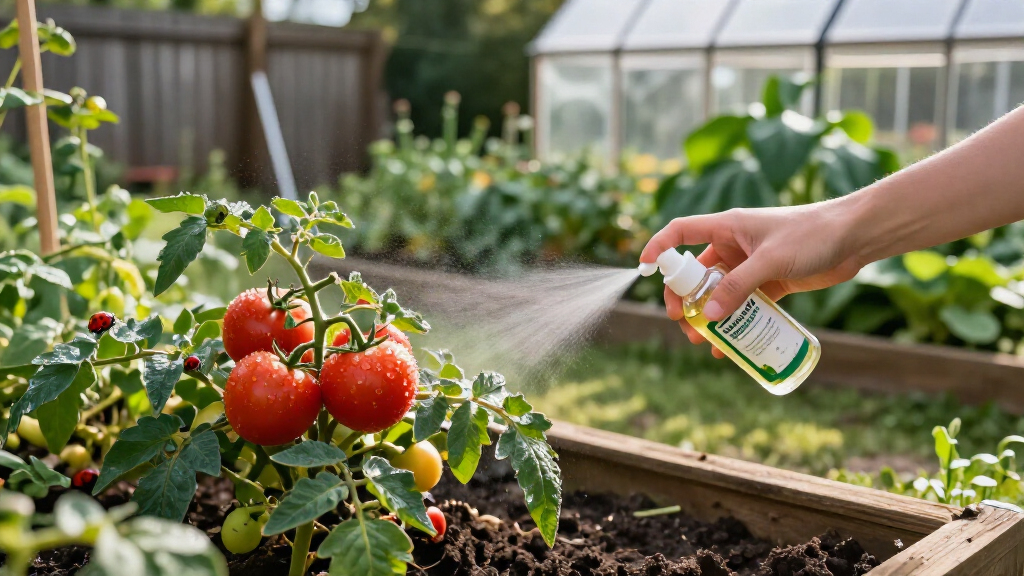

For the best organic garden pest control overall, I’d start with Trifecta Crop Control Ready-to-Use Plant Pest and Disease Spray for its broad pest-and-disease role, while Bonide Captain Jack’s Deadbug Brew stands out for gardeners targeting chewing pests and Bonide Captain Jack’s BT for caterpillars. The main tradeoff is between broad coverage and targeted action: a multi-purpose spray can be convenient, but a pest-specific product may be a better match for a known infestation. Ready-to-use bottles simplify small jobs, while concentrates and dusts suit different garden sizes and application needs. Organic labeling does not mean every product is safe for every plant or beneficial insect, so follow the label and check application limits. Read on for the full breakdown of all 15 options and how I’d choose among them.

Get garden gear delivered free with Prime
- Fast, free delivery on millions of items
- Prime Video, Amazon Music and more included
- Member-only deals all year
Complete the kit


Key Takeaways
- Broad coverage led the shortlist: Trifecta Crop Control and Earth’s Ally combine pest and disease claims, while most other picks focus more narrowly on insect control.
- Known pest targets can change the best pick: Deadbug Brew is positioned for chewing pests, while BT is the more specialized choice for caterpillars and worms.
- Ready-to-use sprays favor convenience, not every garden size: They avoid mixing, while concentrate options such as Safer Brand soap and Neem Max allow gardeners to prepare their own application strength according to the label.
- Contact treatments call for coverage: Insecticidal soaps and neem sprays generally work best when the target pest is reached, so hidden insects and missed leaf surfaces can limit results.
- Organic does not mean harmless to all garden life: Application timing, plant sensitivity, beneficial insects, and label restrictions matter as much as the product’s pest list.
| Garden Safe Houseplant & Garden Insect Killer, Ready-to-Use Spray, 32 fl oz |  | Best for Broad, Ready-to-Use Coverage | Brand: Garden Safe | Item type: Insect killer | Form: Ready-to-use spray | VIEW LATEST PRICE | See Our Full Breakdown |
| Fertilome Spinosad Soap Insecticide, Ready to Use, 32 oz |  | Best OMRI-Listed Spinosad-and-Soap Blend | Brand: Fertilome | Model: 16076 | Volume: 32 fluid ounces | VIEW LATEST PRICE | See Our Full Breakdown |
| Bonide Captain Jack’s Deadbug Brew Insecticide, 32 oz |  | Best for Spinosad-Focused Pest Control | Brand: Bonide | Product form: Ready-to-use spray | Volume: 32 fluid ounces | VIEW LATEST PRICE | See Our Full Breakdown |
| Trifecta Crop Control Ready-to-Use Plant Pest and Disease Spray, 32 fl oz |  | Best for Pests Plus Plant Disease | Brand: Trifecta | Volume: 32 fluid ounces | Form: Ready-to-use spray | VIEW LATEST PRICE | See Our Full Breakdown |
| BioAdvanced Organics Tomato, Vegetable & Fruit Insect Control, 24 oz |  | Best for Edible-Crop and Mildew Coverage | Brand: BioAdvanced | Volume: 24 fluid ounces | Formula: Spinosad-based spray | VIEW LATEST PRICE | See Our Full Breakdown |
| Bonide Captain Jack’s Neem Oil Ready-to-Use Spray, 32 oz |  | Best Ready-to-Use Neem Spray | Brand: Bonide | Volume: 32 fluid ounces | Form: Liquid spray | VIEW LATEST PRICE | See Our Full Breakdown |
| Garden Safe Crawling Insect Killer with Diatomaceous Earth, 4 lb |  | Best for Crawling Pests Outdoors | Brand: Garden Safe | Form: Powder | Item weight: 4.1 pounds | VIEW LATEST PRICE | See Our Full Breakdown |
| Safer Brand Insect Killing Soap Concentrate, 16 fl oz |  | Best Concentrate for Soft-Bodied Pests | Brand: Safer Brand | Product type: Insecticidal soap concentrate | Volume: 16 fluid ounces | VIEW LATEST PRICE | See Our Full Breakdown |
| Bonide Captain Jack’s Neem Max Cold-Pressed Neem Oil Concentrate, 16 fl oz |  | Best Multi-Application Neem Concentrate | Brand: Bonide | Volume: 16 fluid ounces | Form: Concentrate | VIEW LATEST PRICE | See Our Full Breakdown |
| Bonide Captain Jack’s Deadbug Brew Concentrate, 16 oz |  | Best Targeted Spinosad Concentrate | Brand: Bonide | Volume: 16 fluid ounces | Form: Spray concentrate | VIEW LATEST PRICE | See Our Full Breakdown |
| Bonide Captain Jack’s BT Worm and Caterpillar Control Spray, 32 oz |  | Best for Caterpillars | Brand: Bonide | Volume: 32 fluid ounces | Item weight: 2.3 pounds | VIEW LATEST PRICE | See Our Full Breakdown |
| BioAdvanced Organics Neem Oil Spray, 24 fl oz |  | Best for Combined Pest and Disease Care | Volume: 24 fl oz | Active ingredient: Clarified hydrophobic extract of neem oil, 0.9% | Form: Ready-to-use spray | VIEW LATEST PRICE | See Our Full Breakdown |
| Earth’s Ally 3-in-1 Plant Spray for Pests and Disease, 32 oz |  | Best Botanical Oil Option | Brand: Earth’s Ally | Unit count: 32 fluid ounces | Form: Oil | VIEW LATEST PRICE | See Our Full Breakdown |
| Garden Safe Insecticidal Soap Insect Killer Spray, 32 oz |  | Best for Edibles Through Harvest | Brand: Garden Safe | Form: Spray | Liquid volume: 32 fluid ounces | VIEW LATEST PRICE | See Our Full Breakdown |
| Bonide Insecticidal Soap Ready-to-Use Spray, 32 oz |  | Best for Mixed Indoor and Outdoor Plants | Brand: Bonide | Item form: Spray | Liquid volume: 32 fluid ounces | VIEW LATEST PRICE | See Our Full Breakdown |
| organic garden pest control | Brand | Form | Volume | Active ingredient |
|---|---|---|---|---|
| Garden Safe Houseplant & Garde | Garden Safe | Ready-to-use spray | — | — |
| Fertilome Spinosad Soap Insect | Fertilome | Ready-to-use spray | 32 fluid ounces | — |
| Bonide Captain Jack’s Deadbug | Bonide | — | 32 fluid ounces | Spinosad |
| Trifecta Crop Control Ready-to | Trifecta | Ready-to-use spray | 32 fluid ounces | — |
| BioAdvanced Organics Tomato | BioAdvanced | — | 24 fluid ounces | — |
| Bonide Captain Jack’s Neem Oil | Bonide | Liquid spray | 32 fluid ounces | Clarified hydrophobic extract of neem oil |
| Garden Safe Crawling Insect Ki | Garden Safe | Powder | — | Silicon dioxide |
| Safer Brand Insect Killing Soa | Safer Brand | — | 16 fluid ounces | Potassium salts of fatty acids |
| Bonide Captain Jack’s Neem Max | Bonide | Concentrate | 16 fluid ounces | Cold-pressed neem |
| Bonide Captain Jack’s Deadbug | Bonide | Spray concentrate | 16 fluid ounces | Spinosad |
| Bonide Captain Jack’s BT Worm | Bonide | Ready-to-use spray | 32 fluid ounces | Bacillus thuringiensis |
| BioAdvanced Organics Neem Oil | — | Ready-to-use spray | 24 fl oz | Clarified hydrophobic extract of neem oil, 0.9% |
| Earth’s Ally 3-in-1 Plant Spra | Earth’s Ally | Oil | — | — |
| Garden Safe Insecticidal Soap | Garden Safe | Spray | — | Potassium salts of fatty acids |
| Bonide Insecticidal Soap Ready | Bonide | — | — | Potassium salts of fatty acids |
More Details on Our Top Picks
Garden Safe Houseplant & Garden Insect Killer, Ready-to-Use Spray, 32 fl oz
Garden Safe covers a wide range of listed insect pests in one ready-to-use bottle, making it a flexible choice for gardeners moving between houseplants, ornamentals, and edible crops. Its label includes more than 100 pests, including aphids and tomato hornworms, and permits use on edible crops up to harvest day when label directions are followed. Compared with Trifecta Crop Control, which also addresses certain plant diseases, this spray focuses on insect control rather than offering a dual pest-and-disease role. It also skips the mixing step required by concentrates elsewhere in the roundup. The tradeoff is that it only controls listed insects, and its broad use range does not remove the need to check crop-specific directions and precautions before spraying.
Pros:- Ready-to-use spray avoids measuring or mixing
- Lists more than 100 insect pests, including aphids and tomato hornworms
- Suitable for houseplants, ornamental plants, and edible crops
- Label allows use on edible crops up to harvest day
Cons:- Controls only insects listed on the label, not plant diseases
- Crop-specific label directions and precautions still need careful attention
Best for: Gardeners who want one ready-to-use insect spray for a mix of houseplants, garden ornamentals, and edible crops.
Not ideal for: Growers seeking help with powdery mildew or other plant diseases, or anyone who needs a product for pests not listed on the label.
- Brand:Garden Safe
- Item type:Insect killer
- Form:Ready-to-use spray
- Liquid volume:32 fluid ounces
- Item weight:2.3 pounds
- Target:Listed insects
- Model number:HG-93214
Our verdict“Choose Garden Safe for broad, ready-to-use insect coverage across edible and ornamental plants; choose Trifecta instead if disease control matters too.”
Fertilome Spinosad Soap Insecticide, Ready to Use, 32 oz
Fertilome combines spinosad with potassium salts of fatty acids, giving organic gardeners a ready-to-use blend rather than a single-ingredient spinosad spray. Its listed uses span vegetables, fruits, citrus, trees, shrubs, and flowers, so one bottle can suit mixed plantings. It is OMRI listed for organic gardening, while Bonide Captain Jack’s Deadbug Brew is another organic-gardening option that relies on spinosad alone at a stated 0.5% concentration. Fertilome’s appeal is the combination and broad range of plant types; the compromise is that the provided description does not identify the full pest list or application restrictions. I would check the product label against the specific crop and pest before choosing it, rather than treating broad plant suitability as a guarantee of use for every situation.
Pros:- OMRI listed for organic gardening
- Combines spinosad and potassium salts of fatty acids
- Ready-to-use spray bottle requires no mixing
- Listed for vegetables, fruits, citrus, flowers, trees, and shrubs
Cons:- Full pest list and use restrictions require checking the label
- No warranty is specified in the product information
Best for: Organic gardeners with mixed vegetable, fruit, citrus, flower, and woody plantings who want a ready-to-use spray with both spinosad and insecticidal soap.
Not ideal for: Buyers who want a clearly specified pest list at a glance or who prefer a product whose stated active ingredient is spinosad alone.
- Brand:Fertilome
- Model:16076
- Volume:32 fluid ounces
- Weight:2 pounds
- Form:Ready-to-use spray
- Active ingredients:Spinosad 0.005%; potassium salts of fatty acids 0.940%
- Organic listing:OMRI listed
- Suitable plants:Vegetables, trees, shrubs, flowers, fruits, and citrus
Our verdict“Fertilome suits organic gardeners who value a spinosad-and-soap blend for varied plantings, provided they verify the label for their target pest.”
Bonide Captain Jack’s Deadbug Brew Insecticide, 32 oz
Captain Jack’s Deadbug Brew uses spinosad at 0.5% in a ready-to-use spray for listed pests on vegetables, fruits, flowers, and ornamental plants. Its clearest distinction from Fertilome Spinosad Soap Insecticide is the stated single active ingredient: Fertilome pairs a much lower stated spinosad concentration with potassium salts of fatty acids, while this product keeps the formula focused on spinosad. The description also says it has limited impact on beneficial predatory insects, mites, and spiders, a useful point for gardeners trying to protect helpful garden residents. That does not make it a universal or unrestricted option: it is intended only for listed insect pests, and the product information does not provide a broader disease-control role. Check the label for target pests and application directions before use.
Pros:- Ready-to-use bottle with spray nozzle
- Contains spinosad at a stated 0.5%
- Approved for organic gardening
- Description notes limited impact on beneficial predatory insects, mites, and spiders
Cons:- Intended only for control of listed insect pests
- Does not offer the plant-disease control described for Trifecta or BioAdvanced
Best for: Gardeners seeking a ready-to-use, spinosad-based spray for listed pests on vegetables, fruits, flowers, and ornamentals.
Not ideal for: Gardeners who need disease control, a soap-based active ingredient blend, or treatment for pests outside the label list.
- Brand:Bonide
- Product form:Ready-to-use spray
- Volume:32 fluid ounces
- Weight:2.4 pounds
- Active ingredient:Spinosad
- Active ingredient concentration:0.5%
- Target:Listed insect pests
- Suitable plants:Vegetables, fruits, flowers, and ornamental plants
Our verdict“Pick Deadbug Brew if you want a straightforward spinosad spray for labeled garden insects, rather than a blend or a pest-and-disease product.”
Trifecta Crop Control Ready-to-Use Plant Pest and Disease Spray, 32 fl oz
Trifecta stands apart by addressing both soft-bodied pests and plant diseases, including spider mites, aphids, whiteflies, and powdery mildew. That wider purpose makes it a different kind of pick from Garden Safe Houseplant & Garden Insect Killer, which is framed around killing listed insects rather than treating disease. Trifecta is plant-based, described as biodegradable and fast-drying, and intended for indoor and outdoor plants, including edible crops. Those traits may appeal to gardeners who want a single spray for several recurring problems, but the product information does not give specific application frequency or coverage details. Direct application is also required, so it may involve more attention across foliage than a solution aimed at only one problem. I would choose it for mixed pest-and-disease needs, not as a substitute for checking crop-specific directions.
Pros:- Targets common pests such as spider mites, aphids, and whiteflies
- Also intended to help treat powdery mildew and other plant diseases
- Suitable for indoor and outdoor plants, including edible crops
- Plant-based formula described as biodegradable and fast-drying with no residue
Cons:- Requires direct application to plants
- Product information does not specify application frequency or coverage details
Best for: Indoor and outdoor gardeners dealing with soft-bodied pests alongside powdery mildew who want one ready-to-use spray for edible and ornamental plants.
Not ideal for: Buyers who need clear application-frequency and coverage guidance from the product information, or who are targeting pests outside its stated range.
- Brand:Trifecta
- Volume:32 fluid ounces
- Form:Ready-to-use spray
- Use sites:Indoor and outdoor plants
- Pest targets:Spider mites, aphids, whiteflies, and fungus gnats
- Disease target:Powdery mildew and other plant diseases
- Formula description:Plant-based and biodegradable
Our verdict“Choose Trifecta when plant disease is part of the problem; for insect-only control with a stated pest count, Garden Safe is the clearer fit.”
BioAdvanced Organics Tomato, Vegetable & Fruit Insect Control, 24 oz
BioAdvanced Organics combines ready-to-use spinosad-based insect control with help for powdery mildew, giving edible-crop gardeners a targeted option that also reaches herbs, berries, nut trees, citrus, lawns, and outdoor ornamentals listed for use. It is OMRI Listed, and its named pests include aphids, caterpillars, mealybugs, spider mites, and thrips. Compared with Trifecta Crop Control, BioAdvanced provides a more explicit list of labeled crops and pests, while Trifecta is described for indoor plants as well as outdoor use. The main compromise is bottle size: 24 ounces is less than the 32-ounce ready-to-use sprays in this group. Powdery mildew control also calls for repeat applications every 7–10 days, so it is not a one-and-done treatment plan.
Pros:- OMRI Listed for organic gardening
- Ready to use with no mixing required
- Targets named pests including aphids, caterpillars, mealybugs, spider mites, and thrips
- Helps control powdery mildew and is labeled for a range of edible crops
Cons:- The 24-fluid-ounce bottle is smaller than the 32-ounce sprays in this roundup
- Powdery mildew control requires repeated applications every 7–10 days
- Use is limited to pests and sites listed on the label
Best for: Edible-crop gardeners who want an OMRI-listed, ready-to-use spinosad spray with named pest targets and powdery mildew support.
Not ideal for: Indoor plant owners or gardeners wanting a larger ready-to-use bottle or a mildew treatment without repeated applications.
- Brand:BioAdvanced
- Volume:24 fluid ounces
- Formula:Spinosad-based spray
- Application:Ready to use; no mixing required
- Target pests:Aphids, caterpillars, mealybugs, spider mites, thrips, and other listed pests
- Use sites:Vegetables, fruits, nut trees, citrus, berries, herbs, lawns, outdoor ornamentals, and non-commercial greenhouses
- Organic gardening:OMRI Listed
- Item weight:1.7 pounds
- Model number:800420D
Our verdict“Choose BioAdvanced for labeled edible-crop coverage that includes powdery mildew support, but select a 32-ounce alternative if bottle capacity matters more.”
Bonide Captain Jack’s Neem Oil Ready-to-Use Spray, 32 oz
For gardeners who want neem oil without measuring or mixing, this ready-to-use trigger spray is the most convenient neem option here. Its clarified hydrophobic neem extract is labeled for use as an insecticide, fungicide, and miticide, and it targets insects at egg, larval, and adult stages. Compared with Bonide Captain Jack’s Neem Max Cold-Pressed Neem Oil Concentrate, this bottle saves preparation time, but the concentrate offers spray-or-drench flexibility and suits gardeners treating more plants. The 32-ounce format is a practical choice for spot-treating a modest garden or houseplants; it is less appealing for repeated coverage across a large planting. Reapplication every 7–14 days as needed also means it is a maintenance spray, not a one-application fix.
Pros:- Ready-to-use trigger spray avoids mixing and measuring
- Neem-based formula is approved for organic gardening
- Labeled for insect, fungal, and mite problems
- Targets insects across egg, larval, and adult stages
Cons:- Requires reapplication every 7–14 days as needed
- A single 32-ounce bottle may be limiting for broad or frequent treatment
Best for: Gardeners treating a small set of vegetables, ornamentals, or houseplants who prefer a premixed neem spray over measuring concentrate.
Not ideal for: People maintaining large gardens or wanting a drench option; the ready-to-use bottle offers less flexibility than Neem Max concentrate and requires repeat applications.
- Brand:Bonide
- Volume:32 fluid ounces
- Form:Liquid spray
- Active ingredient:Clarified hydrophobic extract of neem oil
- Target species:Insects
- Weight:2.3 pounds
- Model number:0226
Our verdict“Choose this for convenient, small-scale neem treatments; pick Neem Max concentrate when you need more application flexibility.”
Garden Safe Crawling Insect Killer with Diatomaceous Earth, 4 lb
This powder fills a different niche from the lineup’s sprays: it is meant for outdoor crawling insects, applied as a thin layer on plants or surrounding soil. Its diatomaceous earth works through contact, damaging insects’ outer shells and absorbing oils and fats, rather than acting as a broad liquid treatment. Compared with Safer Brand Insect Killing Soap Concentrate, which targets soft-bodied pests on contact and is mixed for spraying, Garden Safe is better suited to crawling pests where a dry application makes sense. The tradeoff is a narrower target and setting: it is for outdoor use only and is not effective against every ant or beetle type. Buyers should match the listed pests to the insects they actually need to control rather than treating it as an all-purpose garden solution.
Pros:- Diatomaceous-earth powder offers a non-spray application option
- Can be applied to plants and surrounding soil
- Targets several listed crawling insects by contact
- Four-pound package provides material for repeated outdoor applications
Cons:- For outdoor use only
- Not effective against all ant and beetle types
- A powder is less suited than a spray for treating foliage evenly
Best for: Outdoor gardeners dealing with listed crawling pests such as mealybugs, fleas, or cockroaches on plants or nearby soil.
Not ideal for: Indoor growers, gardeners seeking a spray for aphids or whiteflies, or anyone whose target is an ant or beetle type not covered by the product label.
- Brand:Garden Safe
- Form:Powder
- Item weight:4.1 pounds
- Active ingredient:Silicon dioxide
- Target species:Insects
- Use:Outdoors
- Model number:93186
Our verdict“Pick this for listed crawling pests outdoors, but choose an insecticidal soap or neem spray for broader foliar pest coverage.”
Safer Brand Insect Killing Soap Concentrate, 16 fl oz
When aphids, whiteflies, mealybugs, or spider mites are the main problem, this insecticidal soap concentrate offers a focused alternative to neem-based products. It kills listed soft-bodied pests on contact, is OMRI Listed, and can be used up to the day of harvest. One 16-fluid-ounce bottle makes up to six gallons of spray, which suits gardeners who need repeat treatments across multiple plants. Compared with Bonide Captain Jack’s Neem Oil Ready-to-Use Spray, this option requires dilution but gives you more prepared solution and a shorter stated application interval of every 5–7 days while insects are present. The tradeoff is the need for thorough, repeated coverage: it does not provide the same multi-purpose fungicide use described for the neem sprays, and applications during peak heat or above 90°F can damage leaves.
Pros:- Targets aphids, whiteflies, mealybugs, spider mites, and other listed soft-bodied pests
- OMRI Listed for organic gardening
- One bottle makes up to six gallons of spray
- May be used up to the day of harvest
Cons:- Repeat applications every 5–7 days may be needed while pests remain
- Must be diluted before use
- Applying in peak heat or above 90°F can cause leaf damage
Best for: Vegetable gardeners managing recurring soft-bodied pests who want a concentrate they can mix for multiple applications, including close to harvest.
Not ideal for: Gardeners who want a premixed spray, need fungal-disease control, or cannot avoid applying during peak heat or temperatures above 90°F.
- Brand:Safer Brand
- Product type:Insecticidal soap concentrate
- Volume:16 fluid ounces
- Coverage:Makes up to 6 gallons
- Active ingredient:Potassium salts of fatty acids
- Organic listing:OMRI Listed
- Application interval:Every 5–7 days while insects are present
Our verdict“Choose this concentrate for repeated, targeted treatment of soft-bodied pests, especially when a ready-to-use bottle would not cover enough plants.”
Bonide Captain Jack’s Neem Max Cold-Pressed Neem Oil Concentrate, 16 fl oz
Neem Max is the flexible choice for gardeners who want one concentrate for several application styles and plant types. Its cold-pressed neem is described for insecticide, fungicide, miticide, and nematicide use, and the product can be mixed for a spray or drench on everything from herbs and vegetables to trees and turf. That versatility gives it an advantage over Bonide Captain Jack’s Neem Oil Ready-to-Use Spray, which skips mixing but is limited to a ready-to-apply spray format. The added flexibility comes with more work: buyers must mix before use and choose the application method carefully. Compared with Safer Brand Insect Killing Soap Concentrate, Neem Max covers more than soft-bodied insects, but it is a less focused choice if the only issue is a quick soap treatment for aphids or whiteflies.
Pros:- Four listed uses: insecticide, fungicide, miticide, and nematicide
- Can be applied as a spray or drench
- Suitable for a wide range of listed plants, including vegetables, herbs, trees, and turf
- Targets egg, larval, and adult insect stages
Cons:- Must be mixed before application
- Choosing between spray and drench use adds preparation compared with a ready-to-use neem spray
Best for: Gardeners with varied plantings who want a neem concentrate for spray or drench applications and multiple pest or disease uses.
Not ideal for: People who want a premixed spot-treatment spray or need a simple, narrowly targeted soap for soft-bodied insects.
- Brand:Bonide
- Volume:16 fluid ounces
- Form:Concentrate
- Active ingredient:Cold-pressed neem
- Uses:Insecticide, fungicide, miticide, and nematicide
- Application:Spray or drench
- Item weight:1.1 pounds
Our verdict“Choose Neem Max when broad plant coverage and spray-or-drench flexibility matter more than the convenience of a premixed bottle.”
Bonide Captain Jack’s Deadbug Brew Concentrate, 16 oz
For gardeners whose listed crop pests call for a spinosad treatment, Deadbug Brew offers a concentrated formula for vegetables, fruits, flowers, and ornamental plants. Unlike the neem products in this group, which are also described for fungal or mite control, this option centers on controlling listed insects and mites with spinosad. It is approved for organic gardening and can be applied with several types of sprayers, making the concentrate useful for treating different garden areas. Compared with Safer Brand Insect Killing Soap Concentrate, it is not limited to soft-bodied pests, but its use is still bounded by the product’s listed pests and plants. You must mix it with water, select a suitable sprayer, and follow label directions; it is not the simplest choice for an occasional, ready-to-use spot treatment.
Pros:- Spinosad concentrate is approved for organic gardening
- Controls a wide range of listed insects and mites
- Can be used on listed vegetables, fruits, flowers, and ornamentals
- Compatible with several types of sprayers
Cons:- Must be mixed with water before use
- Use is limited to listed pests and plants
- Requires careful attention to label directions
Best for: Organic gardeners with listed insect or mite problems across fruit, vegetable, flower, or ornamental plantings who already use a suitable sprayer.
Not ideal for: Buyers who want a ready-to-use spray, need a general-purpose disease treatment, or cannot confirm that both their pest and plant are listed.
- Brand:Bonide
- Volume:16 fluid ounces
- Form:Spray concentrate
- Active ingredient:Spinosad
- Item weight:1.2 pounds
- Organic gardening:Approved
- Model number:252
Our verdict“Choose Deadbug Brew for listed insect and mite problems across varied garden crops when you are comfortable mixing and applying a concentrate.”
Bonide Captain Jack’s BT Worm and Caterpillar Control Spray, 32 oz
For a garden where caterpillars are the main problem, I rank this ahead of broader sprays because its Bacillus thuringiensis formula targets worms and caterpillars rather than trying to cover every insect. It is ready to use on fruits, vegetables, trees, and ornamentals, so there is no concentrate to mix. The description says it is approved for organic gardening and safe for birds, earthworms, and beneficial insects, a useful distinction from general-purpose insect killers. Compared with Garden Safe Insecticidal Soap, which needs direct contact with listed pests, this spray works when caterpillars ingest treated foliage. The tradeoff is that leaves need thorough coverage when pests first appear, and control is not immediate: affected pests may take 2–3 days to die.
Pros:- Ready-to-use trigger spray requires no dilution.
- Targets worms and caterpillars with Bacillus thuringiensis.
- Labeled for fruits, vegetables, trees, and ornamental plants.
- Described as safe for birds, earthworms, and beneficial insects.
Cons:- Thorough coverage is needed when pests are first noticed.
- Pests may take 2–3 days to die after ingesting the spray.
- Its target range is narrower than multi-purpose oil or soap sprays.
Best for: Organic vegetable and fruit growers who are seeing caterpillars and can spray affected foliage early and thoroughly.
Not ideal for: Gardeners seeking quick knockdown of visible insects or broad control of pests beyond worms and caterpillars.
- Brand:Bonide
- Volume:32 fluid ounces
- Item weight:2.3 pounds
- Form:Ready-to-use spray
- Active ingredient:Bacillus thuringiensis
- Target pests:Worms and caterpillars
- Model number:8066A
Our verdict“Choose this for focused organic caterpillar control on edible plants, but pick a contact spray if immediate action against visible pests matters more.”
BioAdvanced Organics Neem Oil Spray, 24 fl oz
I’d choose this when a gardener wants one ready-to-use product for listed insects, mites, and plant diseases, not just insect control. Its clarified hydrophobic neem oil extract is labeled for ornamental and edible plants, including roses, fruits, and vegetables, and the label permits use up to the day of harvest. That broader pest-and-disease role sets it apart from Bonide Captain Jack’s BT Worm and Caterpillar Control, which is more focused on caterpillars and does not offer the same stated fungicide and miticide functions. The compromise is that the bottle holds 24 fl oz, less than the 32-ounce sprays in this group, and fungal disease control calls for repeat applications every 7–14 days. I’d favor it for mixed garden problems, not a one-time spray plan.
Pros:- Combines stated fungicide, insecticide, and miticide action.
- Labeled for ornamental and edible plants, including fruits and vegetables.
- Can be applied up to the day of harvest according to the description.
- Ready-to-use spray avoids mixing concentrate.
Cons:- The 24 fl oz volume is smaller than several 32-ounce options here.
- Fungal disease control requires repeat applications every 7–14 days.
- Its broader functions may be unnecessary for gardeners targeting a single pest.
Best for: Edible-garden growers who want a ready-to-use neem product labeled for both pest and fungal disease control across several plant types.
Not ideal for: Gardeners focused on caterpillars alone, or those who want a larger ready-to-use bottle and do not need disease control.
- Volume:24 fl oz
- Active ingredient:Clarified hydrophobic extract of neem oil, 0.9%
- Form:Ready-to-use spray
- Application interval for fungal disease control:7–14 days
- EPA registration number:70051-13-92564
- Listed plant types:Ornamental and edible plants, including roses, flowers, fruits, and vegetables
- Harvest timing:May be applied up to the day of harvest
Our verdict“Pick this neem spray for a mixed edible-garden pest and disease problem, but choose a more focused product if caterpillars are the only concern.”
Earth’s Ally 3-in-1 Plant Spray for Pests and Disease, 32 oz
Among these choices, I’d put Earth’s Ally on the list for gardeners who prefer a botanical-oil formula and want a single spray labeled for indoor and outdoor plants. Its thyme, rosemary, clove, and peppermint oils are intended to help control soft-bodied insects and common plant diseases across houseplants, fruit trees, vegetables, and ornamentals. That makes it broader in setting than Bonide Captain Jack’s BT Worm and Caterpillar Control, which is aimed specifically at caterpillars and garden plants. It also differs from Garden Safe Insecticidal Soap, whose described action depends on direct contact with pests. Earth’s Ally’s main tradeoff is that the supplied information does not name specific pest species or give a repeat-treatment interval, so buyers should check the label for their exact problem and follow its directions carefully.
Pros:- Uses thyme, rosemary, clove, and peppermint oils.
- Designed for indoor and outdoor plant use.
- Targets soft-bodied insects and common plant diseases.
- Ready to use on houseplants, fruit trees, vegetables, and ornamentals according to label directions.
Cons:- The supplied product details do not identify specific pest species.
- No repeat-application interval is provided in the supplied information.
- Directions must be followed for use.
Best for: Houseplant and garden owners seeking a ready-to-use botanical oil spray for soft-bodied insects and common plant diseases in indoor and outdoor settings.
Not ideal for: Growers who need a clearly specified treatment for a named pest or want detailed application timing from the product information provided.
- Brand:Earth’s Ally
- Unit count:32 fluid ounces
- Form:Oil
- Active ingredients:Thyme oil, rosemary oil, clove oil, peppermint oil
- Target types:Insects, plant pathogens, fungus
- Use:Indoor and outdoor plants
- Manufacturer:Sarasota Green Group
Our verdict“Choose this for botanical-oil care across indoor and outdoor plants, but verify the label covers your specific pest before buying.”
Garden Safe Insecticidal Soap Insect Killer Spray, 32 oz
I’d rank Garden Safe as the most straightforward choice here for growers who need a contact spray for listed soft-bodied pests on edible plants. The ready-to-use formula targets aphids, mites, mealybugs, and whiteflies, and the description allows use on edibles through harvest day. It also covers indoor, outdoor, and greenhouse settings, giving it a wider range of growing environments than the more garden-focused Bonide Captain Jack’s BT Worm and Caterpillar Control. The key tradeoff is how contact soap works: pests need to be sprayed directly, so concealed insects or missed leaf surfaces may escape treatment. Unlike BioAdvanced Organics Neem Oil Spray, this product is not presented as a combined fungicide, insecticide, and miticide option; I’d pick it for its named insect targets, not plant disease management.
Pros:- Ready to use with no mixing required.
- Labeled for indoor, outdoor, and greenhouse use.
- Targets aphids, mites, mealybugs, and whiteflies.
- May be used on edibles through the day of harvest according to the description.
Cons:- Pests must be sprayed directly for control.
- The described target list does not focus on caterpillars.
- The supplied information does not claim plant disease control.
Best for: Vegetable growers and greenhouse gardeners who want a ready-to-use contact spray for listed pests and need a product labeled for use through harvest day.
Not ideal for: Gardeners dealing mainly with caterpillars, plant diseases, or pests hidden where direct spray cannot reach.
- Brand:Garden Safe
- Form:Spray
- Liquid volume:32 fluid ounces
- Active ingredient:Potassium salts of fatty acids
- Target pests:Aphids, mites, mealybugs, and whiteflies
- Use:Indoor, outdoor, and greenhouse
- Application timing for edibles:Up to and including the day of harvest
- Model number:HG-93216
Our verdict“Choose Garden Safe for named contact-control targets on edible plants, especially in greenhouses, but not for pests you cannot reach directly.”
Bonide Insecticidal Soap Ready-to-Use Spray, 32 oz
Bonide’s soap spray is a practical fit for growers who want one ready-to-use insecticidal soap for houseplants and a range of garden crops. Its potassium salts of fatty acids kill insects on contact and may also work when leaf-feeding pests ingest treated foliage, while the product is described as suitable for organic gardening. Compared with Garden Safe Insecticidal Soap, it shares the same active-ingredient type and contact-dependent approach, but the supplied details specifically mention possible control through ingestion of treated foliage. It is also broader in everyday plant use than the caterpillar-focused Bonide Captain Jack’s BT Worm and Caterpillar Control. The limitation is that application still has to reach the pests or treated foliage; this is not a set-and-forget barrier, and the information provided does not list specific target insects.
Pros:- Ready-to-use spray nozzle avoids mixing.
- Suitable for organic gardening according to the description.
- Labeled for houseplants, vegetables, flowers, fruits, and other listed garden plants.
- Can act through direct contact or ingestion of treated foliage.
Cons:- Application must reach the insects or foliage they feed on.
- The supplied details do not name specific target pests.
- The information provided does not state a harvest-day application allowance.
Best for: Organic gardeners managing listed insects across houseplants, vegetables, fruits, and flowers who prefer a ready-to-use soap spray.
Not ideal for: Gardeners who need a named target-pest list, treatment that reaches hidden insects, or a product focused specifically on caterpillars.
- Brand:Bonide
- Item form:Spray
- Liquid volume:32 fluid ounces
- Item weight:2 pounds
- Active ingredient:Potassium salts of fatty acids
- Target species:Insects
- Use:Indoor and outdoor gardening
Our verdict“Pick Bonide’s soap for flexible organic use across indoor and outdoor plants, but choose a product with named targets if pest identification is your priority.”

How We Picked
I compared the 15 products by pest and disease targets, application format, and label-directed use, then weighed how well each format fits a typical home garden. I gave preference to options with a clearly differentiated role, such as caterpillar-focused BT, chewing-pest-focused Deadbug Brew, and broader sprays that also claim disease control. Ready-to-use bottles earned credit for straightforward application; concentrates were judged for flexibility and the mixing step they add; diatomaceous earth was treated as a distinct, dry application rather than a spray substitute.
The ranking reflects use-case range and practical fit, not a claim that one active ingredient suits every pest. Broad-use products rank higher for gardeners who have not identified a single target, while specialized treatments rank higher for a defined problem. I also accounted for meaningful limitations: contact coverage, application conditions, plant sensitivity, and potential effects on beneficial insects. Because organic standards and permitted uses can differ by product, I recommend checking each current label before treating edible crops or applying near pollinators.
Factors to Consider When Choosing Best Organic Garden Pest Control
Before choosing a bottle, I’d match the treatment to the pest, the affected plants, and the way you plan to apply it. These broader checks can prevent wasted product and avoid treating the whole garden when a smaller, targeted response may do.
Identify the Pest Before Choosing a Formula
Start by checking leaves, stems, and the undersides of foliage for the pest or its signs rather than selecting a product based on a general “garden insect” label. Caterpillars, soft-bodied insects, and crawling pests may call for different treatment types, and a broad spray may not be the best match for each one. If you cannot identify the pest, take a clear photo or ask a local extension service before treating edible plants. Avoid applying multiple products at once just because damage continues; that makes it harder to tell what worked and can add unnecessary exposure. For a small outbreak, treat a limited area according to the label and check whether the pest population changes before expanding treatment.
Decide Whether Broad Coverage Is Worth the Tradeoff
Products marketed for several pests or for pests and disease can simplify shopping, but broad claims do not mean every garden problem responds equally. A targeted treatment may be a better fit when you have confirmed caterpillars or another clearly named pest. Broad sprays can also touch beneficial insects if they reach them, so avoid treating indiscriminately. Read the full label for the listed pests and plants rather than relying on the front of the bottle. If you face recurring problems from different causes, keeping more than one targeted option may be more useful than expecting a single spray to solve them all.
Choose a Format That Fits Your Garden and Routine
Ready-to-use sprays remove the measuring and mixing step, which can help with a few containers or spot treatments. Concentrates may suit a larger garden or repeat use, but they require careful dilution and a separate sprayer in some cases. Dry diatomaceous earth has a different application pattern from liquid treatments and may be a poor fit if you want to coat foliage with a spray. Think about where you will store the product, how often you expect to treat, and whether you can apply it exactly as directed. The easiest format is the one you can use accurately, not automatically the one with the fewest steps.
Check Edible-Crop Directions and Harvest Limits
For vegetables, herbs, and fruit, verify that the specific crop appears on the product label before application. Look for any stated interval between treatment and harvest, along with directions for washing produce and limits on repeat applications. Do not assume that an “organic” description makes a product suitable for every edible plant or stage of growth. Keep the original label available, since the permitted uses and instructions are more useful than general marketing language. If a crop is not listed, choose a product whose label names it or ask a qualified local gardening resource before spraying.
Protect Beneficial Insects and Reduce Unnecessary Exposure
Organic pest controls can still affect insects you want in the garden, including pollinators and natural predators. Check label directions for restrictions around flowering plants, application timing, wind, and contact with non-target organisms. Treat only affected plants when spot application is allowed, and avoid spraying when bees are actively visiting flowers. Keep children and pets away as directed, and use any protective equipment listed on the label. A smaller, well-timed application may be a better choice than routine whole-garden spraying when the problem is limited.
Know When to Pay for Convenience or Flexibility
A ready-to-use option may be worthwhile when measuring a concentrate would make occasional spot treatment harder or less accurate. For a larger garden with repeat needs, a concentrate can offer more control over preparation, provided the label permits the intended use and you can mix it correctly. Multi-purpose sprays may save storage space, but specialized products can better match a diagnosed pest. Compare the work involved, the plants covered, and the frequency of use rather than treating bottle size as the main measure of value. Paying for a broader formula makes the most sense when its additional listed uses fit problems you actually encounter.
Frequently Asked Questions
Which type should I choose if I have not identified the insect yet?
I would pause before spraying and identify the pest first, since the lineup includes both broad-use formulas and treatments aimed at narrower targets. Inspect the underside of leaves and new growth, and note whether the damage looks like chewing, stippling, or another pattern. If you still cannot identify it, consult a local extension service or garden professional and share a clear photo. A broad product is not a substitute for checking that the pest appears on its label. Avoid treating several products in succession without a clear reason.
Are ready-to-use sprays a better choice than concentrates?
They are often easier for occasional spot treatments because they remove measuring and dilution, but that convenience does not make them better for every garden. Concentrates can suit gardeners who treat more plants or expect repeated applications, as long as they follow the label’s mixing directions. Your ability to measure accurately and store a separate sprayer may matter more than garden size alone. Compare the listed crops and pests as well as the application steps. Choose the format you can use consistently and correctly.
Can I use these products on vegetables close to harvest?
Only if the product label lists the specific crop and the timing fits its harvest directions. Check for any required waiting period between treatment and picking, plus instructions for repeat applications and produce washing. Do not infer that a product is appropriate from its organic positioning or from another product in the lineup. If the crop is not named, avoid applying it until you confirm permitted use with a qualified local source. Keep the label handy so you can follow its exact directions.
Will an organic insect spray leave bees and other beneficial insects unharmed?
No product should be assumed harmless to beneficial insects simply because it is described as organic. Effects depend on the formula, how it is applied, and whether non-target insects contact the treatment. Read the label for pollinator precautions and avoid spraying flowers while bees are visiting. When allowed, spot-treat affected foliage rather than applying across the whole garden. If pollinator activity is high or the target pest is limited, consider whether treatment can wait or be restricted to a smaller area.
Should I choose neem oil or insecticidal soap for a recurring pest problem?
Choose based on the pest listed on each label and the plants you need to treat, not on a general assumption that one formula is more effective. Both product types require careful attention to coverage and plant directions, and neither should be treated as a universal fix. Check whether the label permits repeat use and whether conditions such as heat or direct sun affect application guidance. For recurring damage, identify why the pest keeps returning and look for prevention steps alongside treatment. A pest-specific option may be a better match if the source of the problem is clear.
Conclusion
For the broadest starting point in this lineup, I’d choose Trifecta Crop Control as the best overall, with Earth’s Ally 3-in-1 as another broad-use option for gardeners who want pest and disease coverage in one spray. For a best-value format, I’d look at a concentrate such as Safer Brand Insect Killing Soap when the garden and label directions make mixing practical; it is less convenient than a ready-to-use bottle. Beginners may prefer a ready-to-use insecticidal soap for straightforward spot applications, while growers facing caterpillars should choose Bonide Captain Jack’s BT and gardeners targeting chewing pests can consider Deadbug Brew. For dry treatment needs, Garden Safe Crawling Insect Killer with Diatomaceous Earth fills a different role from the sprays. My final recommendation is to identify the pest, confirm the crop and application directions, and select the narrowest product that fits the job.
Fall yard work Picks
leaf blowers
As an affiliate, we earn on qualifying purchases.