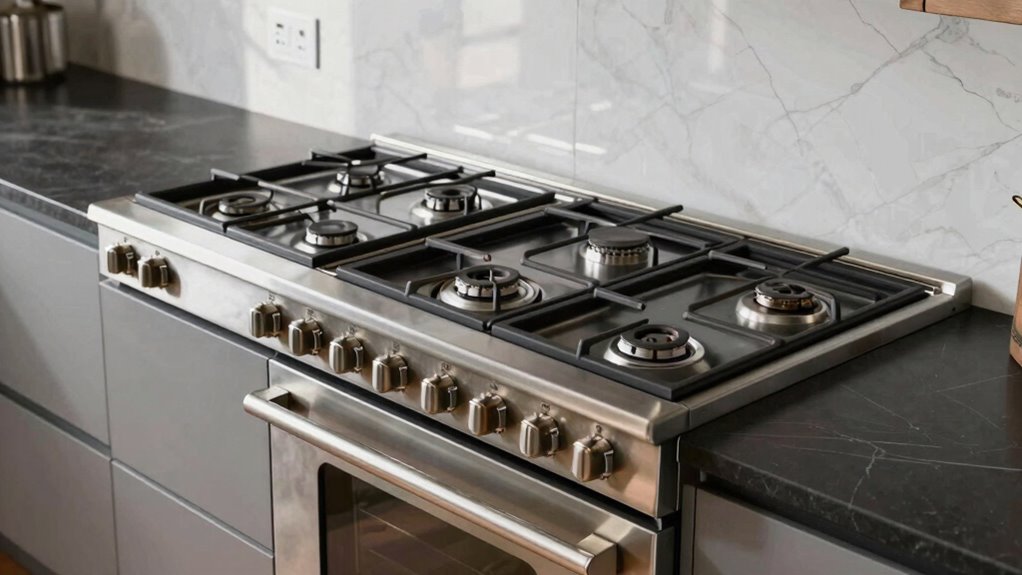

If you’re choosing between a 24-inch and a 30-inch range for a small kitchen, consider your space and cooking needs. A 24-inch model fits easily into tight spots and is ideal for simple meals, while a 30-inch offers more burners and oven space for greater versatility. Think about your available room and style preferences. To find the best fit, explore how each size aligns with your kitchen’s layout and your cooking habits.
Key Takeaways
- Measure available space carefully to ensure a proper fit before choosing between 24-inch and 30-inch ranges.
- Opt for 24-inch ranges for compact kitchens with limited space and simpler cooking needs.
- Choose 30-inch ranges if you need more burners and larger oven capacity, even in small kitchens.
- Consider installation requirements and clearance to prevent fitting issues or costly modifications.
- Balance your culinary habits and aesthetic preferences to select a size that enhances functionality and style.

Choosing the right range size for a small kitchen depends on your cooking needs and available space. When deciding between a 24-inch and a 30-inch range, you need to evaluate how much cooking you typically do and how much room you have to work with. Installation considerations play a significant role here, especially if your kitchen has limited space or specific layout constraints. A 24-inch range is often easier to fit into compact spaces, making it a practical choice if you’re working within tight dimensions. It can slide into narrower cabinets or alcoves, and its installation process tends to be more straightforward since it requires less clearance around the unit. On the other hand, a 30-inch range, while slightly larger, offers more cooking surface and oven capacity, which might be beneficial if you do frequent or more elaborate cooking. Keep in mind that a larger range might need additional countertop or cabinet modifications, so measuring your space carefully is essential to avoid surprises during installation.
Additionally, considering range energy efficiency can help you choose a model that saves on utility costs while meeting your cooking demands. Style options are also a key factor in your decision. Both sizes come in various styles, finishes, and configurations, so you can find a model that complements your kitchen décor. A 24-inch range often has a sleek, minimal look that works well in modern or minimalist kitchens, and it’s available in a range of finishes like stainless steel, black, or white. A 30-inch range, however, tends to look more substantial and can serve as a focal point in your kitchen. It’s also more likely to feature additional features such as extra burners, larger ovens, or advanced controls, giving you more versatility and a professional appearance. When considering style options, think about how the range’s look will integrate with your existing cabinets, countertops, and appliances.
Ultimately, your choice should balance your culinary habits, available space, and aesthetic preferences. If your cooking is mostly simple, quick meals, a 24-inch range might be all you need while saving space. If you enjoy baking or preparing multiple dishes simultaneously, a 30-inch range could be worth the extra footprint for its increased capacity. Remember to check the installation considerations carefully—measure your space, consult with professionals if needed, and verify the clearance requirements for each size. By weighing these factors, you’ll be able to select a range that fits seamlessly into your small kitchen, meets your cooking needs, and enhances your overall kitchen style.

Avanti Gas Range Oven, Compact Freestanding Design, 4 Sealed Burners with Electronic Ignition, 2.6 Cu.Ft. Capacity Features Storage Drawer Broiler and Accessories, 24-Inch, Black
SPACIOUS 2.6 CU. FT. CAPACITY: This 24-inch freestanding gas range is perfect for small kitchens, offering ample space…
As an affiliate, we earn on qualifying purchases.
As an affiliate, we earn on qualifying purchases.
Frequently Asked Questions
Can a 24-Inch Range Fit in a Standard 30-Inch Space?
Yes, a 24-inch range can fit in a standard 30-inch space, but you’ll want to check your countertop compatibility first. Make certain the installation area allows for proper clearance and supports the appliance’s weight. Also, consider appliance aesthetics to match your kitchen’s style. Keep in mind that you may need to adjust or trim the surrounding cabinetry for a seamless look. Proper planning guarantees a secure, attractive fit.
Is There a Significant Difference in Cooking Performance?
Think of a 24-inch range as a compact powerhouse—while it may seem smaller, it still delivers solid cooking efficiency. The difference in heat distribution between a 24-inch and a 30-inch range can be noticeable; larger models often spread heat more evenly, enhancing performance. If you’re mindful of space but want reliable results, a 24-inch range can serve you well, just with slightly less capacity and possibly a bit less uniform heat.
Are 24-Inch Ranges Suitable for Baking Needs?
Yes, 24-inch ranges are suitable for baking needs, especially if you have limited space. Their baking capacity is typically smaller, but oven performance remains efficient for most everyday baking tasks. While they might not handle large batches or complex recipes as easily as bigger models, they still deliver consistent results for standard cakes, cookies, and bread. If you mainly bake small to medium items, a 24-inch range works well.
How Do Installation Costs Compare Between Sizes?
Think of installation costs as the foundation of your kitchen puzzle. Smaller ranges, like 24-inch models, usually fit more easily and cost less to install because they require less modification and are more size compatible. Larger 30-inch ranges may bump up your costs due to additional labor, custom fitting, or electrical upgrades. So, if budget and space are tight, the smaller size generally keeps installation simpler and cheaper.
Do Smaller Ranges Have Enough Burner Options?
Smaller ranges do offer enough burner options for most compact cooking needs. While they typically have fewer burners than larger models, they still provide a good variety, often including a combination of standard and specialized burners. This burner variety allows you to cook multiple dishes efficiently without sacrificing performance. So, if your cooking style is simple or you’re managing limited space, a 24-inch range can meet your needs comfortably.

Amana 30 in. 4.8 cu. ft. Electric Range in White
Large 4.8 cu. ft. oven capacity gives you the space you need to make dinner and dessert at…
As an affiliate, we earn on qualifying purchases.
As an affiliate, we earn on qualifying purchases.
Conclusion
Ultimately, choosing between a 24-inch and a 30-inch range depends on your kitchen space and cooking needs. If you’re tight on room, the smaller 24-inch might be your best bet. But if you want more burners and flexibility, a 30-inch could serve you better. Remember, “A stitch in time saves nine”—investing in the right size now saves headaches later. Make your choice wisely, and cook with confidence!

Avanti CK3016 Energy Star Certified Full Compact Kitchen, Built in Kitchenette Stainless Steel Counter, Two Element Cooking Range, Refrigerator & Storage, 30-Inch, White
ALL IN ONE KITCHEN: Complete convenience for your kitchen in one compact built in includes a cooktop, sink,…
As an affiliate, we earn on qualifying purchases.
As an affiliate, we earn on qualifying purchases.

Avanti Gas Range Oven, Compact Freestanding Design, 4 Sealed Burners with Electronic Ignition, 2.1 Cu.Ft. Capacity Features Storage Drawer Broiler and Accessories, 20-Inch, Black
COMPACT & SPACE-SAVING DESIGN: A 20-inch freestanding gas range, ideal for small kitchens, RVs, studio apartments, and vacation…
As an affiliate, we earn on qualifying purchases.
As an affiliate, we earn on qualifying purchases.