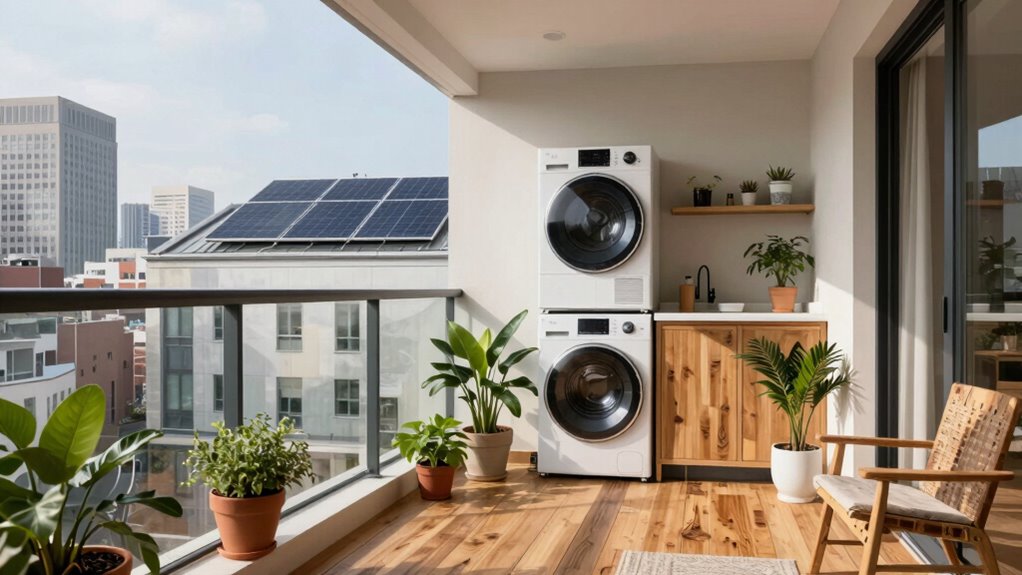

Living in an apartment shifts your sustainability priorities toward resource sharing, urban gardening, and efficient use of space. You’ll focus on practices like recycling, composting, and using energy-efficient appliances. Community initiatives, like communal gardens or shared resources, become key to reducing waste and conserving energy. These small changes help lower your environmental impact and strengthen neighborhood ties. To discover more eco-friendly tips tailored for apartment living, keep exploring how you can make a difference.

Get garden gear delivered free with Prime
- Fast, free delivery on millions of items
- Prime Video, Amazon Music and more included
- Member-only deals all year
Key Takeaways
- Promotes resource sharing and community initiatives to optimize sustainability efforts in limited spaces.
- Encourages urban gardening to reduce food miles and foster ecological connections.
- Prioritizes space- and energy-efficient appliances and smart systems for lower environmental impact.
- Implements targeted waste management, recycling, and composting programs to minimize landfill contributions.
- Fosters eco-friendly habits and collective responsibility within apartment communities for sustainable living.
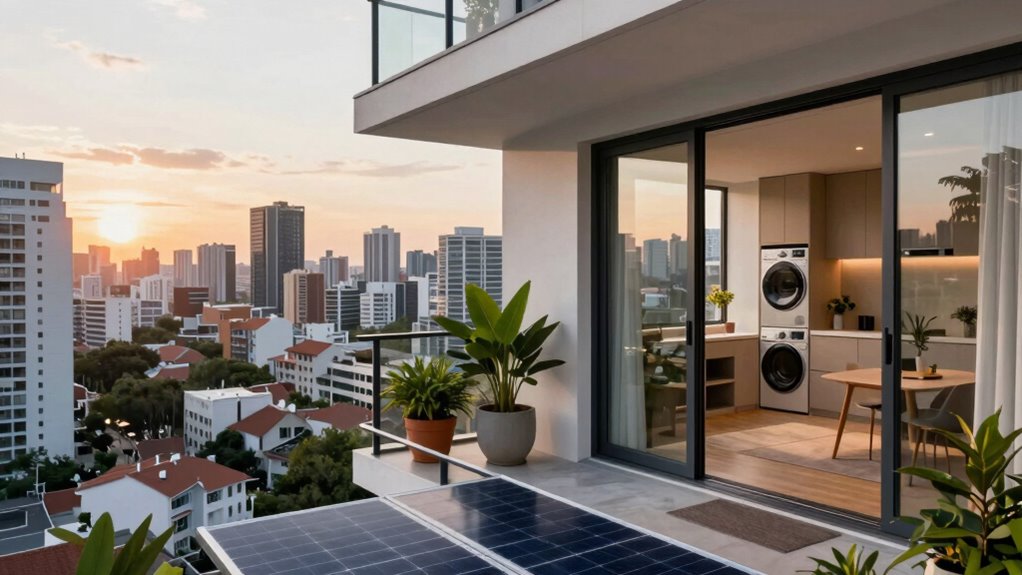
Living in an apartment doesn’t mean you have to sacrifice sustainability. In fact, your urban environment offers unique opportunities to make eco-friendly choices that can considerably reduce your carbon footprint. One effective way to do this is through urban gardening. Even with limited space, you can grow herbs, vegetables, or small plants on your balcony or windowsill. Urban gardening not only provides fresh produce but also encourages you to connect with nature amidst the city’s hustle. It reduces the need to buy store-bought produce, which often involves extensive transportation and packaging, consequently lowering your overall environmental impact. Additionally, embracing compact, energy-efficient appliances**** and smart systems can further enhance your sustainability efforts within your apartment.
Urban gardening in small spaces helps cut carbon footprints and fosters a natural connection amidst city life.
Another key aspect of living sustainably in an apartment revolves around shared resources. Many apartment buildings now promote community initiatives that help residents save energy, water, and other resources. Participating in shared programs—like communal compost bins, water-saving fixtures, or energy-efficient appliances—can make a notable difference. When you utilize shared resources, you’re not just reducing your individual consumption but also fostering a sense of community and collective responsibility. This collaborative approach often encourages better maintenance practices and resource conservation, amplifying the sustainability benefits. Incorporating urban biodiversity into your living space can also support local ecosystems and promote a healthier environment.
Living in an apartment also shifts your focus toward more efficient use of space and energy. You tend to rely more on compact, energy-efficient appliances, smart lighting, and heating systems designed to minimize waste. Additionally, you’re likely to be more conscious of your daily habits—like turning off unused lights or unplugging electronics—because small actions add up when shared or monitored collectively. Many buildings now offer communal charging stations for electric vehicles or shared bike programs, further reducing reliance on fossil fuels and supporting greener transportation options.
Your awareness of sustainability naturally extends to waste management. Apartments often have recycling and composting programs, which encourage you to sort waste properly and reduce landfill contributions. These programs are more effective when residents actively participate, and sharing resources like compost bins or recycling stations makes it easier to stay committed. You might even organize or join a community swap or donation event, emphasizing reuse and extending the life of items.
Ultimately, apartment living shifts your sustainability priorities by emphasizing community-driven initiatives, resource efficiency, and innovative practices suited for small spaces. It challenges you to think creatively about how to incorporate eco-friendly habits into daily routines, leveraging shared resources and urban gardening to make a tangible impact. Living sustainably in an apartment isn’t just possible; it can become a rewarding part of your lifestyle, contributing to a healthier planet while fostering stronger community ties.
compact energy-efficient appliances for apartment
As an affiliate, we earn on qualifying purchases.
As an affiliate, we earn on qualifying purchases.
Frequently Asked Questions
How Do Apartment Residents Reduce Their Carbon Footprint Effectively?
You can reduce your carbon footprint effectively by practicing energy conservation and water efficiency. Turn off lights and unplug electronics when not in use, and switch to energy-efficient bulbs. Limit water usage by fixing leaks, taking shorter showers, and using water-saving fixtures. These small actions add up, helping lower your energy consumption and water waste, which benefits the environment and can also save you money on utility bills.
Are There Specific Sustainability Programs for Apartment Complexes?
Yes, many apartment complexes implement sustainability programs like green leasing, which encourages tenants to adopt eco-friendly habits, and conduct regular energy audits to identify energy-saving opportunities. These initiatives promote responsible resource use and reduce overall environmental impact. As a resident, you can participate actively by supporting these programs, conserving energy, and communicating your sustainability interests, helping your community become more eco-conscious and resilient.
How Does Shared Living Impact Waste Management Practices?
Shared living acts like a catalyst, transforming waste management practices. You notice shared recycling bins and communal composting stations becoming the norm, making waste reduction easier. By pooling resources, you and your neighbors minimize trash and promote sustainability. This collective effort not only reduces environmental impact but also fosters a sense of community. Ultimately, shared living encourages smarter, more efficient waste management, proving that together, you can make a real difference for the planet.
What Are Affordable Eco-Friendly Upgrades for Renters?
You can make your apartment more eco-friendly by investing in affordable upgrades like energy-efficient appliances, which reduce electricity use, and low-flow fixtures that conserve water. These upgrades are cost-effective and easy to install, helping you lower your environmental impact without breaking the bank. Plus, they improve your living space’s sustainability, making it better for the planet and for your utility bills.
How Can Apartment Dwellers Participate in Local Sustainability Initiatives?
You can participate in local sustainability initiatives by joining community gardening projects, which promote green spaces and local food production. Advocate for renewable energy adoption within your building or neighborhood, such as solar panels or energy-efficient systems. Attend local sustainability events or workshops to stay informed and connect with like-minded neighbors. Your involvement helps foster eco-conscious habits, supports community resilience, and contributes to a greener, more sustainable environment for everyone.
Conclusion
Living in an apartment is like tending a small, shared garden—each choice you make helps nurture a greener future. Your daily actions, from conserving water to recycling, are tiny seeds growing into a forest of change. As you move through your space, remember you’re not just inhabiting a building; you’re shaping the landscape of sustainability. Together, our collective efforts bloom into a vibrant, resilient world—proof that even small steps can grow into mighty, lasting change.
Halloween Picks
halloween
As an affiliate, we earn on qualifying purchases.