Both bamboo and hemp are top choices for sustainable building materials, thanks to their rapid growth and minimal environmental impact. Bamboo grows quickly, stabilizes soil, and requires little water, making it perfect for renewable projects. Hemp also fast-matures, enriches soil, and captures lots of CO2, supporting climate goals. Which is best depends on your specific needs and goals. Keep exploring to discover how each can fit into environmentally friendly construction practices.
Key Takeaways
- Bamboo grows faster and requires less land and water, making it highly sustainable for quick renewable building materials.
- Hemp improves soil health and absorbs significant CO2, offering strong environmental benefits beyond rapid growth.
- Both materials produce fewer greenhouse gases and require minimal chemical inputs, supporting eco-friendly construction.
- Bamboo’s soil stabilization and hemp’s soil enrichment make them suitable for environmentally conscious projects.
- The choice depends on specific sustainability goals: bamboo for fast renewal, hemp for soil and climate benefits.
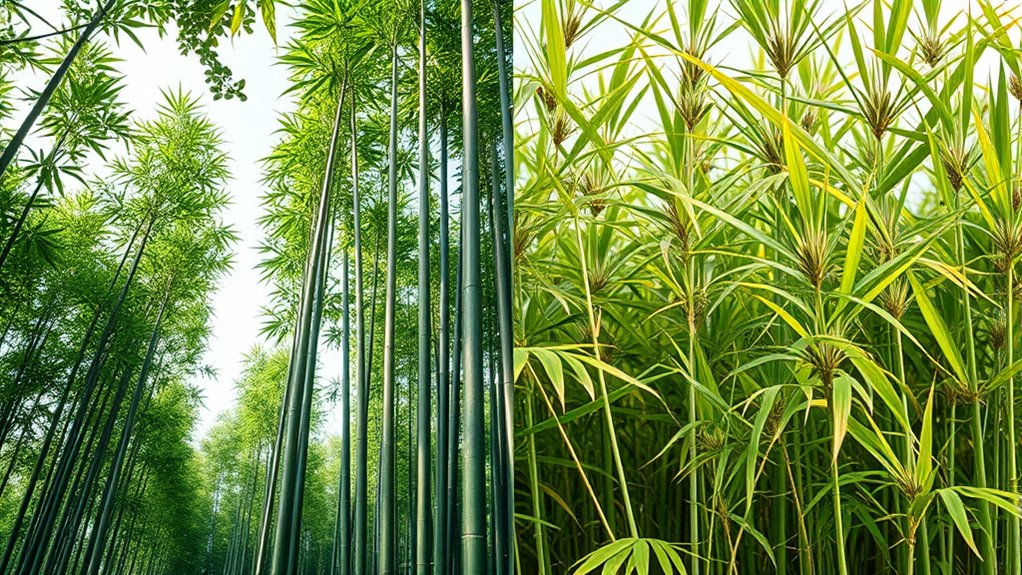
When comparing bamboo and hemp, two versatile plants often praised for their eco-friendly properties, it’s important to understand their differences in growth, sustainability, and uses. Both plants are heralded as sustainable building materials, but they differ profoundly in their environmental impact and how they contribute to a greener future. Your choice between the two should consider a thorough sustainability comparison, which examines how each plant affects the environment during cultivation, processing, and lifecycle.
Bamboo and hemp are sustainable, eco-friendly plants with distinct growth, environmental, and usage benefits.
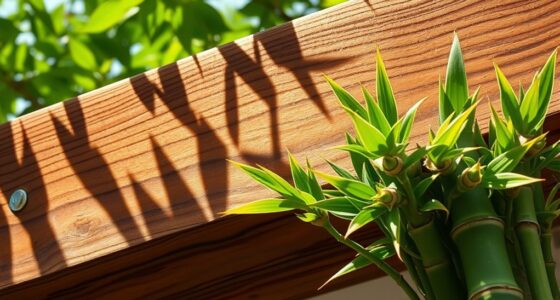
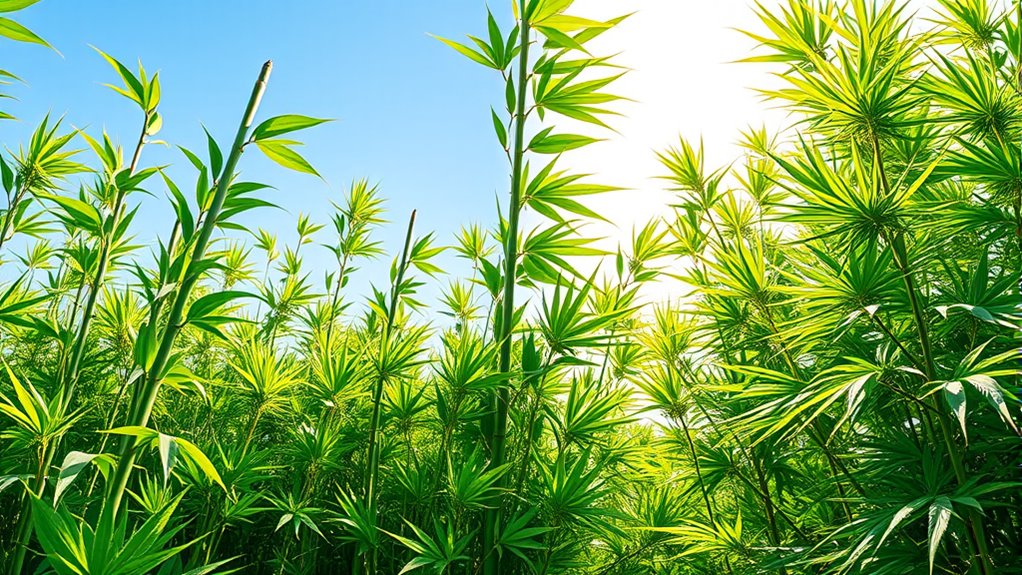
Bamboo grows at an astonishing rate—some species can shoot up several inches daily—making it one of the fastest renewable resources available. Its rapid growth means it can be harvested frequently without depleting the plant, which minimizes land use and encourages sustainable harvesting practices. Its extensive root system also stabilizes the soil, reducing erosion and promoting healthy ecosystems. Because bamboo can be harvested every 3-5 years without killing the plant, it offers a high yield with minimal environmental disturbance. This fast growth and renewability give bamboo a noteworthy edge in sustainability comparisons, as it requires less land, water, and fertilizer than many other crops.
Hemp, on the other hand, also boasts impressive sustainability credentials. It matures in around 3-4 months, allowing multiple harvests per year in suitable climates. Hemp’s deep roots improve soil health by preventing erosion and extracting nutrients from deep within the ground, reducing the need for chemical fertilizers. Its dense fiber structure makes it a durable, versatile material that can replace less sustainable options in construction, textiles, and composites. Furthermore, hemp absorbs large amounts of CO2 during its rapid growth, contributing positively to climate change mitigation efforts. Its low water requirement and ability to grow in poor soils further enhance its environmental profile, making it a highly sustainable crop with minimal environmental impact.
In terms of environmental impact, both plants excel over traditional building materials like wood or concrete. Bamboo’s quick growth reduces the need for deforestation, while hemp’s ability to grow without pesticides or herbicides cuts down on chemical runoff and pollution. Their cultivation generally produces fewer greenhouse gases and consumes less water than conventional materials, helping you lower the carbon footprint of your projects. However, processing methods and transportation can influence the overall environmental impact, so sourcing locally and choosing eco-friendly manufacturing practices are essential.
Ultimately, when you compare their sustainability profiles, bamboo and hemp both shine but in different ways. Bamboo’s rapid renewal and soil stabilization make it ideal for projects prioritizing quick, renewable resources. Hemp’s fast growth, soil benefits, and carbon absorption make it equally compelling for environmentally conscious building. Understanding these distinctions ensures you select the material that best aligns with your sustainability goals and minimizes your environmental impact.

Ethical Mattress CO 10" Toxin-Free Hybrid Mattress, Made in the USA with Organic Cotton, Wool, Latex & Pocketed Coils (No Fiberglass or Polyfoams) Comfortable & Supportive Bed-in-Box - King Size
TOXIN-FREE – this mattress contains no petrochemical polyfoams, no fiberglass, no toxic flame retardants, and as of January...
As an affiliate, we earn on qualifying purchases.
Frequently Asked Questions
How Do Bamboo and Hemp Compare in Terms of Environmental Impact?
When comparing bamboo and hemp’s environmental impact, you consider sustainability metrics and cultivation practices. Bamboo grows quickly, requiring minimal water and pesticides, making it highly sustainable. Hemp also thrives with low inputs and enriches soil. Both materials have low embodied energy, but hemp’s ability to improve soil health gives it an edge. You’ll find that both are eco-friendly options, but understanding their cultivation practices helps you choose the best for your project.
What Are the Cost Differences Between Bamboo and Hemp Building Materials?
You’ll find that the cost comparison between bamboo and hemp building materials varies due to price variability in supply and processing. Typically, bamboo is more affordable because it’s widely available and faster to harvest, while hemp can be pricier due to limited processing facilities. However, prices fluctuate based on regional factors and market demand, so it’s best to compare current prices in your area before making a decision.
Are There Any Health Concerns Associated With Bamboo or Hemp?
Did you know that both bamboo and hemp are generally safe for indoor air quality? You might worry about allergenic potential, but studies show that hemp has low allergenicity, while bamboo can sometimes cause skin irritation. Overall, neither poses significant health concerns if properly processed, making them healthy choices for sustainable building. Just verify they’re sourced from reputable suppliers to minimize any potential indoor air or allergy issues.
How Do Bamboo and Hemp Perform in Extreme Weather Conditions?
When considering weather resilience, both bamboo and hemp offer notable material durability, but they perform differently in extreme conditions. Bamboo’s flexibility helps it withstand high winds, making it resilient during storms. Hemp’s dense fibers provide excellent resistance to moisture and pests, enhancing its durability in humid environments. Overall, bamboo’s adaptability gives it an edge in extreme weather, but your choice depends on your specific climate needs and project requirements.
What Is the Lifespan of Structures Built With Bamboo Versus Hemp?
You’ll find that structures built with hemp often last around 50 years, thanks to its natural resistance and durability. Bamboo structures can endure over 20-30 years but face durability challenges, especially if not properly maintained. Maintenance requirements are higher for bamboo, which can be vulnerable to pests and weathering. Hemp’s lower maintenance makes it a longer-lasting choice overall, though both materials need proper care to maximize lifespan.

Dura-Bench Original Greenhouse Bench Top, 2t x 4ft, Non-Overlap
Durable and Smooth: These panels are made from UV protected, high-impact, abrasion-resistant polypropylene, ensuring long-lasting durability and a...
As an affiliate, we earn on qualifying purchases.
Conclusion
When it comes to green building materials, bamboo and hemp each bring their own unique magic to the table. Like two mighty trees in a forest, they stand tall with promise, ready to shape a sustainable future. Whether you choose bamboo’s swift growth or hemp’s resilient strength, you’re planting seeds for a greener tomorrow. Ultimately, both are heroes in the fight for our planet, promising a future where nature and innovation grow hand in hand.

Yaheetech Potting Bench Table Horticulture Germination Table & Outdoor Garden Work Bench Platform w/Display Rack/Storage Shelf/Hanger/Thoughtful Sink Brown
Natural Fir, Plant with Confidence: Made from untreated fir wood, this raised garden potting bench is strong and...
As an affiliate, we earn on qualifying purchases.
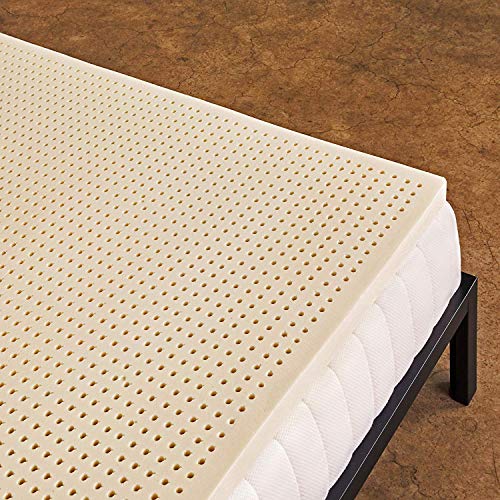
Pure Green Natural Latex Mattress Topper - Firm - 2 Inch - King Size (GOLS Certified Organic)
Firm - Provides Strong Pinpointed Support
As an affiliate, we earn on qualifying purchases.