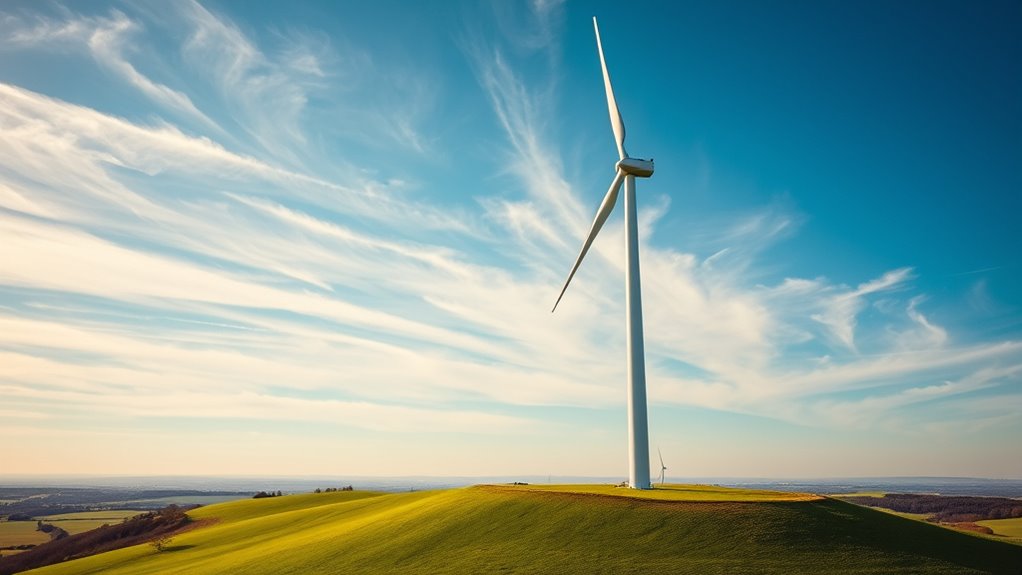

When siting a wind turbine, you need to ensure factors like wind availability, proximity to power grids, and local environmental impacts. Selecting a site with consistent wind can boost efficiency, while avoiding sensitive ecosystems and migration routes helps protect wildlife. It’s also important to minimize noise and visual impacts on nearby communities. Proper assessment and mitigation strategies ensure your project aligns with sustainability goals. Keep exploring further to understand how thorough planning can optimize your wind energy project.
Key Takeaways
- Choose locations with optimal wind resources while avoiding sensitive habitats and migration routes.
- Conduct comprehensive environmental assessments to identify potential ecological impacts and mitigation needs.
- Minimize noise, visual, and ecological disruptions to nearby communities and wildlife.
- Ensure site planning aligns with environmental regulations and sustainability goals.
- Incorporate stakeholder feedback and manage project timelines to balance ecological preservation and development goals.

Choosing the right location is essential when siting a wind turbine, as it directly impacts its efficiency and environmental impact. When selecting a site, you need to carefully contemplate how the environment will respond to the turbine’s presence. A well-chosen site minimizes disruptions to local wildlife, preserves natural habitats, and reduces noise and visual impacts on nearby communities. You should conduct thorough environmental assessments to identify potential issues, such as bird and bat migration routes or sensitive ecosystems, and take steps to mitigate these concerns. Proper siting can make a significant difference in reducing negative environmental effects, ensuring the project aligns with sustainability goals and community expectations. Additionally, understanding how workaholic tendencies can influence project planning and stakeholder engagement may help in managing deadlines and expectations effectively.

Thames & Kosmos Wind Power V5.0 STEM Experiment Kit, Build a 3ft-Tall Model Wind Turbine & Explore Clean, Renewable Energy, Optimized for Use Outdoors & Indoors, Experiments & Discovery for Ages 8+
- Updated Wind Turbine Kit: Fifth-generation STEM wind turbine kit
- Indoor & Outdoor Use: Optimized for versatile environments
- Educational Content: Learn about renewable wind energy
As an affiliate, we earn on qualifying purchases.
As an affiliate, we earn on qualifying purchases.
Frequently Asked Questions
How Does Local Wildlife Affect Siting Decisions?
You should consider local wildlife because their habitat and species migration patterns can be impacted by turbine placement. Avoid siting turbines in areas with sensitive wildlife habitat or key migration corridors to prevent disruption. By evaluating these factors, you help protect species and ensure your project aligns with environmental regulations. Thoughtful siting minimizes negative effects on wildlife and promotes sustainable energy development.
What Are the Noise Restrictions for Wind Turbines?
You should know that noise restrictions for wind turbines typically limit noise levels to around 35-45 decibels, depending on local regulations. Setback distances are also vital, often requiring turbines to be placed at least 300-1,000 meters from residences to minimize noise impact. Investigations reveal that proper siting and adherence to these restrictions help prevent noise complaints, ensuring community acceptance and sustainable operation of your wind project.
How Do Property Values Change After Turbine Installation?
Property values can fluctuate after wind turbine installation, but the impact varies based on location and perceptions. Some buyers may see turbines as a positive investment in renewable energy, boosting property value, while others might view them as noise or visual obstructions, decreasing real estate considerations. Overall, understanding local attitudes and conducting thorough assessments help you anticipate how turbine siting might influence property value changes in your area.
What Permits Are Required for Siting a Wind Turbine?
Think of permits as your wind turbine’s passport to fly. You’ll need to obtain local zoning regulations approval and make certain your turbine meets setback distances from property lines and roads. Check with your city or county planning department, as they usually require permits for construction and electrical connections. Securing these permits ensures your project complies with safety standards and avoids fines or delays, making your wind energy journey smooth and legal.
How Does Climate Variability Influence Turbine Placement?
Climate variability influences your turbine placement because weather patterns and climate impact wind consistency and strength. You should analyze historical weather data to identify areas with stable, high wind speeds, minimizing energy fluctuations. Consider seasonal changes and extreme weather events that could damage equipment or reduce efficiency. By understanding climate impact, you guarantee your turbine is situated where it can operate at its best, maximizing energy production and longevity while mitigating risks associated with unpredictable weather patterns.
Conclusion
When siting a wind turbine, it’s essential to weigh all factors carefully. By considering location, wind patterns, and environmental impact, you set yourself up for success. Remember, the right spot can make all the difference, turning a good project into a great one. Don’t put all your eggs in one basket—think it through, plan ahead, and you’ll be sailing smoothly. With the right approach, you’ll have wind power working for you in no time.