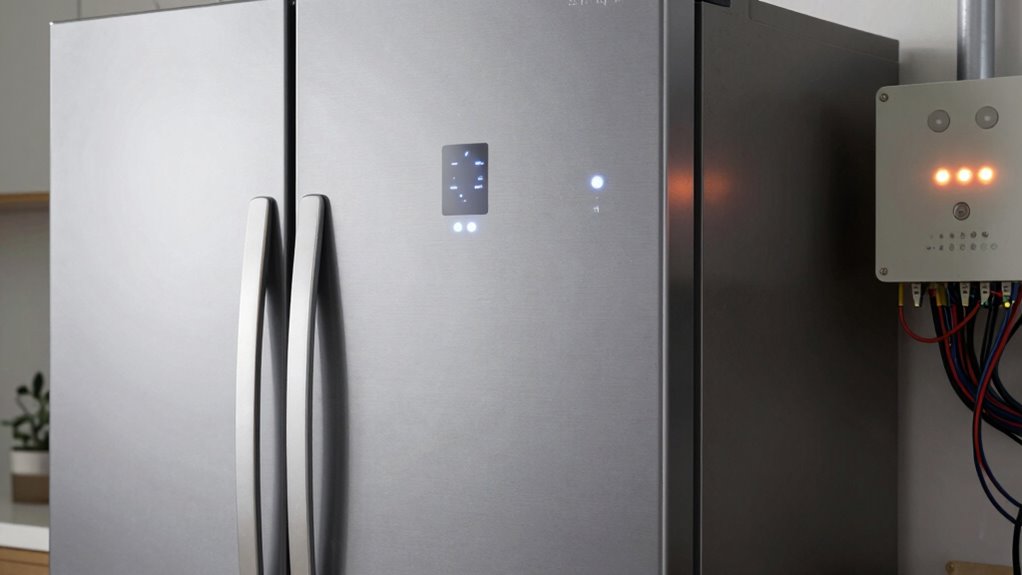

When your fridge starts, it demands a sudden surge of power, called surge wattage, which can be 2-3 times higher than its normal running watts. This temporary spike can overload your power station if it isn’t rated to handle such surges. Knowing the surge wattage helps you prevent your system from tripping or shutting down unexpectedly. Stay with us to explore ways to protect your appliances and power setup from these common issues.
Key Takeaways
- Refrigerators have high startup surge wattages due to compressor motor inrush, which temporarily exceeds running wattage.
- Surges can be 2-3 times the normal power draw, causing overloads if the power station’s surge capacity is insufficient.
- Power stations trip or shut down to protect against overloads caused by the refrigerator’s sudden surge.
- Knowing your fridge’s surge wattage helps ensure your power station can handle startup demands without tripping.
- Properly matching your fridge’s surge wattage with your power station’s surge capacity prevents trips and prolongs equipment lifespan.
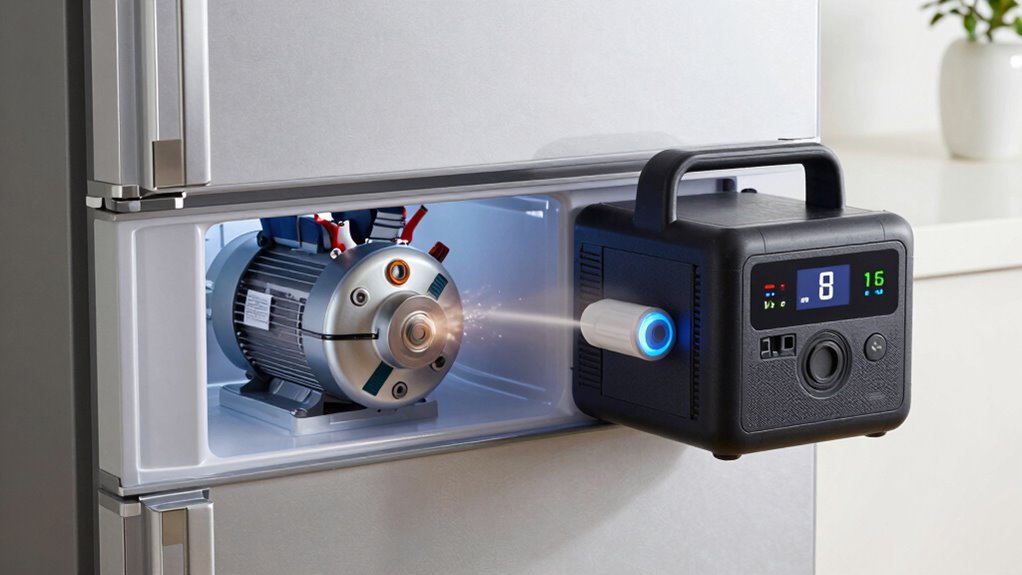
Understanding surge watts is essential when selecting electrical devices or appliances, especially during startup. When you plug in a fridge, for instance, it demands a significant initial burst of power known as a power surge. This surge happens because the compressor motor and other components need extra energy to start running. If your power station isn’t rated to handle this surge, it can trigger an electrical overload, causing the system to shut down or trip. Recognizing the difference between running watts and surge watts helps you avoid these issues and ensures your appliances operate smoothly.
Understanding surge watts helps prevent overloads during appliance startup.
A power surge is a sudden spike in electrical current that occurs when large appliances turn on. In your fridge’s case, the compressor’s start-up requires more wattage than it does when running normally. This initial demand can be two to three times higher than the appliance’s running wattage. If your power station isn’t capable of providing that extra power, it might interpret the surge as an electrical overload. When an overload happens, your system automatically cuts off power to protect itself from damage, resulting in your fridge shutting off unexpectedly or other devices being affected. That’s why understanding surge watts helps you select a generator or power station with enough capacity to handle these startup demands.
Many appliances, especially refrigerators, air conditioners, and power tools, draw a significant power surge at startup. Failing to account for these surges can lead to frequent trips of your power station, which is frustrating and potentially damaging over time. To prevent this, you need to check the surge wattage rating of your appliances and compare it with your power station’s surge capacity. If your generator or portable power station isn’t rated for the surge wattage, you risk electrical overloads that could damage your equipment or trip the system repeatedly.
Knowing the surge wattage also helps you plan your power usage more efficiently. For example, if you want to run your fridge alongside other devices, make sure the combined surge wattage doesn’t exceed the power station’s capacity. By doing so, you prevent overloads and ensure continuous operation without interruptions. It’s important to remember that surge wattages are only temporary, but if your system isn’t prepared for these short bursts, it can cause frequent shutdowns, reducing the lifespan of both your appliances and your power source. Being aware of these factors makes your setup safer, more reliable, and better suited to handle the demands of your household or worksite.
Frequently Asked Questions
How Do Surge Watts Differ From Running Watts?
Surge watts are higher than running watts because they account for the initial power needed to start your fridge’s compressor, which temporarily exceeds its steady power draw. Your power factor and voltage stability influence this difference, as a poor power factor or voltage fluctuations increase surge watt requirements. Understanding this helps prevent tripping your power station, ensuring your appliances start smoothly without overloading.
Can Surge Watts Damage My Power Station?
Yes, if you push your power station beyond its surge watt limits, it can cause serious damage and weaken its durability over time. Think of it like overloading a tiny engine—eventually, it can’t handle the stress and breaks down. Always stay within the recommended surge watt limits to protect your power station’s lifespan. Ignoring this risk can lead to costly repairs or total failure, so be cautious!
What Appliances Typically Require High Surge Watts?
Appliances that typically require high surge watts include refrigerators, air conditioners, well pumps, and power tools. They demand a strong appliance startup, which temporarily exceeds surge watt limits. When these devices turn on, they draw extra power, risking your power station tripping. To prevent this, make certain your power station can handle the initial surge, and avoid running multiple high-surge appliances simultaneously.
How Can I Calculate the Surge Watt Requirement?
Imagine your appliance as a sprinter needing a burst of energy at the start. To calculate the surge watt requirement, check the appliance’s label for startup or surge watts, then add a safety margin. Make certain your inverter capacity exceeds this combined wattage to handle the startup load smoothly, preventing trips. This way, your power station stays steady, powering your appliances without interruptions during their vital startup moments.
Is It Safe to Run Multiple Appliances With High Surge Watts?
Running multiple appliances with high surge watts isn’t safe because their startup loads can overload your power station. Appliances often need a power surge during startup, and simultaneous startup can cause power surge management issues, leading to trips or damage. To avoid this, run high surge watt appliances one at a time or guarantee your power station can handle the combined startup loads, preventing overloads and ensuring safe operation.
Conclusion
Understanding surge watts is like knowing the heartbeat of your appliances. When your fridge trips your power station, it’s because those initial surges are stronger than they appear—like a sudden storm in a calm sky. By recognizing these power spikes, you can prevent unexpected shutdowns and protect your gear. Think of surge watts as the hidden rhythm that keeps your home running smoothly, even when the storm seems to catch you off guard.