To stop guessing, create a simple backup load list focused on critical needs like your refrigerator, essential medical devices, communication tools, and lighting. Use a reliable generator or inverter and prioritize power for safety, health, and essential communication. Keep your total load within capacity limits to avoid overloads. By planning with these basics, you’ll guarantee your household stays safe and functional during outages. Stay with us to discover how to tailor your list perfectly.
Key Takeaways
- List and prioritize essential devices like refrigerator, medical equipment, and communication tools to ensure safety during power outages.
- Calculate total energy consumption of critical devices to match with your generator or inverter capacity, avoiding overloads.
- Include only necessary items in your backup plan, focusing on health, safety, and communication needs to streamline power usage.
- Use energy-efficient appliances and devices to maximize backup duration and reduce overall power requirements.
- Regularly review and update your backup load list to reflect household changes and ensure reliable, safe operation during emergencies.
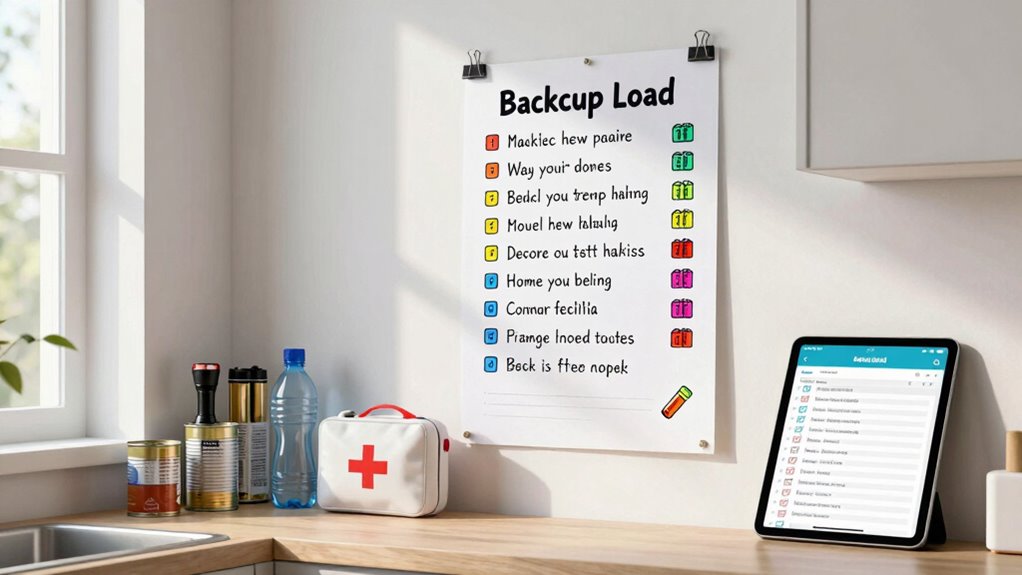
Have you ever wondered what essential appliances and devices you should include in your home backup load list? When it comes to power outage preparedness, having a clear plan can make all the difference. Knowing what to keep running during an outage ensures your safety, comfort, and basic needs are met without unnecessary stress. The first step is identifying your emergency kit essentials, which should include more than just flashlights and batteries. These essentials form the foundation of your backup load, so you’re prepared to handle short-term disruptions confidently.
Identify key appliances and essentials to keep your home running smoothly during power outages.
Start with the basics: a reliable power source like a generator or inverter is fundamental. You’ll want to power up your refrigerator and freezer to prevent food spoilage, and a few LED lights or portable lamps for illumination. Consider a small, portable stove or hot plate if you need to cook during extended outages—just make sure it’s safe and used in ventilated spaces. Your backup load list should also include essential communication devices such as a charged cell phone, portable charger, or emergency radio. Staying connected with loved ones and receiving updates is essential during any power emergency.
In terms of emergency kit essentials, include a well-stocked first aid kit, bottled water, non-perishable food, and necessary medications. These items help you remain comfortable and safe in the absence of power. For power outage preparedness, think about powering devices that support your health and safety—like CPAP machines or oxygen concentrators—if applicable. Also, consider small appliances or tools that can help you maintain hygiene and sanitation, such as electric razors or portable fans. Understanding your energy consumption and generator capacity can help you optimize your backup power plan and avoid overloads.
When creating your home backup load list, prioritize devices that keep your household running smoothly and support your safety. For example, if you rely on medical devices, those should be top of the list. If you have children, include items like baby monitors or formula warmers. Remember, the goal isn’t to power everything but to focus on critical needs that sustain your well-being during an outage. Keep your list manageable by choosing energy-efficient devices and understanding your generator’s capacity.
Frequently Asked Questions
How Often Should I Update My Home Backup Load List?
You should update your home backup load list at least once a year or whenever your storage planning changes, like new appliances or medical devices. Regular updates make sure your emergency preparedness remains accurate, preventing overloads or shortages during an emergency. Review your list after major life events or renovations, and keep it current to stay ready for any situation. Staying proactive helps you avoid surprises when you need backup power the most.
What Tools Are Best for Creating a Backup Load List?
Think of creating your backup load list as assembling a treasure map. The best tools are digital inventory apps like Sortly or MyStuff, which simplify tracking your items. Checklist templates in Excel or Google Sheets are also great, letting you customize and update easily. These tools help you stay organized, ensuring you’re always prepared for any emergency, without guesswork, by keeping your backup load list clear and current.
Can I Customize the Load List for Different Emergencies?
Yes, you can customize your load list for different emergencies by utilizing personalization options. This allows you to tailor your emergency specific lists based on the scenario, such as power outages or natural disasters. By adjusting your list, you guarantee you have the right essentials ready for each situation. This proactive approach helps you stay prepared and minimizes unnecessary items, making your backup plan more efficient and effective.
How Do I Prioritize Items in My Backup List?
You might think prioritizing items is complicated, but it’s actually simple. Start with a clear priority ranking, focusing on essentials like water, food, and medications. Use item categorization to group similar items—think of it as organizing your emergency kit for quick access. This way, you’ll always know what to grab first, and you won’t waste time rummaging through your backup list when it matters most.
What Common Mistakes Should I Avoid When Preparing My Load List?
You should avoid storage mistakes like overloading your backup with non-essential items, which wastes space. Also, don’t neglect item prioritization by including critical electronics and essentials first, then adding less important items. Failing to categorize items can cause confusion during emergencies. Keep your load list organized and realistic, focusing on what’s truly necessary. This approach guarantees quick access and efficient use of your backup resources during critical moments.
Conclusion
Now that you have this straightforward backup load list, you’re ready to face any power outage with confidence. Think of it like a trusted map guiding you through a storm—clear and dependable. Keep your essential devices ready, and you’ll stay comfortable no matter what. By sticking to this simple plan, you’ll prevent guesswork and stay prepared, just like having a reliable safety net. You’ve got this—power outages won’t catch you off guard anymore.