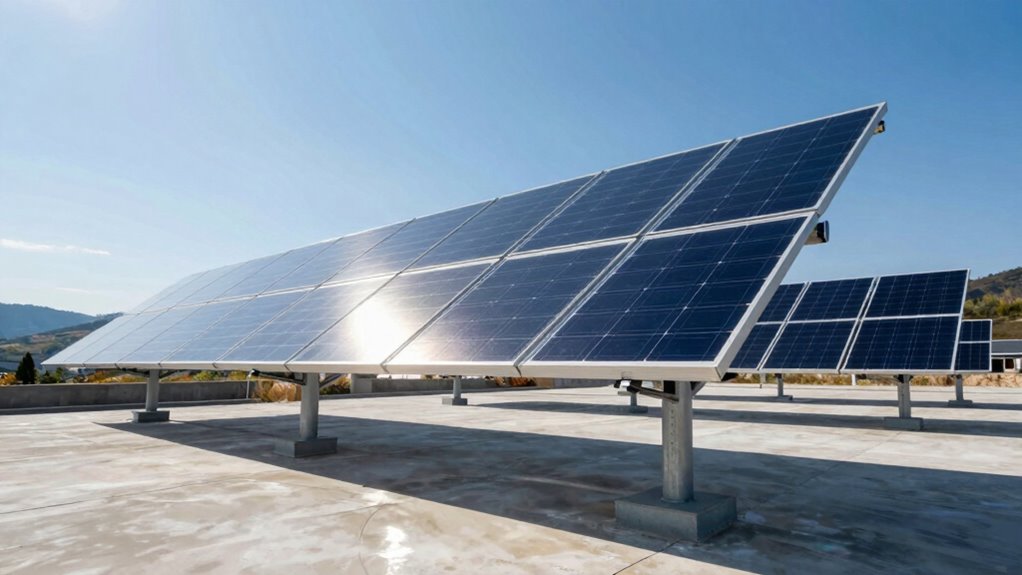
Bifacial solar panels are designed to capture sunlight from both sides, increasing energy output by 20-30% compared to standard panels, especially in environments with reflective surfaces like snow or water. Their effectiveness depends on proper installation, elevation, and surface reflectivity. When set up correctly in suitable conditions, these panels can deliver faster returns and lower energy costs. Want to find out how to maximize their benefits? Keep exploring to learn more.
Key Takeaways
- Bifacial panels generate more energy by capturing sunlight on both sides, especially in high-reflectivity environments.
- They deliver 20-30% higher output than traditional panels, improving return on investment.
- Optimal performance occurs on reflective surfaces like snow, water, or white rooftops that boost albedo.
- Proper mounting, tilt, and elevated installation are essential to maximize reflected light capture.
- Surface treatments and electrical configurations can further enhance efficiency and overall system gains.
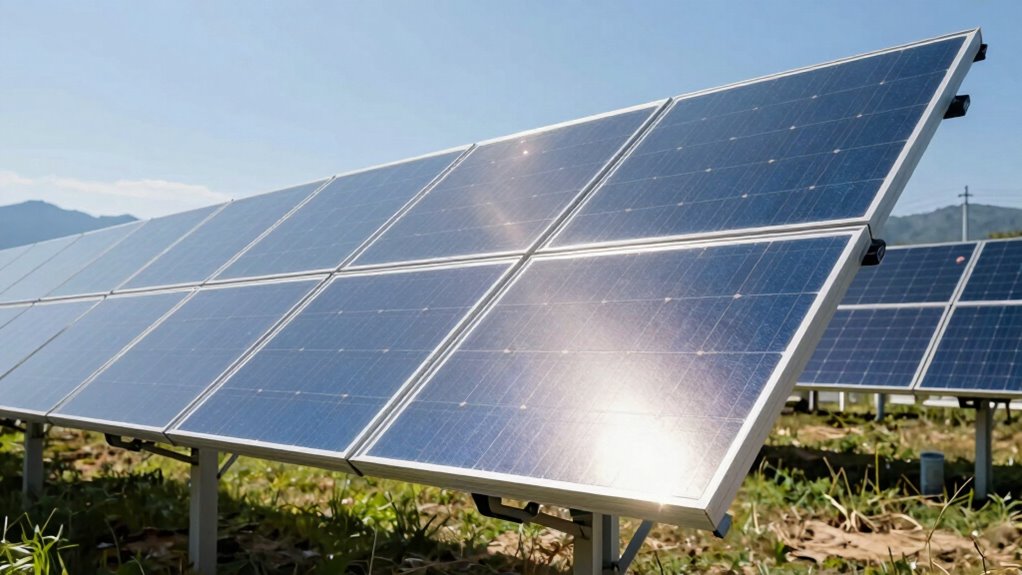
Bifacial solar panels are an innovative technology that captures sunlight on both sides, increasing energy output compared to traditional one-sided panels. This dual-sided design allows you to harness reflected sunlight from surfaces like snow, water, or white rooftops, markedly boosting overall solar panel efficiency. When contemplating bifacial systems, you’ll find that their potential for higher energy production can make them a smarter investment, especially in locations with high albedo surfaces. However, to maximize these benefits, you need to understand the installation challenges involved. Proper setup is vital because the way bifacial panels are mounted and oriented directly impacts how much sunlight they receive on both sides. For instance, you’ll want to guarantee they are tilted at an ideal angle and elevated sufficiently above the ground to reduce shading and increase exposure to reflected light. This often means that installation can be more complex and potentially more costly compared to traditional panels. You might need reinforced mounting structures to support the increased height and weight, and precise positioning becomes essential to prevent shading from nearby objects or structures. Additionally, you’ll need to consider the type of surface underneath the panels; highly reflective surfaces will yield better results, but not all rooftops or ground terrains are suitable. This can lead to challenges in planning and may require custom solutions or surface treatments to enhance reflectivity. The wiring and electrical systems must also accommodate the unique setup of bifacial panels, which can involve longer cables or different configurations to maximize energy collection from both sides. Despite these challenges, the benefits often outweigh the drawbacks when you’re aiming for maximum efficiency. Bifacial panels can produce up to 20-30% more energy than traditional monofacial panels, especially in ideal conditions. This increased efficiency can lead to faster return on investment and lower overall energy costs over their lifespan. But, to get the most out of your bifacial system, you’ll need to carefully weigh installation challenges against the expected gains, guaranteeing your setup is tailored to your specific environment. With proper planning and execution, these panels can deliver substantial performance improvements, making the extra effort worth it. Ultimately, bifacial solar panels represent a major step forward in solar technology, but their success depends on understanding and addressing the unique installation challenges they present.

Callsun N-Type 16BB 400W Bifacial Solar Panel, 2Pcs 200 Watt Solar Panel 12V, 25% High Efficiency, Dual-module Parallel Anti-Shade Design, for RV Van Marine Home Rooftop Off-Grid Systems (2 Pack 200W)
【N-Type 16BB High-Efficiency Solar Cells】The Callsun 200 watt solar panel is built with advanced N-type solar cells and…
As an affiliate, we earn on qualifying purchases.
As an affiliate, we earn on qualifying purchases.
Frequently Asked Questions
How Do Bifacial Panels Perform in Cloudy Conditions?
In cloudy conditions, bifacial panels still perform well because they can use diffused sunlight and reflected light from clouds and surroundings. While cloud cover reduces direct sunlight, your panels can capture energy from the indirect, diffused sunlight on both sides. This means they can generate power even on overcast days, making them a reliable choice for consistent energy production, regardless of weather.
What Are the Maintenance Requirements for Bifacial Solar Panels?
To maintain bifacial solar panels, you should follow regular cleaning protocols to remove dirt, dust, and snow, ensuring maximum efficiency. Gently wash the panels with water and a soft brush or cloth as needed. This routine helps prevent buildup that can reduce energy output and extends panel longevity. Regular inspections also identify any damage early, keeping your bifacial panels performing at their best and lasting longer over time.
Can Bifacial Panels Be Installed on Existing Solar Setups?
Yes, you can install bifacial panels on existing solar setups, but it often involves retrofit upgrades that may increase costs. You’ll need to assess your current system’s compatibility, space, and shading issues. While the initial investment might be higher, the enhanced energy output can justify the costs over time. Consulting a professional helps guarantee proper installation and maximizes your return on investment with bifacial technology.
How Does Shading Affect Bifacial Panel Efficiency?
Shading impacts bifacial panel efficiency by causing efficiency reduction, especially since both sides can generate power. When shading blocks sunlight on either side, it limits energy production, reducing overall output. To minimize shading impact, you should avoid obstructions like trees or buildings near the panels. Proper placement and maintenance help guarantee maximum sunlight exposure, keeping efficiency high and ensuring your bifacial panels perform at their best.
Are Bifacial Panels More Durable Than Traditional Monofacial Panels?
You’ll be amazed—bifacial panels are often more durable than traditional monofacial ones. Their robust materials and innovative design can withstand harsher weather, making them last longer. When considering durability comparison and material longevity, bifacial panels typically have a sturdier build, reducing maintenance costs. So, you get a resilient investment that’s built to endure, ensuring your solar system stays efficient and reliable for decades.

ECO-WORTHY 16 Units Solar Panel Mounting Brackets,Z Bracket Sets Lightweight Aluminum Corrosion-Free for RV, Trailer, Boat, Yachs, Wall and Other Off Gird Roof,4 Set of 4 Units
Robustness: The ECO-WORTHY Z solar panel mounting brackets are made of aluminum alloy bracket and stainless steel M6…
As an affiliate, we earn on qualifying purchases.
As an affiliate, we earn on qualifying purchases.
Conclusion
So, are bifacial solar panels truly worth the investment? If you’re looking to maximize energy output and boost your solar efficiency, they often deliver more than traditional panels, especially in suitable environments. With their ability to capture sunlight from both sides, you might wonder if it’s time to upgrade. Ultimately, weighing the upfront costs against long-term gains can help you decide—after all, isn’t harnessing more sunlight the smart choice for a sustainable future?

Upgraded 24"x30"/24"x35" Solar Radar Speed Limit Sign with Wireless LED Speed Monitor, High Power Solar Panel and Reflective Surface, 656ft Detection Range, IP65 Weatherproof for Road yellow 24"x30"
Solar-Powered Radar Speed Display with LED System:This wireless solar radar sign features an LED light system designed for…
As an affiliate, we earn on qualifying purchases.
As an affiliate, we earn on qualifying purchases.

Solar Panel Mounting Brackets, 8PCS Adjustable RV Solar Panel Mount, Tilt Angle 10-60 Roof Mounting Kit for Solar Panels 400 W, 500 W
High Quality Material: Our solar panel bracket is made of high quality aluminium alloy material, strong load-bearing capacity,…
As an affiliate, we earn on qualifying purchases.
As an affiliate, we earn on qualifying purchases.