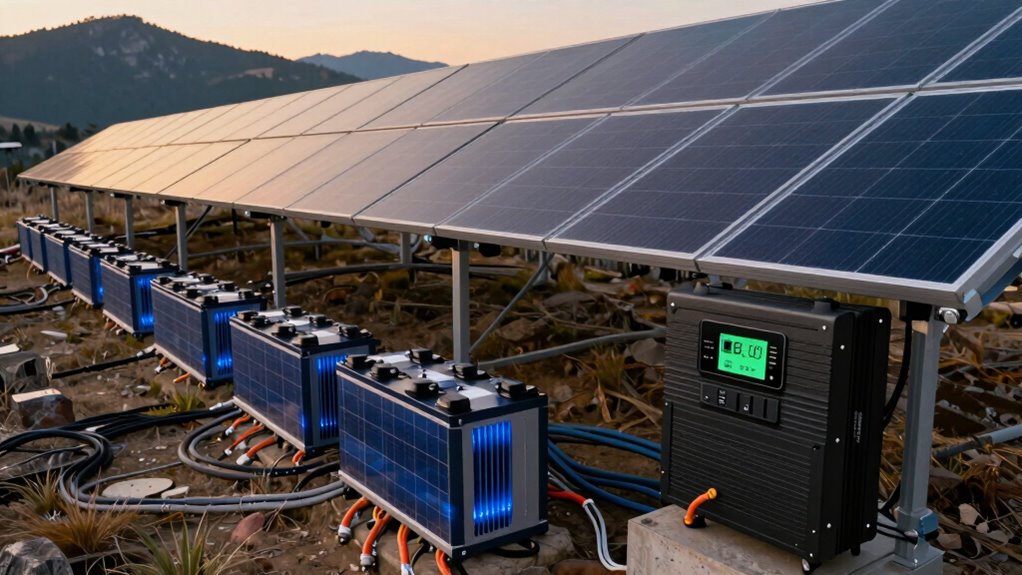
A 48V off-grid system is the standard for serious setups because it offers ideal safety, efficiency, and scalability. Its voltage level simplifies connections, reduces risks of overcharging, and extends battery lifespan with advanced management. It supports high inverter efficiency, allowing your system to handle larger loads without oversized batteries. Plus, standardization makes integration and maintenance easier. If you want to discover how these advantages can power your off-grid lifestyle reliably, keep exploring the details ahead.
Key Takeaways
- 48V systems enable safer, more efficient battery connections and management with advanced BMS integration.
- They support high-efficiency inverters, maximizing power output with minimal energy loss.
- Standardization ensures compatibility across components, simplifying setup and future system expansion.
- 48V setups deliver reliable performance, reducing downtime and supporting scalable off-grid applications.
- They promote cost-effective, durable solutions that extend battery life and enhance long-term sustainability.
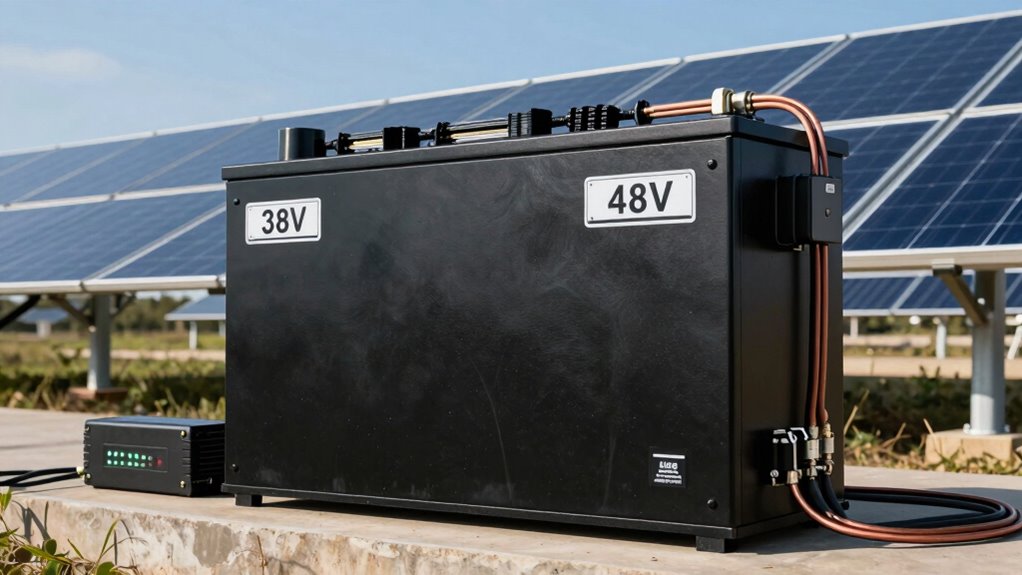
If you’re considering off-grid power solutions, 48V systems offer an efficient and reliable option for a wide range of applications. These systems strike a balance between performance and safety, making them ideal for residential, commercial, and remote setups. One of the key benefits of choosing a 48V configuration is how it enhances battery management. With a 48V system, you can connect batteries in series more easily, creating a stable voltage that’s easier to monitor and maintain. Proper battery management becomes straightforward, reducing the risk of overcharging or deep discharging, which can shorten battery lifespan. This reliability means you spend less time troubleshooting and more time enjoying consistent power. Additionally, a 48V system can incorporate advanced battery management systems (BMS) that optimize charging cycles, improve battery longevity, and guarantee safety. This precise control helps you get the most out of your investment, making your off-grid setup more sustainable and cost-effective over time.
Another essential advantage of 48V systems is inverter efficiency. Inverters are the heart of any off-grid setup because they convert DC power from batteries into usable AC power for appliances. Higher inverter efficiency means less energy is lost during this conversion process, so you get more usable power from your stored energy. 48V systems are particularly well-suited to high-efficiency inverters, which operate more effectively at this voltage level. This means you can run more appliances or larger loads without needing oversized batteries or additional hardware. It also reduces heat dissipation issues, which can be a concern in lower-voltage systems, ultimately prolonging inverter lifespan. When you invest in a 48V system, you’re choosing a configuration that maximizes your power output, reduces waste, and enhances overall system reliability. Moreover, the standardization of 48V systems facilitates easier integration with a variety of components and accessories, streamlining setup and expansion. The combination of efficient battery management, high inverter efficiency, and scalability makes 48V off-grid systems the standard for serious setups. They offer a practical, long-term solution that balances performance, safety, and ease of maintenance. Whether you’re powering a tiny cabin or a larger homestead, a 48V system provides a dependable backbone for your off-grid lifestyle, guaranteeing you have power when and where you need it most.
Frequently Asked Questions
How Do 48V Systems Compare Cost-Wise to Higher Voltage Setups?
You’ll find that 48V systems generally cost less upfront compared to higher voltage setups, mainly because they require smaller, less expensive components. When considering cost comparison, installation costs are also lower since wiring and safety equipment are simpler. While higher voltage systems might offer efficiency advantages, 48V setups provide a budget-friendly, reliable option for off-grid applications, making them ideal for those seeking affordability without sacrificing performance.
What Safety Precautions Are Necessary for 48V Off-Grid Systems?
You need to follow proper safety precautions for your 48V off-grid system, especially regarding battery safety and wiring standards. Always wear protective gear when handling batteries, avoid short circuits, and guarantee correct insulation. Use appropriately rated wiring and secure connections to prevent sparks or overheating. Keep your system dry and well-ventilated, and regularly inspect for corrosion or damage. Staying vigilant ensures safe, reliable operation of your 48V setup.
Can 48V Systems Be Expanded Easily for Increased Capacity?
Yes, 48V systems can be expanded easily for increased capacity. You just need to regard battery expansion options that match your existing setup, ensuring compatibility. Wiring flexibility plays a key role here, allowing you to add more batteries or components without complicated reconfigurations. Just make sure to follow proper safety protocols and consult with experts if you’re unsure about the expansion process, ensuring your system remains reliable and efficient.
What Are the Common Troubleshooting Steps for 48V Systems?
When troubleshooting your 48V system, start with battery maintenance by checking connections, voltage levels, and electrolyte levels if applicable. For inverter troubleshooting, verify proper wiring, reset the unit if needed, and confirm settings. Always inspect for loose connections or corrosion. Use a multimeter to test voltage outputs, and consult the user manual for specific error codes. Regular maintenance helps prevent issues and keeps your system running smoothly.
How Do 48V Systems Perform in Extreme Weather Conditions?
You’ll find 48V systems perform well in extreme weather thanks to their temperature resilience and weatherproof design. They can handle high heat, freezing cold, and humidity if properly installed with insulated enclosures and robust components. Regular maintenance guarantees your system remains resilient, preventing weather-related issues. By choosing weatherproofed setups, you ensure consistent performance even during harsh conditions, making your off-grid setup reliable no matter the climate.
Conclusion
As you’ve seen, 48V off-grid systems are quickly becoming the standard for serious setups. They offer efficiency, safety, and scalability — essentials for reliable power. Remember, a chain is only as strong as its weakest link; selecting the right system guarantees your independence and peace of mind. By investing in quality, you’re building a resilient future where your off-grid lifestyle thrives. Don’t wait for the storm to come—prepare now and power your freedom today.