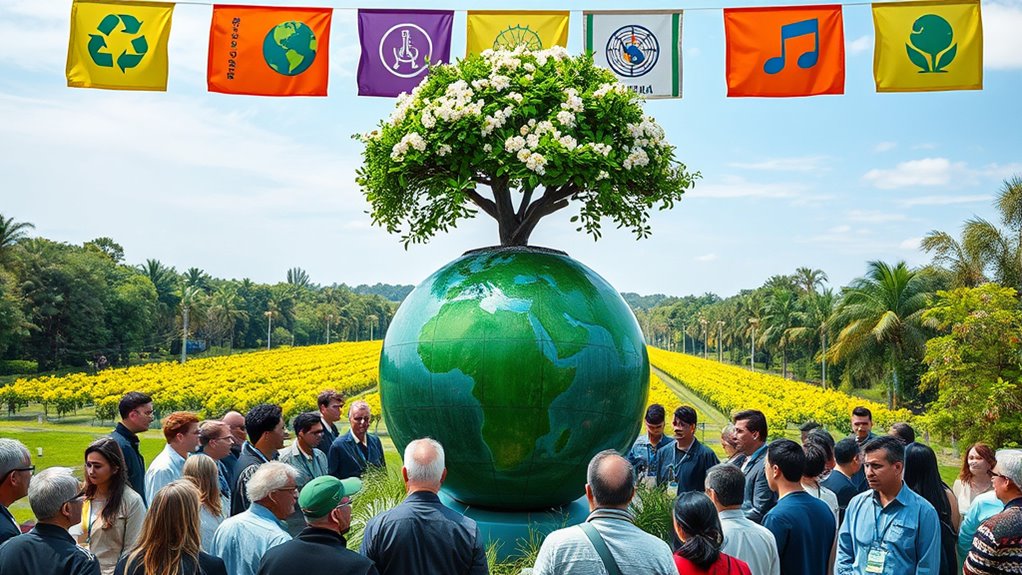

World Environment Day, organized by the United Nations, encourages you to take action for global environmental policy shifts. It raises awareness about climate change, biodiversity, and sustainability. The day inspires individuals, communities, and governments to participate in eco-friendly practices and advocate for stronger policies. By supporting these efforts, you help drive international commitments toward a healthier planet. Keep exploring to discover how collective efforts continue to shape impactful environmental policies worldwide.
Key Takeaways
- The United Nations leads World Environment Day to promote global awareness and action for environmental policy reforms.
- The day serves as a platform for the UN to advocate for sustainable development and climate commitments worldwide.
- World Environment Day mobilizes governments, communities, and individuals to support policies addressing biodiversity loss and climate change.
- The UN uses this day to highlight the importance of integrating environmental considerations into global policy agendas.
- Collective participation on June 5th reinforces international cooperation toward sustainable environmental policies and practices.
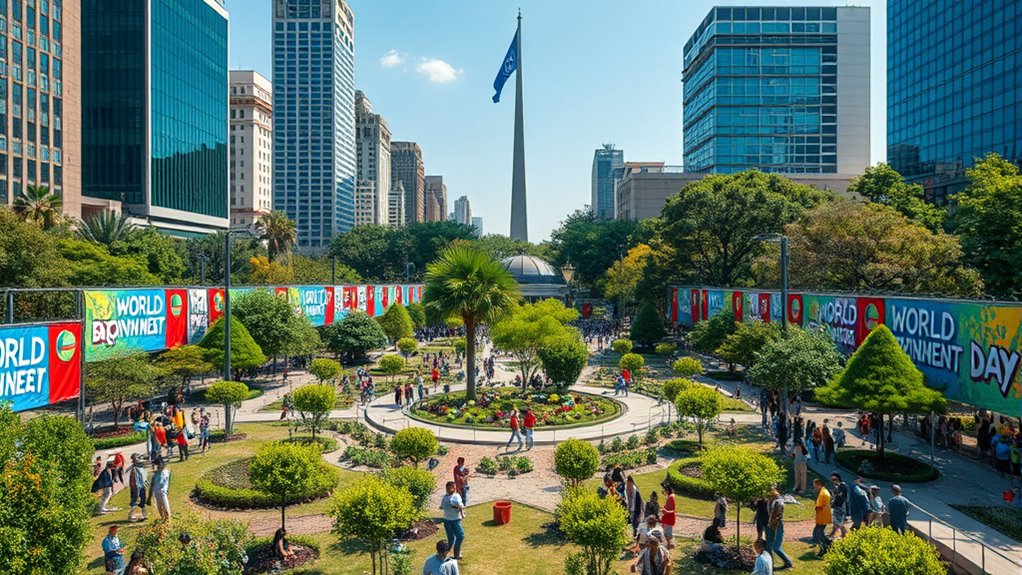
Every year on June 5th, the world comes together to celebrate World Environment Day, an initiative led by the United Nations to raise awareness about environmental issues and promote sustainable actions. This day serves as a global reminder that each of us plays a crucial role in protecting the planet. As you participate in this celebration, you become part of a worldwide movement advocating for stronger climate action and biodiversity conservation. The focus is on inspiring individuals, communities, and governments to implement practical steps that address pressing environmental challenges.
Join the global effort on June 5th to protect our planet through sustainable actions and environmental awareness.
The importance of climate action cannot be overstated. Climate change impacts everything—from rising sea levels and extreme weather events to shifting ecosystems. Your choices, from reducing carbon footprints to supporting renewable energy, contribute to a collective effort to curb global warming. The United Nations emphasizes that meaningful climate action requires cooperation at every level, encouraging you to advocate for policies that prioritize sustainability. Small actions, like conserving energy or choosing eco-friendly transportation, may seem minor, but they add up when millions participate. The goal is to create a tangible, positive impact that shifts the global trajectory toward a more sustainable future.
Biodiversity conservation is equally critical. Our planet’s diverse ecosystems, from rainforests to coral reefs, sustain life and provide essential resources. Yet, human activities threaten this rich tapestry of life. You can make a difference by supporting conservation initiatives, reducing habitat destruction, and advocating for policies that protect endangered species. The United Nations highlights that preserving biodiversity enhances resilience against climate change and secures the health of our planet. Additionally, understanding the role of natural materials in creating a rustic, farmhouse bedroom ambiance can inspire sustainable choices in decor and lifestyle. Educating yourself about local and global biodiversity issues helps you understand your role in safeguarding these ecosystems. Participating in community projects or volunteering for conservation efforts amplifies your impact, fostering a sense of responsibility and hope. Recognizing the importance of ecosystem services can further motivate sustainable practices that benefit both the environment and your well-being. Incorporating sustainable practices into daily life can promote long-term ecological balance and resource conservation.
On World Environment Day, the message is clear: everyone has a part to play in shaping environmental policies that prioritize sustainability. The United Nations uses this day to push for stronger commitments worldwide, but real change happens when individuals like you take action. Whether it’s reducing waste, supporting eco-friendly businesses, or raising awareness about climate change and biodiversity, your efforts contribute to a larger movement. This day reminds you that collective action is powerful, and when you unite with others in these efforts, you help drive the global policies needed to protect our planet for future generations. Your involvement not only supports global initiatives but also inspires others to join the cause, creating a ripple effect that can lead to lasting change. Embracing sustainable living practices can significantly amplify your positive impact on the environment.
Frequently Asked Questions
How Does UN Funding Impact Environmental Initiatives Globally?
Your understanding of how UN funding impacts environmental initiatives is essential. When funding allocation is sufficient, it boosts policy influence, enabling programs to expand and innovate. Conversely, limited funding restricts efforts, slowing progress and reducing effectiveness. By supporting well-funded initiatives, you help shape stronger policies and drive meaningful change worldwide. Your contribution guarantees resources are available to tackle pressing environmental issues, making a tangible difference in global sustainability efforts.
Who Are the Key Stakeholders Involved in UN Environmental Policies?
Imagine you’re steering a complex web of environmental challenges. Who are the key players? You see governments and international organizations leading policy creation, but also local communities and NGOs shaping real change through stakeholder collaboration. Business leaders and scientists advise and implement solutions, while citizens hold everyone accountable. Together, these stakeholders drive policy enforcement and guarantee environmental efforts are effective, balancing diverse interests for a sustainable future.
How Are Local Communities Engaged in Un-Led Environmental Projects?
You actively participate in UN-led environmental projects by contributing community participation and sharing Indigenous knowledge. Local communities are engaged through consultations, local partnerships, and capacity-building initiatives that respect their traditions and insights. This involvement guarantees projects are culturally appropriate and sustainable. Your input helps shape policies that reflect local realities, empowering communities to protect their environment and implementing solutions grounded in Indigenous wisdom and firsthand experience.
What Are the Long-Term Goals of the Un’s Environmental Programs?
You know what they say, “a journey of a thousand miles begins with a single step.” The UN’s environmental programs aim for long-term goals like promoting Sustainable Development and building Climate Resilience worldwide. These initiatives seek to guard ecosystems, reduce poverty, and guarantee future generations can thrive. By focusing on these goals, you help create a healthier planet, where environmental and social progress go hand in hand for lasting change.
How Does UN Environmental Policy Adapt to Emerging Global Challenges?
You see that UN environmental policy adapts by focusing on climate resilience and biodiversity conservation, addressing emerging global challenges like climate change and habitat loss. They update strategies based on new scientific data and global trends, encouraging nations to implement innovative solutions. By fostering international cooperation and integrating local actions, the UN guarantees policies remain effective and responsive, helping communities adapt and protect ecosystems amidst evolving environmental threats.
Conclusion
As you celebrate World Environment Day, remember that the United Nations continues to lead the charge, shaping policies that protect our planet. Just like the explorers of old, you now have the power to make a difference, whether by advocating for change or adopting sustainable habits. Don’t wait for a DeLorean to take you back—embrace today’s opportunities and be part of the global movement to safeguard our environment for future generations.