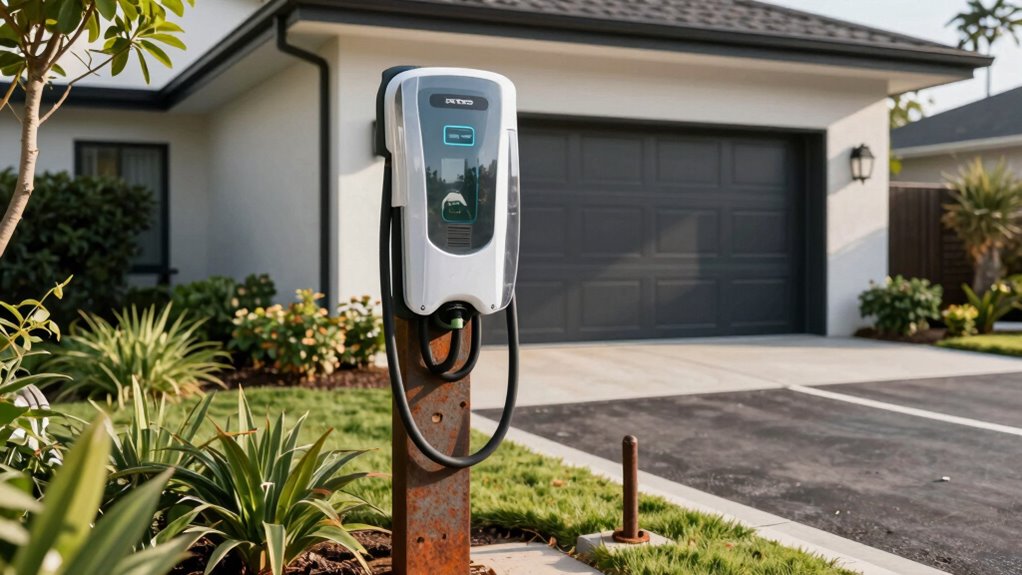

To install your outdoor EV charger safely, choose a flat, sturdy spot near your driveway that’s easily accessible and away from obstructions. Make sure it’s weatherproofed with an appropriate IP-rated enclosure, and use UV-resistant cables routed through weatherproof conduits. Secure all connections tightly and lockable enclosures to prevent theft or vandalism. Proper placement, weatherproofing, and safety measures are key—continue exploring for detailed tips to guarantee a durable, secure installation.
Key Takeaways
- Select a durable, weatherproof charger with appropriate IP ratings and install it on a stable, flat surface near an accessible electrical outlet.
- Ensure all electrical connections are sealed and protected with weatherproof enclosures or covers to prevent moisture ingress.
- Use outdoor-rated, UV-resistant cables organized with conduit or clips, routed away from foot traffic and potential impacts.
- Position the charger in a well-lit, secure area with lockable enclosures to deter theft and vandalism.
- Verify electrical capacity, properly prepare mounting surfaces, and seal all connections to ensure safety and longevity of the installation.

Installing an outdoor EV charger is a practical way to guarantee your electric vehicle is always prepared for your next trip. Proper placement ensures easy access while minimizing risks associated with weather and security. When choosing a location, look for a spot that’s close to your driveway or parking area, ideally on a sturdy, flat surface. Keep in mind that the charger should be accessible without obstruction, but also protected from harsh elements. Positioning it near existing electrical outlets or panels can simplify installation and reduce wiring costs. Additionally, consider the proximity to your home’s power source, ensuring your electrical system can handle the charger’s requirements.
Choose a flat, accessible spot near your driveway, protected from weather, close to electrical panels for easy outdoor EV charger installation.
Weatherproofing is critical for outdoor installations, so you want to assure the charger and its components are rated for outdoor use. Look for models with an IP (Ingress Protection) rating that indicates resistance to dust, water, and other environmental factors. Proper weatherproofing prevents damage from rain, snow, and temperature fluctuations. When installing, verify that the mounting surface is stable and can support the weight of the charger. Seal all connections securely to prevent moisture ingress, which could cause electrical faults or corrosion over time. Installing a weatherproof enclosure or cover enhances protection, especially in areas prone to heavy storms or snow.
Cable management is an often-overlooked but essential aspect of outdoor EV charger installation. Use high-quality, outdoor-rated cables that resist UV degradation and weather damage. Keep cables neatly organized, using conduit or cable clips to secure wiring along walls or posts, avoiding loose or dangling wires that could pose tripping hazards or become damaged. Proper cable management not only enhances safety but also prolongs the lifespan of your equipment. It’s advisable to route cables in a way that minimizes exposure to foot traffic and potential physical impacts. If your setup involves long cable runs, consider using weatherproof conduits to protect the wiring from the elements. Proper cable management is an important part of ensuring safety and durability in outdoor installations.
Security considerations are equally important when installing an outdoor charger. Since the device will be exposed to the outdoors, you should think about preventing theft or vandalism. Installing a lockable enclosure or cable lock can deter unauthorized access. Position the charger in a visible, well-lit area to discourage tampering and make it easier to monitor. You might also consider security cameras or motion-activated lighting to add an extra layer of protection. Ensuring the installation is sturdy and anchored properly reduces the risk of theft or accidental damage. Remember, a secure setup not only protects your investment but also ensures consistent, safe operation for your EV charging needs.
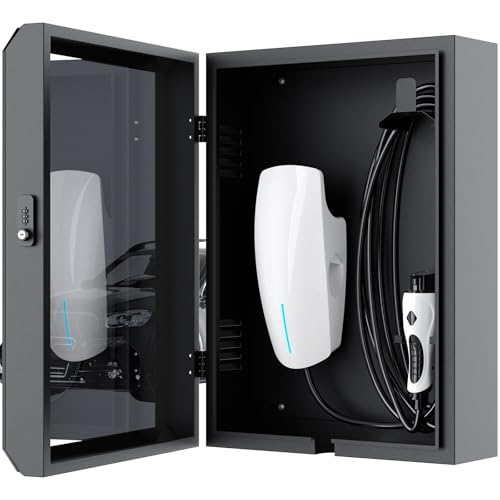
NOTASA Tesla Wall Charger Cover, Outdoor EV Charger Enclosure Universal Fit for All Electric Vehicle Chargers, Large Capacity Weatherproof Wall-Mounted Charger Box
Universal Compatibility: In addition to Tesla charger cover, it is also compatible with most other electric vehicle chargers….
As an affiliate, we earn on qualifying purchases.
As an affiliate, we earn on qualifying purchases.
Frequently Asked Questions
How Often Should Outdoor EV Chargers Be Inspected for Weather Damage?
You should inspect your outdoor EV charger at least quarterly for weather-related damage as part of your maintenance schedule. Regular weather-related inspections help identify issues like corrosion, water ingress, or physical wear early on. After severe storms or harsh weather, it’s wise to do a quick check. Consistent inspections guarantee safety, proper functioning, and longevity, making sure your charger remains weatherproof and ready when you need it.
Can Outdoor EV Chargers Be Installed on Any Exterior Wall?
Yes, you can install outdoor EV chargers on most exterior walls, but make certain they have proper wall mounting and adequate structural support. Check that the wall can handle the weight and vibration of the charger, and secure it firmly to prevent weather-related damage. Avoid installing on weak or unstable surfaces, and follow manufacturer guidelines for mounting height and safety clearance to ensure a safe, durable setup.
What Are the Best Security Measures to Prevent Theft?
To prevent theft, you should install security cameras around your outdoor EV charger for real-time monitoring and deterrence. Use lockable enclosures to secure the charging unit, making it difficult for thieves to access or remove. Additionally, consider installing motion-activated lights and alarm systems for extra security. These measures work together to protect your charger, giving you peace of mind and reducing the risk of theft.
Are There Specific Lighting Requirements for Outdoor EV Chargers?
Yes, outdoor EV chargers should meet lighting regulations and visibility standards to guarantee safety. You should install adequate lighting around the charger to prevent accidents and deter theft, especially at night. Proper lighting helps users see clearly, follow safety protocols, and comply with local regulations. Make sure the lighting is bright enough without causing glare, and consider motion-activated lights for energy efficiency and added security.
How Do Seasonal Changes Affect Outdoor EV Charger Performance?
Seasonal changes can impact your outdoor EV charger’s performance due to temperature fluctuations and precipitation impact. Extreme cold may slow charging speeds or cause components to freeze, while heat can overheat the unit. Rain, snow, and ice can damage connections or reduce efficiency. To minimize issues, guarantee your charger is weatherproofed, properly mounted, and protected against seasonal elements, so it operates safely and reliably year-round.

MACH 1: Fast 48 Amp Level 2 EV Charger, Hardwired Wall-Mount EVSE – Electric Vehicle Charging Station with Amp Lock, 200-240V. J1772 Connector Plus Tesla NACS Adapter. Outdoor Rated & a 30ft Cable
An American brand 4 all EVs in the US: ApexCharger features high end displays on all of its…
As an affiliate, we earn on qualifying purchases.
As an affiliate, we earn on qualifying purchases.
Conclusion
Installing your outdoor EV charger with proper weatherproofing, safety measures, and placement guarantees reliable, long-lasting performance. Did you know that over 80% of EV chargers experience weather-related issues due to improper installation? Taking the time to do it right not only protects your investment but also keeps you safe and ready for any weather. By following these tips, you’ll enjoy seamless charging and peace of mind, rain or shine.

WenStorm 50A 21ft J1772 EV Extension Cable, Level 2 EV Charger Extension Cord, Heavy-Duty 240V EV Extension Cable for Fast Charging (21FT)
Extended Charging Reach – Park Freely, Charge Anywhere: Add 21FT reach with this extra long EV charging cable….
As an affiliate, we earn on qualifying purchases.
As an affiliate, we earn on qualifying purchases.

HAVXJAN Outdoor EV Charger Enclosure with Key Password Lock, Floor Standing Steel Electric Vehicle Charging Protective Box, Tempered Glass Front Panel, Visible, Easy to Install, Black
【UNIVERSAL & EASY INSTALL】The EV charger holders compatible with Tesla and all major EV chargers. Simply attach the…
As an affiliate, we earn on qualifying purchases.
As an affiliate, we earn on qualifying purchases.