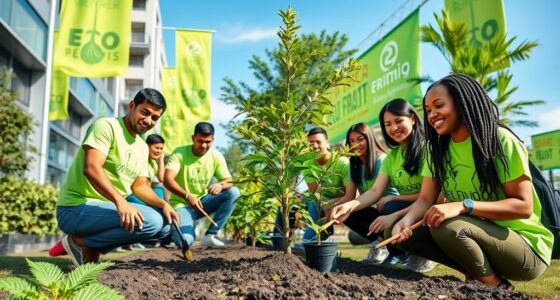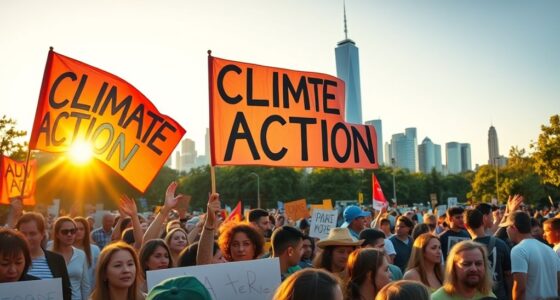
Green jobs are essential for building a sustainable economy, offering opportunities in renewable energy, green infrastructure, and environmental innovation. As you get involved, you’ll develop skills in solar, wind, and eco-friendly technologies, with continuous learning helping you stay ahead. These roles not only help the environment but also create economic resilience and social benefits. If you’re curious about how you can be part of this growing sector, there’s plenty more to explore.
Key Takeaways
- Green jobs focus on building an environmentally sustainable economy through renewable energy and green infrastructure projects.
- Workforce development involves continuous skills training, certifications, and adapting to technological innovations.
- Growing sectors like solar, wind, and clean energy offer increasing employment opportunities.
- Green infrastructure projects improve urban resilience, health, and climate adaptation through eco-friendly designs.
- Developing green skills supports economic resilience, social equity, and long-term sustainable growth.
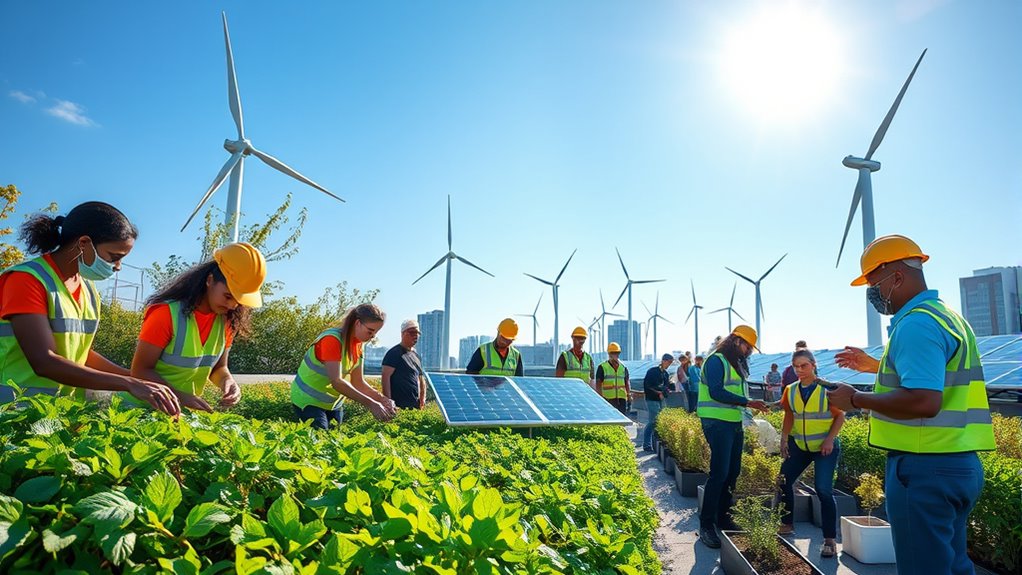
As the world shifts toward sustainable practices, green jobs are becoming a pivotal part of workforce development. These jobs focus on building a more environmentally friendly economy, and they often involve working with renewable energy sources and green infrastructure. You may find yourself in roles that contribute to reducing carbon emissions, conserving natural resources, and promoting healthier communities. This shift isn’t just about protecting the environment; it’s also about creating long-term economic opportunities for workers like you. As demand for renewable energy grows, so does the need for skilled professionals to install, maintain, and innovate in solar, wind, and other clean energy sectors. Whether you’re an electrician learning to handle solar panel systems or an engineer designing wind farms, your skills will be essential in transforming energy production and consumption.
Green infrastructure plays a central role in this change as well. It includes projects like green roofs, urban parks, permeable pavements, and stormwater management systems that help cities adapt to climate change while enhancing quality of life. When you work on green infrastructure projects, you’re directly contributing to healthier urban environments, reducing heat islands, and managing stormwater runoff more sustainably. These initiatives often require collaboration across various disciplines, so you might find yourself working alongside architects, environmental scientists, and city planners. Your expertise can help guarantee these projects are not just environmentally beneficial but also economically feasible and socially inclusive.
Getting involved in green jobs means you’ll need to stay updated on the latest technologies and policies related to renewable energy and green infrastructure. Continuous learning will be part of your career, as innovations in solar panel efficiency, battery storage, and eco-friendly materials evolve rapidly. Many organizations offer specialized training, certifications, and apprenticeship programs to help you develop the skills needed for these emerging fields. By embracing this knowledge, you position yourself as a pivotal contributor to the green economy, capable of tackling complex challenges with sustainable solutions.
Ultimately, your role in developing renewable energy projects and green infrastructure isn’t just a job—it’s a way to make a meaningful impact. You’ll be helping communities reduce their carbon footprint, create resilient urban spaces, and transition toward a low-carbon future. As these sectors expand, opportunities will multiply for workers ready to adapt, learn, and innovate. Your participation in this movement not only supports environmental health but also ensures economic resilience and social equity, making green jobs an essential pillar of workforce development for years to come.

ECO-WORTHY 16 Units Solar Panel Mounting Brackets,Z Bracket Sets Lightweight Aluminum Corrosion-Free for RV, Trailer, Boat, Yachs, Wall and Other Off Gird Roof,4 Set of 4 Units
Robustness: The ECO-WORTHY Z solar panel mounting brackets are made of aluminum alloy bracket and stainless steel M6…
As an affiliate, we earn on qualifying purchases.
As an affiliate, we earn on qualifying purchases.
Frequently Asked Questions
What Certifications Are Most Valued in Green Job Sectors?
You’ll find that certifications in renewable energy, like the NABCEP PV Installer Certification, are highly valued, helping you stand out in the green job sectors. For sustainable building, the LEED credential demonstrates your expertise in eco-friendly construction practices. These certifications show employers your commitment and skills, opening doors to roles focused on renewable energy projects and sustainable building initiatives, making you a more competitive candidate in these growing fields.
How Can Small Businesses Access Green Workforce Training Programs?
Imagine walking into a community center, where your small business can access renewable energy and sustainable materials training programs. You can often find these programs through local economic development agencies, industry associations, or online platforms. Many offer grants or subsidies to support small businesses. By engaging with these resources, you’ll develop skills that make your business more eco-friendly, competitive, and aligned with the growing demand for sustainability.
What Are the Average Salaries for Entry-Level Green Jobs?
You’ll find that entry-level salaries in renewable energy and sustainable manufacturing typically range from $40,000 to $55,000 annually. These roles often involve installing solar panels, working on energy-efficient manufacturing processes, or supporting eco-friendly projects. Your starting pay depends on your location, skills, and company size. As you gain experience, your salary can increase, opening doors to more advanced green job opportunities with higher pay.
How Does Green Job Growth Vary Across Different Regions?
You’ll notice green job growth varies across regions due to disparities in industry diversification. Some areas with a strong focus on renewable energy or sustainable manufacturing experience rapid expansion, while others see slower growth. Regional disparities influence opportunities, with regions investing in diverse green industries fostering more robust job markets. To capitalize on this, explore regions emphasizing industry diversification, as they’re more likely to offer dynamic green job growth and career opportunities.
What Are the Long-Term Career Prospects in Green Industries?
You’ll find strong long-term career prospects in green industries like renewable energy and sustainable manufacturing. As demand for clean energy solutions grows, you’ll have opportunities to advance your skills and take on leadership roles. These fields are evolving, offering stability and innovation. By staying current with industry trends and gaining specialized training, you can build a rewarding, lasting career that contributes to a healthier planet.

Maintenance Fundamentals for Wind Technicians (Go Green with Renewable Energy Resources)
Used Book in Good Condition
As an affiliate, we earn on qualifying purchases.
As an affiliate, we earn on qualifying purchases.
Conclusion
As you embrace green jobs and workforce development, remember that progress isn’t just about technology—it’s about people. Like the Wright brothers’ daring flight, your efforts can lift communities into a sustainable future. Stay adaptable, learn continuously, and don’t be afraid to challenge the status quo. The future’s green horizon is yours to shape, so seize it with the same spirit of innovation that once changed the world forever.

Green Stormwater Infrastructure Fundamentals and Design
As an affiliate, we earn on qualifying purchases.
As an affiliate, we earn on qualifying purchases.
eco-friendly stormwater management systems
As an affiliate, we earn on qualifying purchases.
As an affiliate, we earn on qualifying purchases.