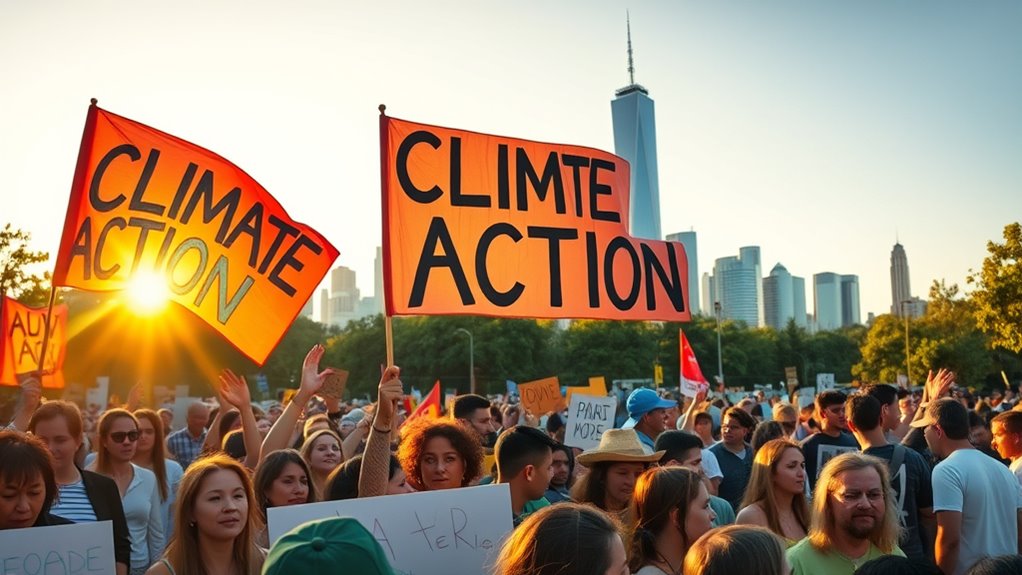

Climate Week genuinely makes a difference in shaping policies and shifting public opinion. It mobilizes activists, policymakers, and citizens to come together, boosting media attention and grassroots campaigns that pressure leaders to take stronger climate action. These efforts often lead to policy shifts and more ambitious commitments. If you want to discover how Climate Week continues to influence change and empower discussions, you’re in the right place.
Get ready for Prime Big Deal Days — try Prime free
Exclusive member deals on October 6–7, plus fast free delivery. Cancel anytime.
As an affiliate, we earn on qualifying purchases.
Key Takeaways
- Climate Week raises awareness and mobilizes public support, influencing policymakers to prioritize climate initiatives.
- It serves as a catalyst for policy discussions, leading to concrete commitments and resource allocation.
- The event amplifies advocacy efforts, encouraging stronger corporate and government climate strategies.
- Increased media coverage and grassroots campaigns during Climate Week shape public opinion and accountability.
- Visual communication and collective activism during the week inspire long-term climate action and systemic change.
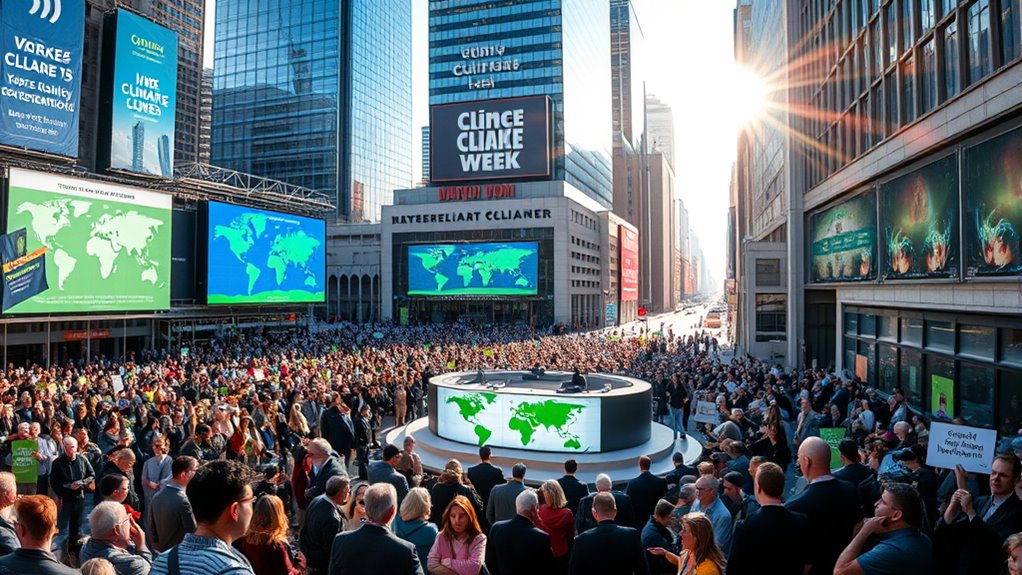
Climate Week has become a pivotal moment for shaping both policy and public opinion on environmental issues. During this time, activists, policymakers, and citizens come together to highlight the urgency of climate change and push for meaningful action. If you’re involved in climate activism or policy advocacy, you’ll notice that the events and discussions held during this week often serve as catalysts for change. They bring critical issues to the forefront and inspire people like you to demand stronger commitments from governments and corporations. This convergence of voices can influence the direction of policy, encouraging leaders to adopt more ambitious climate targets and support sustainable practices.
Climate Week unites activists and leaders to inspire stronger climate commitments and promote sustainable change.
As you participate in Climate Week, you see firsthand how momentum builds through public demonstrations, media attention, and grassroots campaigns. Your efforts, along with others’, help create a collective push that can sway policymakers. When you attend protests or write to your representatives, you’re engaging in policy advocacy — a key component of climate activism during these events. This advocacy plays a crucial role in translating public concern into concrete policy proposals. The more visible and vocal you are, the more pressure you place on decision-makers to prioritize climate initiatives and allocate resources to renewable energy, conservation, and adaptation strategies.
Furthermore, Climate Week’s influence extends beyond immediate policy changes. It shapes public opinion by raising awareness and changing perceptions. When you see headlines about new climate commitments or hear stories of communities affected by climate impacts, it reinforces the importance of collective action. Your involvement in climate activism helps amplify these messages, making sure they reach a broader audience. This increased awareness can lead to a more informed and engaged public, which in turn holds leaders accountable. Over time, this cycle of activism and advocacy helps embed climate considerations into mainstream political discourse and corporate strategies. Recognizing the importance of public engagement can significantly enhance the effectiveness of climate communication, making visual campaigns more compelling and relatable.
In addition, understanding the role of color accuracy in environmental communication can enhance the effectiveness of climate messaging, making visual campaigns more compelling and relatable. In essence, Climate Week acts as a rallying point that energizes climate activism and policy advocacy. It provides a platform where your voice, along with others, can influence the political landscape while shaping public attitudes. If you participate actively, you contribute to a larger movement that’s pushing for urgent, systemic change. Your engagement during this week can spark conversations, inspire new initiatives, and ultimately drive policies that prioritize the planet’s health. The impact of Climate Week isn’t just in the immediate events; it’s in how it energizes ongoing efforts to make climate action a central part of the global agenda. Additionally, the use of visual communication techniques can help make complex climate issues more accessible and motivating for diverse audiences.
climate activism signs and banners
As an affiliate, we earn on qualifying purchases.
As an affiliate, we earn on qualifying purchases.
Frequently Asked Questions
How Is Climate Week Funded and Organized Globally?
You’ll find that Climate Week is funded through a mix of government support, corporate sponsorships, and nonprofit organizations. Its organizational structures involve partnerships across international agencies, local governments, and environmental groups. These funding mechanisms and collaborative frameworks help coordinate the events, ensuring broad participation and impact. By understanding these systems, you can see how Climate Week manages to operate globally, raising awareness and fostering action on climate issues worldwide.
What Are the Measurable Outcomes of Climate Week Initiatives?
Imagine you’re witnessing the impact of Climate Week firsthand. You see increased public awareness through social campaigns and media coverage, leading to tangible policy change. Measurable outcomes include new environmental regulations, commitments from corporations, and heightened community engagement. These initiatives drive momentum, convincing policymakers to prioritize climate action. Ultimately, your participation helps turn awareness into action, proving that Climate Week can indeed make a difference in shaping a sustainable future.
How Do Local Communities Participate in Climate Week Events?
During Climate Week, you can actively participate through community engagement and local activism. Attend events like workshops, clean-up drives, or panel discussions to connect with neighbors and raise awareness. You might also organize your own initiatives or join local groups advocating for sustainable policies. Your involvement helps amplify the message, fosters collective action, and encourages others to get involved, making a real difference in your community’s approach to climate solutions.
Are There Specific Industries That Benefit Most From Climate Week?
During Climate Week, industry beneficiaries like renewable energy, transportation, and tech sectors often gain visibility and support. Corporate sponsorship plays a key role, boosting their presence and credibility. You’ll notice these industries leverage the event to showcase innovations, attract investments, and strengthen partnerships. As a result, Climate Week helps them expand their influence, accelerate sustainable initiatives, and capitalize on the growing demand for eco-friendly solutions, benefiting both their growth and environmental goals.
How Does Climate Week Influence International Climate Agreements?
During Climate Week, your awareness can influence international climate agreements by highlighting the importance of policy impact and diplomatic negotiations. As global leaders and stakeholders gather, your engagement and advocacy can push for stronger commitments and collaborative actions. By participating in events or spreading awareness, you help shape the dialogue, encouraging negotiators to prioritize climate solutions. Your involvement supports the momentum needed to achieve meaningful progress in international climate policies.
Conclusion
You see the power of Climate Week in shaping policy and shifting public opinion. You witness the moments that matter, the voices that resonate, and the actions that inspire change. You recognize that awareness sparks advocacy, advocacy fuels progress, and progress drives transformation. By engaging, by speaking out, by participating—you become part of the movement. Climate Week may be just a week, but its impact is ongoing, unfolding through your voice and your actions.
Fall Picks
fall essentials
As an affiliate, we earn on qualifying purchases.