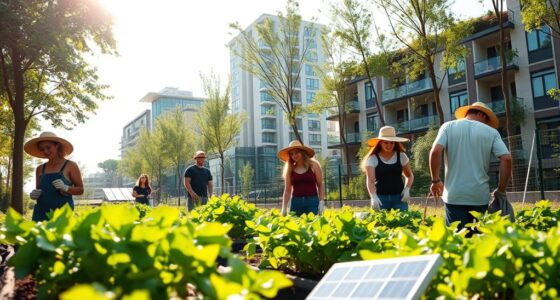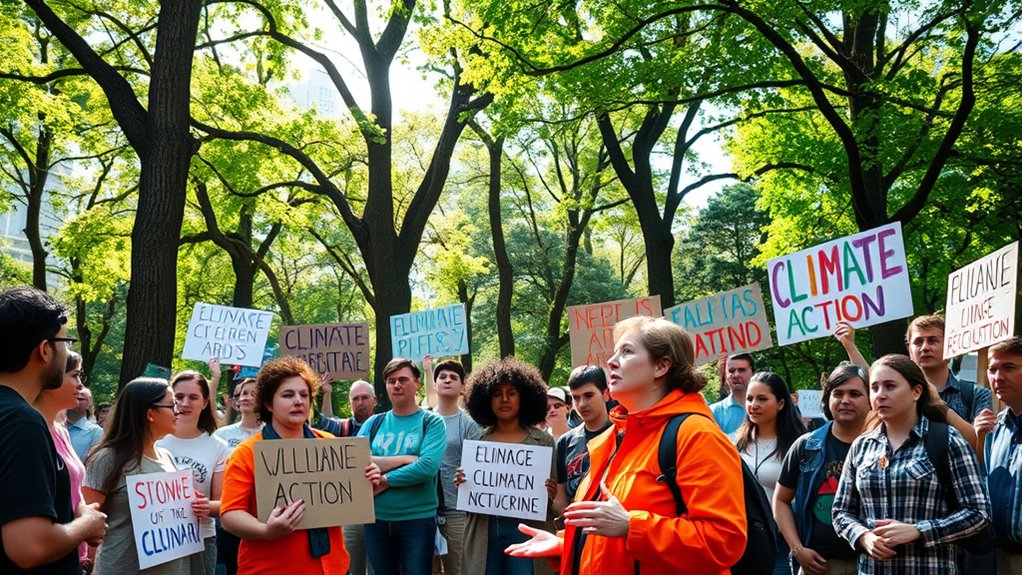

Grassroots organizing for climate action empowers you to connect with neighbors, local leaders, and organizations to push for meaningful policy changes. By participating in activities like neighborhood clean-ups and workshops, you help build trust and awareness within your community. Your collective efforts can influence policies supporting renewable energy and emission reductions, proving that local actions matter. Keep exploring how grassroots organizing can make a real difference and turn small steps into powerful change.
Key Takeaways
- Mobilize community members through local events and educational workshops to raise awareness and foster collective climate action.
- Engage residents in decision-making processes to build trust and ensure initiatives reflect community needs.
- Connect grassroots efforts with policy advocacy to influence legislation prioritizing sustainability and pollution accountability.
- Demonstrate tangible local benefits, like cleaner parks and reduced emissions, to inspire ongoing community involvement.
- Leverage grassroots organizing to create a unified voice that pressures policymakers and promotes systemic climate solutions.
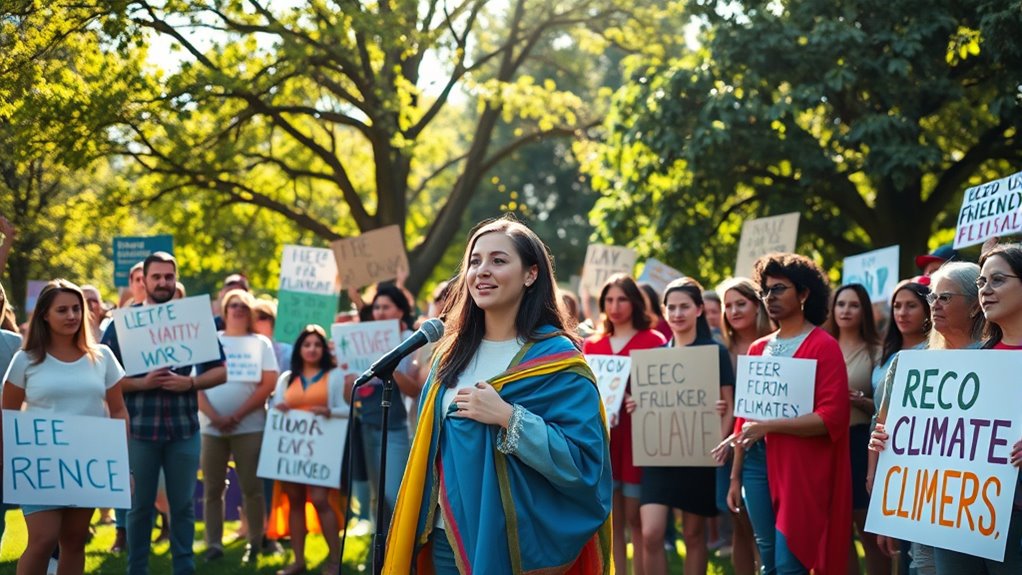
Have you ever wondered how small communities can drive big changes in the fight against climate change? The power lies in grassroots organizing, where your involvement can spark meaningful shifts. At the core of this movement is policy advocacy—pushing for laws and regulations that prioritize sustainability and hold polluters accountable. When you engage in policy advocacy, you’re not just raising awareness; you’re actively shaping the policies that govern your community and beyond. This might involve meeting with local officials, participating in public hearings, or mobilizing others to support climate-friendly legislation. Your voice becomes a catalyst for change, influencing decision-makers to adopt policies that promote renewable energy, reduce emissions, and protect natural resources.
Small communities can drive change through policy advocacy and grassroots action.
But policy advocacy alone isn’t enough. Community engagement is equally essential. When you connect with neighbors, local organizations, and community leaders, you create a collective force that amplifies your impact. Organizing neighborhood clean-ups, hosting educational workshops, or starting community gardens are practical ways to foster engagement. These activities not only raise awareness but also build a sense of shared responsibility. When people see tangible results—like cleaner parks or lower neighborhood emissions—they’re more motivated to support ongoing climate initiatives. Your efforts can inspire others to get involved, turning individual actions into a powerful movement.
Effective grassroots organizing requires understanding your community’s unique needs and strengths. By listening to residents and involving them in decision-making, you build trust and ensure that your advocacy efforts resonate locally. When community members feel heard and empowered, they’re more likely to participate actively. This creates a ripple effect, where small actions—such as signing petitions, attending rallies, or advocating for local policies—compound into significant change. The key is maintaining momentum through consistent engagement, making climate action a shared priority rather than a distant goal.
Your role is essential in bridging the gap between policy and everyday life. By championing policy advocacy and fostering community engagement, you help embed climate solutions into the fabric of your community. Grassroots organizing transforms abstract issues into tangible actions you and your neighbors can influence directly. It proves that even small communities, when united and determined, can challenge larger interests and push for a sustainable future. Your participation isn’t just about individual effort; it’s about creating a collective force that demands accountability and drives systemic change. Recognizing the importance of offensive security measures can enhance your strategy by proactively identifying vulnerabilities before they are exploited. The future of climate action depends on voices like yours—engaged, persistent, and committed to making a difference.

Gardening Tools 9-Piece Heavy-Duty Garden Tools Set, Stainless Steel Garden Hand Tools with Purple Floral Tote Bag and Repotting Mat Garden Supplies Kit Gifts for Women
【Complete 9-Piece Spring Gardening Tool Set for All Your Garden Tasks】Halilus gardening tool set includes 8 heavy-duty hand…
As an affiliate, we earn on qualifying purchases.
As an affiliate, we earn on qualifying purchases.
Frequently Asked Questions
How Can I Start a Grassroots Climate Group in My Community?
You can start a grassroots climate group by first doing local outreach to raise awareness and gather interested people. Then, focus on coalition building by connecting with community organizations, local activists, and environmental groups. Host meetings to develop shared goals, plan actions, and build momentum. Keep communication open, use social media, and engage your community regularly. This way, you’ll create a strong, effective group that makes a real difference in your area.
What Funding Sources Are Available for Grassroots Climate Initiatives?
Think of funding sources as a garden needing water to grow. You can tap into grant opportunities, which act like reliable rain showers, providing steady support. Crowdfunding campaigns are your sunshine, attracting community energy and donations. By combining these sources, you nurture your grassroots climate initiatives, helping them flourish. Seek out local foundations, government grants, and online platforms to diversify your funding and keep your efforts thriving.
How Do Grassroots Efforts Influence National Climate Policies?
Your grassroots efforts influence national climate policies through policy advocacy and raising public awareness. By mobilizing communities, you create pressure on policymakers to prioritize climate issues. Your campaigns can lead to increased media coverage and voter engagement, pushing politicians to support sustainable legislation. When you organize events, share information, and advocate for change, you help shape the political landscape, making climate action a national priority.
What Are Effective Strategies for Engaging Reluctant Community Members?
To engage reluctant community members, focus on building trust by listening to their concerns and showing genuine care. Motivate volunteers by highlighting how their actions make a real difference. Use relatable stories and small, achievable steps to inspire participation. Offer flexible involvement options to accommodate busy schedules. Consistently communicate progress, celebrate successes, and create a welcoming environment, making people feel valued and empowered to join your climate efforts.
How Can Technology Enhance Grassroots Climate Organizing?
Imagine you’re in 1920, and instead of telegrams, you have digital platforms at your fingertips. You can use these platforms to reach more people quickly and organize events efficiently. Data analytics help you understand community concerns and tailor your messages. Technology enhances grassroots climate organizing by expanding your reach, increasing engagement, and enabling smarter strategies, all while keeping the movement connected and energized.

Creative Safety Supply Clean Up After Your Dog, Be Respectful, No Poop and Pee – Wall Sign (7" x 10") PVC Signboard Backing
Clear Visual Communication – Designed with bold text and intuitive imagery, allowing crucial messaging to stand out in…
As an affiliate, we earn on qualifying purchases.
As an affiliate, we earn on qualifying purchases.
Conclusion
If you don’t get involved now, the planet could turn into a lifeless desert, with your voice lost forever in the wind. Your small actions, combined with others’, can create a tidal wave of change so powerful it reshapes the future. Don’t wait until it’s too late—your passion and effort are the sparks that can ignite a global wildfire of climate action. Together, we can stop disaster from releasing its full fury.
climate activism educational workshop kits
As an affiliate, we earn on qualifying purchases.
As an affiliate, we earn on qualifying purchases.

SmartSign – S-7385-PL-10 "We Reserve the Right to Refuse Services to Anyone" Sign | 7" x 10" Plastic Black/Red on White
DURABLE PLASTIC: 'Right To Refuse Services' signs use 55 mil thick HDPE (high density polyethylene) and can last…
As an affiliate, we earn on qualifying purchases.
As an affiliate, we earn on qualifying purchases.