Environmental justice mapping supports your advocacy by turning complex data into accessible visuals like maps and charts, highlighting disparities in pollution and resource access. It actively involves communities, giving them a voice and reflecting their lived experiences. Visual tools make invisible issues visible, helping you communicate your concerns clearly to decision-makers and the public. Combining accurate data with community insights strengthens your case and drives action. Keep exploring to discover how these strategies can empower your efforts even more.

Get garden gear delivered free with Prime
- Fast, free delivery on millions of items
- Prime Video, Amazon Music and more included
- Member-only deals all year
Key Takeaways
- Visualizes disparities and pollution hotspots, making environmental issues clear and compelling for advocacy efforts.
- Incorporates community input, ensuring maps reflect lived experiences and foster trust in the advocacy process.
- Combines ecological and social data to address root causes and promote sustainable solutions.
- Provides concrete visual evidence to persuade stakeholders and support policy change.
- Ensures advocacy is based on accurate, comprehensive data, highlighting inequities as undeniable, actionable facts.
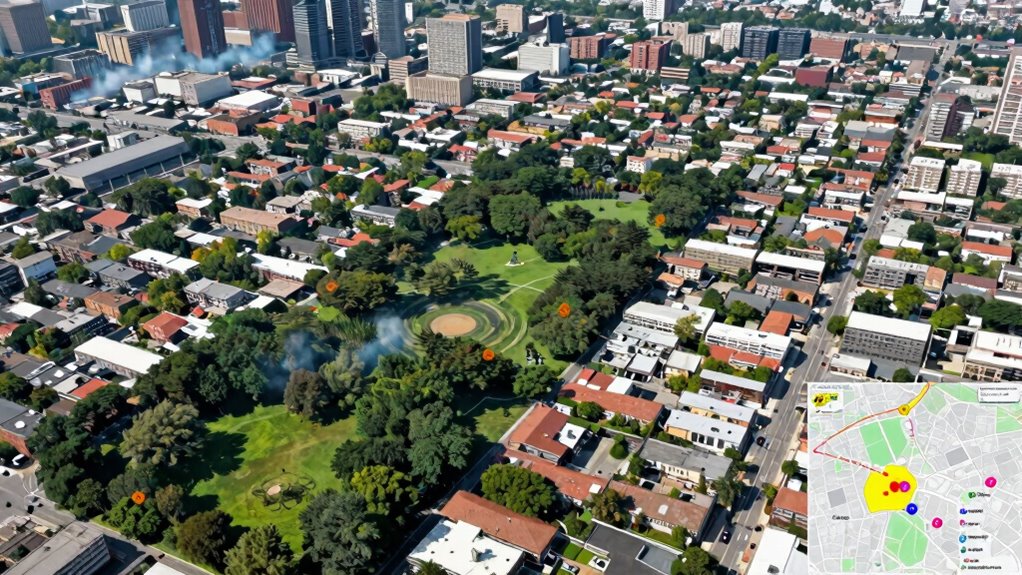
Environmental justice mapping is a powerful tool that helps identify communities most affected by pollution, environmental hazards, and resource disparities. When you use this mapping, you gain a clear view of where environmental injustices are most concentrated, allowing you to target your advocacy efforts more effectively. It’s not just about collecting data; it’s about transforming that data into meaningful insights that can drive change. Data visualization plays an essential role in this process, as it turns complex information into accessible, visual formats like maps, charts, and graphs. These visuals make it easier for you and others to grasp the severity and scope of environmental issues in specific areas, fostering a shared understanding among community members, policymakers, and activists.
Environmental justice mapping reveals hotspots, transforming data into visuals that empower communities and drive meaningful change.
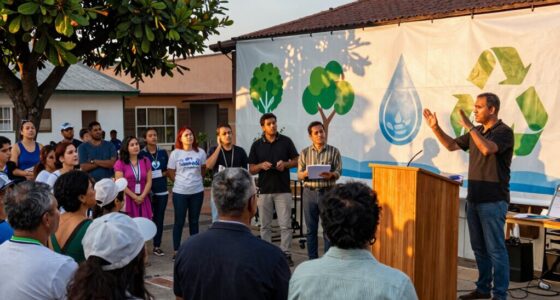
Community engagement becomes a key component of environmental justice mapping because it guarantees that those directly impacted by environmental hazards have a voice in the process. When you involve community members, you get firsthand knowledge about local concerns, historical context, and specific needs that data alone might not reveal. This collaborative approach builds trust and empowers residents to participate actively in advocacy efforts. As community members see their lived experiences reflected in the maps and data visualizations, they’re more likely to feel motivated to push for policy changes, cleanup initiatives, or resource allocation. This sense of ownership turns passive observers into active advocates. Incorporating biodiversity data into environmental justice mapping can also highlight how ecological health influences social equity, offering a more holistic view of environmental impacts. Additionally, understanding environmental health is crucial for addressing the root causes of disparities and promoting sustainable solutions.
Furthermore, environmental justice mapping enhances your ability to communicate complex findings convincingly. Good data visualization makes the invisible visible—highlighting pollution hotspots, disparities in access to clean water, or proximity to hazardous sites in a way that’s easy to understand. When you present this information visually, it resonates more deeply with decision-makers and the public, increasing the chances of generating support for your cause. Visual tools also facilitate clearer comparisons between different communities, showing how certain groups bear disproportionate burdens. Incorporating data visualization techniques broadens your capacity to communicate findings effectively, making complex issues more tangible and engaging for diverse audiences. Recognizing the importance of data collection and its accuracy further strengthens your advocacy by ensuring your efforts are based on reliable and comprehensive information. In the end, environmental justice mapping supports advocacy by making inequities undeniable and actionable. It provides concrete, visual evidence that can influence policy, mobilize community action, and attract funding for environmental improvements. When you combine community engagement with compelling data visualization, you create a powerful platform for change—one that highlights injustice and drives real progress toward environmental equity. This approach guarantees that your advocacy efforts are rooted in accurate, accessible information, giving communities the tools they need to stand up for their rights and demand a healthier environment for all.
Popular right now

Hisense 65-inch U6 Pro Mini-LED 4K UHD Smart Fire TV

iRobot Roomba 105 Robot Vacuum with LiDAR Navigation

Dyson Car+Boat Cordless Handheld Vacuum
As an affiliate, we earn on qualifying purchases.
Frequently Asked Questions
How Do Communities Access Environmental Justice Mapping Tools?
You can access environmental justice mapping tools through online platforms provided by government agencies, nonprofits, or research institutions. These tools often emphasize community engagement by offering tutorials and support. To guarantee data accessibility, look for user-friendly interfaces and downloadable datasets. Participating in community workshops or webinars can help you learn to navigate these maps effectively, empowering you to advocate for environmental justice in your area.
What Training Is Needed to Interpret Environmental Justice Maps Accurately?
Like a knight preparing for battle, you need proper training to interpret environmental justice maps accurately. Focus on skill development in understanding spatial data, overlays, and demographic information. Also, emphasize data accuracy to avoid misrepresentation. You might attend workshops, online courses, or work with experts to sharpen your skills. This knowledge helps you advocate effectively, ensuring your efforts are grounded in reliable insights and empowering your community’s voice.
How Often Are Environmental Justice Maps Updated With New Data?
Environmental justice maps are typically updated annually or semi-annually, depending on data availability and community needs. You should prioritize data accuracy during updates to guarantee reliable insights. Engaging with communities regularly helps gather timely information and maintain trust. By involving local residents, you can improve the map’s relevance, making sure it reflects current conditions and supports effective advocacy for environmental justice.
Can Environmental Justice Mapping Influence Policy Changes Directly?
Yes, environmental justice mapping can directly influence policy changes by highlighting disparities and informing decision-makers. Your community engagement through these maps strengthens the policy impact, as it provides concrete evidence of environmental inequalities that need addressing. When you present accurate, up-to-date data, policymakers are more likely to prioritize equitable solutions. This process empowers communities, giving them a voice in shaping policies that promote environmental justice and healthier living conditions.
What Are Common Challenges in Implementing Environmental Justice Mapping?
You’ll face challenges like ensuring data accuracy, which is vital for reliable mapping, and fostering genuine community engagement, as residents know their environment best. Limited resources and technical expertise can hinder data collection and analysis. Additionally, building trust within communities takes time, yet is essential for meaningful participation. Overcoming these hurdles requires collaboration, transparency, and ongoing support to create impactful, equitable environmental justice maps.
Conclusion
So, next time you’re fighting for cleaner air or fairer land use, remember—mapping isn’t just for cartographers; it’s your secret weapon. With every pixel and pinpoint, you’re basically wielding a GPS-guided sword against environmental injustice. Who knew that revealing the truth on a map could be so powerful? So, get your layers in order and keep fighting—because in the battle for environmental justice, a well-placed dot might just be your best defense.