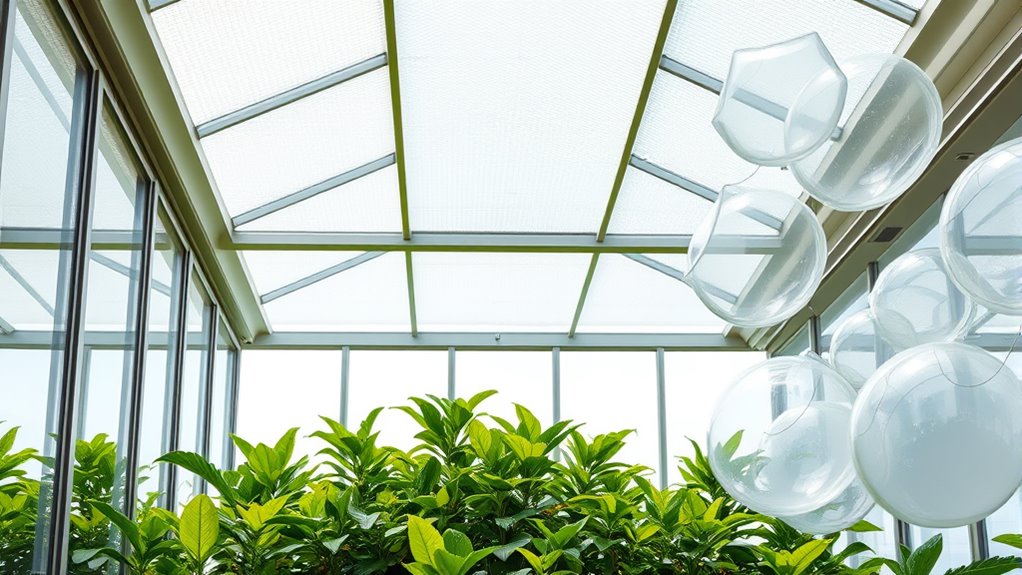

When choosing greenhouse glazing options, consider glass for its clarity and high light transmission, but remember it can be fragile and costly initially. Polycarbonate offers impact resistance, is lightweight, and helps with insulation, making it budget-friendly and durable. ETFE is highly resistant to weather, UV rays, and lasts long with minimal maintenance, though it costs more upfront. To find the best fit for your climate and budget, explore the advantages of each—more details await.
Play games included with Prime
Start a Prime free trial and play with Amazon Luna on your devices.
As an affiliate, we earn on qualifying purchases.
Key Takeaways
- Glass offers high clarity and solar heat but is fragile and heavier, requiring tempered or laminated options for durability.
- Polycarbonate provides impact resistance, lightweight installation, and cost-effective upfront investment with decent insulation.
- ETFE is highly durable, UV resistant, lightweight, and suitable for large spans, with higher initial costs but lower maintenance.
- Climate, budget, and specific needs like impact resistance influence the best choice among glass, polycarbonate, and ETFE.
- Advances in glazing technology enhance performance, sustainability, and long-term savings for greenhouse applications.
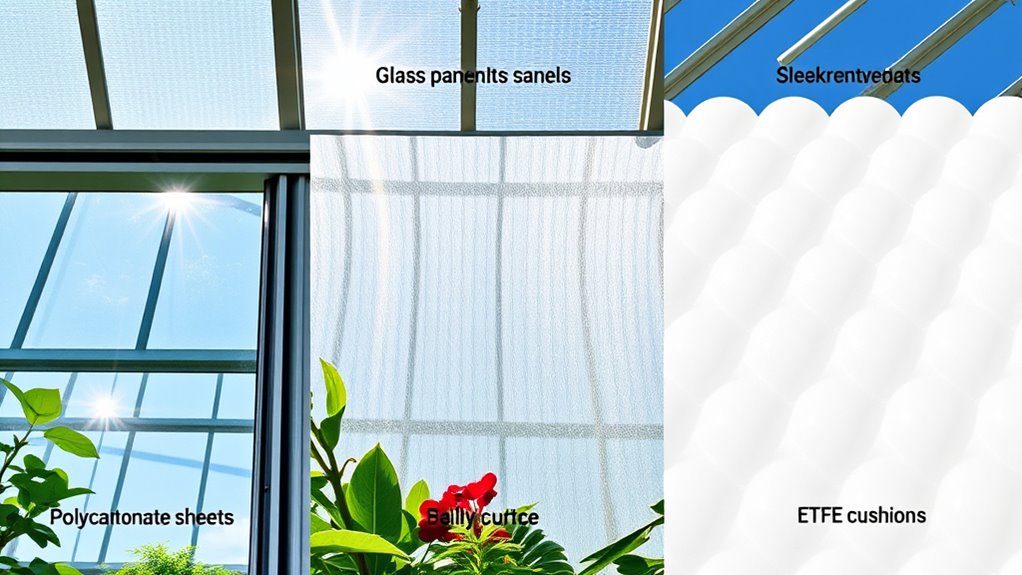
Are you wondering which greenhouse glazing option best suits your needs? Choosing the right material can substantially impact your greenhouse’s efficiency and longevity. When contemplating options like glass, polycarbonate, and ETFE, it’s essential to evaluate factors such as solar heat transmission and material durability. Each material offers unique advantages that can influence your growing environment and maintenance requirements.
Glass has long been a popular choice for greenhouse glazing because it provides excellent clarity and high light transmission. Its ability to maximize solar heat makes it ideal for colder climates, helping you retain warmth and extend your growing season. However, glass can be more fragile compared to other materials, so you’ll need to think about its material durability. While modern tempered or laminated glass enhances strength, it still risks breakage from impacts or severe weather events. Additionally, glass tends to be heavier and more expensive initially, but its durability can justify the investment over time, especially if you prioritize long-lasting, sturdy construction.
Glass offers excellent clarity and high light transmission, ideal for colder climates but can be fragile and more costly initially.
Polycarbonate panels are a versatile alternative, offering impressive durability and good light diffusion. They’re much more impact-resistant than glass, making them less prone to damage from hail, debris, or accidental impacts. This increased material durability can save you money on repairs and replacements. Polycarbonate also provides decent solar heat retention, though not quite at the level of glass. Its insulating properties help maintain stable temperatures inside your greenhouse, which is especially beneficial if you’re in an area with fluctuating weather conditions. Plus, polycarbonate is lightweight, easier to install, and generally more affordable upfront, making it a practical choice for many growers.
ETFE (ethylene tetrafluoroethylene) is a modern, high-performance material that has gained popularity for its exceptional durability and unique properties. It’s highly resistant to UV radiation, chemicals, and weathering, ensuring a long lifespan with minimal maintenance. ETFE’s transparency rivals that of glass, allowing ample sunlight and solar heat to pass through, which can boost plant growth and reduce heating costs. Its thin, lightweight nature also means you can design larger spans without excessive structural support. While ETFE can be more costly initially, its durability and high light transmission can translate into lower maintenance and energy expenses over the long term. If you’re looking for a cutting-edge material that combines solar heat efficiency with resilience, ETFE might be your best option.
It’s also important to note that advancements in material technology continually improve the performance and sustainability of greenhouse glazing options, providing more choices tailored to different environmental and economic needs.
Ultimately, your choice depends on your climate, budget, and specific needs. Whether you prioritize maximum solar heat, material durability, or a balance of both, understanding the strengths and limitations of each glazing type will help you make an informed decision for your greenhouse setup.
As an affiliate, we earn on qualifying purchases.
Frequently Asked Questions
How Do Glazing Options Impact Greenhouse Energy Efficiency?
Your choice of glazing options directly impacts your greenhouse’s energy efficiency by affecting solar gain and insulation properties. Glass provides high solar gain but can lose heat quickly, while polycarbonate offers better insulation, reducing heat loss. ETFE is lightweight with excellent light transmission and good insulation. Selecting the right material optimizes solar gain, maintains warmth, and minimizes energy costs, ensuring your greenhouse stays productive and energy-efficient year-round.
What Are the Maintenance Requirements for Different Glazing Materials?
You need to keep your glazing material clean, follow regular cleaning schedules to maintain clarity and efficiency, and address durability concerns to prevent damage. Glass requires gentle cleaning to avoid scratches, polycarbonate needs periodic checks for cracks, and ETFE necessitates minimal maintenance due to its resilience. Consistent upkeep guarantees your greenhouse stays efficient, durable, and protected from the elements, helping you maximize plant growth and energy savings over time.
How Does Glazing Choice Influence Plant Growth and Health?
Your glazing choice considerably impacts plant growth and health by affecting light transmission and heat retention. Glass offers high light transmission, promoting photosynthesis, and excellent heat retention, creating a stable environment. Polycarbonate provides good light diffusion and insulation, reducing temperature fluctuations. ETFE ensures high light transmission with excellent durability and self-cleaning properties, supporting healthy growth. Selecting the right material depends on balancing these factors with your specific greenhouse needs to optimize plant health.
Are There Environmental Benefits Associated With Each Glazing Type?
Imagine you’re in a time machine—each glazing type offers unique environmental perks. Glass has high recycling potential, making it eco-friendly, but it uses more natural resources during production. Polyethylene (Poly) is lightweight and energy-efficient to produce, reducing resource use, but it’s less recyclable. ETFE is durable and has excellent recycling potential, minimizing waste. Choosing the right option helps conserve resources and supports sustainability in your greenhouse.
What Are the Cost Differences Between Glass, Poly, and ETFE?
You’ll find glass typically has the highest initial cost but offers great durability and clarity, making it a solid long-term investment. Polyethylene (Poly) is more affordable upfront but may need more frequent replacements due to lower material durability. ETFE falls in between, with moderate costs and excellent durability. Your choice depends on your budget, desired lifespan, and the importance of clarity and insulation for your greenhouse.
Conclusion
Choosing the right greenhouse glazing depends on your needs and budget, whether you opt for glass, poly, or ETFE. Each offers unique benefits, so weigh your options carefully. Remember, “a penny saved is a penny earned,” so investing wisely now can pay off with healthier plants and lower energy costs later. Whatever you choose, your greenhouse will thrive with the right protection—it’s all about making smart, informed decisions.
Fall yard work Picks
leaf blowers
As an affiliate, we earn on qualifying purchases.