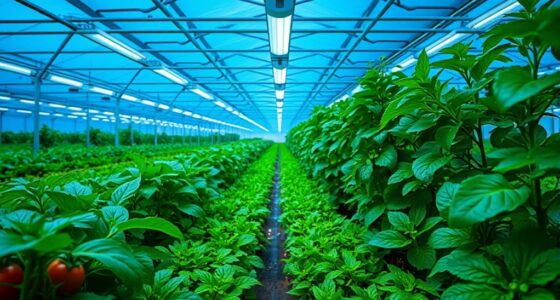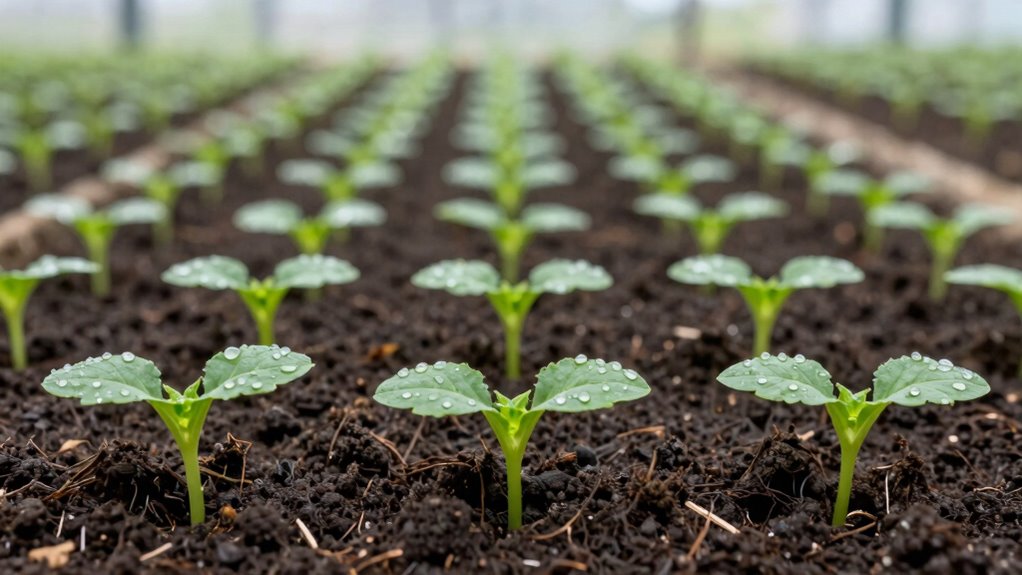

Seedling uniformity is valuable because it helps you plant more efficiently and predict crop outcomes. When seedlings grow at the same rate, you can plan your schedule better and reduce wasted resources. It also makes managing watering, fertilizing, and pest control simpler. Consistent growth leads to healthier, more reliable crops, which boosts yields and quality. If you want to discover how seed quality influences this process, keep exploring what makes seedlings so uniform.
Open a free Amazon Business account
Business pricing, bulk buying and tax-exempt orders.
As an affiliate, we earn on qualifying purchases.
Key Takeaways
- Ensures consistent growth and development, simplifying crop management and scheduling.
- Improves planting efficiency and resource utilization, reducing waste and costs.
- Facilitates accurate prediction of harvest times and yields for better planning.
- Promotes healthier crops with uniform maturity, enhancing overall crop quality.
- Supports reliable genetic traits, leading to higher crop resilience and productivity.
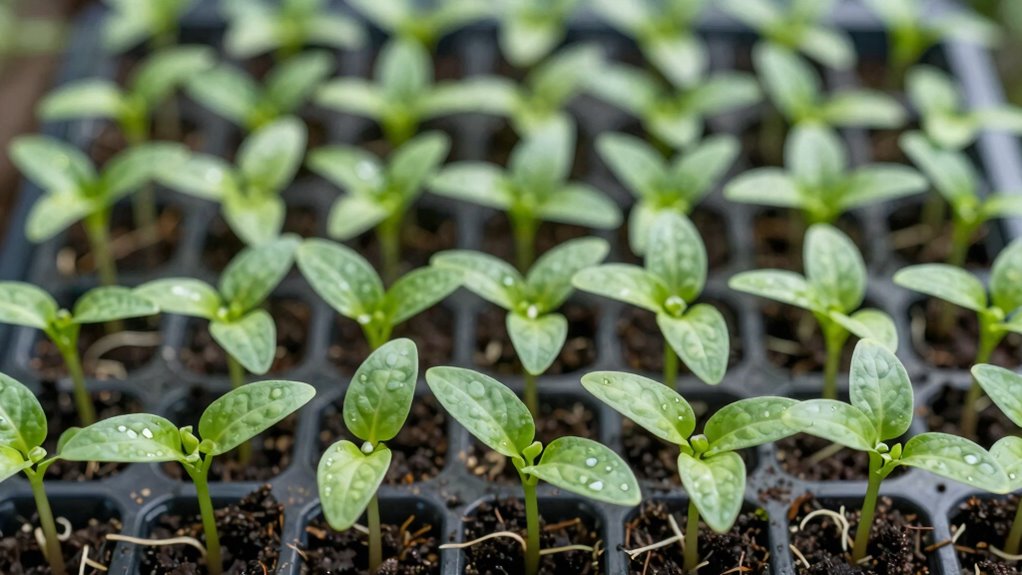
Understanding seedling uniformity is vital for optimizing crop production, as it directly impacts planting efficiency and future yields. When your seedlings grow evenly, you can plan your planting schedule more accurately, reduce waste, and guarantee that all plants develop under similar conditions. Uniform seedlings simplify management tasks such as watering, fertilizing, and pest control, leading to healthier crops and more predictable harvests. The key to this uniformity lies in genetic consistency and growth predictability, both of which play essential roles in establishing a reliable, high-quality crop.
Seedling uniformity boosts efficiency, yields, and crop quality through genetic consistency and predictable growth.
Genetic consistency means that each seed carries similar genetic traits, resulting in seedlings that grow at comparable rates and reach maturity around the same time. When you select seed lots with high genetic uniformity, you minimize variability in plant size, vigor, and resilience. This consistency allows you to anticipate how your crop will develop, making it easier to optimize resource use and scheduling. With predictable growth patterns, you avoid uneven stands, which can cause issues like overcrowding or underutilization of space and nutrients. Maintaining genetic consistency ensures that your seedlings have the inherent traits necessary for uniform development, which ultimately enhances overall yield quality. Additionally, seed quality plays a crucial role in maintaining this genetic uniformity and consistent growth. Ensuring high-quality seed also supports growth predictability, which is fundamental for effective crop management.
Growth predictability is equally important as it directly influences your ability to manage crops effectively. When seedlings grow predictably, you can precisely time interventions such as fertilization, watering, and pest control, reducing unnecessary applications and costs. Predictable growth also means that you can forecast harvest dates with greater accuracy, helping you plan labor and logistics efficiently. This consistency minimizes risks associated with uneven growth, such as increased vulnerability to pests or diseases, which tend to spread more easily among inconsistent stands. By fostering growth predictability, you create a stable environment where your crops can reach their full potential without surprises or setbacks.
seedling uniformity seed packets
As an affiliate, we earn on qualifying purchases.
As an affiliate, we earn on qualifying purchases.
Frequently Asked Questions
How Does Seedling Uniformity Affect Crop Yield?
Seedling uniformity positively impacts your crop yield by ensuring consistent growth and development across plants. When seedlings exhibit high vigor, they grow stronger and faster, leading to better competition against weeds and pests. Maintaining genetic diversity within uniform seedlings helps prevent vulnerabilities to diseases, securing your yield. Overall, uniform seedlings allow you to optimize resource use, reduce variability, and achieve higher, more predictable harvests.
Can Seedling Uniformity Be Improved After Planting?
Think of your seedlings as a choir; after the performance begins, you can’t change the singers. Similarly, improving seedling uniformity after planting is limited. While you can’t alter genetic diversity or soil variability once seedlings are established, you can optimize conditions like watering and fertilization to support their growth. These efforts help maintain uniformity, but the initial genetic and soil factors largely determine how synchronized your seedlings will remain.
What Are the Economic Benefits of Uniform Seedlings?
Uniform seedlings boost your economic gains by ensuring genetic consistency and growth synchronization. These qualities lead to predictable yields, reducing waste and optimizing resource use. When your seedlings grow evenly, you save on labor, fertilizers, and irrigation, which cuts costs. Additionally, uniform crops fetch better market prices because of their quality and consistency. Overall, investing in uniform seedlings enhances your profitability by streamlining production and meeting demand more efficiently.
Which Seedling Traits Are Most Important for Uniformity?
You should focus on seedling vigor and root development, as these traits are vital for uniformity. Strong seedling vigor ensures consistent growth rates, while healthy root development promotes stable, uniform plants. When both traits are optimized, your seedlings will grow evenly, reducing variability and increasing overall crop predictability. Prioritizing these traits helps you achieve uniformity, leading to better yields, easier management, and more efficient resource use.
How Does Seedling Uniformity Influence Pest Resistance?
Seedling uniformity can improve pest resistance because it promotes consistent genetic traits, making plants less vulnerable to pest adaptation. When seedlings are uniform, they respond similarly to pest attacks, allowing you to implement targeted and effective pest management strategies. However, too much uniformity can reduce genetic diversity, which is essential for long-term resilience. Balancing uniformity with genetic diversity helps maintain strong, pest-resistant crops.
Conclusion
Just as a maestro’s baton guides a symphony to harmony, your focus on seedling uniformity guarantees a thriving, balanced crop. When each seedling mirrors the next, it’s like tuning an instrument to perfection—creating a landscape of consistent growth and reliable yield. Embrace this precision, and watch your garden or farm flourish with the same finesse that turns chaos into concert. Remember, in nature’s orchestra, uniformity is the key to a masterpiece.
Fall Picks
fall essentials
As an affiliate, we earn on qualifying purchases.