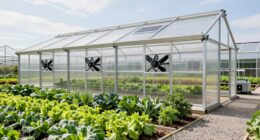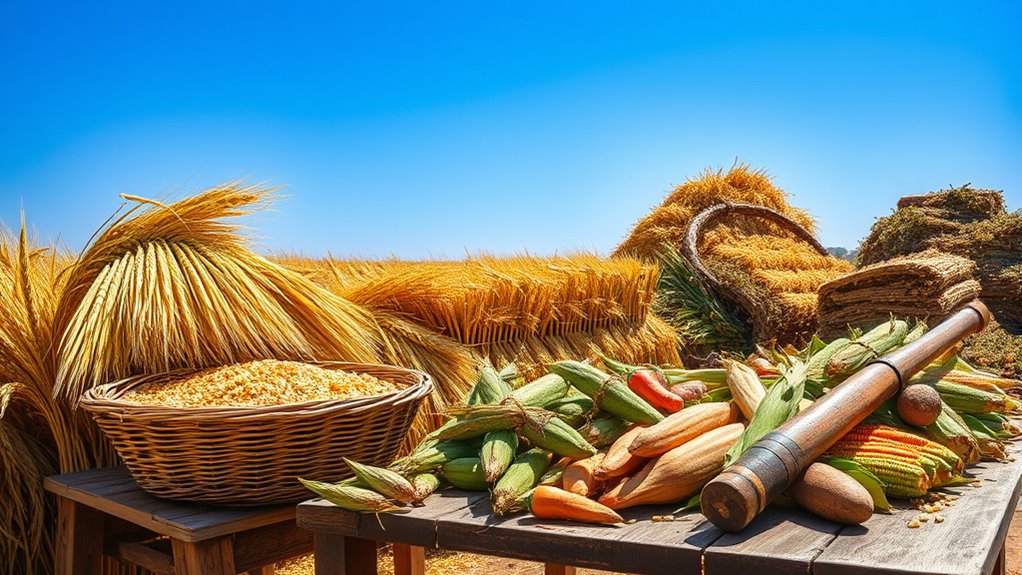

To handle harvest and postharvest tasks effectively, you need to time your harvest when fruits are fully ripe to guarantee quality and shelf life. Handle produce gently to prevent damage and use proper packaging for transport. Maintain ideal storage conditions, including temperature, humidity, and air circulation, to slow ripening and microbial growth. Managing these basics helps preserve freshness and reduce waste; continue exploring for more tips to maximize your produce’s quality.
Key Takeaways
- Correct harvest timing ensures fruits ripen fully, maximizing flavor, quality, and shelf life.
- Proper temperature control during storage slows ripening and microbial growth, maintaining freshness.
- Gentle handling and clean tools prevent bruising and physical damage, reducing spoilage risks.
- Optimizing storage conditions like airflow, humidity, and temperature prolongs produce freshness.
- Using protective packaging and consistent postharvest practices preserves quality during transport and sale.

Harvesting and postharvest handling are vital steps that determine the quality and shelf life of your produce. When it comes to fruit, understanding how fruit ripening affects your harvest is fundamental. Fruits continue to ripen after they are picked, which means timing your harvest correctly can make a significant difference in flavor, texture, and overall freshness. If you pick fruit too early, it might not fully ripen, resulting in a less desirable product that can spoil quickly. Conversely, harvesting too late can lead to overripe fruit prone to damage and decay. By monitoring the stages of fruit ripening carefully, you guarantee you harvest at the ideal point, preserving flavor and extending shelf life.
Once you’ve harvested your fruit, managing storage temperature becomes essential. Proper temperature control slows down the ripening process and inhibits microbial growth, helping your produce stay fresh longer. For many fruits, cooler storage temperatures—usually between 32°F and 55°F—are perfect. For example, apples and berries benefit from colder storage, which maintains firmness and flavor. On the other hand, some fruits, like bananas or tomatoes, are sensitive to cold and should be stored at slightly higher temperatures to prevent chilling injury. Knowing the specific temperature requirements for each type of fruit allows you to maximize shelf life and maintain quality.
Handling your fruit with care during and after harvest is equally important. Gentle handling minimizes bruising and damage, which can accelerate spoilage. Use clean, sharp tools for cutting, and avoid dropping or stacking heavy loads that can crush softer fruits. Once in storage, guarantee good air circulation around your produce to prevent moisture buildup and mold growth. Proper packaging can also protect delicate fruits from physical damage and reduce dehydration, especially during transportation. Maintaining ideal storage conditions, including temperature, humidity, and ventilation, helps slow down the natural ripening process, giving you more time to sell or consume your harvest.

The Art of Ripening Fruits: Mastering Nature's Timing for Perfectly Sweet Harvests
As an affiliate, we earn on qualifying purchases.
As an affiliate, we earn on qualifying purchases.
Frequently Asked Questions
How Does Climate Affect Harvest Timing and Quality?
Climate variability directly impacts your harvest timing and quality. Warmer temperatures or unexpected weather changes can accelerate crop ripening or cause damage, making timing critical. By monitoring climate patterns, you can optimize your harvest to maximize quality and yield. Adjusting your schedule based on climate forecasts guarantees you harvest at peak ripeness, reducing losses and improving overall crop quality. Effective harvest optimization depends on understanding and responding to climate influences.
What Are Common Postharvest Diseases and Their Prevention?
You should focus on postharvest disease management by maintaining proper sanitation and controlling humidity levels. Prevent common postharvest diseases like mold and rot by using disease-resistant varieties and applying appropriate fungicides. Regularly inspect produce for early signs of infection, and guarantee proper storage conditions to slow disease development. Proper handling and timely processing also help reduce disease spread, keeping your produce fresh and market-ready longer.
How Can Technology Improve Harvest Efficiency?
Have you wondered how technology can boost your harvest efficiency? Leveraging mechanization advancements and harvest automation streamlines your process, reducing labor time and increasing yield accuracy. Automated machinery handles delicate crops with precision, minimizing damage and waste. By integrating sensors and data analytics, you can monitor crop readiness and optimize harvest timing. Isn’t it time you embraced these innovations to maximize productivity and stay competitive in today’s fast-paced agricultural world?
What Are the Best Storage Conditions for Different Crops?
For ideal crop storage, you should focus on temperature control tailored to each crop, such as cool, humid conditions for berries or cooler, dry environments for root vegetables. guarantee proper crop storage by maintaining consistent temperatures and humidity levels to prevent spoilage. Proper ventilation also helps reduce mold and decay. Adjust storage conditions based on the specific needs of each crop to extend freshness and preserve quality effectively.
How Do Harvesting Methods Impact Shelf Life?
Your harvesting methods directly impact shelf life by influencing crop quality and damage. Using proper harvesting equipment minimizes bruising and cuts, preserving freshness. Effective labor management ensures timely harvesting, preventing overripe or underripe produce, which shortens shelf life. Gentle handling during harvest reduces stress on crops, maintaining their firmness and moisture content. Overall, careful techniques and efficient labor practices extend shelf life, ensuring produce stays fresh longer after harvest.

MOCREO WiFi Remote Thermometer Freezer Alarm, 1/3 Mile Long Range, IP66 Waterproof, App Email Alert, with Digital Monitor Hub, 2 Smart Wireless Temperature Sensors for Fridge, RV, Greenhouse
Update Remote Mute Function: Enjoy the convenience of dismissing the H5Pro hub's beep directly from the Smart App,…
As an affiliate, we earn on qualifying purchases.
As an affiliate, we earn on qualifying purchases.
Conclusion
Now that you understand harvest and postharvest basics, you’ll find that timing and careful handling often work together in surprising ways. It’s almost as if nature and science conspire to keep your produce fresh and tasty. When you pay attention to these details, you not only preserve quality but also turn everyday efforts into moments of mastery. So, next time you harvest, remember—sometimes success is just a matter of catching that perfect moment.

DonSail Fruit Picker Pole Tool with Basket Long Handle, 35-65 Inch Adjustable Apple Orange Picker Pole Tool with Basket for Avocado Acorn Lemon Pear Mango Tree Picker
▲【Large Fruit Picker Basket with Claw】Our fruit picker rake comes with metal twist on head basket( 9"x5.5"x5.5") for…
As an affiliate, we earn on qualifying purchases.
As an affiliate, we earn on qualifying purchases.

9527 Product 12" x 16" Clear Plastic Produce Bag, Food Storage Bag on a Roll, 350 Bags One Roll, Freeze/Heat Clear Bag for Bread, Meat, Vegetables, Fruits
【Generous Quantity】Each roll includes 350 clear plastic bags measuring 12" x 16" , providing ample supply for daily…
As an affiliate, we earn on qualifying purchases.
As an affiliate, we earn on qualifying purchases.