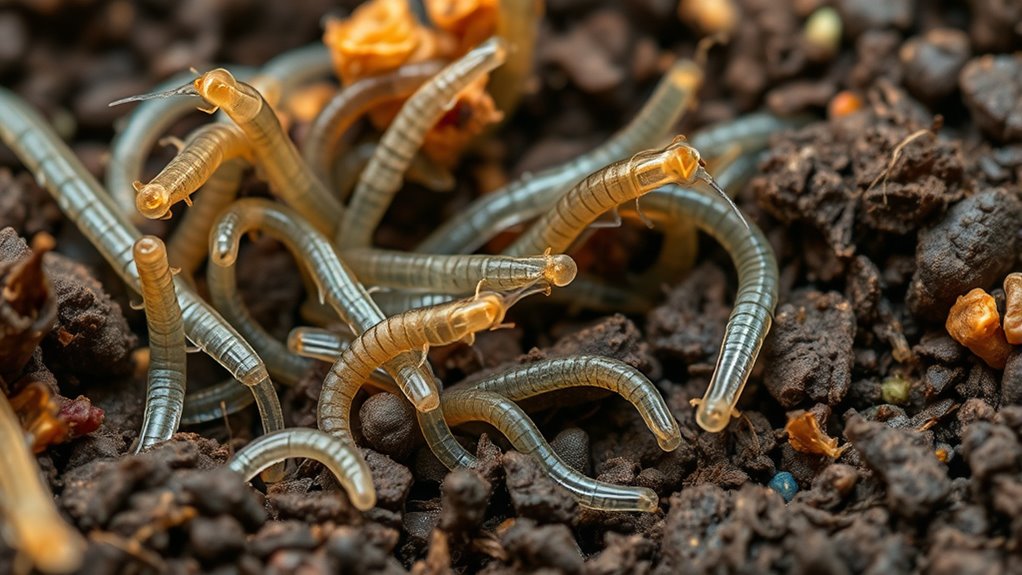

Nematodes are natural biocontrol agents that target soil pests like root maggots, beetles, and grubs without harming your plants or beneficial insects. They improve soil health by enhancing aeration, breaking down organic matter, and releasing nutrients, which supports stronger plant growth. Using nematodes offers a sustainable, residue-free alternative to chemical pesticides that helps maintain a balanced underground ecosystem. Keep going to discover how these tiny worms can help you achieve healthier, pest-free gardens and crops.
Key Takeaways
- Nematodes naturally target and infect specific soil pests like root maggots, beetles, and grubs, controlling their populations effectively.
- They enhance soil health by improving structure, aeration, and nutrient cycling, supporting vigorous plant growth.
- Nematodes offer a sustainable, chemical-free pest control method that reduces pest resistance and environmental impact.
- They promote biodiversity in the soil, benefiting beneficial microorganisms and beneficial insects.
- Application of nematodes integrates into pest management strategies, ensuring ongoing, natural pest suppression without harming plants.

Nematodes are microscopic worms that play an essential role in controlling pest populations naturally. When you introduce beneficial nematodes into your soil, you’re harnessing a powerful ally that helps maintain soil health while reducing the need for chemical pesticides. These tiny organisms target specific pests, such as root maggots, beetles, and grubs, by infecting and killing them without harming plants or beneficial insects. This natural pest control method not only keeps your garden or farm safer but also promotes a balanced ecosystem underground.
By improving soil health, nematodes support a thriving environment for plant roots and beneficial microorganisms. Healthy soil is the foundation for vigorous plant growth, and nematodes contribute to this by controlling pest species that damage roots and hinder nutrient absorption. When pests are kept in check, plants can access essential nutrients more efficiently, leading to stronger, more resilient growth. Moreover, nematodes help break down organic matter, releasing nutrients into the soil that plants can readily absorb. This process enhances soil structure, aeration, and water retention, creating ideal conditions for your crops or garden plants. Additionally, understanding the differences between pest control methods helps in choosing the most sustainable approach for your garden.
Nematodes improve soil health by controlling pests, breaking down organic matter, and enhancing soil structure and nutrient availability.
One of the most significant advantages of using nematodes as biocontrol agents is their ability to foster pest resistance naturally. Unlike chemical pesticides, which pests can develop resistance to over time, nematodes provide a sustainable, ongoing solution. Because they target specific pests and are part of the natural soil ecosystem, pests are less likely to develop immunity. This makes nematodes a long-term, effective approach to integrated pest management. Plus, they don’t leave harmful residues behind, ensuring your soil remains safe for beneficial insects, wildlife, and future crops.
When you apply nematodes correctly, they actively seek out their target pests within the soil and infect them, leading to their death. This process reduces pest populations without disrupting the delicate balance of your soil ecosystem. As pest numbers decline, plants experience less stress and can grow more vigorously. This, in turn, promotes a healthier, more resilient garden or farm environment, less dependent on chemical interventions. Over time, integrating nematodes into your pest management routine enhances soil vitality, encourages biodiversity, and supports sustainable farming practices.

25 Million Live Beneficial Nematodes Hb – Soil Pest Exterminator
Easy to apply and can be use around humans and pets
As an affiliate, we earn on qualifying purchases.
As an affiliate, we earn on qualifying purchases.
Frequently Asked Questions
How Are Nematodes Applied in Organic Farming Systems?
You apply nematodes in organic farming systems by using specific application methods like soil drenching, watering, or injecting them into the soil. Make certain the nematode formulation is appropriate, usually a powder or gel, and follow label instructions for best results. You typically apply them when soil conditions are moist and temperatures are suitable, which helps nematodes move effectively and target pests, providing natural pest control without synthetic chemicals.
What Are the Environmental Impacts of Using Nematodes?
Think of nematodes as tiny guardians working silently in your soil. When used responsibly, they help preserve ecosystem balance by targeting pests without harming beneficial organisms. However, you should watch for non-target effects, as they might accidentally affect other soil inhabitants. Overall, their environmental impact is positive, acting like natural allies that keep pests in check while maintaining the soil’s delicate harmony.
Can Nematodes Target Multiple Pest Species Simultaneously?
Yes, nematodes can target multiple pest species simultaneously, thanks to their broad host range. Their pest specificity varies among species, allowing some to infect various pests while others are more specialized. When you use nematodes with a wider host range, they can effectively control multiple pests at once, making them versatile biocontrol agents. However, understanding their host range is essential to avoid unintended impacts on non-target organisms.
How Do Nematodes Survive in Different Soil Types?
You can guarantee nematodes survive in different soil types by maintaining ideal soil moisture levels, as they need moisture to move and infect pests. Habitat diversity also helps, providing various microenvironments that support their survival. In dry or compacted soils, you might need to adjust irrigation or incorporate organic matter to improve conditions, enabling nematodes to thrive and effectively control pests across diverse soil environments.
Are Nematodes Effective Against Invasive Pest Species?
Yes, nematodes can be effective against invasive pest species by targeting and suppressing their populations. You’ll find that they actively seek out pests in the soil, infecting and killing them naturally. This pest suppression method is environmentally friendly and specific, making it a useful tool for managing invasive species without harmful chemicals. When used correctly, nematodes help restore balance to affected ecosystems, offering a sustainable pest control solution.

BioLogic's Scanmask Steinernema Feltiae (Sf) Beneficial Nematodes for Natural Insect Pest Control, 5 Million Size
NATURAL PEST CONTROL: Kills over 230 different pests. Safe for people, pets, plants and beneficials!
As an affiliate, we earn on qualifying purchases.
As an affiliate, we earn on qualifying purchases.
Conclusion
You now see how nematodes act as silent warriors beneath the soil’s surface, patrolling like hidden guardians. Their natural ability to target pests makes them a powerful, eco-friendly weapon in your pest management arsenal. Just as a key unlocks a door, nematodes open new pathways to sustainable agriculture. Embracing their potential transforms your approach from reliance on chemicals to a harmonious balance with nature, ensuring healthy crops and a thriving ecosystem.

50 Million Live Beneficial Nematodes Hb – Soil Pest Exterminator
Beneficial nematode specie: Hb (heterohabditis bacteriophora)
As an affiliate, we earn on qualifying purchases.
As an affiliate, we earn on qualifying purchases.

Monterey Nematode Control Bundled with Garden Spoon – Organic Gardening Control of Plant Parasitic Nematodes – 1 Quart – Apply with Sprayer, or as Drench
EFFECTIVE CONTROL OF PLANT-PARASITIC NEMATODES: Monterey Nematode Control is specially formulated to suppress and manage damaging nematodes in…
As an affiliate, we earn on qualifying purchases.
As an affiliate, we earn on qualifying purchases.