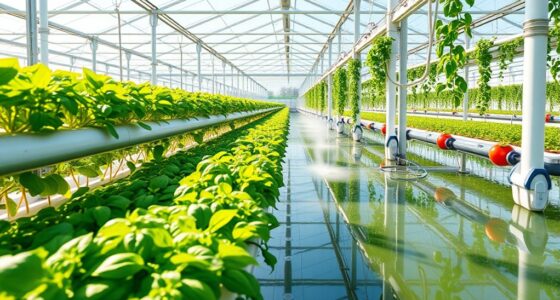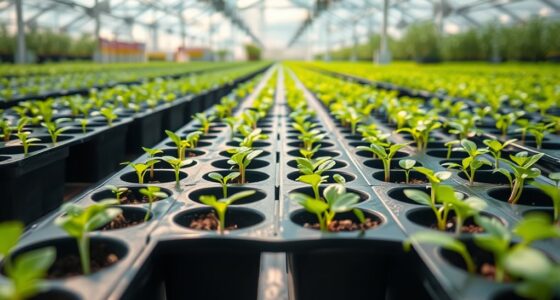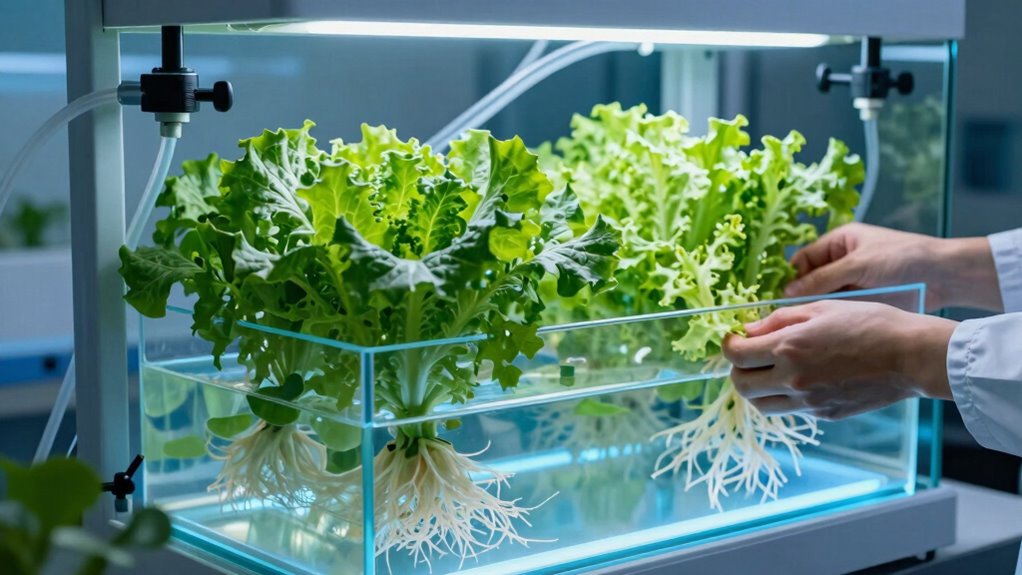

Although hydroponics looks high-tech, it still faces essential biological challenges. You need to carefully manage nutrients because plants lack soil buffers, risking deficiencies or toxicities. Beneficial microbes are key to healthy roots, but pathogens like Pythium can infect and devastate crops if you’re not vigilant. Contaminated water and humidity promote mold and disease. To succeed, you must actively control these biological factors. Keep exploring to discover how to keep your system resilient and thriving.

Get garden gear delivered free with Prime
- Fast, free delivery on millions of items
- Prime Video, Amazon Music and more included
- Member-only deals all year
Key Takeaways
- Despite advanced technology, biological factors like microbial balance and pathogens remain critical challenges in hydroponic systems.
- Maintaining nutrient accuracy is vital, as biological uptake varies and imbalances can lead to deficiencies or toxicities.
- Root diseases such as Pythium and Fusarium are biological threats that require strict hygiene and monitoring.
- Water quality management is essential to prevent microbial contamination and support healthy plant roots.
- Biological interactions influence system resilience, requiring ongoing biological and environmental management beyond high-tech infrastructure.
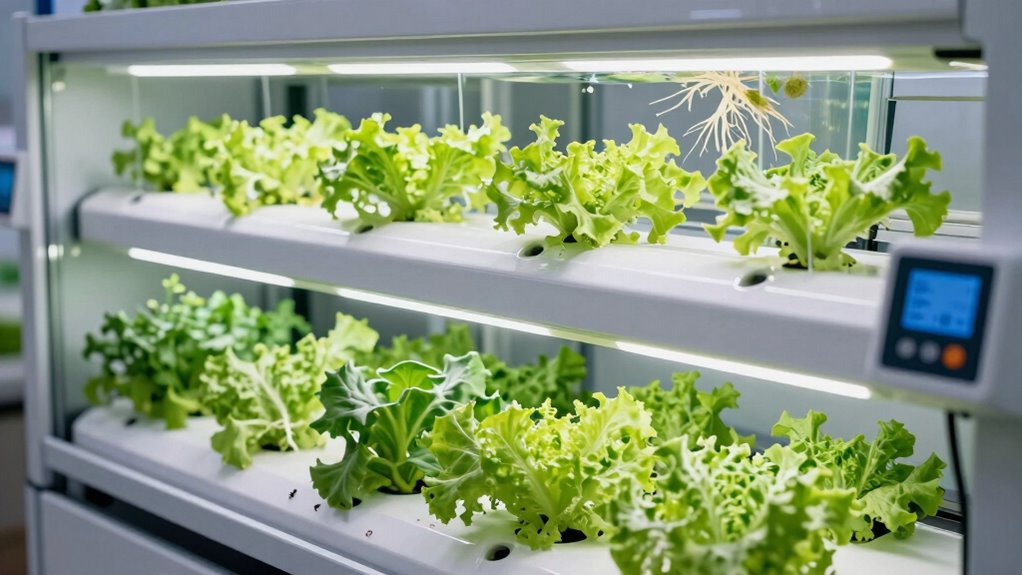
Hydroponics offers an innovative way to grow plants without soil, but it comes with its own set of core challenges. One of the biggest hurdles you’ll face is maintaining the right nutrient balance. Without soil to act as a buffer, you have to carefully monitor and adjust the nutrients in your water solution. If the nutrient levels are off, your plants won’t thrive. Too much nitrogen, for example, can cause excessive leafy growth but stunt fruit or flower development. Too little, and your plants will struggle to grow strong. Achieving precise nutrient balance requires constant testing and adjustment, especially as plants take up nutrients at different rates. If you don’t stay on top of it, your crops can suffer from deficiencies or toxicities, which can be hard to correct once they set in. Additionally, understanding the biological factors at play, such as beneficial microorganisms, is crucial to preventing issues. A comprehensive understanding of these biological interactions can help optimize plant health and growth. Regularly researching and staying informed about these biological factors can significantly improve your system’s resilience. Maintaining a healthy microbial balance is essential for supporting root development and preventing harmful pathogens from establishing.
Another biological problem you’ll need to contend with is root disease. In soil-based farming, the soil often contains beneficial microorganisms that help suppress harmful pathogens. Hydroponics, however, creates a sterile environment where pathogens can easily take hold if conditions are right. Root diseases like Pythium or Fusarium can quickly spread through your system, causing root rot and plant death. You might notice wilting, browning roots, or stunted growth as early signs. Preventing root disease requires strict cleanliness, proper sterilization of equipment, and vigilant monitoring of root health. If you ignore these steps, you risk losing entire batches of plants, which can be costly and discouraging. Proper water quality management and microbial balance are essential for preventing outbreaks of disease in a hydroponic system.
Furthermore, integrating biological controls such as beneficial microbes can help create a more resilient environment against pathogens. The biological challenges don’t stop there. Since hydroponic systems are so dependent on water, any contamination can spread rapidly. You need to be diligent about water quality, ensuring it’s free from pathogens and pollutants. Regularly flushing and sterilizing your system helps prevent buildup of harmful microbes. Additionally, you should implement good airflow and humidity control because overly humid conditions promote mold and other diseases that can attack roots and foliage alike. Regular testing of water and root health can help catch issues early before they become widespread.
In essence, while hydroponics appears cutting-edge, it’s still rooted in biological realities. You must actively manage nutrient levels and prevent root disease to keep your plants healthy. This isn’t a set-it-and-forget-it farming method; it demands constant attention and care. If you overlook these core issues, your high-tech system can quickly turn into a biological battleground, undermining your efforts and jeopardizing your harvest. Success in hydroponics hinges on understanding these biological challenges and staying vigilant to keep your plants thriving.
As an affiliate, we earn on qualifying purchases.
Frequently Asked Questions
How Does Hydroponics Compare to Traditional Soil Farming in Yield?
Hydroponics often yields more crops per square foot than traditional soil farming because it reduces soil dependency and optimizes nutrient delivery. You’ll notice faster growth rates and higher productivity compared to traditional methods, since plants don’t struggle with soil-borne diseases or poor soil quality. While soil farming has its charm, hydroponics offers a controlled environment that boosts yield, making it a promising solution for efficient, high-output food production.
What Are the Initial Costs for Setting up a Hydroponic System?
You’ll find the initial setup costs for a hydroponic system can be higher than traditional farming due to equipment investment. Expect to spend on grow lights, nutrient delivery systems, and climate control, which all contribute to the cost comparison. While these upfront expenses may seem steep, they often lead to faster yields and less land use, making hydroponics a worthwhile investment for consistent, high-quality produce.
Can Hydroponics Be Used for All Types of Crops?
You can’t use hydroponics for all types of crops, as there are growing limitations and crop diversity concerns. While leafy greens and herbs thrive in hydroponic systems, root vegetables like carrots or potatoes are harder to cultivate because of their size and growth needs. The technology works best for small, fast-growing plants, but for some crops, traditional soil methods remain more practical and effective.
How Is Pest Control Managed in Hydroponic Systems?
You manage pest control in hydroponic systems like a gardener wielding a gentle shield. Biological pests are kept at bay by introducing natural predators, turning your farm into a balanced ecosystem. You monitor your plants closely, acting swiftly when pests appear, and use biological controls instead of chemicals. This natural approach keeps your crops healthy, while maintaining the delicate harmony within your high-tech but biologically rooted hydroponic garden.
What Is the Environmental Impact of Hydroponic Farming?
Hydroponic farming has a lower environmental impact because it conserves water through recirculation, reducing overall use. You’ll also notice less nutrient runoff compared to traditional soil farming since nutrients are carefully controlled and recycled within the system. However, it still requires energy for lighting and climate control, which can contribute to greenhouse gas emissions if not sourced sustainably. Overall, it’s a more efficient and eco-friendly option.
Conclusion
Remember, hydroponics may look like the gleaming skyscraper of agriculture, but at its roots, it’s still grounded in biology—the soil’s silent heart. Just as a tree’s strength lies in its roots, your success depends on understanding these core issues. Embrace the challenge, nurture the delicate balance, and recognize that even in high-tech systems, life’s fundamentals remain unchanged. It’s the unseen depth that truly sustains growth, both in plants and progress.
Fall yard work Picks
leaf blowers
As an affiliate, we earn on qualifying purchases.