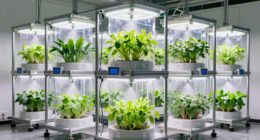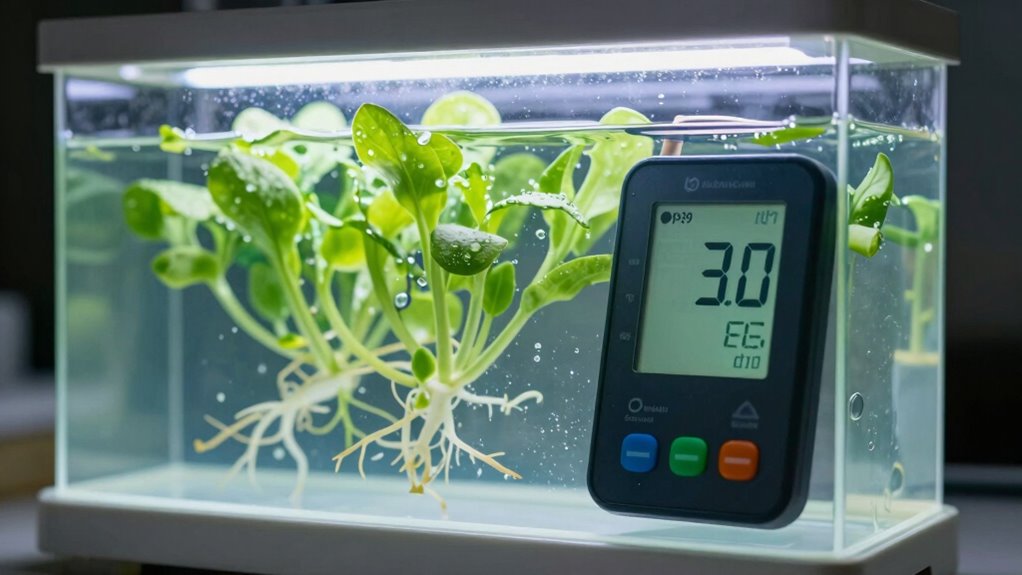

To keep your hydroponic system healthy, you must control both EC and pH levels. EC measures nutrient strength, so maintaining it within the right range prevents under- or over-fertilizing. pH affects nutrient availability; most plants thrive between 5.5 and 6.5. Regular testing and adjustments guarantee your plants get the nutrients they need without toxicity or deficiencies. Stay consistent, and you’ll open the door to vigorous growth and high yields. Continue to explore how to fine-tune these essential numbers for optimum results.
Key Takeaways
- Maintaining proper EC ensures optimal nutrient concentration, preventing deficiencies or toxicity in plants.
- Regularly monitoring pH keeps nutrient availability within the ideal range of 5.5 to 6.5.
- Adjust EC and pH levels promptly using appropriate solutions for healthy growth.
- Consistent testing and rebalancing avoid nutrient lockout and promote vigorous plant development.
- Proper control of EC and pH maximizes crop yield and overall system productivity.

Understanding and properly managing the electrical conductivity (EC) and pH levels in your hydroponic system is vital for healthy plant growth. These two measurements directly influence how nutrients are absorbed by your plants, impacting overall health and yield. When you control EC and pH carefully, you guarantee that your nutrient solution balance is ideal, which is essential for plant growth optimization. If these levels are off, plants can suffer from deficiencies or toxicity, leading to poor development and reduced productivity.
Proper EC and pH management is crucial for healthy, productive hydroponic plant growth.
The EC measures the concentration of dissolved salts or nutrients in your solution. Think of it as a way to gauge the strength of your nutrient mix. Too high, and the solution can become saltier than what your plants can tolerate, causing root burn or dehydration. Too low, and your plants might not receive enough nutrients, stunting growth. Regularly testing EC allows you to adjust your nutrient levels precisely, maintaining the perfect range for your specific plants. This proactive approach helps prevent nutrient lockout, where plants can’t uptake essential elements despite their presence in the solution.
Meanwhile, pH controls the acidity or alkalinity of your nutrient solution. Most hydroponic plants thrive in a slightly acidic environment, typically between 5.5 and 6.5. When pH drifts outside this range, nutrient availability drops considerably. For example, if the pH is too high, iron and manganese become less available, leading to deficiencies. If it’s too low, other nutrients like calcium and magnesium can become less accessible. Monitoring pH daily and adjusting it with pH up or down solutions keeps your plants in the ideal zone, ensuring nutrients are readily available for uptake. Maintaining proper nutrient availability is crucial, and consistent adjustments help optimize plant health.
Balancing EC and pH isn’t a one-time task; it’s an ongoing process that requires attention. Using reliable testing equipment, like EC meters and pH testers, will give you quick and accurate readings. When you notice fluctuations, adjust your nutrient solution accordingly. For instance, if the EC is too high, dilute the solution with water. If pH is off, add small amounts of pH adjusters, then re-test to confirm. Doing this consistently guarantees your plants are always in a state of nutrient availability that promotes vigorous growth.

VIVOSUN Digital pH and TDS Meter Kits, 0.01pH High Accuracy Pen Type pH Meter ± 2% Readout Accuracy 3-in-1 TDS EC Temperature Meter for Hydroponics, Pool and Aquarium, Yellow Blue, UL Certified
Application: Great for all home and laboratory TDS & pH testing applications including aquariums, swimming pools
As an affiliate, we earn on qualifying purchases.
As an affiliate, we earn on qualifying purchases.
Frequently Asked Questions
How Often Should I Test EC and pH Levels?
You should test your water’s EC and pH levels at least once daily to maintain proper nutrient balance. Frequent water testing helps you catch any imbalances early, ensuring your plants get the right nutrients. Adjust your nutrient solution as needed, especially if you notice changes in plant health or after adding water. Consistent monitoring keeps your hydroponic system stable and healthy, promoting ideal plant growth.
What Are the Signs of Incorrect EC or pH?
Imagine you’re steering a spaceship, and the controls are your EC and pH levels. If your plants show yellowing leaves or stunted growth, it’s a sign of nutrient deficiencies caused by incorrect EC or pH. You might also notice root rot, which occurs when levels are off and roots can’t absorb nutrients properly. These signs indicate you need to adjust your EC and pH to keep your plants healthy.
Can I Use Tap Water for Hydroponics?
Yes, you can use tap water for hydroponics, but you should check its quality first. Tap water quality varies by location and often contains minerals that can affect your system’s EC and pH levels. Too many minerals may lead to nutrient imbalances, so consider testing your tap water and adjusting or filtering it as needed. This guarantees your plants get the ideal conditions for healthy growth.
How Do Temperature Changes Affect EC and pH?
Temperature fluctuations can subtly yet markedly impact your hydroponic system. When temperatures rise or fall unexpectedly, they alter nutrient absorption rates, causing EC and pH levels to shift. This means your plants might struggle or thrive unpredictably. You must stay vigilant, adjusting your nutrient solution and monitoring levels closely. Don’t let temperature swings catch you off guard—mastering this control keeps your crops healthy and your yields consistent.
Are There Natural Methods to Adjust pH Levels?
Yes, you can naturally modify pH levels using organic methods. You might incorporate natural pH buffers like compost tea or organic acids such as vinegar or lemon juice in small amounts. These options help lower pH, while adding materials like crushed limestone or wood ash can raise it. Always test your water afterward to guarantee the pH remains within ideal ranges, and use organic pH adjustment methods carefully to avoid over-correction.
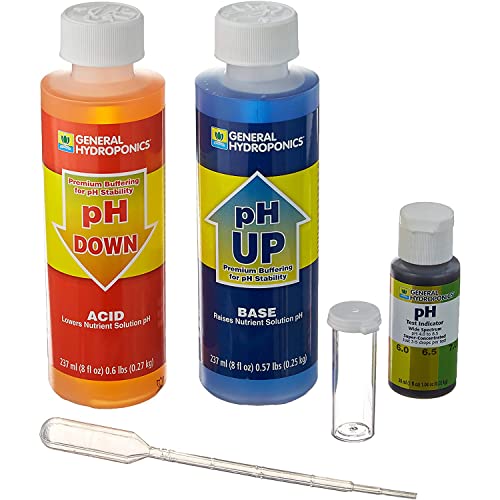
General Hydroponics Ph Control Kit
General Hydroponics pH Control Kit contains everything you need to measure pH levels of your hydroponic grow reservoirs
As an affiliate, we earn on qualifying purchases.
As an affiliate, we earn on qualifying purchases.
Conclusion
Keeping your hydroponic system’s EC and pH levels in check is vital for healthy plant growth. Imagine you notice your tomatoes aren’t ripening; by adjusting the pH to around 6.0 and maintaining the right EC, you create ideal conditions. Just like a grower who improved yields by fine-tuning these numbers, you too can boost your plants’ health and productivity. Stay vigilant, monitor regularly, and you’ll see better results with less guesswork.

Hydroponics pH Up Down Solution pH Control Kit,pH Adjuster for Hydroponic, Aquaponic, Balance Nutrient Solution, Include pH Test Strips(8.45oz/250ml)
✅Precise pH Control – Formulated with food-grade phosphoric acid (pH Down) and premium buffering agents, this kit ensures…
As an affiliate, we earn on qualifying purchases.
As an affiliate, we earn on qualifying purchases.

Digital Soil EC Meter 2-in-1 Porfessional Plants EC Temperature Tester Meter with Corded Sensor, Backlight LCD Display, Temperature Compensation, Easy Calibration for Soil Plants Lawn Nutrient Test
【Professional EC Temperature Soil Meter】EC is the conductivity value in soil and is an important indicator of salt…
As an affiliate, we earn on qualifying purchases.
As an affiliate, we earn on qualifying purchases.