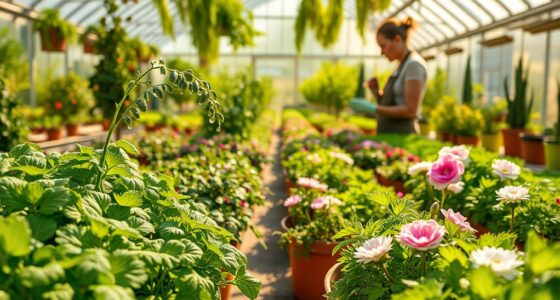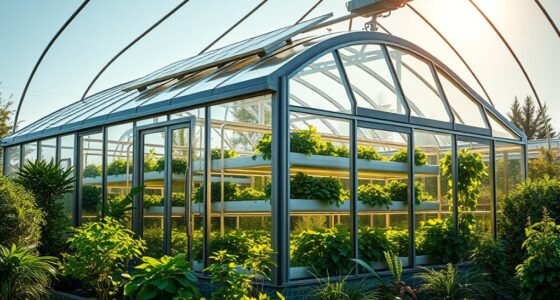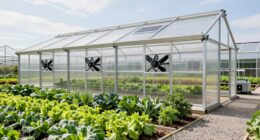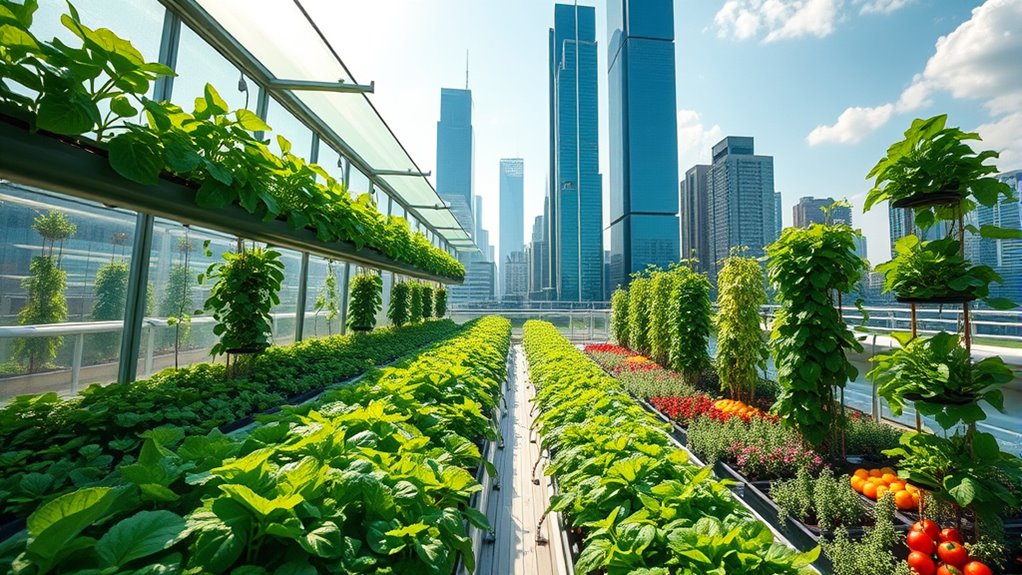

Greenhouse farming is key to ensuring food security in urban areas, allowing you to grow a diverse range of crops year-round despite limited space and resources. It brings food production closer to consumers, reducing transportation emissions while providing fresher, more nutritious options. By using efficient water, energy, and resource management, it helps create sustainable, resilient food systems that can withstand climate challenges. To discover how these innovations can shape future cities, keep exploring this exciting subject.
Key Takeaways
- Greenhouse farming enables year-round, diverse crop production within urban areas, ensuring consistent food supply.
- It optimizes resource use, reducing water, energy, and land consumption to promote sustainable urban food systems.
- Incorporating greenhouses into city landscapes enhances local food resilience and decreases reliance on external supply chains.
- Urban greenhouses create community engagement, local jobs, and support food security initiatives in densely populated areas.
- They provide climate-resilient food production, protecting crops from weather extremes and climate change impacts.

Have you ever wondered how greenhouse farming can boost food security? It’s a compelling question, especially as urban populations grow and arable land becomes scarcer. Greenhouses offer a practical solution by enabling urban agriculture—growing fresh produce within city environments. This approach brings food production closer to consumers, reducing transportation costs and emissions while ensuring fresher, more nutritious food reaches your plate. By integrating greenhouses into city landscapes, you can participate in a system that makes food supply more resilient and less vulnerable to disruptions like climate change or supply chain issues.
One of the key advantages of greenhouse farming in urban settings is crop diversification. Instead of relying solely on traditional crops or seasonal farming, greenhouses allow you to cultivate a wide variety of vegetables, herbs, and even fruits year-round. This diversification not only enhances food security but also improves dietary diversity, giving you access to a broader spectrum of nutrients. You can grow spinach, tomatoes, peppers, strawberries, and more, all within a controlled environment that shields plants from pests, harsh weather, and diseases. This control over growing conditions ensures higher yields and consistent quality, making urban agriculture a reliable food source.
Moreover, greenhouses enable you to optimize resource use. Water, nutrients, and energy are managed efficiently, reducing waste and environmental impact. For instance, hydroponic systems—often used in greenhouse setups—allow you to grow plants using less water than traditional farming methods. This efficient resource use is crucial in urban areas where water and land are limited. Additionally, greenhouses can incorporate renewable energy sources like solar panels, further decreasing their carbon footprint and aligning with sustainable food production goals.
Another benefit of greenhouse-based urban agriculture is its potential to create local jobs and foster community engagement. As you participate in or support greenhouse farming initiatives, you help develop local food networks that can bolster economic stability. Schools, community centers, and small businesses can incorporate greenhouse projects, educating residents about sustainable food practices and encouraging healthier eating habits. This sense of community involvement not only improves access to fresh produce but also promotes resilience against external shocks to the food system.

6×10 FT Greenhouse, Large Walk in Greenhouses for Outdoors and Garden Planting, Polycarbonate Greenhouse with Enhanced Aluminum Frame, Green Houses with Quick Setup Structure and Roof Vent, Black
【Effortless Assembly】Create your beautiful gardening space quickly with our greenhouse kit. The package comes with a clear instruction...
As an affiliate, we earn on qualifying purchases.
Frequently Asked Questions
What Are the Initial Costs of Establishing a Greenhouse Farm?
When you consider establishing a greenhouse farm, start with a thorough cost analysis of startup expenses. Initial costs include land preparation, greenhouse structure, climate control systems, irrigation, and lighting. These expenses vary based on size and technology. You’ll also need to budget for seeds, labor, and permits. Planning carefully helps you understand the overall investment, ensuring you’re prepared for the financial commitment required to launch a successful greenhouse farm.
How Does Greenhouse Farming Impact Local Biodiversity?
Imagine a vibrant city park, where urban pollinators like bees thrive alongside native plants. Greenhouse farming can sometimes threaten local biodiversity if it replaces natural habitats or draws away native species. However, it can also protect native species by reducing pressure on wild ecosystems. By carefully managing greenhouse operations, you help preserve native species and support urban pollinators, creating a balance that benefits the entire local environment.
Can Greenhouse Farming Be Sustainable Long-Term?
You can make greenhouse farming sustainable long-term by embracing renewable energy sources like solar or wind power, reducing reliance on fossil fuels. Additionally, implementing water recycling systems guarantees efficient use of water, minimizing waste and conserving resources. By integrating these practices, you support eco-friendly farming that reduces environmental impact, helping to ensure that greenhouse farming remains a viable and sustainable method for food production in the future.
What Are Common Pest Control Methods in Greenhouses?
You can manage pests in greenhouses through integrated pest management, which combines various methods for effective control. Biological control is key—you introduce natural predators like ladybugs or parasitoid wasps to keep pest populations in check. This eco-friendly approach minimizes chemical use and maintains a healthy environment. Regular monitoring, sanitation, and resistant plant varieties also support a sustainable, integrated pest control strategy, ensuring healthy crop growth.
How Can Greenhouse Farming Adapt to Climate Change?
To adapt to climate change, you can enhance your greenhouse’s climate resilience by incorporating adaptive technology like automated ventilation, shading, and heating systems. These innovations help you maintain ideal growing conditions despite unpredictable weather. By staying flexible and investing in smart systems, you guarantee your crops thrive, reduce risks, and secure food production for future urban populations. Embracing these strategies keeps your greenhouse resilient against climate impacts.

Greenhouse Heater 1500W with APP Remote Control, Greenhouse Heater With Thermostat, Portable Outdoor Heater for Plants Vegetables Flowers,Smart Electric Safe Heater for Green house,Grow Tents,Garage
Remote Control, Convenient and Smart: Our greenhouse heater can be connected to your smartphone by downloading the "Smart...
As an affiliate, we earn on qualifying purchases.
Conclusion
By embracing greenhouse farming, you can help secure food for future cities. This innovative approach allows you to grow crops efficiently, even in limited spaces, and withstand climate swings. It’s clear that investing in such solutions isn’t just a drop in the ocean but a crucial step toward sustainability. Remember, where there’s a will, there’s a way, and with determination, you can turn greenhouses into the backbone of future food security.

LHUKSGF Greenhouse Heater with Digital Thermostat, Grow Tent Heaters, Overheat Protection, Fast Heating for Green House, Flower Room, Yellow
【Greenhouse Heater】: The greenhouse heater is equipped with a thermostat that easily heats up to 150 ft ²...
As an affiliate, we earn on qualifying purchases.

Greenhouse Heater with Thermostat, Auto Temperature Control Kit with Digital Display, Fast Heating, Overheat Protection, for Grow Tent, Greenhouse, Flower Room, Patio, Winter Plants
Auto Temperature Control Kit: This kit includes a reliable greenhouse heater and a precise digital thermostat, designed to...
As an affiliate, we earn on qualifying purchases.