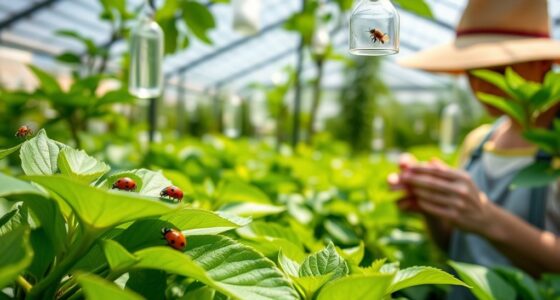
Biological control involves using natural predators like ladybugs and spiders, along with parasitoids such as wasps and flies, to naturally manage pest populations. These organisms hunt or parasitise pests like aphids, mites, and caterpillars, helping keep ecosystems balanced without chemicals. Their lifecycle and hunting behaviors support sustainable pest suppression and foster biodiversity. If you want to discover how these natural allies work together to protect your crops and environment, continue exploring this eco-friendly approach.
Key Takeaways
- Biological control uses natural predators and parasitoids to manage pest populations sustainably.
- Predators like ladybugs and spiders hunt pests such as aphids and mites.
- Parasitoids lay eggs inside pests, with larvae killing the host during development.
- Timing releases of predators and parasitoids enhances pest suppression effectiveness.
- This method promotes ecosystem balance, reduces chemical pesticide reliance, and supports biodiversity.
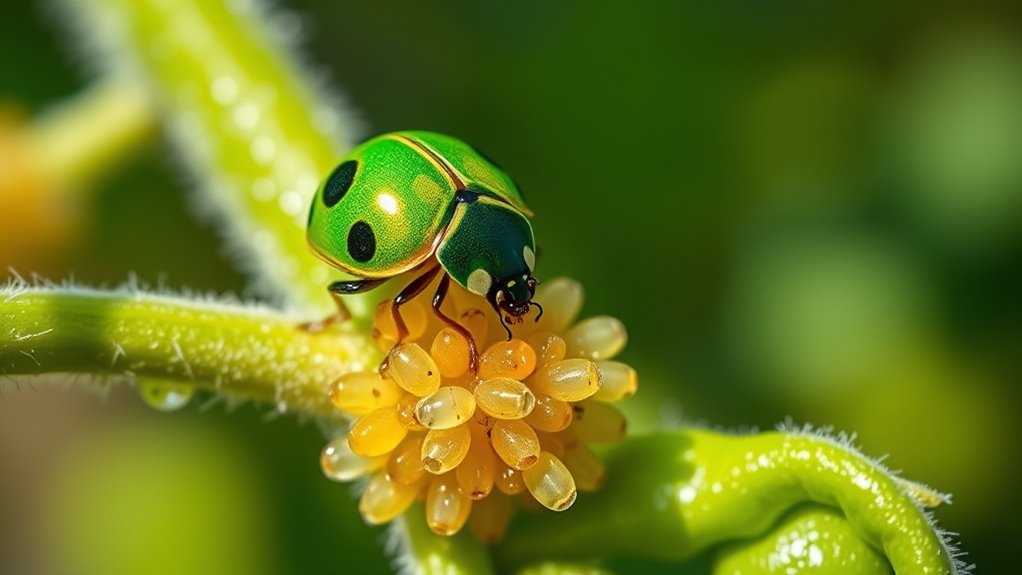
Have you ever wondered how scientists manage pest populations without relying on chemicals? One effective way is through biological control, which leverages natural predator behavior and parasitoid lifecycle dynamics to keep pest numbers in check. Instead of pesticides that can harm the environment, biological control introduces or encourages organisms that naturally suppress pests. These predators and parasitoids become essential allies, helping maintain a balanced ecosystem while protecting crops and native plants.
Natural predator behavior is a key factor in this process. Predators like ladybugs, lacewings, and spiders actively hunt pests such as aphids, mites, and caterpillars. They’re driven by instinct to locate, capture, and consume their prey, often using sensory cues like sight, smell, or touch. By understanding these behaviors, scientists can introduce or conserve predator populations at ideal times, maximizing their impact on pest suppression. For instance, releasing ladybugs during peak aphid populations allows them to feed efficiently, reducing pest numbers before they cause significant damage. This predator-prey relationship is dynamic; as pest populations decline, predator numbers may also decrease, maintaining a natural balance without the need for chemical interventions. Additionally, promoting biological diversity in agricultural landscapes supports the stability and resilience of predator and parasitoid populations, enhancing pest control efforts.
Natural predators like ladybugs and spiders help control pests by instinctively hunting aphids and mites.
Parasitoids follow a different but equally fascinating strategy. They are tiny insects, such as certain wasps and flies, that lay their eggs inside or on pests like caterpillars or beetles. The parasitoid lifecycle dynamics are intricately tied to their hosts. Once the eggs hatch, the developing larvae consume the host from within, eventually killing it. This process naturally reduces pest populations over time. Because of their specialized relationship with hosts, parasitoids tend to target specific pests, making them an efficient and environmentally friendly control method. By understanding their lifecycle, scientists can time releases or conservation efforts to coincide with vulnerable stages of the pest’s development, boosting their effectiveness.
Both natural predator behavior and parasitoid lifecycle dynamics highlight the sophistication behind biological control. They depend on natural processes rather than external chemicals, reducing environmental risks and promoting biodiversity. Managing these organisms requires careful planning, including habitat preservation, timing of releases, and monitoring populations. When done correctly, biological control offers a sustainable, long-term solution that aligns with natural ecological processes. This approach not only curtails pests but also supports healthy ecosystems, making it an increasingly popular choice for farmers and environmental managers aiming for safer pest management strategies.

NaturesArt 1500 Live Ladybugs – Good Bugs for Garden – Ladybug Guaranteed Live Delivery* – Plastic Box, Container, Case.
1500 Live Ladybugs: Each pack contains a generous amount of 1500 ladybugs, providing ample coverage to enhance your…
As an affiliate, we earn on qualifying purchases.
As an affiliate, we earn on qualifying purchases.
Frequently Asked Questions
What Are the Most Effective Predators for Specific Pest Species?
You should choose predators based on their predator specificity and habitat preferences. For example, lady beetles target aphids effectively, especially in diverse habitats where they thrive. Green lacewings are also good for soft-bodied pests in open fields. By matching predator species with the pest and habitat, you optimize control. Always consider the predator’s natural behavior and environment to make sure they effectively reduce pest populations without harming beneficial insects.
How Do Parasitoids Locate Their Hosts in Complex Environments?
You might think locating hosts in complex environments is like finding a needle in a haystack, but parasitoids excel at this challenge. They use chemical cues and visual signals to navigate intricate landscapes, honing in on host odors and movements. These cues act like a GPS, guiding them through dense foliage and cluttered habitats, ensuring they find their targets efficiently despite the environment’s complexity.
Are There Any Risks of Non-Target Species Being Affected?
You should know that non-target impacts are a real risk when using parasitoids in biological control. To mitigate this, risk mitigation strategies are essential, like careful host specificity testing before release. These steps help ensure parasitoids target only the intended pests, reducing the chance of affecting non-target species. Overall, responsible management can balance effective pest control with safeguarding biodiversity.
How Do Environmental Conditions Influence Predator and Parasitoid Effectiveness?
You’ll find that environmental conditions like climate variability and habitat fragmentation considerably impact predator and parasitoid effectiveness. Climate changes can alter their life cycles, making them less synchronized with pest populations. Habitat fragmentation reduces available resources and shelter, limiting their ability to survive and hunt effectively. To optimize biological control, you need to take into account these factors and implement strategies that mitigate their negative effects, ensuring these natural enemies can do their jobs efficiently.
What Are the Costs Involved in Implementing Biological Control Programs?
When implementing biological control programs, you need to consider the costs involved. A thorough cost analysis helps you understand expenses like rearing, releasing, and monitoring predators or parasitoids. Budget considerations are vital to guarantee the program’s sustainability. You might face costs related to labor, equipment, and ongoing evaluation, so planning carefully helps you allocate resources effectively and avoids overspending while maximizing control effectiveness.
Parasitoid wasps for garden pests
As an affiliate, we earn on qualifying purchases.
As an affiliate, we earn on qualifying purchases.
Conclusion
By understanding predators and parasitoids, you harness nature’s own methods to protect crops. You foster balance in ecosystems, reduce chemical use, and promote sustainable farming. You rely on natural enemies to control pests, support biodiversity, and maintain health in your fields. You embrace biological control as a tool that works, a strategy that lasts, and a future that’s healthier. You make smarter choices, you protect your land, and you nurture a sustainable tomorrow.
Biological pest control kits
As an affiliate, we earn on qualifying purchases.
As an affiliate, we earn on qualifying purchases.
Spiders for natural pest management
As an affiliate, we earn on qualifying purchases.
As an affiliate, we earn on qualifying purchases.