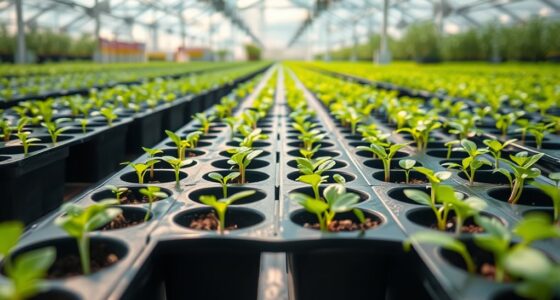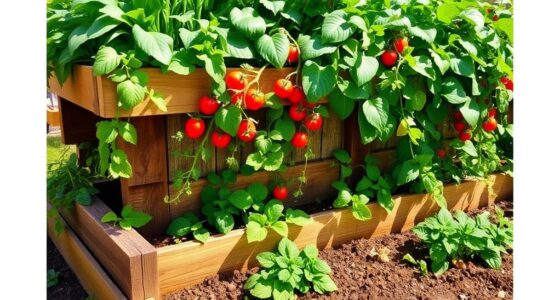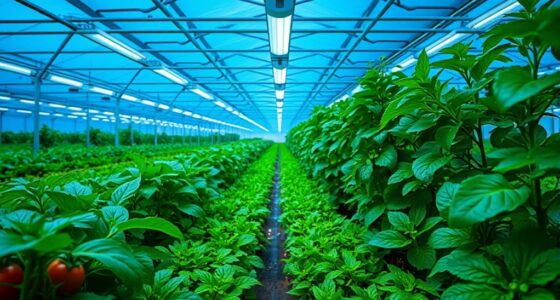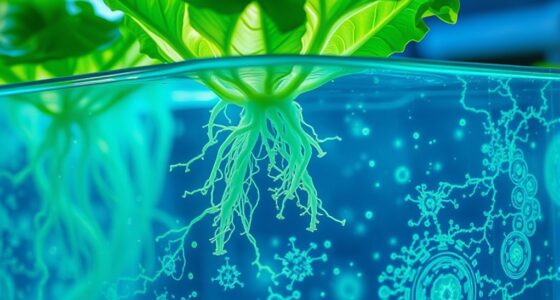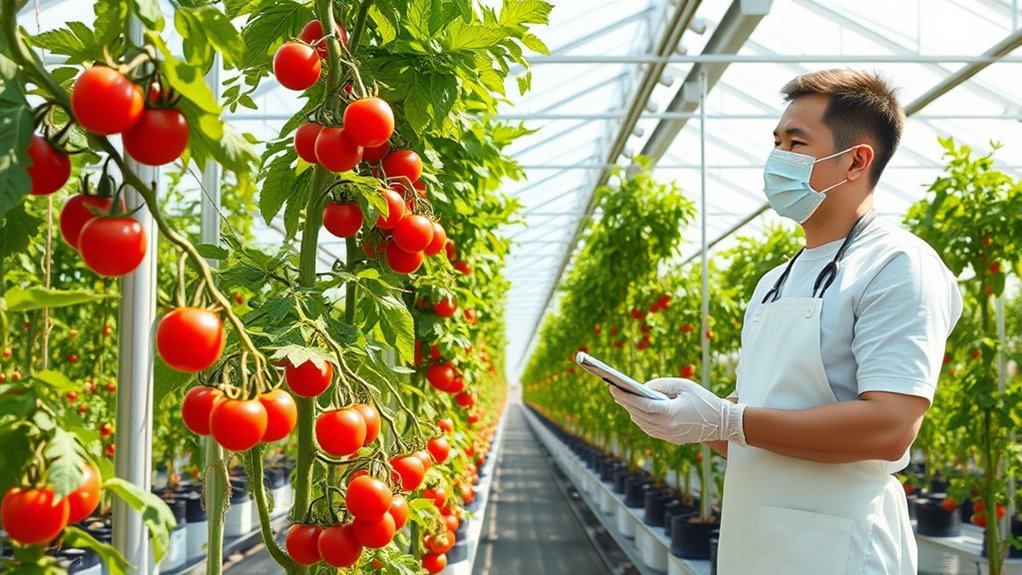

To guarantee food safety in your greenhouse, you need to focus on effective pest control and water management. Use physical barriers, biological controls, and targeted pesticides to keep pests at bay while regularly monitoring for early infestations. Maintain clean, filtered, and sterilized water sources to prevent contamination from bacteria and chemicals. Keeping pests and water sources in check reduces risks of pathogens, contamination, and crop damage. Keep exploring how to optimize these practices for safer, healthier produce.
Key Takeaways
- Implement integrated pest management to prevent pest entry and minimize chemical use, ensuring crop safety.
- Maintain high water quality through regular testing and sterilization to prevent microbial contamination.
- Use physical barriers and biological controls to reduce pest populations and protect food safety.
- Regularly inspect and clean water reservoirs, tools, and surfaces to prevent cross-contamination.
- Educate staff on hygiene, pest control, and water management protocols to uphold overall food safety standards.

Greenhouse operations offer an efficient way to grow fresh produce year-round, but ensuring food safety remains a critical concern. One of the most important aspects of maintaining safe greenhouse environments is effective pest control. Pests such as insects, rodents, and other organisms can carry pathogens that contaminate your crops, posing health risks to consumers. To prevent this, you need a thorough pest management strategy that includes physical barriers like screens and traps, biological controls, and targeted use of pesticides when necessary. Regular monitoring is essential; by inspecting your plants frequently, you can catch infestations early before they spread or cause considerable damage. Preventing pest entry at the outset helps minimize the need for chemical interventions, reducing potential chemical residues on your produce.
Alongside pest control, water quality plays an essential role in food safety within greenhouse settings. Water used for irrigation, cleaning, and humidity control must be free of harmful microorganisms, chemicals, and contaminants. Poor water quality can introduce bacteria such as E. coli or Salmonella, which can quickly contaminate your crops and lead to foodborne illnesses. To make certain water remains safe, you should regularly test your water sources for microbial presence and chemical contaminants. Implementing filtration systems, ultraviolet (UV) sterilization, or ozonation can greatly improve water quality, providing a safer environment for your plants. Additionally, maintaining clean water reservoirs and avoiding stagnant water helps prevent the growth of algae and bacteria that could compromise your produce’s safety. Reliable water management is vital for maintaining overall hygiene and minimizing contamination risks in greenhouse operations.
Proper pest control and water management are interconnected; a pest infestation can sometimes be linked to contaminated water sources, and vice versa. For example, standing water can attract pests, which in turn can spread pathogens. Hence, keeping your greenhouse clean and well-maintained is crucial. Regular sanitation of tools, surfaces, and water delivery systems helps minimize risks. You should also establish strict protocols for handling and storing water and supplies to prevent cross-contamination. Educating your staff on these practices ensures everyone understands the importance of maintaining a pest-free environment and high water quality standards.
Frequently Asked Questions
How Can I Ensure Worker Hygiene in a Greenhouse Setting?
You can guarantee worker hygiene in a greenhouse by implementing strict personal cleanliness protocols. Encourage workers to wash their hands frequently with soap and water, especially before handling plants. Provide accessible handwashing stations, gloves, and hand sanitizers. Educate workers on the importance of maintaining personal hygiene and regularly monitor compliance. By fostering a culture of cleanliness, you reduce the risk of contamination and promote a safe, healthy environment for everyone.
What Are the Best Practices for Pest Control Without Chemical Residues?
Think of pest control as balancing nature’s scales—you want pests gone without chemical residues. Use biological control agents like beneficial insects, and adopt integrated pest management strategies to target pests early. Regular monitoring, proper sanitation, and habitat manipulation help keep pests in check naturally. This approach minimizes chemical use, protects your crops, and guarantees a safe, residue-free environment, promoting healthier plants and happier consumers.
How Do I Monitor Water Quality for Food Safety Compliance?
You should regularly perform water testing to monitor water quality and guarantee it meets safety standards. Use certified testing kits to check for contaminants, pathogens, and nutrient levels, which helps maintain proper nutrient management. Keep detailed records of your tests to track trends over time. Consistent monitoring allows you to identify issues early and take corrective actions, safeguarding your crops and ensuring food safety compliance.
What Sanitation Protocols Are Recommended for Greenhouse Tools and Equipment?
You should implement strict sanitation protocols by regularly sterilizing tools and equipment to prevent contamination. Use appropriate disinfectants and guarantee proper tool sterilization after each use. Maintain equipment through routine inspections and cleaning schedules to avoid buildup of dirt or pathogens. By actively practicing equipment maintenance and sterilization, you reduce the risk of spreading diseases, ensuring a safer environment for your crops and maintaining compliance with food safety standards.
How Can Climate Control Impact Food Safety in Greenhouses?
Climate control, unlike static environments, directly impacts food safety by managing humidity levels and CO2. When you regulate humidity, you prevent mold and bacterial growth, safeguarding your crops. Proper CO2 management boosts plant health, reducing vulnerabilities to pests and diseases. On the flip side, poor climate control creates a breeding ground for contamination. By actively maintaining ideal conditions, you guarantee safer, healthier produce, minimizing risks along the supply chain.
Conclusion
So, here you are, diligently working to keep your greenhouse produce safe, yet one tiny oversight could turn your efforts into a headline for all the wrong reasons. Ironically, in a space dedicated to nurturing healthy plants, a single lapse in food safety can quickly spoil your reputation. Remember, when it comes to safety, the smallest detail isn’t so small after all—sometimes, it’s the biggest risk you overlook. Stay vigilant, or risk losing it all.