
Yes, crop rotation helps in greenhouses by improving soil health, reducing pests, and preventing nutrient depletion. It encourages biodiverse planting, which confuses pests and attracts beneficial insects. Changing crops regularly also breaks pest and disease cycles, reducing the need for chemicals. Advances like nanotechnology offer even better ways to support these efforts. Curious to see how you can apply crop rotation effectively? Keep exploring for more tips and strategies.
Key Takeaways
- Crop rotation improves soil health by replenishing nutrients and reducing nutrient depletion in greenhouse soils.
- It disrupts pest and disease cycles, lowering the need for chemical pest control.
- Rotating different crop types enhances biodiversity and attracts beneficial insects, promoting a natural balance.
- It prevents soil exhaustion by alternating crops that consume different nutrients.
- Integrating technology like nanotech can further optimize crop rotation benefits and pest management.
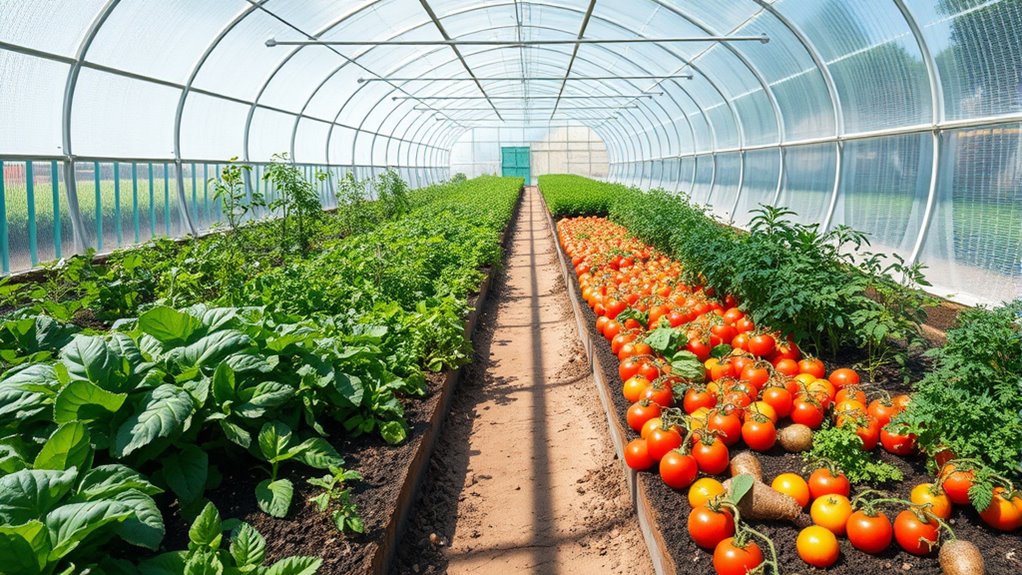
Have you ever wondered how greenhouse growers maintain healthy, productive crops year after year? One key strategy they often use is crop rotation, which involves changing the types of plants grown in a specific area over time. This practice can substantially impact soil health and pest management, both of which are essential for sustaining a successful greenhouse operation. By rotating crops, you can prevent the depletion of essential nutrients in the soil, reduce the buildup of harmful pests and diseases, and promote a more resilient growing environment. Nanotechnology is increasingly being explored as a tool to enhance crop rotation strategies through targeted soil treatments and pest control solutions.
When it comes to soil health, crop rotation plays an important role. Growing the same plant repeatedly in the same spot can exhaust specific nutrients that crop depends on, leading to diminished yields and increased reliance on fertilizers. By rotating crops, you give the soil a chance to recover. Different plants draw on different nutrients and contribute organic matter back into the soil through their roots and residues. For example, legumes fix nitrogen, enriching the soil for subsequent crops, while other plants may help improve soil structure or suppress weeds. This natural balancing act reduces the need for chemical inputs and helps maintain a healthy, fertile growing medium.
Pest management is another area where crop rotation proves its worth. Many pests and diseases are host-specific, meaning they thrive on particular plant types. If you grow the same crop repeatedly, pests can establish a foothold, become resistant to control measures, and spread more easily. Rotating crops disrupts this cycle by removing the preferred host, making it harder for pests to survive and reproduce. For instance, switching from leafy greens to root vegetables can break the life cycle of common pests that target leafy crops. This natural pest suppression reduces the need for chemical pesticides, creating a safer environment for both your plants and you.
Additionally, crop rotation encourages biodiversity within your greenhouse, which can further strengthen pest management. A diverse planting scheme confuses pests, making it more challenging for them to locate their preferred hosts. It also attracts beneficial insects that prey on pests, creating a natural balance. Over time, this integrated approach can lower your reliance on chemical treatments and promote healthier, more sustainable crop production.
Frequently Asked Questions
Can Crop Rotation Eliminate All Greenhouse Pests?
Crop rotation can’t eliminate all greenhouse pests, but it substantially reduces their impact by improving soil health and increasing pest diversity. When you rotate crops, you break pest life cycles and prevent buildup of specific pests. This practice encourages a balanced ecosystem, making it harder for pests to thrive. While not a complete solution, crop rotation is an essential part of integrated pest management that helps keep pests under control.
How Does Crop Rotation Affect Greenhouse Humidity Levels?
Crop rotation dramatically influences greenhouse humidity levels, often more than you might expect. When you rotate crops, you help regulate soil moisture, which directly impacts humidity control. By alternating plant types, you prevent excessive moisture buildup and reduce humidity spikes that can promote pests and mold. This simple yet powerful practice keeps the environment balanced, making your greenhouse more manageable and healthier, almost like magic for ideal humidity control!
Are Certain Crops Better Suited for Rotation in Greenhouses?
Certain crops are better suited for rotation in greenhouses because they improve soil health and promote crop diversity. Legumes, for example, fix nitrogen and enhance soil fertility, making them ideal for rotation. Leafy greens and root vegetables diversify your crop selection, reducing pest buildup and disease risk. By choosing these crops, you maintain healthier soil, reduce reliance on chemicals, and guarantee a more sustainable, productive greenhouse environment.
What Is the Optimal Rotation Schedule for Greenhouse Crops?
You should rotate greenhouse crops every one to two seasons, focusing on crop diversity to boost soil health. Studies show diverse planting can increase yields by up to 20%, reducing pest buildup and nutrient depletion. Start with leafy greens, then switch to root vegetables, and follow with legumes. This schedule helps maintain soil vitality, minimizes disease, and guarantees a steady harvest, making your greenhouse more productive and sustainable.
Does Crop Rotation Improve Greenhouse Plant Disease Resistance?
Yes, crop rotation improves your greenhouse plant disease resistance. By rotating crops, you enhance soil health and reduce pathogen buildup, which lowers disease risks. Incorporating crop diversity disrupts the life cycles of pests and diseases, making it harder for them to establish. This practice creates a healthier environment for your plants, leading to stronger, more resilient growth and fewer outbreaks of common greenhouse diseases.
Conclusion
By rotating crops in your greenhouse, you can break pest cycles and improve soil health. For example, imagine switching from tomatoes to lettuce after a season; this disrupts pests specific to tomatoes and boosts nutrient diversity. Such practices can lead to healthier plants and higher yields over time. So, if you want a sustainable, productive greenhouse, crop rotation isn’t just helpful—it’s essential. Give it a try and see your greenhouse thrive!