
To understand eco labels, start by checking the certifying organization’s name and logo to guarantee credibility. Look for clear information on sourcing, production methods, and environmental or social standards met by the product. Recognize labels like FSC or USDA Organic that certify specific responsible practices. Pay attention to details on packaging or certifier websites for clarity. If you keep exploring, you’ll gain useful tips on confidently choosing products that truly align with your sustainability goals.
Key Takeaways
- Check for recognized certification logos from reputable organizations like FSC, USDA Organic, or Fair Trade.
- Read the label details to understand the specific standards and criteria the product meets.
- Research certifying organizations to verify the legitimacy and credibility of the eco label.
- Look for information on sourcing, production methods, and social practices included on the label.
- Be aware that labels may vary in scope; consult certifier websites for comprehensive explanations.
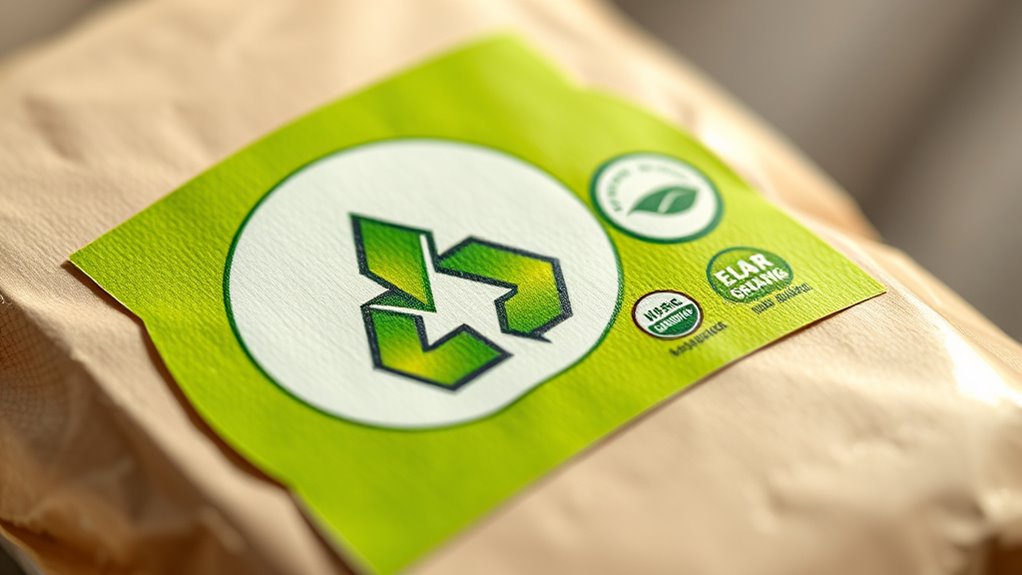
Understanding eco labels can seem confusing at first, but learning how to read them helps you make more sustainable choices. When you’re shopping, eco labels serve as quick guides that reveal important information about how a product was made, sourced, or processed. One key aspect to look for is sustainable sourcing, which indicates that the raw materials used come from environmentally responsible and socially fair sources. Labels that highlight sustainable sourcing often specify that materials are harvested in ways that minimize environmental impact, conserve biodiversity, and support fair labor practices. Recognizing these indicators allows you to support companies committed to environmental stewardship and ethical practices.
Eco labels reveal how products are made, sourced, or processed, helping you make sustainable choices.
In addition to sustainable sourcing, understanding eco label standards is essential. These standards are the criteria that products must meet to earn a specific eco label. Some standards are developed by independent organizations, while others are set by the companies themselves. When you see an eco label, check whether it adheres to recognized standards, as this increases the credibility of the label. For example, labels like FSC (Forest Stewardship Council) indicate that the wood or paper products come from responsibly managed forests. Similarly, ecolabels such as USDA Organic ensure that agricultural products meet strict standards for organic farming practices, including minimal synthetic inputs and soil conservation. By familiarizing yourself with these standards, you can better gauge whether a product genuinely aligns with sustainable and eco-friendly principles.
It’s also helpful to understand that some eco labels are more extensive than others. Some focus strictly on environmental aspects, like carbon emissions or water use, while others incorporate social and ethical considerations such as fair wages and workers’ rights. When shopping, take the time to read the label details or visit the certifying organization’s website if available. This extra step guarantees you’re not just relying on a colorful sticker but truly understanding what the label signifies. Remember, many eco labels require periodic re-certification, which means products bearing these labels are regularly checked to maintain their standards.
Additionally, awareness of eco label credibility is important, since not all labels are equally trustworthy; researching the certifying organization can help ensure the label’s legitimacy. Ultimately, learning how to interpret eco labels empowers you to make more informed decisions. By paying attention to sustainable sourcing and understanding the eco label standards behind each certification, you can choose products that align with your values. It’s a simple yet impactful way to support environmentally responsible companies and reduce your ecological footprint. With practice, reading eco labels becomes second nature, helping you navigate the marketplace with confidence and purpose.
Frequently Asked Questions
How Reliable Are Eco Labels Across Different Countries?
Eco labels’ reliability varies across countries due to cultural differences and certification processes. You should be aware that some countries have strict standards, ensuring trustworthy labels, while others might lack rigorous certification. It’s wise to research the specific eco label’s origin and certification process to gauge its credibility. By understanding these factors, you can make more informed, eco-friendly choices, regardless of where the label originates.
Can Eco Labels Be Faked or Misleading?
Eco labels can definitely be faked or misleading, which increases the greenwashing risk. You should always check the label’s authenticity by researching the certifying organization and looking for recognized standards. Be cautious of vague claims or labels that lack transparency. By verifying the source and understanding what the label truly represents, you can better avoid falling for greenwashing and make more eco-conscious choices.
Do Eco Labels Cover All Environmental Impacts?
Eco labels don’t cover all environmental impacts. They often focus on manufacturing footprints and biodiversity considerations, but many other factors like water use, chemical runoff, and carbon emissions might be overlooked. You should recognize that eco labels are useful guides but not exhaustive. Always research specific standards and certifications to get a clearer picture of a product’s overall environmental impact, rather than relying solely on the label.
What Are the Most Recognized Eco Labels Globally?
You’ll find that the most recognized eco labels globally include the Forest Stewardship Council (FSC), Energy Star, and Fair Trade certifications. These labels often indicate sustainable packaging choices and support renewable energy initiatives. They help you easily identify products that prioritize environmental responsibility. By paying attention to these badges, you can make more eco-friendly decisions that align with your values, all while enjoying the little acts that contribute to a greener planet.
How Often Are Eco Label Standards Updated?
Eco label standards are updated regularly, often every one to three years, to stay current with new sustainability practices. You should check the specific eco label’s website for the latest updates, especially if you’re interested in renewable energy or waste reduction initiatives. Staying informed helps you verify that products meet current environmental standards, so you can make eco-friendly choices that support sustainable energy use and waste reduction efforts.
Conclusion
Now that you know how to read eco labels, you’re equipped to make smarter choices. But what if some labels aren’t as clear as they seem? The truth is, not all eco labels are created equal, and some might hide surprising secrets. Stay vigilant and question what you see. Your next purchase could reveal more than you think—are you ready to uncover the real story behind those labels? The power is in your hands.