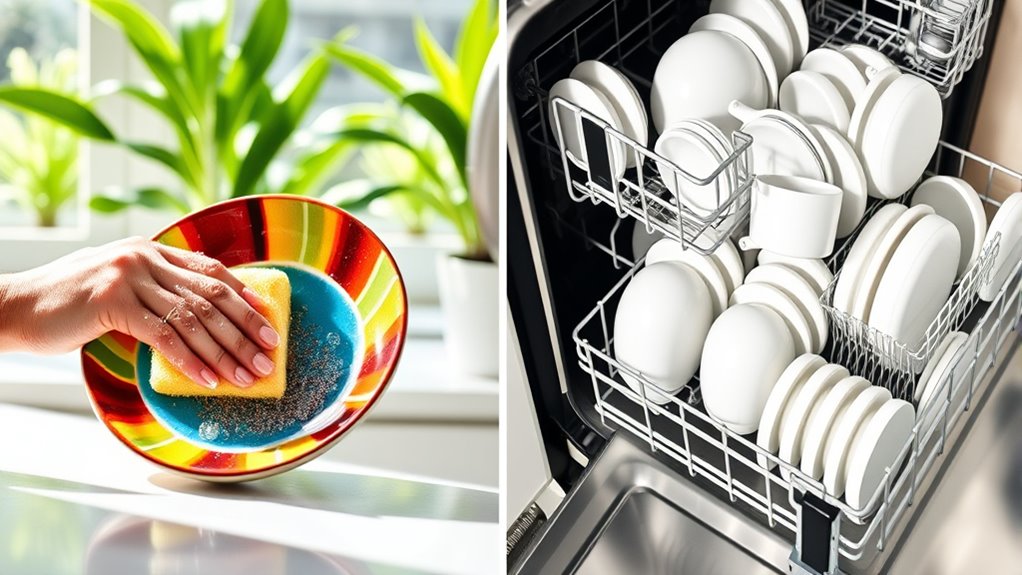

Choosing between hand washing and a dishwasher depends on your habits and water use. Hand washing can be eco-friendly if you avoid running water continuously, wash full loads, and air dry. Modern dishwashers are often more efficient, especially with eco modes, when used properly for full loads and skipping heated drying. Both methods can be green with small adjustments. Keep exploring to discover how to make your dishwashing routine even more sustainable.
Key Takeaways
- Hand washing can be more eco-friendly if tap water is turned off and full loads are washed using eco-friendly detergents.
- Modern dishwashers often use less water and energy per load, especially when operated with eco modes and full loads.
- Air drying dishes instead of towel drying or heated dry cycles reduces energy consumption in dishwashers.
- Proper maintenance and using efficient cycles enhance the environmental benefits of dishwashers.
- Small routine changes, like filling basins and avoiding unnecessary rinsing, make both methods more sustainable.

When it comes to cleaning dishes, you have two main options: washing by hand or using a dishwasher. Each method has its own environmental footprint, and choosing the greener approach depends on how you use them. If you opt for hand washing, there are opportunities to make it more eco-friendly. Using eco-friendly detergents is a smart move because they contain fewer harmful chemicals that can pollute water sources and harm wildlife. These detergents are often biodegradable and free from phosphates and synthetic fragrances, making them safer for your family and the environment. To maximize water conservation, you should avoid leaving the tap running continuously. Instead, fill one basin with soapy water and another with rinse water, so you’re only using the amount of water necessary to clean your dishes. It might seem simple, but these small adjustments can considerably reduce your water consumption, especially if you wash dishes frequently. When washing by hand, consider the size of your load. Washing a full load of dishes at once, rather than multiple small loads, helps conserve water and energy. Plus, air-drying dishes instead of using a towel or the heat-dry cycle on your machine reduces energy use further.
Switching gears to dishwashers, modern machines are designed with water efficiency in mind. Many models now feature eco modes that use markedly less water and energy, helping you cut your environmental impact. Using the right detergent, preferably eco-friendly ones, ensures the process remains gentle on the environment. Dishwasher cycles that are optimized for shorter durations or lower temperatures also contribute to water conservation and energy savings. Running full loads is essential to maximize efficiency; avoid the temptation to run small loads, as it wastes resources. Additionally, skipping the heated dry cycle and opting for air drying can save substantial energy. Regular maintenance, such as cleaning filters and ensuring the spray arms work properly, keeps your dishwasher running efficiently, preventing unnecessary water and energy waste. When used correctly, dishwashers typically use less water than hand washing, especially if you’re mindful of how many dishes you clean at once.
Ultimately, whether you choose to wash dishes by hand or use a dishwasher, small changes can make a big difference. Both methods can be environmentally friendly if you use eco-friendly detergents, conserve water, and optimize your routine. Hand washing offers control over water use, especially when you avoid leaving the tap running. Dishwashers, on the other hand, tend to be more efficient for large loads, provided you operate them thoughtfully. Whichever method you prefer, making conscious choices is key to a greener dishwashing routine.
Frequently Asked Questions
Which Method Uses Less Water Overall?
A dishwasher generally uses less water overall than handwashing, especially if you choose an energy-efficient model. Dishwasher efficiency is key—modern machines can wash a full load with minimal water, while handwashing habits often involve running the tap continuously, wasting more water. To save even more, only use your dishwasher when it’s full and select eco-friendly cycles. This way, you conserve water and energy effectively.
How Does Energy Consumption Compare Between Hand and Machine Washing?
Dishwasher efficiency generally means it uses less energy than hand washing, especially if you run full loads. Modern dishwashers consume less energy per cycle compared to the energy needed for hand washing, which can be less efficient depending on your techniques. To save energy, choose an energy-efficient dishwasher and avoid pre-rinsing dishes excessively. Hand washing techniques that involve hot water and prolonged scrubbing tend to use more energy overall.
Are There Specific Dish Types Better Suited for One Method?
Certain dish types prefer specific methods, like delicate cookware that’s best treated with gentle hand washing to avoid damage. Special dish types, such as crystal glasses or fine china, need the careful touch of hand washing, while sturdier items like pots and pans can brave the machine’s whirl. Think of it as matching the dance partner to the music—choose the right method for each dish to keep them pristine and eco-friendly.
What Are the Health Risks Associated With Each Method?
You face some health risks with both methods. Hand washing may expose you to cross contamination risks if you don’t clean sponges or brushes properly, and to chemical exposure from harsh dish soaps. Using a machine reduces cross contamination risks with better sanitation, but some detergents can still cause chemical exposure. Always rinse thoroughly and choose eco-friendly, non-toxic cleaning products to minimize these risks, ensuring safer dishwashing habits.
How Does Dishwashing Impact the Environment Beyond Water and Energy?
Dishwashing impacts the environment like a ripple spreading through a pond. When you use harsh detergents, they can cause chemical runoff, polluting water sources. Plastic waste from disposable scrubbers or packaging adds to landfills and oceans, harming wildlife. By choosing eco-friendly soap and reusable tools, you reduce these effects, helping protect ecosystems from chemical contamination and plastic pollution, creating a cleaner, healthier planet for everyone.
Conclusion
So, whether you choose to scrub with sincerity or let the machine do the work, remember that mindful methods matter. By balancing budget-friendly practices with eco-friendly efforts, you can reduce your footprint without sacrificing cleanliness. Embrace efficient techniques, minimize water use, and make mindful choices that matter. Ultimately, your small steps can profoundly support sustainability, turning dishwashing from a chore into a chance to champion a greener globe. Clean dishes, conscious choices, and caring for our planet—every little bit counts.