
To make healthy home paint choices, opt for low VOC and zero VOC paints to reduce harmful emissions. Choose natural pigments derived from minerals or plants, which are non-toxic and environmentally friendly. Always check labels for eco-friendly guarantees and proper product specs. During application, guarantee good ventilation to clear out fumes faster. By selecting safer paints and following these tips, you create a healthier, more breathable living space—discover more ways to enhance your home’s air quality inside.
Key Takeaways
- Choose low or zero VOC paints to minimize indoor air pollution and health risks.
- Opt for natural pigments derived from minerals or plants for a non-toxic, eco-friendly option.
- Always read labels to confirm the paint’s natural ingredients and low VOC content.
- Ensure proper ventilation during and after painting to reduce residual fumes.
- Incorporate eco-friendly paints into decorating plans for a healthier indoor environment.
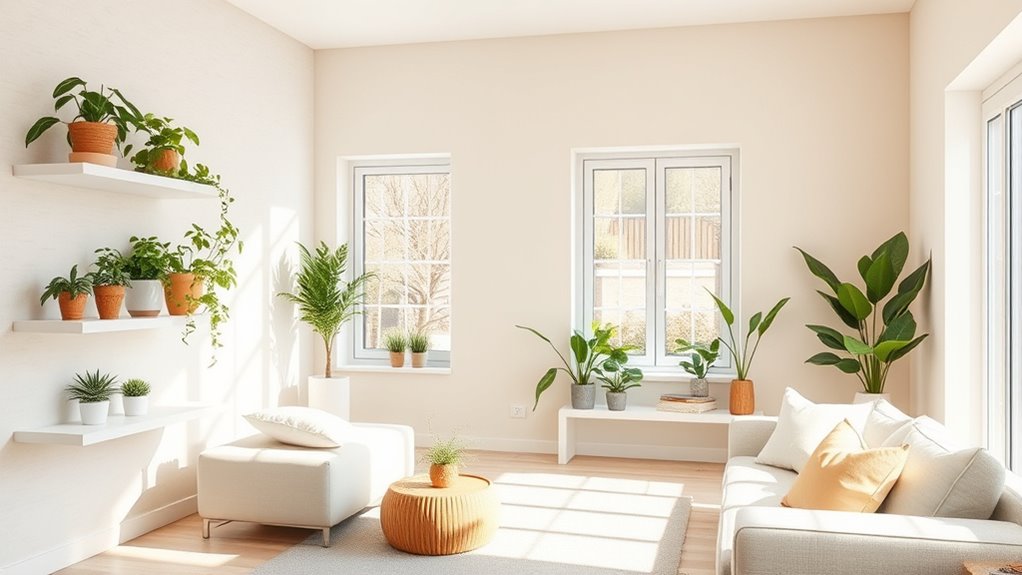
Choosing the right paint for your home can considerably impact your health and indoor air quality. When you select paints with low VOC emissions, you’re reducing the release of volatile organic compounds that can linger in the air and cause headaches, respiratory issues, or more serious health concerns over time. Many conventional paints contain high levels of VOCs, which evaporate into your living space and can contribute to indoor pollution. To create a healthier environment, look for options labeled as low or zero VOC, ensuring fewer harmful chemicals are released during and after application. These paints are especially important in homes where you spend most of your time, like bedrooms and living areas.
Another aspect to contemplate is the use of natural pigments. Traditional synthetic pigments often contain metals or chemical dyes that may emit volatile compounds or pose health risks. Natural pigments, derived from minerals, plants, or other organic sources, are non-toxic and environmentally friendly. They don’t emit VOCs, making them a safer choice for indoor spaces. By choosing paints made with natural pigments, you’re not only reducing chemical exposure but also supporting sustainable practices. Natural pigments tend to have a softer, more authentic appearance, offering rich, earthy tones that can enhance your home’s aesthetic without compromising health.
When selecting your paint, always check the labels and product specifications to confirm the presence of natural pigments and low VOC content. Many brands now focus on creating eco-friendly, healthy paints that align with sustainable living. These paints often come in a variety of colors and finishes, allowing you to personalize your space without sacrificing safety. Keep in mind that proper ventilation during and after painting can further reduce VOC levels and help dissipate any residual fumes. Using fans and opening windows will accelerate the process, ensuring the air in your home remains fresh and safe.
Additionally, consider the application process itself—using high-quality brushes and rollers can minimize overspray and waste, reducing exposure to airborne particles. Properly disposing of leftover paints and cleaning tools outside your living spaces will prevent unnecessary chemical buildup indoors. Incorporating low VOC paint options and natural pigments into your decorating plan demonstrates a commitment to healthier living environments. Ultimately, investing in healthy paints with low VOC emissions and natural pigments isn’t just about aesthetics; it’s about creating a safe, breathable environment for you and your family. With a little research and attention to product details, you can enjoy beautiful, vibrant walls that support your health and well-being every day.
Frequently Asked Questions
Are Low-Voc Paints as Durable as Traditional Paints?
Yes, low-VOC paints are just as durable as traditional paints. They typically have comparable paint longevity, so you won’t sacrifice quality for healthier indoor air. Lower VOC levels reduce harmful emissions, making your home safer. Modern low-VOC formulations are designed to withstand wear and tear, ensuring your walls stay fresh and durable over time. So, you can confidently choose low-VOC options without worrying about sacrificing durability.
How Do Natural Paints Compare in Cost?
Natural paints tend to be more expensive than traditional options due to formulation differences and higher-quality ingredients. While their cost considerations are higher upfront, they often last longer and emit fewer harmful chemicals, which can save you money over time. You might find natural paints a bit pricier initially, but their eco-friendly benefits and better indoor air quality make them a worthwhile investment for your healthy home.
Can Eco-Friendly Paints Be Mixed With Standard Paints?
Yes, you can mix eco-friendly formulations with standard paints, but it’s not always recommended. When doing paint mixing, verify both paints have compatible bases and finishes to prevent issues like uneven texture or poor adhesion. Mixing can alter the eco benefits, so consider the impact on VOC levels and environmental safety. For best results, consult the manufacturer or a professional to maintain the integrity of your eco-friendly paints.
What Certifications Should I Look for in Healthy Paints?
Don’t judge a book by its cover—look for paints with eco certifications like Green Seal or GREENGUARD Gold. These certifications guarantee low VOC levels, making your home safer and healthier. You want paints that meet strict standards for emissions and toxins, so always check for credible labels. By choosing certified paints, you’re ensuring a healthier environment for you and your loved ones—because a little caution goes a long way.
Are There Any Health Risks With Water-Based Versus Oil-Based Paints?
Water-based paints generally pose fewer health risks than oil-based paints because they emit fewer volatile organic compounds (VOCs), which can affect your indoor air quality. Oil-based paints often release higher VOC levels, potentially causing respiratory issues and headaches. By choosing water-based options, you reduce exposure to harmful fumes, making your home safer and healthier. Always look for low-VOC labels to further protect your indoor air quality.
Conclusion
Choosing healthy home paints might seem limiting, but it actually opens the door to a safer, more vibrant living space. Don’t let concerns about color options or cost hold you back—there are plenty of eco-friendly, affordable paints that look great and keep your family safe. Making this switch isn’t just good for your health; it’s a simple step toward a happier, cleaner home. Start today and enjoy the peace of mind you deserve.