TL;DR

Get garden gear delivered free with Prime
- Fast, free delivery on millions of items
- Prime Video, Amazon Music and more included
- Member-only deals all year
A Gardening Know How report recommends three October steps for coneflowers: leave healthy seedheads standing for birds, remove severely diseased foliage and check soil drainage around the roots. It advises leaving the main cutback until spring; local weather and plant conditions affect whether watering or mulch is needed.
Gardening Know How’s October coneflower guidance recommends leaving healthy seedheads in place for birds, removing badly diseased foliage and protecting roots without cutting the whole plant back. The advice matters to gardeners preparing Echinacea perennials for winter while preserving food and cover for wildlife, including seed-eating birds such as goldfinches.
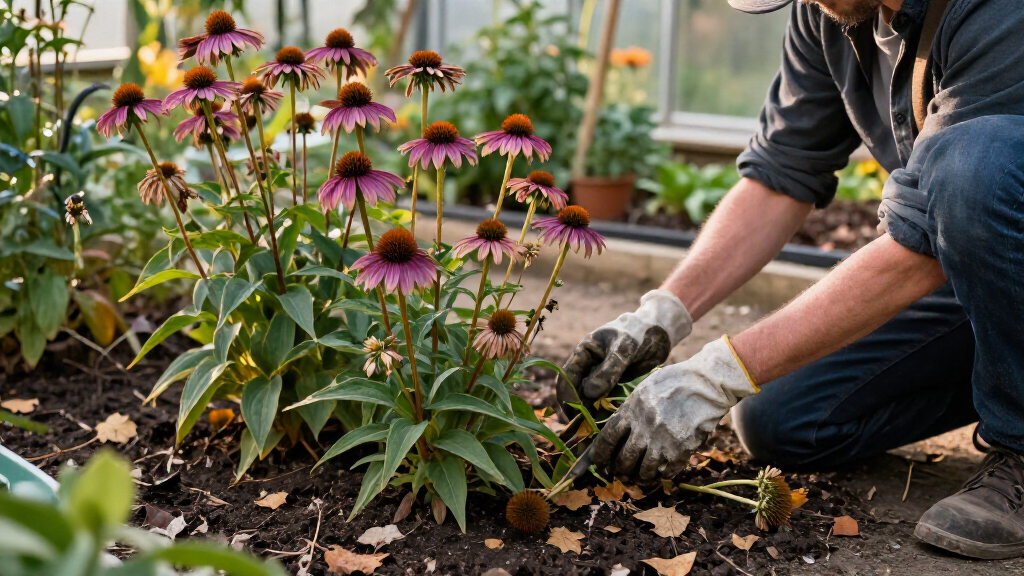
The report’s first recommendation is to resist tidying away every faded flower. After petals drop, the central cones dry and hold seeds that birds can forage through fall and winter. American goldfinches are especially fond of coneflower seeds, according to the article, though which birds visit depends on region and the plants in a garden. Standing stems can also add shape to winter borders.
The advice is selective, not a call to leave all foliage untouched. The report says gardeners should inspect plants for signs of disease, including powdery mildew, which can appear as a pale coating on leaves and stems. It recommends removing badly affected material with clean pruning tools and disposing of it appropriately rather than putting it in a home compost pile. Healthy stems and seedheads can remain standing.
For roots, the report advises checking that soil drains instead of holding water around the plant crown. Established coneflowers generally do not need extensive winter protection, it says. Watering before the ground freezes may be appropriate if soil is dry, while a light layer of mulch can moderate soil temperatures; gardeners should avoid piling mulch directly over the crown. The main cutback can wait until spring, when new growth begins.
Seedheads Support Winter Garden Wildlife
October cleanup choices affect more than how a garden looks. Leaving healthy seedheads retains a potential food source for birds after summer blooms fade, while standing stems provide winter structure. Removing every flower head for a neat appearance can remove those seeds before birds have a chance to use them.
The guidance also distinguishes wildlife-friendly restraint from ignoring plant health. Removing severely diseased foliage can reduce infected debris left near a plant, while keeping healthy material avoids unnecessary cutting. The result is a practical balance: retain useful healthy growth, address significant disease and avoid disturbing roots without a specific need.
These are general gardening recommendations, not a guarantee of more flowers next year. Blooming depends on factors beyond October care, including the variety, growing conditions and weather. The report frames its suggestions as seasonal maintenance intended to help plants prepare for winter and preserve garden resources for wildlife.
bypass pruning shears for removing diseased coneflower foliage
As an affiliate, we earn on qualifying purchases.
As an affiliate, we earn on qualifying purchases.
Three October Tasks for Echinacea
Coneflowers, or Echinacea, are flowering perennials whose summer petals fade as the season ends. Their central cones remain after flowering and can carry seed. The Gardening Know How report focuses on a short list of fall tasks rather than a major winter-protection routine: leave healthy seedheads, check foliage for disease and look after the root zone.
The article notes that seed production varies among cultivars. Some highly bred double-flowered varieties may produce less viable seed than simpler, single-flowered forms. Gardeners who want to support birds can consider native purple coneflower, Echinacea purpurea, and other varieties known to produce seed, according to the report. It does not identify every cultivar that will reliably provide food.
The report’s seasonal timing is tied to the approach of colder weather, not a fixed date for every location. Its author recommends leaving the main cleanup until spring, when new growth emerges and old stems can be cut back if they are in the way. Local conditions matter: dry soil may call for water before freezing, while already moist, poorly drained soil calls for attention to drainage instead.
““Leave the healthy seedheads standing.””
— Gardening Know How report
Weather and Cultivar Affect Care
The report does not specify a single watering or mulch schedule for all gardens. Whether plants need water before the ground freezes depends on soil moisture and local conditions; the article’s suggestion applies when the ground is dry. It also does not quantify how much leaving seedheads changes bird visits or next year’s blooms.
Seed availability varies by cultivar, and the report does not list seed-production data for individual varieties. The level of disease risk also depends on conditions such as humidity and air circulation. Gardeners should assess their own plants rather than treating every faded leaf as a reason for a full cutback.
Leave Main Cutback Until Spring
Before colder weather, gardeners can inspect coneflowers, remove badly diseased material with clean tools, check that water drains away from crowns and assess whether dry soil needs watering. A light mulch layer may be used where appropriate, kept clear of the crown. Healthy seedheads can remain through winter.
When warmer weather returns and new growth starts, the remaining old stems can be cut back if needed. The report offers no specific forecast or follow-up date; the next step is seasonal observation of local weather, soil and plant growth.
Key Questions
Should I cut coneflowers back in October?
Not all the way, according to the report. Leave healthy stems and seedheads standing through winter, then consider cutting old stems back when new growth appears in spring.
Why leave coneflower seedheads?
The dried cones contain seeds that birds can forage on in fall and winter. Goldfinches are named as frequent visitors, although bird activity varies by region and garden.
What should I do about powdery mildew?
Inspect foliage and remove material that is badly affected, using clean pruning tools. The report advises disposing of diseased material appropriately rather than adding it to a home compost pile.
Do coneflowers need mulch or watering before winter?
Not necessarily. Water may be useful before the ground freezes if soil is dry, and a light mulch layer can moderate soil temperatures. Keep mulch away from the crown and account for local soil and weather conditions.
Do all coneflower varieties feed birds equally?
No. The report says some double-flowered varieties may provide less viable seed than simpler forms. Gardeners prioritizing bird food can consider native purple coneflower and other seed-producing varieties.
Source: rss
Halloween Picks
halloween
As an affiliate, we earn on qualifying purchases.