
TL;DR

Get garden gear delivered free with Prime
- Fast, free delivery on millions of items
- Prime Video, Amazon Music and more included
- Member-only deals all year
A compost pile that slows or freezes in winter is not necessarily broken, and adding water, scraps or activator without checking conditions can make matters worse. The Planet Natural report recommends checking the pile’s center, thawed moisture, compacted layers and recent additions before deciding whether to correct it or wait for spring.
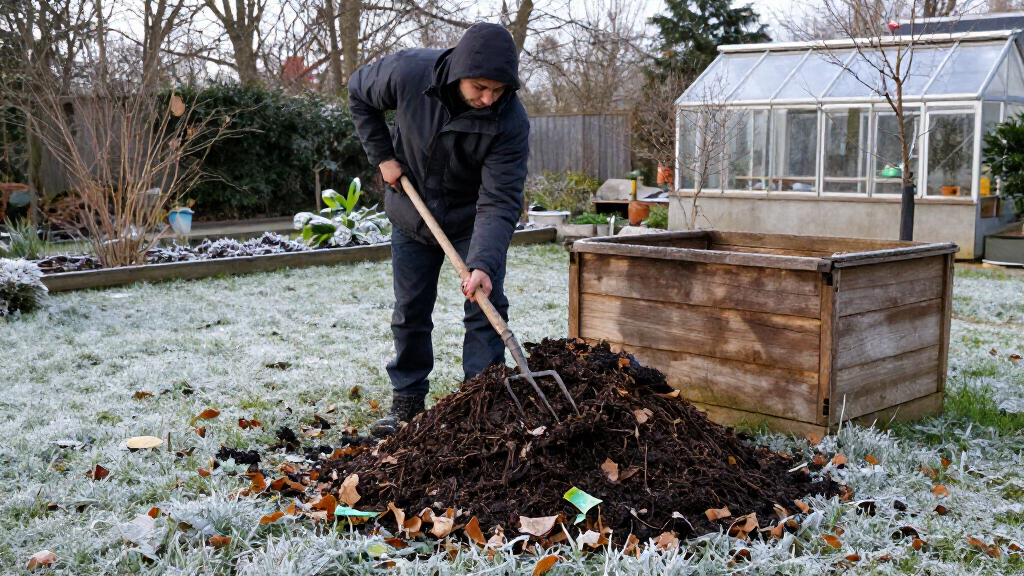
A winter compost pile that has slowed or frozen is not necessarily broken, according to a Planet Natural report advising gardeners to check its temperature, moisture, airflow and recent additions before making changes. The guidance matters because adding water, food scraps or an activator without diagnosing the pile can worsen problems such as saturation or compaction.
First, compare the pile’s center with the outside conditions. If the material is not frozen solid and a compost thermometer can be inserted without force, record the interior temperature, outdoor temperature and approximate pile size. A frosty surface or lack of visible steam does not establish whether decomposition has stopped. A small or shallow pile may retain less heat than a substantial, well-built batch, while recognizable scraps and fresh leaves point to unfinished material rather than finished compost.
Next, assess moisture only after material has thawed enough to handle. With gloves on, inspect several spots: suitable compost should feel damp like a wrung-out sponge, not release a stream of water. Dripping, heavy material or a sour smell can indicate excess moisture and limited oxygen. If the thawed mix is truly dry, add water gradually in workable weather; do not flood frozen material, because trapped ice will supply water as it melts.
Look for compacted layers and review what has gone into the bin. Wet leaves or scraps can settle into dense mats that restrict air, and a single handful may not represent the whole pile. When conditions allow a correction, loosen compacted material and mix in dry browns, such as suitable dry leaves. Illinois Extension describes a starting mix of roughly three containers of browns to one of greens by volume, but the report says to adjust for actual moisture and structure. That ratio is a starting point, not a substitute for checking the material.
Avoiding Winter Compost Mistakes
The practical concern is not simply that cold compost works slowly. A pile that is wet, tightly packed or receiving mostly kitchen scraps can develop conditions that limit airflow and make it harder to manage. Adding more wet material or water without a diagnosis may compound the problem; adding an activator will not correct freezing, waterlogging or a lack of air.
The guidance also helps gardeners decide whether to intervene at all. Repeatedly opening or turning a reasonably balanced pile can release stored heat, while forcing a frozen tumbler can damage its mechanism. A targeted correction when the material is workable is different from routine winter turning. For people willing to wait, keeping the bin covered, protecting dry browns and pausing additions when capacity is reached can be more sensible than trying to keep a small pile active through severe cold.
Popular right now

Dyson V8 Cyclone Cordless Vacuum

Philips Café Aromis Automatic Espresso Machine with LatteGo Pro Milk System

Dyson Ball Animal 3 Upright Vacuum – Corded, 290 AW, De‑tangling Motorbar Cleaner Head, 3 Suction Modes
As an affiliate, we earn on qualifying purchases.
Why Winter Slows Backyard Piles
Outdoor temperatures can slow decomposition sharply, and a small backyard bin may freeze. Pile size and construction affect how well material retains heat, so a small system should not be judged against a larger, actively managed batch. The supplied report cites Illinois Extension guidance on pile size and winter conditions and Maryland Extension advice to avoid winter turning because disturbing a pile can release heat.
The source presents two reasonable approaches: let an ordinary pile pause until conditions improve, or manage a substantial, balanced batch for active winter composting. The latter requires appropriate moisture, air spaces and protection from excess rain and wind, and cold weather still limits what a small volume can do. The report also points to Planet Natural’s troubleshooting guide for diagnosing compost problems.
What a Cold Reading Cannot Show
A cold surface, frozen contents or lack of visible steam cannot by itself establish whether decomposition has stopped or the compost is finished. The source offers no specific temperature threshold for diagnosing a winter pause, and no one moisture or temperature reading describes a pile that varies from one pocket to another. A thermometer should not be forced into frozen material, and frozen lumps cannot be reliably assessed with a squeeze test.
The supplied material also does not establish how quickly a given pile will resume decomposition, how much heat a particular bin will retain, or whether a particular additive will help in an individual case. Those outcomes depend on pile size, ingredients, moisture, airflow and weather. Gardeners need to assess their own material rather than infer a problem from the season alone.
Recheck After the Thaw
For a pile that can wait, keep the bin accessible and appropriately covered, store dry browns nearby, and add only material the bin can hold and cover. If it fills, pause additions or use an accepted collection program. After thawing, reassess moisture and mix before deciding whether to loosen the contents or add dry material.
Those aiming for active winter composting can work with a substantial, balanced batch, monitor its center and make corrections only when the material is workable. The immediate next step in either approach is the same: diagnose conditions before adding anything, and do not force a frozen pile or tumbler.
Key Questions
Does a frozen compost pile mean the compost is finished?
No. Cold or frozen material does not prove the compost is finished. If recognizable scraps and fresh leaves remain, the pile may simply be paused by winter conditions.
Should I add water if the pile looks dry in winter?
Wait until material has thawed enough to inspect. If it is genuinely dry, add water gradually in workable weather. Do not flood frozen material; water trapped as ice will become available as it melts.
How can I tell if a pile is too wet?
With gloves on, check several thawed areas. Material that drips, feels heavy or slumps, or has a sour smell may be too wet and short on oxygen. Add dry browns and loosen it when conditions allow.
Should I turn my compost pile during winter?
Not routinely, according to the report’s account of Maryland Extension guidance. Turning a reasonably balanced pile can release stored heat. Make a targeted correction if needed, and never force a frozen tumbler to rotate.
Will a compost activator fix a slow winter pile?
An activator cannot replace suitable ingredients, airflow, balanced moisture or heat retention. Check those conditions first; a frozen or waterlogged pile needs a diagnosis, not an unverified additive.
Source: planetnatural.com