
TL;DR
A Gardening Know How report says drilling holes in a cut Christmas tree trunk does not help it absorb more water or stay fresh. The recommended approach is a clean, flat cut across the base, keeping that cut submerged, and checking the stand’s water level daily—especially during the first week.
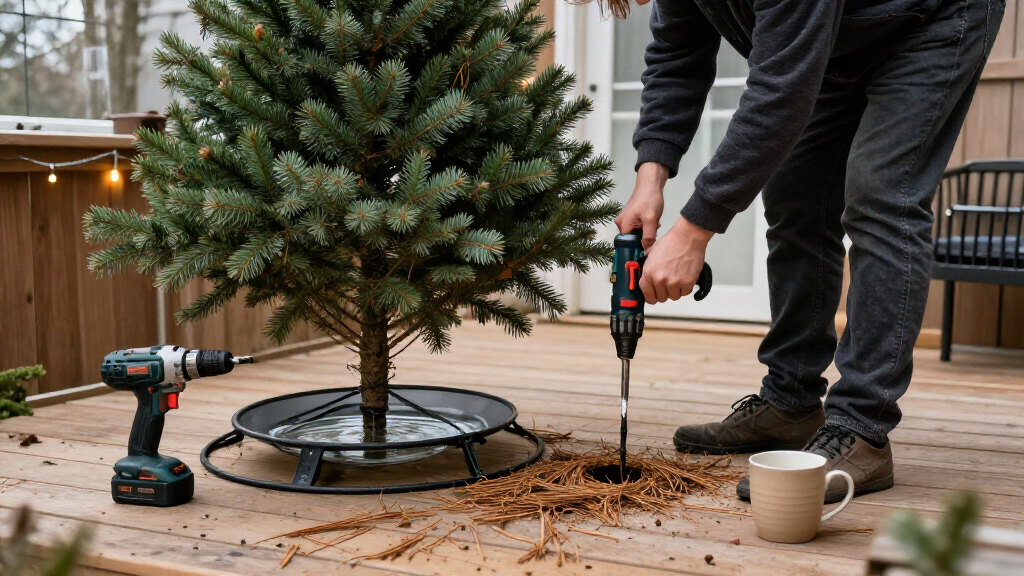
Drilling holes in a cut Christmas tree trunk does not make the tree take up more water, according to a Gardening Know How report on seasonal tree-care advice. The report says the practice leaves the dried, sap-sealed cut end in place; a fresh, flat cut across the trunk and keeping that cut submerged are the recommended ways to support water uptake.

Get garden gear delivered free with Prime
- Fast, free delivery on millions of items
- Prime Video, Amazon Music and more included
- Member-only deals all year
The drilling idea rests on a plausible-sounding theory: more openings in the wood might let more water enter. But the report says holes in the trunk’s base or sides do not remove the dried sap that can cover the original cut. It also says devices that deliver water through side holes do not keep a tree fresher than a standard stand filled with plain water.
According to the report, water moves upward through wood just beneath the bark, where the outer layers carry most of the tree’s uptake. After a tree is cut, sap can ooze from the trunk and dry over the cut end, restricting water entry. A new horizontal cut exposes clean wood; holes do not clear the sealed surface.
For a tree cut more than about 12 hours earlier, the report recommends sawing off a disk roughly ¼ to 1 inch (6 mm to 2.5 cm) thick and placing the tree in water soon afterward. A tree cut that same morning may go directly into its stand. The base should remain flat: angled cuts and V-shaped points are not reported to improve drinking and can make the tree harder to secure upright.
Keeping the Tree Hydrated
The advice matters both for holiday upkeep and household safety. A cut tree that dries out can shed needles and fade; the source also says moisture loss increases fire risk. Drilling holes may create extra work without addressing the reported cause of poor uptake, while neglecting the water level can allow the cut end to seal again.
The report says a fresh tree can use more than a gallon (3.8 liters) of water in a day early in its time at home. That is a reported possible daily amount, not a fixed requirement for every tree. Checking the stand at least once a day during the first week helps households catch a low water level before the trunk is exposed to air.
Practical details also affect whether the care advice works: the stand must hold enough water, the trunk should fit without stripping away bark, and the water must actually touch the base. The source advises choosing a larger stand for an oversized trunk rather than cutting away the outer wood, which it says absorbs water best.
Popular right now

Apple AirPods Pro 3 Wireless Earbuds with Active Noise Cancellation

TCL F8D Series 65-Inch 4K UHD QLED Smart Fire TV, 144Hz, HDR (65F8D, 2026)

Dyson Airwrap Multi-Styler Complete Long
As an affiliate, we earn on qualifying purchases.
Why the Cut End Matters
The report places trunk drilling among recurring home remedies for keeping real Christmas trees fresh. Its central explanation is that water enters mainly through the wood below the bark, while sap from the cut can dry over the base. That makes a fresh cut more relevant than adding openings elsewhere in the trunk.
Timing and continued watering are part of the same advice. If a tree must wait before being brought indoors, the report recommends standing its trunk in a bucket of water in a cool, shaded place. At home, it suggests a stand holding about 1 quart (0.95 liters) per inch (2.5 cm) of trunk width, with at least a gallon (3.8 liters) for most trees.
The source also recommends keeping the tree away from fireplaces, heaters, heat vents and sunny windows, and says cooler rooms slow drying. It advises against homemade additions such as sugar, aspirin, bleach or soda. Although it mentions commercial preservatives and customer reviews, it says independent evidence that additives outperform plain water is limited.
““No. Holes drilled into the trunk’s base don’t increase how much water a cut tree takes up.””
— Gardening Know How report
When a Tree Stops Drinking
The report does not describe a named scientific study or provide experimental data comparing drilled trunks with freshly cut trunks. Its conclusion is presented as care guidance, but the article does not identify the researchers or studies behind that assessment. The precise amount of water a particular tree will use can also vary; the stated figure of more than a gallon per day is not presented as a universal rate.
A tree that has not used water for a day or two may not necessarily be beyond help. The report says trees that arrived very dry or very cold can take a day or two to begin drinking. It recommends checking whether the trunk was actually below the waterline and looking for dried sap on the cut end before concluding that the tree has stopped absorbing water.
If the base has sealed and the tree is not decorated, the report advises removing it from the stand and making another fresh cut. With a decorated tree, that is harder; the source notes that drilling holes below the waterline is sometimes suggested as a fallback, but the supplied report text ends before fully explaining or evaluating that option. It does not establish that drilling is an effective remedy in that situation.
Check Water and Tree Condition
For households following the report’s guidance, the next step is to inspect the stand and make sure water reaches the trunk’s cut surface. Check the level daily during the first week, when a fresh tree may use water quickly, and refill as needed. If the tree is not taking up water, verify that its base has not been left above the waterline and consider whether the tree may need time to begin drinking.
Before buying a tree, the report suggests gently running a hand along a branch: few needles should fall, the stump should feel sticky with sap, and the tree should retain a rich green color and feel heavy for its size. The source offers no new official guidance or scheduled follow-up; its practical recommendation is to rely on a sound cut and consistent watering rather than drilling holes.
Key Questions
Do holes drilled into a Christmas tree trunk help it absorb water?
According to the Gardening Know How report, drilling holes does not increase water uptake. The report says holes leave the sap-sealed cut end in place.
What should I do if my Christmas tree has stopped drinking?
First check that the trunk’s cut end is actually below the waterline and look for dried sap on the base. The report says a very dry or cold tree may take a day or two to begin drinking. If the base has sealed and the tree is not decorated, it recommends making another fresh cut.
How much water should a Christmas tree stand hold?
The report recommends a stand with capacity of about 1 quart (0.95 liters) for every inch (2.5 cm) of trunk width, and at least 1 gallon (3.8 liters) for most trees. Keep the cut end in contact with water.
Should I add sugar, aspirin or another product to the water?
The report advises against homemade additions such as sugar, aspirin, bleach and soda. It says there is little independent evidence that additives work better than plain water.
Source: gardeningknowhow.com