
TL;DR

Get garden gear delivered free with Prime
- Fast, free delivery on millions of items
- Prime Video, Amazon Music and more included
- Member-only deals all year
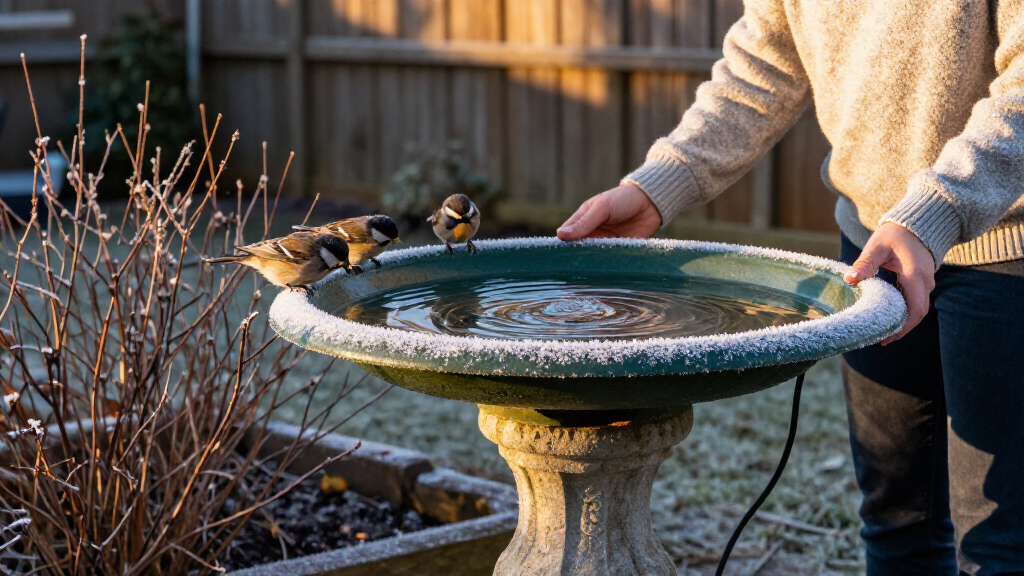
Gardening Know How has published four suggestions for slowing or preventing a bird bath from freezing: move it to a sunnier, sheltered spot, add a dark stone, float a moving object, or use a thermostatic de-icer. The advice is seasonal gardening guidance, not a report of a new study; how well the non-electric methods work will depend on local weather and placement.
Gardening Know How has published four ways to slow or prevent a bird bath from freezing in winter, advising readers to use a sunnier location, a heat-absorbing stone, a floating object, or a thermostatic de-icer. The guidance matters to people who want to maintain an outdoor water source for birds when temperatures fall, though the article does not report new research or guarantee that each method will keep water ice-free in every climate.
The first suggestion is to move the bath into winter sun, ideally where it is sheltered from prevailing cold winds. Gardening Know How says a position about six feet from a south-facing wall may gain warmth from sunlight and from heat absorbed and released by the wall. The article notes that a garden’s sunniest location can change between summer and winter, so placement may need to be reconsidered seasonally.
A second option is a dark, dense stone that absorbs warmth during the day and releases it as the air cools. The source recommends a stone at least four inches across, while cautioning that it should not take up more than a third of the bath’s water. It should protrude above the water, where it can absorb sunlight directly. These passive approaches may slow freezing; the source does not claim they will prevent ice during all cold spells.
For a floating object, the report suggests choosing one that moves in a light breeze but is unlikely to blow away. It names a ping-pong ball for a sheltered position and a tennis ball for a windier site, with a rubber duck as an option for many gardens. For more dependable heating, it recommends a thermostatically controlled bird bath de-icer that switches on in freezing conditions and off when temperatures rise. The article says a 60-to-120-watt unit is generally sufficient for preventing freezing, rather than keeping the water warm, and advises checking that the cord reaches a suitable location.
Keeping Winter Water Accessible
Bird baths can provide water when natural sources are frozen, but the source presents winter bathing as useful care advice, not as a measured finding about survival. Gardening Know How says birds need water for drinking and feather maintenance, and that access to water may save them energy they would otherwise spend searching for it. Those explanations are claims in the source material; it supplies no study citation or figures quantifying the effects.
The advice also points to an ongoing maintenance commitment. A busy bath may need frequent refilling and cleaning, and a heater requires electricity and appropriate placement. Readers should weigh those practical limits against their winter conditions: a sunny location or floating object may be enough in milder weather, while sustained freezing may call for a suitable de-icer or taking the bath out of service.
Popular right now

Ninja CREAMi 7-in-1 Ice Cream Maker, NC301

Vitamix Propel Series 750 Professional-Grade Blender, 4 Programs, Black

Roborock Q7 M5+ Robot Vacuum and Mop
As an affiliate, we earn on qualifying purchases.
Seasonal Placement and Upkeep
The report contrasts summer and winter placement: partial shade may help limit algae in warm weather, while greater sunlight can help slow ice formation in winter. It also notes that the lower winter sun changes where light falls in a garden. Wind matters because exposed water loses heat more quickly, according to the article.
Gardening Know How advises keeping the bath topped up and clearing fallen leaves. It recommends scrubbing the bath weekly, especially if many birds use it, and says to use a bird-safe cleaning product. These are maintenance recommendations from the source; it does not provide a specific product label or cleaning procedure in the material supplied here.
Limits of the Winter Advice
The article does not cite comparative tests showing how much each method delays freezing, nor does it give performance results across different temperatures, bath sizes, or wind conditions. The effectiveness of stones and floating objects is likely to depend on local exposure and weather, but the source does not quantify those differences.
It also does not identify a particular de-icer as independently tested or provide installation instructions for electrical safety. The wattage range and product examples are recommendations in the source, not a guarantee of suitability for every bath. Readers should follow the heater manufacturer’s instructions and use equipment intended for bird baths.
Preparing Baths as Temperatures Fall
Gardeners can check where winter sunlight falls, move a bath away from strong winds where practical, and decide whether a passive measure or a purpose-built heater fits local conditions. If using a de-icer, follow its product instructions and confirm that its cord and placement are suitable for the bath.
After temperatures drop, the practical next step is regular upkeep: check whether water remains available, refill as needed, remove leaves, and clean the bath routinely. The source gives no forecast or follow-up report, so whether the methods will prevent freezing in a particular garden remains dependent on weather and setup.
Key Questions
What are the four ways to keep a bird bath from freezing?
Move it to a sunnier, sheltered spot, add a dark stone that protrudes above the water, float a suitable object, or use a thermostatic bird bath de-icer. The first three are passive measures; their performance may vary with conditions.
Will a floating ball stop a bird bath freezing?
Gardening Know How says a floating object can disrupt ice formation and slow freezing. It does not provide test results or say that a ball will keep water ice-free during every freeze.
What wattage de-icer does the report recommend?
The article suggests a 60-to-120-watt de-icer for preventing freezing, rather than heating the water. Check the product’s instructions and suitability for the size and type of bath.
How often should a winter bird bath be cleaned?
The source recommends scrubbing it weekly, with particular attention when many birds use it. It also advises clearing fallen leaves and topping up water as needed.
Source: gardeningknowhow.com