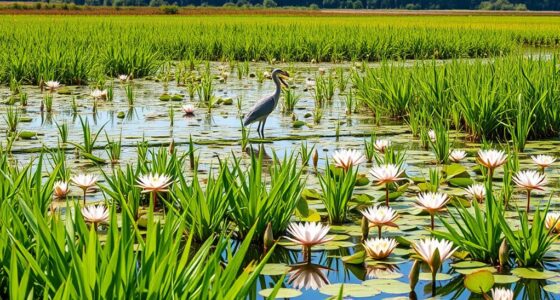
Wetlands naturally filter water by trapping pollutants, sediments, and excess nutrients with their dense plant roots and soil. They act as natural water purifiers, improving water quality before it reaches lakes and rivers. These ecosystems also help control floods by absorbing excess rainwater and releasing it slowly. Protecting wetlands not only keeps water clean but also supports biodiversity and reduces the need for costly treatment. Keep exploring to discover how these essential ecosystems sustain healthy environments and communities.
Play games included with Prime
Start a Prime free trial and play with Amazon Luna on your devices.
As an affiliate, we earn on qualifying purchases.
Key Takeaways
- Wetlands naturally trap pollutants, sediments, and excess nutrients through dense plant roots and soil.
- They improve water quality before it reaches lakes and rivers, reducing pollution levels.
- Wetlands serve as cost-effective, eco-friendly water filtration systems that protect drinking and recreational water sources.
- They help maintain ecological balance by supporting diverse plant and animal life essential for healthy water ecosystems.
- Protecting wetlands ensures continued water filtration, flood control, and biodiversity benefits for surrounding communities.

Have you ever wondered why wetlands are so crucial to our environment? These lush, often overlooked ecosystems play an essential role in maintaining the health of our planet, especially when it comes to flood control and habitat preservation. Wetlands act like natural sponges, absorbing excess water during heavy rains and releasing it slowly over time. This flood control ability helps reduce the risk of devastating floods in nearby communities, protecting homes, infrastructure, and even lives. Instead of relying solely on man-made barriers, nature’s own wetlands step in to manage water flow efficiently, demonstrating an elegant form of ecological engineering.
Wetlands naturally absorb and slow water flow, reducing floods and protecting communities through ecological engineering.
Beyond flood control, wetlands are critical habitats that support a rich diversity of plant and animal life. They serve as breeding grounds for many fish species, feeding grounds for migratory birds, and homes to countless insects and amphibians. If you want to understand how indispensable wetlands are, consider how many species depend on these environments for survival. They provide shelter, nourishment, and breeding sites, helping to sustain biodiversity that would otherwise be threatened by rapid urban development or agricultural expansion. Preserving these habitats ensures that future generations can enjoy the same natural riches we do today.
When wetlands are healthy, they also act as natural water filters. The dense plant roots and soil in these ecosystems trap pollutants, sediments, and excess nutrients from runoff before they reach larger bodies of water like lakes and rivers. This filtration process not only improves water quality but also reduces the need for costly treatment facilities. By maintaining wetlands, you help safeguard clean water supplies, which is essential for drinking, agriculture, and recreation. Additionally, wetlands are vital components of ecological engineering, showcasing how nature self-regulates and maintains balance.
However, wetlands face numerous threats, including drainage for development, pollution, and climate change. When these ecosystems degrade, their ability to control floods diminishes, and their role as habitats shrinks, putting countless species at risk. Protecting wetlands requires active efforts—whether through conservation programs, sustainable land use practices, or community involvement. Every small action counts because the health of wetlands directly impacts water quality, biodiversity, and even the stability of local communities.
In essence, wetlands are more than just muddy, marshy areas—they’re dynamic systems that serve as nature’s water filters. They buffer us from floods, preserve essential habitats, and keep our water clean. Recognizing their importance is the first step toward ensuring their preservation for the future. When you support wetland conservation, you’re not just protecting a single ecosystem; you’re safeguarding the intricate web of life that sustains us all.
As an affiliate, we earn on qualifying purchases.
Frequently Asked Questions
How Do Wetlands Compare to Artificial Water Treatment Systems?
You’ll find wetlands excel at natural filtration and pollutant removal compared to artificial water treatment systems. They use plants, soil, and microorganisms to filter water, reducing contaminants sustainably. While artificial systems rely on chemicals and mechanical processes, wetlands offer a cost-effective, eco-friendly alternative that supports biodiversity. By mimicking natural processes, wetlands provide ongoing pollutant removal and improve water quality without the energy consumption or chemical use typical of artificial systems.
Can Wetlands Help Combat Climate Change?
Yes, wetlands can help combat climate change. You benefit from their carbon sequestration abilities, as they absorb and store large amounts of CO2, reducing greenhouse gases. Wetlands also aid in flood mitigation, protecting communities from extreme weather events linked to climate change. By preserving and restoring wetlands, you’re supporting natural systems that fight climate change while safeguarding ecosystems and human lives.
Are Wetlands Suitable for Recreational Activities?
Wetlands welcome a wide range of recreational activities, making them perfect for outdoor enthusiasts. You can enjoy wetland sports like kayaking and paddleboarding, which allow you to explore the serene scenery. Birdwatching wetlands are ideal for spotting diverse bird species in their natural habitat. These wetlands provide a peaceful, picturesque setting for nature lovers seeking serenity and adventure, all while supporting conservation and appreciation of these essential ecosystems.
What Are the Main Threats to Wetland Ecosystems?
You should know that pollution impacts wetlands by contaminating water and harming plants and animals. Invasive species also threaten these ecosystems by outcompeting native species, disrupting the natural balance. Human activities like development and agriculture further degrade wetlands, leading to loss of biodiversity. Protecting wetlands from pollution impacts and invasive species is essential to preserving their critical functions and ensuring they continue to support diverse ecosystems.
How Can Individuals Support Wetland Conservation Efforts?
You can support wetland conservation by getting involved in community engagement initiatives and advocating for stronger policies. Research shows that local action drives significant change, so volunteer with organizations, participate in cleanup events, and spread awareness. Push for policies that protect wetlands by contacting representatives and supporting legislation. Your active participation helps preserve these essential ecosystems, ensuring they continue filtering water and supporting biodiversity for future generations.
Conclusion
You now see how wetlands act as nature’s water filters, cleansing our streams and lakes like an ancient aqueduct channeling pure water. Just as the great Roman engineers relied on aqueducts to deliver clean water, wetlands use their natural processes to trap pollutants and improve water quality. Protecting these essential ecosystems is like guarding a precious treasure chest—preserving a gift that keeps our environment healthy and thriving for generations to come.
Flea & tick season Picks
flea and tick prevention
As an affiliate, we earn on qualifying purchases.