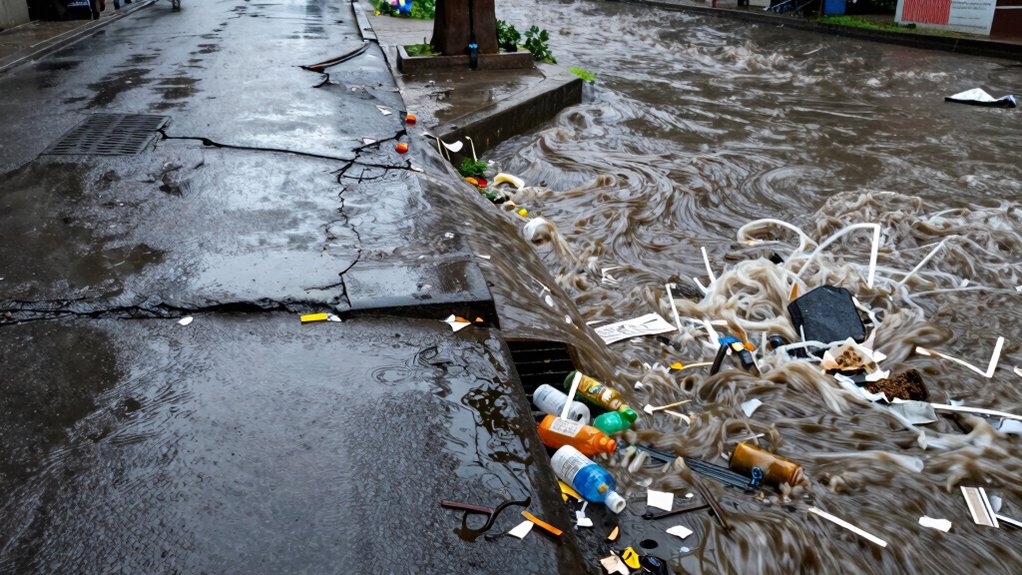

When it rains, stormwater flows over streets, parking lots, and construction sites, picking up pollutants like oil, heavy metals, chemicals, and debris. Instead of soaking into the ground, the runoff carries these contaminants into rivers, harming aquatic life and degrading water quality. Illegal dumping worsens this problem as waste is swept directly into waterways. If you want to understand how these processes impact our environment and what can be done, keep exploring the connections between stormwater and pollution.

Get garden gear delivered free — and shop member deals
- Fast, free delivery on millions of items
- Access to Prime Big Deal Days deals on October 6–7
- Prime Video, Amazon Music and more included
Key Takeaways
- Rainwater flows over land surfaces, collecting pollutants like oil, chemicals, and debris from urban areas.
- Runoff bypasses natural filtration, transporting pollutants directly into rivers and streams.
- Illegal dumping introduces hazardous waste and toxins into waterways via stormwater runoff.
- Urban infrastructure and surfaces prevent water absorption, increasing pollutant-carrying runoff to rivers.
- Pollutants in stormwater degrade water quality and harm aquatic ecosystems downstream.
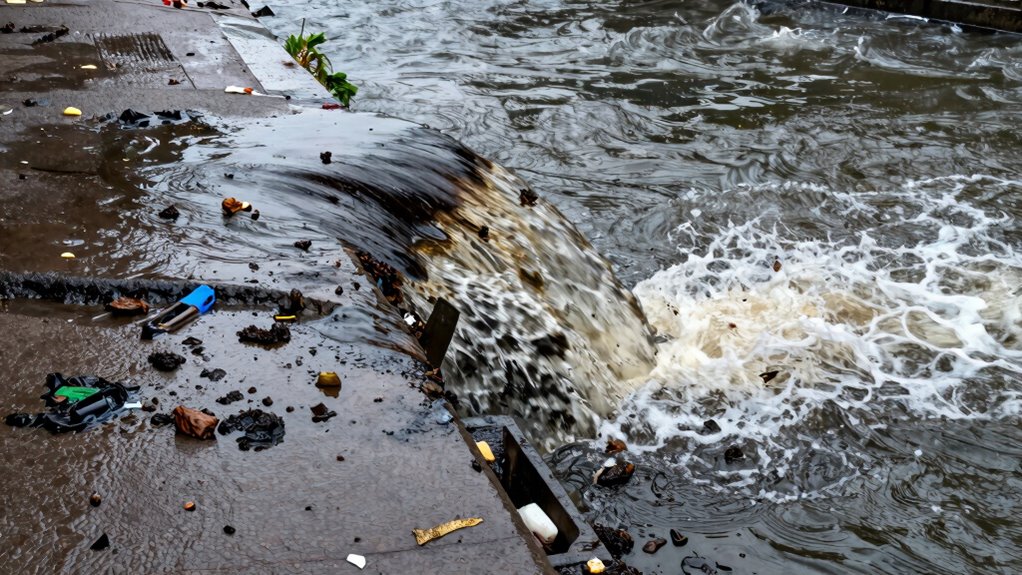
Stormwater pollution in rivers occurs when rainwater runs over land surfaces, picking up pollutants and carrying them into waterways. When rain falls on urban areas, it doesn’t just soak into the ground; it picks up a variety of pollutants from streets, parking lots, and construction sites. This process, known as urban runoff, is a major contributor to water pollution. As the water flows, it gathers oil, heavy metals, chemicals, and debris, all of which can harm aquatic ecosystems and make water unsafe for humans and wildlife alike. You might not see these pollutants directly, but they’re carried downstream, gradually degrading water quality.
Stormwater runoff carries pollutants from urban surfaces, harming ecosystems and degrading water quality downstream.
One of the biggest issues with stormwater pollution is illegal dumping. People sometimes discard waste—trash, chemicals, or even hazardous materials—illegally in streets, alleys, or vacant lots. When it rains, all that waste gets swept away by the runoff, directly entering rivers and streams. Illegal dumping bypasses waste management systems, making it an easy way for pollutants to reach waterways. These dumped materials can release toxins that threaten fish, plants, and other aquatic life. Plus, they often contain pathogens that can cause illnesses in humans who come into contact with contaminated water. Proper disposal methods and waste management systems are essential to prevent this type of pollution.
You might wonder why illegal dumping persists. Often, it’s because of a lack of proper disposal options or awareness. But regardless of why it happens, the impact is clear: it accelerates pollution in rivers. When stormwater carries debris, chemicals, or waste from illegal dumping sites into waterways, it creates a cascade of environmental problems. These pollutants can clog waterways, harm aquatic habitats, and introduce toxins into the food chain. The more urban runoff and illegal dumping occur, the more the water quality declines, affecting communities that rely on rivers for drinking water, recreation, and fishing. Implementing stormwater management strategies can significantly reduce the amount of pollution entering waterways. Additionally, community education about the importance of pollution prevention can inspire proactive efforts to keep waterways clean. Promoting urban planning that incorporates green infrastructure can also help filter pollutants before they reach rivers. Addressing stormwater runoff through sustainable solutions can greatly improve water quality and protect ecosystems.
You play a role in preventing stormwater pollution by being mindful of how you dispose of waste. Properly disposing of trash, avoiding the use of harmful chemicals, and participating in community cleanup efforts help reduce the amount of pollutants carried by runoff. Supporting local policies that crack down on illegal dumping and promote better stormwater management can also make a difference. Remember, every drop of rain that flows over contaminated surfaces has the potential to pollute rivers further. Taking steps to manage urban runoff and prevent illegal dumping protects your water resources, ensuring cleaner rivers for everyone.
As an affiliate, we earn on qualifying purchases.
Frequently Asked Questions
How Does Stormwater Pollution Affect Aquatic Life?
Stormwater pollution harms aquatic ecosystems by introducing harmful substances like chemicals, oils, and trash into rivers. When you contribute to pollution, you threaten fish health and disrupt the balance of aquatic life. Pollutants can cause fish to suffer from health issues, reduce their ability to reproduce, and lead to declines in fish populations. Your actions directly impact aquatic ecosystems, making it essential to reduce stormwater runoff and keep waterways clean.
Can Urban Design Reduce Stormwater Runoff Pollution?
Yes, urban design can reduce stormwater runoff pollution by incorporating green infrastructure like rain gardens and permeable pavements. These features allow water to soak into the ground rather than flow directly into waterways, filtering pollutants along the way. By designing cities with these sustainable solutions, you help decrease pollution entering rivers, protect aquatic ecosystems, and promote healthier communities. Implementing green infrastructure is a practical step toward cleaner, more resilient urban environments.
What Are the Main Sources of Pollutants in Stormwater?
You might be surprised to learn that over 80% of stormwater pollution comes from urban sources. Industrial runoff and agricultural chemicals top the list, washing harmful substances into waterways with every rain. When rain hits streets and farms, it picks up oil, heavy metals, pesticides, and fertilizers. These pollutants then flow into rivers, harming aquatic life and contaminating drinking water. Your city’s runoff directly impacts the health of local ecosystems and communities.
How Does Climate Change Influence Stormwater Pollution?
Climate change worsens stormwater pollution by increasing heavy rainfall, overwhelming drainage systems and washing more pollutants into rivers. Your community can adapt through climate adaptation strategies like green infrastructure, which absorbs and filters stormwater naturally. These solutions reduce runoff, prevent pollutants from reaching waterways, and make urban areas more resilient. By implementing green infrastructure, you help protect rivers from climate-induced pollution, ensuring cleaner water and healthier ecosystems for the future.
Are There Natural Methods to Filter Stormwater Before It Reaches Rivers?
Yes, natural methods like vegetative buffers effectively filter stormwater before it reaches rivers. These buffers, composed of grasses, shrubs, and trees, absorb pollutants through natural filtration processes. When stormwater flows through these vegetative areas, it slows down, allowing sediments, nutrients, and contaminants to settle or be absorbed. This natural filtration reduces pollution, protecting water quality and maintaining healthier ecosystems in rivers and surrounding environments.
Conclusion
As stormwater rushes into rivers, it acts like a thief stealing away clean water and replacing it with a toxic mix of pollutants. By understanding how stormwater carries pollution into our waterways, you can help protect these essential lifelines. Every drop that flows into rivers is a chance to make a difference—think of it as a ripple; what you do today can create waves of change for cleaner, healthier rivers tomorrow.
Fall yard work Picks
leaf blowers
As an affiliate, we earn on qualifying purchases.