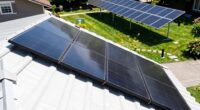
Even a small leaf casting a shadow on your solar panel can cause a noticeable drop in energy output because shadows disrupt how sunlight reaches the cells. The shading blocks direct sunlight, which can reduce efficiency markedly, sometimes by over 20% for just a tiny shadow. Understanding how shadows from leaves or branches impact performance helps you optimize placement and trimming. Keep exploring this topic to see how detailed shading math can protect your solar investment.
Key Takeaways
- Even a small shadow from a single leaf can significantly reduce solar panel efficiency due to localized shading effects.
- Shading disrupts the flow of sunlight, causing voltage drops and decreasing overall energy output.
- The impact depends on the shadow’s size, position, and the panel’s sensitivity to partial shading.
- Understanding the math of shadow length and position helps predict how a leaf’s shadow affects solar performance.
- Proper shading analysis and placement can mitigate the effects of small shadows like those from individual leaves.
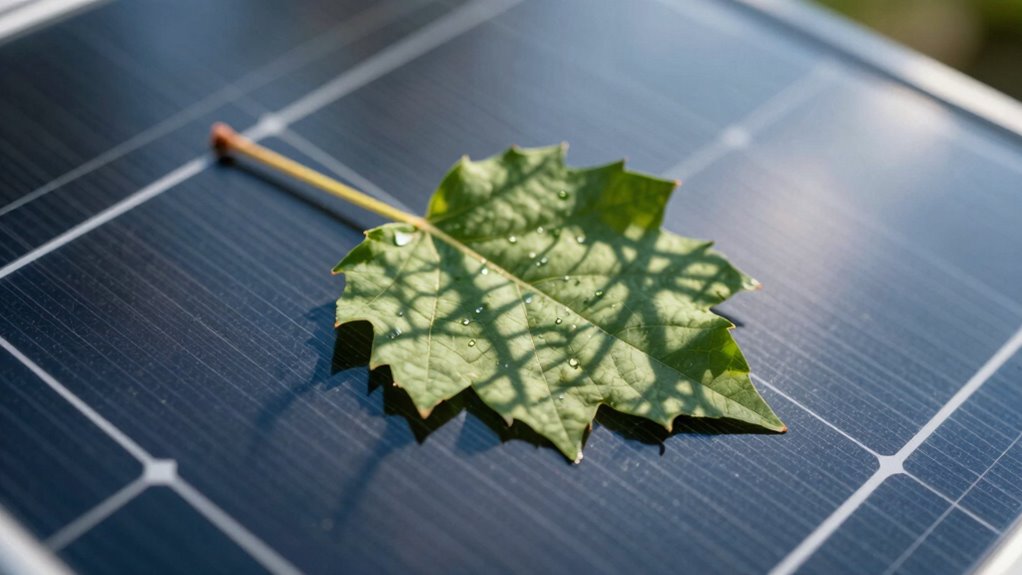
Have you ever wondered how artists and designers create realistic shading in their work? It’s a skill that involves understanding light, shadow, and how surfaces interact. But this principle isn’t limited to art; it also plays a critical role in the world of solar energy. When your solar panels are shaded, even partially, it can considerably reduce their efficiency. This is because shading disrupts the flow of sunlight reaching the photovoltaic cells, leading to a drop in power output. To maximize solar panel efficiency, it’s essential to understand and apply shading analysis techniques—methods used to assess how nearby objects, like trees or buildings, cast shadows throughout the day and year.
Shading analysis techniques help you identify potential issues before installing or optimizing solar systems. They involve mapping shadow patterns during different times and seasons, often using tools like solar pathfinders, computer simulations, or drone imagery. By analyzing how a single leaf or a small branch can cast a shadow, you realize just how delicate the balance is between sunlight and shade. Even a tiny obstacle, such as a leaf fluttering in the wind or a slight protrusion on a building, can cast a shadow large enough to decrease the efficiency of your solar panels. This is why careful shading assessment is essential—your panels might be perfectly positioned, but unexpected shading can still diminish their output.
Understanding shading analysis techniques makes you more aware of how shading affects solar panel efficiency. For example, some shading is unavoidable, but knowing the precise times and locations of shadow castings allows you to design around them. You can choose ideal panel placement, angle, and orientation to minimize shading impact. In some cases, trimming trees or relocating panels can make a noteworthy difference. Advanced shading analysis tools can even simulate how shadows move across your panels throughout the day, providing a clear picture of where shading might occur during different seasons and times. This detailed information empowers you to make smarter decisions, ensuring your solar investment produces the maximum possible energy.
In essence, grasping how shading impacts solar panel efficiency through effective shading analysis techniques transforms how you approach solar projects. It’s about controlling the shadows that threaten your energy output, much like an artist controls light and shadow to create realism. By paying close attention to even the smallest shadow—like that cast by a single leaf—you can optimize your system to perform at its best. In the end, understanding shading math isn’t just about avoiding shade; it’s about mastering the delicate dance between sunlight and obstacles to boost your solar power’s performance. Recognizing the importance of energy-efficient solutions can help you make sustainable choices that benefit both your wallet and the environment.
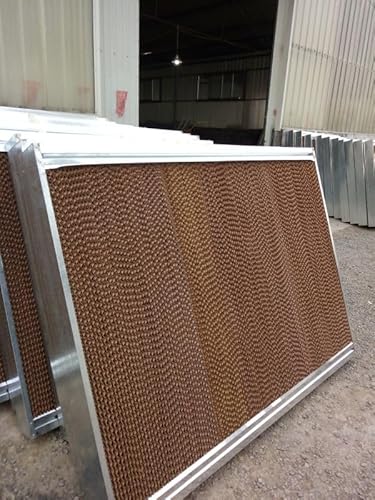
Self Contained Greenhouse Swamp Cooler, Greenhouse Water Walls, Evaporative Cooling System, Evaporative Cooler Pad, 4 inch Thick, 72 inch Long, 48 inch Height
Self contained, you just need to connect PVC pipe water supply and water drain, easy and cheap installation.
As an affiliate, we earn on qualifying purchases.
Frequently Asked Questions
How Can I Estimate Shading Impact on My Specific Solar System?
You can estimate shading impact on your solar system by performing a shadow analysis and sunlight mapping. Use tools like solar software or apps that simulate shading throughout the year, considering trees, buildings, and other obstructions. These tools help you visualize how shadows move and affect sunlight exposure on your panels, enabling you to adjust panel placement or trim nearby foliage for ideal performance and minimal shading loss.
What Tools Are Best for Modeling Shading Effects?
You should use tools like PVsyst, HelioScope, or Aurora Solar for modeling shading effects. These programs incorporate solar path analysis and shading analysis features, helping you visualize how shadows from nearby objects affect your panels throughout the day and year. By inputting your location and system details, you get accurate shading impact estimates, enabling you to optimize your solar layout and maximize energy production.
Does Shading Affect All Solar Panel Types Equally?
Shading doesn’t affect all solar panel types equally. Monocrystalline panels tend to be more efficient and handle shading better, while polycrystalline panels suffer more efficiency loss. To minimize shading impacts, you should focus on shading mitigation strategies like panel placement and using bypass diodes. Understanding your panel’s efficiency and shading resilience helps maximize output, so always consider these factors when designing or upgrading your solar system.
Can Shading Issues Be Corrected After Installation?
Yes, shading issues like tree shading or roof obstructions can often be corrected after installation. You might trim back overhanging branches or reposition panels, letting sunlight dance freely across your system again. Sometimes, adding microinverters or power optimizers acts like a conductor, directing energy around shaded areas. While it’s not always perfect, these steps can help restore your panels’ performance, turning shade into sunshine once more.
How Does Seasonal Shading Variation Influence Annual Output?
Seasonal variation in shade patterns markedly impacts your annual solar output. As trees grow or lose leaves, shading increases or decreases, affecting how much sunlight your panels receive throughout the year. You might notice reduced energy production during winter when trees are bare or in fall when leaves fall. To optimize your system, consider adjusting panel angles or trimming nearby foliage to minimize seasonal shading and maximize energy generation year-round.
Amazon Product B0F93KX61M
As an affiliate, we earn on qualifying purchases.
Conclusion
So, next time you see a single leaf covering part of your solar panel, remember it’s not just a tiny shadow—it’s a tiny thief stealing your sunlight. That single leaf, like a small obstacle in your day, can cause a big drop in energy. It’s a reminder that even the smallest shading can have outsized effects. Keep your panels clear, and don’t let a single leaf overshadow your solar potential. Every bit of sunlight counts.
Amazon Product B0F93L46WZ
As an affiliate, we earn on qualifying purchases.
Amazon Product B0F93KLZY2
As an affiliate, we earn on qualifying purchases.