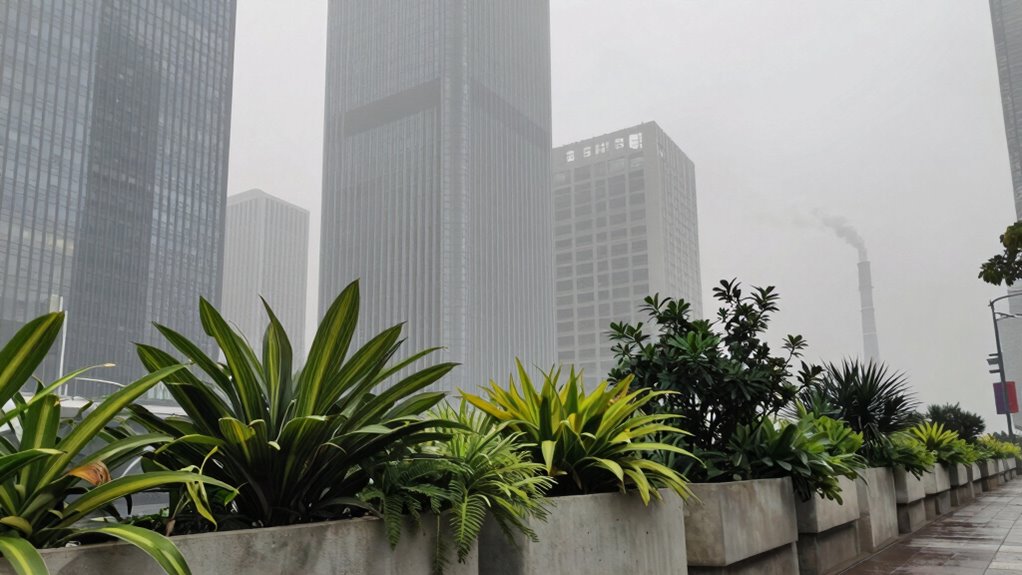

When you see plants in cities, air pollution can harm their growth by reducing chlorophyll levels, which are vital for photosynthesis. Pollutants like nitrogen oxides and sulfur dioxide settle on leaves, making plants less efficient at capturing sunlight. This weakens their health, causes dull, pale leaves, and stunts growth. Over time, plants become more vulnerable to diseases and pests. If you want to understand how pollution impacts urban greenery further, there’s more to explore below.
Key Takeaways
- Air pollution reduces chlorophyll production, impairing photosynthesis and decreasing plant energy and growth.
- Pollutants cause leaves to appear dull and pale, indicating declining plant health.
- Increased pollution weakens plants’ immune defenses, making them more vulnerable to pests and diseases.
- Diminished plant vitality lowers urban air filtration, worsening pollution and environmental quality.
- Pollution control policies can help restore plant health and promote healthier urban greenery.
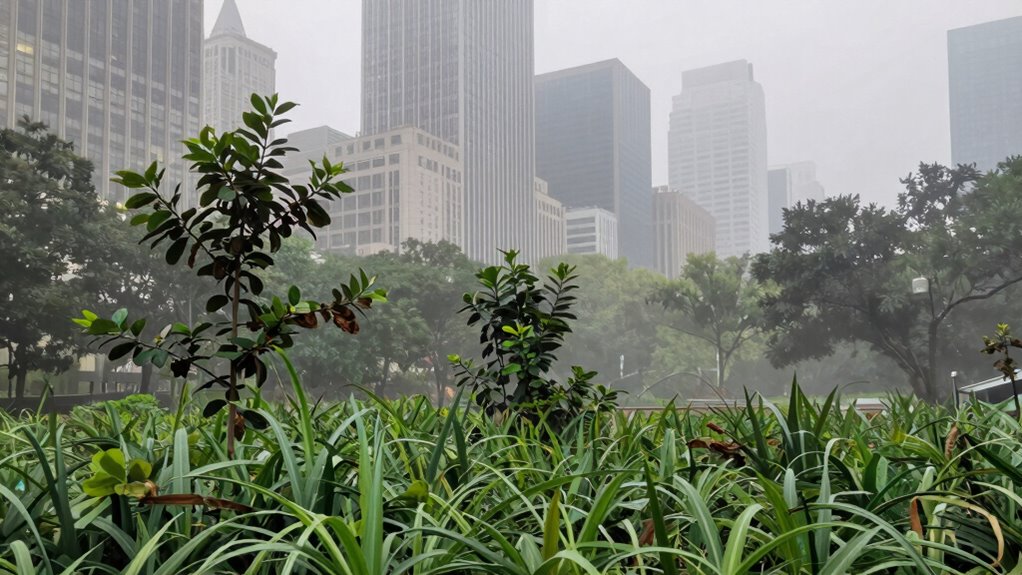
Air pollution markedly impacts plant growth, often in ways that go unnoticed. When you walk through a city, you might admire the greenery or the trees lining the streets, but beneath the surface, urban pollution is quietly affecting how these plants develop. One of the most significant effects of urban pollution is the reduction in chlorophyll, the pigment responsible for photosynthesis. As pollutants like nitrogen oxides and sulfur dioxide settle on leaves, they interfere with chlorophyll production, leading to chlorophyll reduction. This decrease makes plants less efficient at capturing sunlight and converting it into energy, which hampers their growth and overall health.
Urban pollution reduces chlorophyll, weakening plants’ ability to photosynthesize and thrive in city environments.
You might not see these changes immediately, but over time, the impacts become evident. Plants exposed to high levels of air pollution often appear duller, with paler leaves that lack their usual vibrant green color. This is a direct result of compromised chlorophyll levels, which diminishes the plant’s ability to perform photosynthesis effectively. As a result, the plants can’t produce enough energy to sustain healthy growth, leading to stunted development, fewer leaves, and less vigorous flowering. In urban environments, where pollution levels are higher, these effects are more pronounced, and the plants struggle to thrive despite their efforts to adapt.
Urban pollution doesn’t just affect the aesthetics of city greenery; it also weakens plant resilience. When you consider the stress from pollutants, combined with other urban challenges like limited soil quality and water access, plants become more vulnerable to diseases and pests. Chlorophyll reduction weakens their immune defenses, making it harder for them to recover from environmental stresses, especially as air quality continues to decline. Over time, this can lead to a decline in urban plant populations, which in turn impacts air quality, as fewer healthy plants are available to filter pollutants.
Understanding how air pollution impacts plant growth helps you realize the importance of maintaining cleaner air in cities. As pollution decreases, plants can restore their chlorophyll levels, improve photosynthesis, and grow healthier. Encouraging greener urban policies and reducing emissions can help reverse some of these detrimental effects. When you see city trees and parks thriving, it’s a sign that efforts to curb urban pollution are working and that plants are better equipped to support urban ecosystems. Ultimately, protecting plant health in cities benefits everyone, ensuring cleaner air, greener spaces, and healthier communities.

Aokrean Plant Grow Light, 48 LEDs Full Spectrum Grow Lights for Indoor Plants, Height Adjustable Small Halo Grow Light with Base, 3 Optional Spectrums, Auto Timer 3/9/12Hrs, 10 Brightness, 3 Pack
- Stable Stand Design: Requires pot pressure for stability
- Versatile Installation: Insert in soil or use stand
- Multiple Lighting Modes: White, warm white, red, and mix
As an affiliate, we earn on qualifying purchases.
As an affiliate, we earn on qualifying purchases.
Frequently Asked Questions
How Does Air Pollution Affect Different Plant Species Uniquely?
You’ll notice that air pollution affects plant species differently, depending on their pollution resistance. Some plants, like pollution resistant species, withstand pollutants better by activating plant detoxification mechanisms, which help them survive in contaminated environments. Others struggle, showing stunted growth or damage. Your observations highlight how certain plants adapt through specialized mechanisms, while more sensitive species may decline, altering urban biodiversity and ecosystem health.
Can Urban Plants Adapt to High Pollution Levels Over Time?
You wonder if urban plants can truly adapt to relentless pollution. With time, their resilience grows as they develop pollution adaptation mechanisms, like thicker leaves or detoxifying enzymes. Urban plant resilience hinges on this slow yet steady evolution, allowing some species to survive in harsh environments. Yet, the question lingers—will these adaptations be enough to sustain plant life amid increasing city pollution? The answer remains uncertain, but hope persists.
What Specific Pollutants Are Most Harmful to Plant Health?
You should know that the most harmful pollutants to plant health are ground-level ozone, sulfur dioxide, nitrogen oxides, and particulate matter. These pollutants originate from sources like vehicle emissions, industrial processes, and burning fossil fuels, all affecting air quality. When you’re exposed to high levels of these pollutants, they can damage leaves, hinder photosynthesis, and weaken plants, making them more vulnerable to disease and stress.
How Do Pollution Levels Vary Seasonally and Impact Plant Growth?
You’ll notice seasonal variations in pollution levels, with higher pollution in winter due to increased heating and less atmospheric dispersion. This pollution impact can stunt plant growth, causing leaf damage, reduced photosynthesis, and weakened resilience. Conversely, cleaner air in spring and summer helps plants thrive, promoting healthier growth. Understanding these seasonal changes helps you better manage urban greenery and mitigate pollution’s adverse effects on plant health.
Are There City Plants That Thrive Despite High Pollution?
You’ll notice some urban plant resilience shining through, as certain pollution-resistant species flourish despite tough conditions. These hardy plants adapt well, often thriving where others struggle, showcasing nature’s ability to cope with city pollution. By selecting pollution-resistant species like resilient trees and hardy shrubs, city planners and gardeners can cultivate greener spaces that endure air quality challenges while adding beauty and benefits to urban environments.
Conclusion
You see, air pollution can really put a damper on plant growth in cities. It’s a delicate balance, and when pollutants like smog and particulate matter take over, they can stunt plants’ development and weaken their defenses. Don’t forget, the squeaky wheel gets the grease, so addressing pollution now is essential. If we don’t act, we might find ourselves fighting an uphill battle to keep urban greenery healthy and thriving.