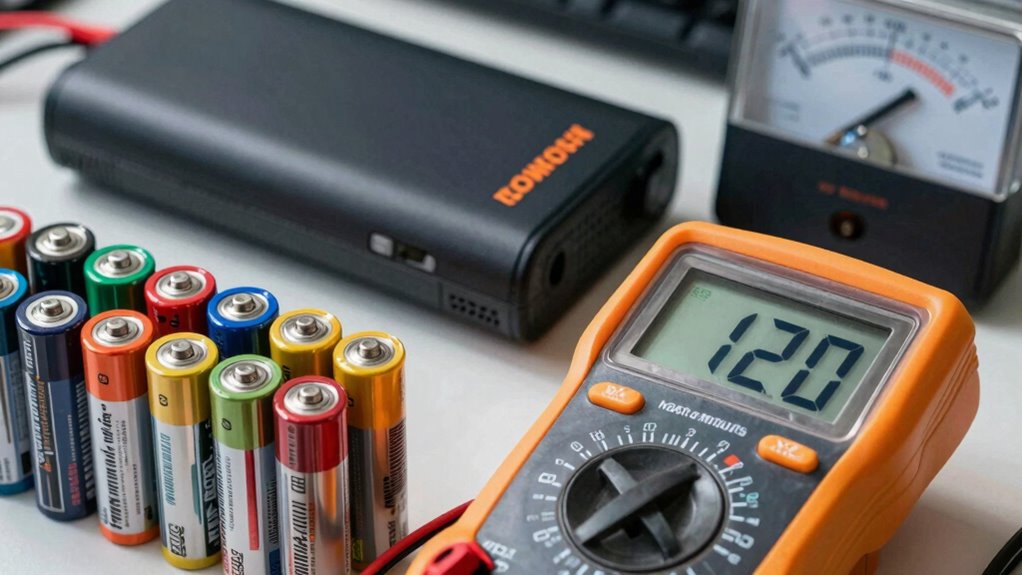
Confusing watts with watt-hours can wreck your backup plans because watts measure how fast energy is used at any moment, while watt-hours tell you the total energy stored or supplied over time. If you underestimate wattage needs, your backup won’t power devices long enough. Conversely, not considering watt-hours might lead to running out of energy unexpectedly. Understanding this difference helps you size your batteries properly for reliable backup, and there’s more to know if you continue exploring.
Key Takeaways
- Watts measure how fast energy is used, while watt-hours show total energy stored or consumed over time.
- Confusing wattage with watt-hours can lead to selecting insufficient backup capacity.
- High wattage devices drain battery capacity faster, reducing runtime despite similar watt-hour ratings.
- Proper backup planning requires matching device power needs (watts) with battery capacity (watt-hours).
- Misunderstanding the difference causes backup failures during critical power outages or off-grid use.
Have you ever wondered what the difference is between watts and watt-hours? It’s a common question, especially when you’re trying to understand how long a backup power source will last or how much energy your devices consume. Watts measure the rate at which energy is used or generated at a specific moment, while watt-hours tell you how much energy is used over time. This distinction is vital when considering battery capacity and managing power consumption. When you’re choosing a backup generator or a portable battery, knowing these differences helps you make smarter decisions.
Watts, often abbreviated as W, are a measure of power. Think of power as the speed at which energy is being used or supplied. For example, a device rated at 100 watts consumes energy at that rate when turned on. The higher the wattage, the more power it draws at any given second. Power consumption is directly related to wattage—if your laptop uses 60 watts, it’s consuming energy at that rate while in use. Understanding the power consumption of your devices helps you estimate how long your backup system will last when supplying power.
Watt-hours, on the other hand, are a measure of energy. They indicate the total amount of energy a battery or power source can deliver over time. For instance, if you have a battery with a capacity of 600 watt-hours, it can theoretically provide 600 watts for one hour or 300 watts for two hours before it’s drained. This measurement is essential because it directly affects your backup plan’s effectiveness. The larger the watt-hour rating, the longer your devices will run on that battery. When choosing a backup power system, you want to confirm that the watt-hour capacity matches your needs based on your power consumption patterns.
It’s easy to get caught up in the numbers and confuse wattage with watt-hours, but remember: wattage tells you how fast energy is being used, while watt-hours tell you how much total energy is available. If you underestimate your power consumption or misjudge the battery capacity, your backup plan could fail when you need it most. For example, a device with a high wattage but a small watt-hour capacity won’t last long, even if it’s powerful. Conversely, a large watt-hour capacity can handle more devices or run them longer, but only if those devices don’t draw excessive power.
Understanding these concepts helps you better plan for emergencies or off-grid living. By keeping in mind the difference between watts and watt-hours, you guarantee your backup system is appropriately sized, avoiding surprises when power is most critical. Additionally, considering the power consumption of your devices ensures your backup plan remains reliable. So, next time you evaluate a battery or generator, check both the wattage and watt-hour ratings, and consider your devices’ power consumption to keep your backup plan reliable and effective.
Frequently Asked Questions
How Can I Convert Watts to Watt-Hours Quickly?
To convert watts to watt-hours quickly, you need to perform an energy calculation that involves time. First, determine how long the device runs in hours. Then, multiply the power in watts by the number of hours to get watt-hours. This power conversion helps you understand energy consumption over time, making your backup plans more accurate and reliable. Remember, watt-hours measure energy, while watts measure power at a specific moment.
Why Does My Battery Last Longer Despite the Same Wattage?
Your battery lasts longer because of changes in battery capacity or power consumption, not just wattage. Think of it like a marathon runner: even with the same wattage, a larger battery capacity means more energy stored, letting you go further. Conversely, lower power consumption means less energy drain. So, your device’s efficiency and how much energy your battery holds are key to longer-lasting performance, even if the wattage stays the same.
What Devices Use Watt-Hours Versus Watts?
Devices that use watt-hours measure their battery capacity, indicating how long they can run on a full charge, like laptops or electric vehicles. In contrast, watt ratings show power consumption at a specific moment, such as light bulbs or chargers. Your device’s efficiency impacts how long a watt-hour battery lasts; more efficient devices use less power, making the battery last longer even if the watt-hour capacity stays the same.
How Do Watt-Hours Affect Solar Panel Efficiency?
Watt-hours dramatically impact your solar panel efficiency by showing how much energy your system can store and use over time. If your battery storage isn’t rated properly in watt-hours, your solar setup might fall short, leaving you in the dark when the sun isn’t shining. Accurate energy measurement with watt-hours helps optimize your solar system, ensuring maximum efficiency and reliable power for your needs.
Can Watt-Hour Ratings Help Predict Backup Power Duration?
Yes, watt-hour ratings can help you predict backup power duration. By knowing your battery capacity in watt-hours and your daily energy consumption, you can estimate how long your backup system will last during an outage. Divide the battery’s watt-hours by your energy use per day, and you’ll get a clear idea of how many hours your backup can sustain your needs. This helps you plan more effectively.
Conclusion
Remember, confusing watts with watt-hours can turn your backup plans into a complete disaster—like trying to fill a swimming pool with a teacup. By understanding the difference, you safeguard your power supply and avoid costly surprises. Don’t let this mix-up be the Achilles’ heel of your energy setup. Get it right, and you’ll keep your devices running smoothly, no matter what chaos the power grid throws at you. Stay informed, and stay powered!