If you want a riding experience that feels more like a real bike, a torque sensor is the way to go. It measures your pedal effort accurately, giving you real-time power data and a more natural feel. In contrast, cadence sensors only track pedal speed, which doesn’t reflect how hard you’re working. To discover how these different sensors impact your ride and training, keep exploring the details behind each option.
Key Takeaways
- Torque sensors measure actual pedaling effort and power, providing a more authentic riding experience.
- They deliver real-time, high-fidelity data that mimics the feel of riding a traditional bike.
- Torque sensors require complex installation and calibration, similar to real bike components.
- Cadence sensors only track pedal speed, offering less immersive and less effort-focused feedback.
- The advanced technology and effort measurement of torque sensors enhance the sense of riding a “real bike.”
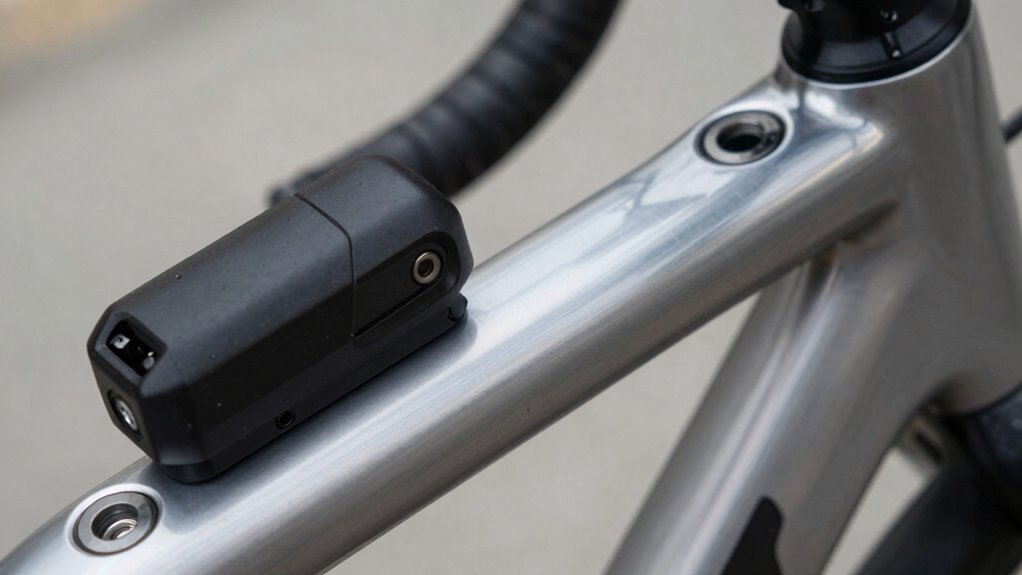
When choosing between a torque sensor and a cadence sensor for your bike, understanding how each one functions can help you make an informed decision. Torque sensors measure the power you generate directly by detecting the force applied to the pedals. This means that your bike’s system can accurately assess how hard you’re pedaling at any given moment, providing a more precise power measurement. This is especially useful if you’re training seriously or trying to optimize your performance. On the other hand, cadence sensors only track how fast you’re spinning the pedals, giving you data on pedal revolutions per minute. While they don’t measure power directly, they’re simpler to install and often more affordable.
Choosing between torque and cadence sensors depends on your training goals and installation preferences.
Installation complexity plays a notable role in your choice. Torque sensors tend to be more intricate to install because they require integration into the crank or pedal system, often involving delicate calibration to ensure accurate readings. You might need to remove parts or adjust your bike’s setup, which can be a hassle if you’re not technically inclined or don’t have the right tools. Conversely, cadence sensors are usually straightforward to set up. They typically attach to the crank arm or shoe, with minimal tools needed, making them a quick upgrade if you want basic cadence data without much fuss.
The difference in installation complexity reflects the level of detail each sensor provides. Torque sensors, by capturing real-time power measurement, deliver a feel that closely mimics riding a “real bike.” You get immediate feedback on how much effort you’re putting in, which can considerably enhance training and riding experience. Cadence sensors, while valuable for maintaining a consistent pedal rhythm, don’t offer the same depth of data. They’re more about monitoring cadence rather than the quality or quantity of power you exert.
If you’re a casual rider or new to cycling tech, the simplicity of cadence sensors might appeal more, especially since they’re less invasive and easier to install. But if you’re serious about training or want that authentic “real bike” feel, a torque sensor provides a more thorough picture of your effort. It’s worth noting that the choice isn’t purely about complexity; it’s about what kind of data you need and how much effort you’re willing to put into setup. A torque sensor’s ability to measure power directly creates a riding experience that truly reflects how much effort you’re putting in, making your ride feel more genuine and connected. Additionally, the use of reliable technology like high refresh rates in sensors can improve the responsiveness and accuracy of your data, further enriching your riding experience.
Frequently Asked Questions
Can Torque Sensors Improve Overall Cycling Performance?
Yes, torque sensors can improve your overall cycling performance. They provide accurate data on your power output, helping you maintain consistent power and avoid fatigue. By ensuring proper sensor calibration, you can trust the feedback and fine-tune your effort. This results in better pacing, increased efficiency, and ultimately, more effective workouts, making your ride feel more natural and connected, just like riding a real bike.
Are Cadence Sensors Suitable for Beginner Cyclists?
Cadence sensors are definitely suitable for beginner cyclists because they’re simple to install and require minimal sensor calibration. You’ll find them easy to use as they focus on tracking pedal rotations, helping you build a sense of rhythm. While they don’t measure effort directly, they’re great for developing consistency and understanding your cadence. This makes them an accessible, practical choice for new riders wanting to improve their cycling skills without complex setup.
How Do Sensors Affect Bike Maintenance Requirements?
Sensors can slightly increase your bike’s maintenance needs, mainly because of calibration. You’ll need to regularly check and calibrate sensors to guarantee accurate readings, which can add to your maintenance frequency. Keep an eye on sensor connections and battery life, as these can affect performance. Proper calibration and occasional checks help prevent issues, making sure your bike stays reliable and feels natural, just like riding a real bike.
Do Sensor Types Impact Battery Life Significantly?
Think of your sensors as tiny energy guardians. Torque sensors generally drain your battery faster because they constantly measure force, increasing power consumption. Cadence sensors, like a gentle breeze, use less energy, resulting in longer battery life. So, yes, sensor types profoundly impact battery drain; choosing one affects how often you’ll need to recharge, making your ride more seamless or demanding depending on the sensor’s power needs.
Which Sensor Provides More Accurate Data for Training?
A torque sensor provides more accurate data for training because it measures power directly through power measurement, capturing your actual effort. This results in more precise data accuracy, helping you train effectively. In contrast, cadence sensors only track pedal revolutions, which lack insight into your true exertion. By choosing a torque sensor, you get detailed, reliable feedback that closely mirrors real riding conditions, enhancing your training results.
Conclusion
Choosing between a torque sensor and a cadence sensor really comes down to your riding style. Torque sensors provide a more natural, bike-like feel, making each pedal stroke more intuitive. Did you know that riders using torque sensors often report a 20% increase in riding comfort? That stat highlights how a torque sensor can make your ride feel more genuine and enjoyable, helping you connect better with your bike and ride more confidently.