
While high-efficiency solar panels sound impressive, they aren’t the only factor that matters. Your overall system performance depends more on cost, installation ease, roof suitability, and climate conditions. Choosing the right balance can save you money and ensure reliable energy production. The most efficient panel isn’t always the best choice if it doesn’t fit your roof or budget. Keep exploring to discover what truly makes your solar investment worthwhile.
Key Takeaways
- Balance efficiency with cost to maximize long-term savings and system affordability.
- Consider roof conditions and shading, as they can impact actual panel performance more than efficiency ratings.
- Prioritize durability, ease of installation, and system compatibility over marginal efficiency gains.
- Align panel choice with your energy needs and climate for optimal, reliable performance.
- Focus on overall system design and quality, not just the efficiency percentage, for better solar investment outcomes.
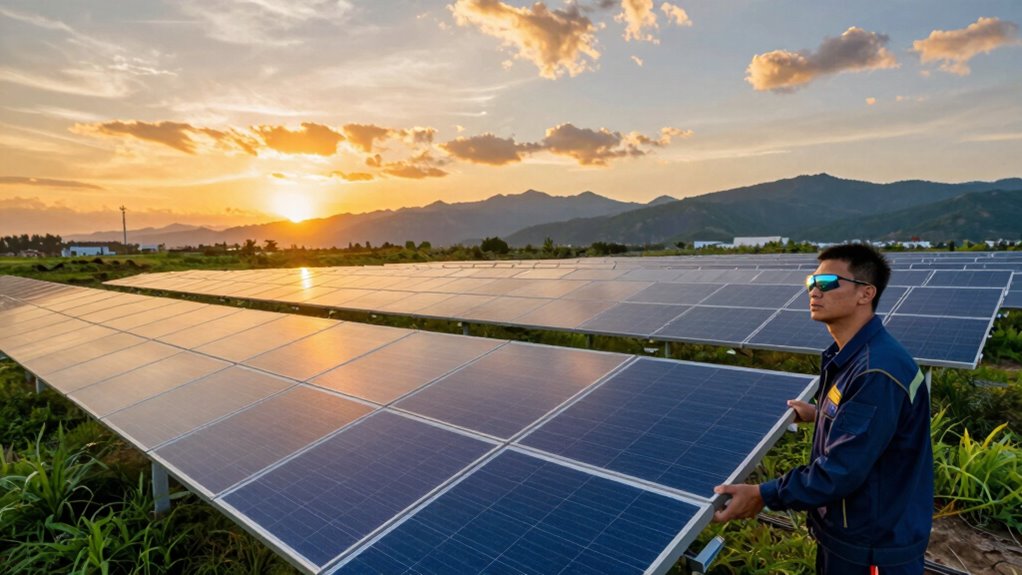
Have you ever wondered how effectively solar panels convert sunlight into electricity? It’s a common question, especially when you’re weighing the benefits of installing a solar system. While efficiency ratings often grab attention, it’s important to understand that efficiency isn’t the only factor that determines how well your solar setup will serve you. Other elements, like cost considerations and installation challenges, can have a bigger impact on your overall experience and savings.
Efficiency isn’t everything; costs and installation play crucial roles in your solar success.
When you look at solar panels, higher efficiency means more electricity generated from a given space. That sounds ideal, but it’s not always the most practical or cost-effective choice. High-efficiency panels tend to come with higher price tags, which can considerably increase your upfront investment. You need to ask yourself whether paying extra for marginal gains in efficiency makes sense for your situation or if a more affordable, slightly less efficient panel will do the job just as well. Sometimes, opting for a slightly less efficient panel allows you to cover more roof space or install a larger system within your budget, ultimately producing more total power and savings.
Installation challenges also play an essential role in your decision. Not all roofs are suitable for complex or heavy-panel installations, which can add to the overall cost and difficulty. For example, if your roof has shading issues, irregular angles, or limited space, you might find that the most efficient panels aren’t the best fit. In some cases, higher-efficiency panels are more delicate or require more precise mounting, which can complicate installation and increase labor costs. Conversely, durable, easier-to-install panels might save you time and money even if their efficiency isn’t top of the line. It’s also worth considering the local climate and your energy needs—sometimes, a simpler, more reliable system can outperform a high-efficiency one that’s difficult to install or maintain. Additionally, understanding the technology differences between panel types can help you make a more informed choice.
Ultimately, you should focus on what makes sense for your specific circumstances. Efficiency is just one piece of the puzzle. Cost considerations, installation challenges, roof suitability, and your energy goals all influence what system will work best for you. Instead of chasing the highest efficiency numbers, aim for a balanced approach that considers both upfront investment and long-term benefits. By doing so, you’ll make smarter choices and enjoy the full advantages of solar energy without getting caught up in the hype of efficiency alone.

Callsun N-Type 16BB 400W Bifacial Solar Panel, 2Pcs 200 Watt Solar Panel 12V, 25% High Efficiency, Dual-module Parallel Anti-Shade Design, for RV Van Marine Home Rooftop Off-Grid Systems (2 Pack 200W)
【N-Type 16BB High-Efficiency Solar Cells】The Callsun 200 watt solar panel is built with advanced N-type solar cells and…
As an affiliate, we earn on qualifying purchases.
As an affiliate, we earn on qualifying purchases.
Frequently Asked Questions
How Does Panel Durability Affect Long-Term Savings?
Panel durability greatly affects your long-term savings because higher material resilience and panel longevity mean your solar system will last longer without needing costly replacements or repairs. When you choose panels built with durable materials, you reduce maintenance costs and ensure consistent energy production over time. This stability not only maximizes your investment but also guarantees that your solar system remains reliable and efficient for many years to come.
What Is the Environmental Impact of Manufacturing Solar Panels?
Did you know manufacturing a single solar panel produces about 300 kilograms of CO2? The environmental impact involves recycling challenges, as many panels contain hazardous materials that are hard to process. Additionally, the supply chain‘s reliance on rare materials can lead to resource depletion. While solar energy benefits the planet, you should consider these manufacturing impacts and support recycling efforts to reduce environmental harm.
How Do Installation Costs Compare Across Different Regions?
Installation costs vary widely across regions due to factors like regional incentives and installation labor rates. In some areas, generous incentives reduce upfront expenses, while in others, higher labor costs increase overall installation prices. You should research local policies and labor conditions to get an accurate estimate. By understanding regional incentives and labor costs, you can better plan your solar panel investment and maximize your savings.
Can Solar Panels Work Efficiently in Cloudy Weather?
Yes, solar panels can work efficiently in cloudy weather, but shadow flickering and panel orientation matter. Clouds reduce sunlight, so your panels produce less power, but they still generate energy. Make sure your panels aren’t shaded by trees or structures, as shadow flickering can decrease efficiency. Proper panel orientation toward the sun helps maximize energy collection, even on cloudy days, ensuring you get the most from your system.
What Are the Maintenance Requirements for Solar Panels?
You should regularly clean your solar panels, especially after dirt, leaves, or snow accumulation, to maintain peak performance. Check for any debris or shading that could reduce efficiency. Additionally, schedule routine inspections to identify worn or damaged components, and replace any faulty parts promptly. Proper maintenance helps guarantee your solar system stays efficient, lasts longer, and provides maximum energy output over time.

Solar Panel Mounting Brackets Kit, 7PCS RV Roof Mounts, No Drill, Caravans, Campervans (Black)
[Easy Set up and Fix]-Solar brackets can be assembled quickly and easily. No drilling required, just using silicone…
As an affiliate, we earn on qualifying purchases.
As an affiliate, we earn on qualifying purchases.
Conclusion
Remember, focusing solely on efficiency might make you overlook other important factors like durability and cost. Even if a panel isn’t the most efficient, it can still save you money and last for years if it’s built well. Don’t get caught up in just one metric—consider your climate, budget, and long-term needs. By looking at the whole picture, you’ll choose a solar setup that truly benefits you, not just one with the highest efficiency rating.

Renogy 200W ShadowFlux Anti-Shading N-Type Solar Panel, 12V/24V System 200 Watt Solar Panel 25% High-Efficiency, PV Module Power Charger for RV Marine Rooftop Farm Battery Off-Grid Applications
ShadowFlux Anti-Shading Technology – Renogy shadowflux technology delivers enhanced power generation even in shaded areas caused by buildings,…
As an affiliate, we earn on qualifying purchases.
As an affiliate, we earn on qualifying purchases.

ECO-WORTHY 10KW Output 9.36KWH Off Grid Solar System Complete Kit for Home:12pcs 195W Solar Panels(2340W)+10KW 120V/240V Inverter (UL 1741)+ 2pcs 48V 100AH Lithium Batteries(UL 1973&UL 9540A)
[Ideally Output of 9.36KWH] The power of 9.36KWh per day under 4 hours full sunshine by the 2340W…
As an affiliate, we earn on qualifying purchases.
As an affiliate, we earn on qualifying purchases.