To promote health and prevent mold and allergies, aim to keep your indoor humidity between 30% and 50%. Many homes fall outside this range, increasing risks like respiratory issues and moisture problems. Maintaining the right balance helps protect your well-being and property. If you want to discover simple ways to monitor and adjust your humidity levels effectively, there’s more to learn below.
Key Takeaways
- The optimal indoor humidity range for health is between 30% and 50%.
- Most homes tend to be too dry or too humid, missing this ideal balance.
- Proper humidity levels reduce mold growth, allergens, and respiratory issues.
- Using a hygrometer helps monitor and maintain the recommended humidity target.
- Balancing humidity during seasonal changes enhances comfort and prevents health problems.
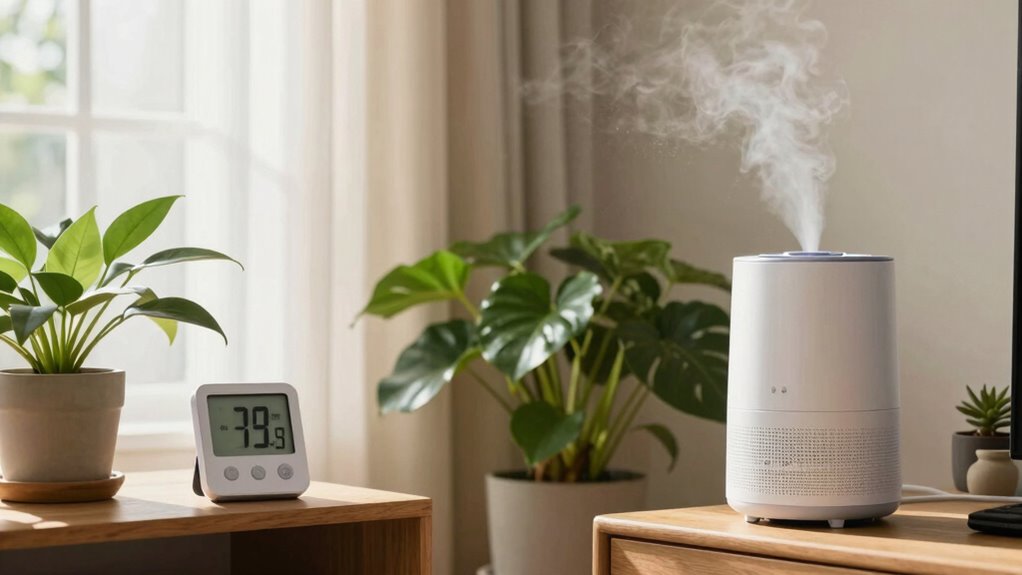
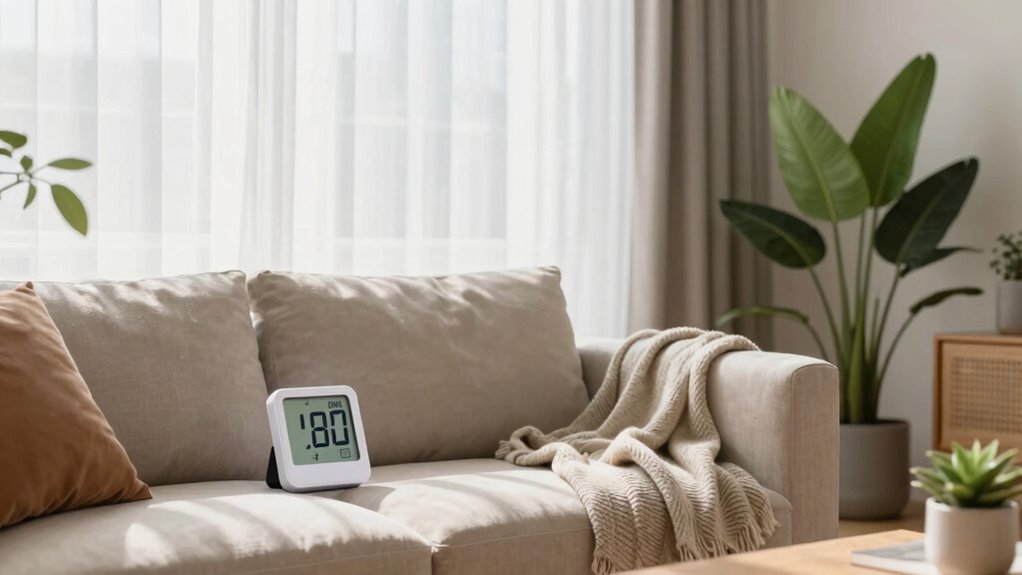
Maintaining proper humidity levels in your indoor environment is essential for promoting good health. When humidity is just right—generally between 30% and 50%—you create an environment that discourages mold growth and alleviates allergy symptoms. Mold thrives in damp conditions, so keeping humidity in check is one of the most effective ways to prevent it from taking hold in your home. Mold prevention not only protects your property but also reduces the risk of respiratory issues, skin irritation, and other health problems associated with mold spores. If you’ve ever experienced sneezing, congestion, or itchy eyes during humid months, controlling indoor moisture levels could be the key to allergy relief. Many people overlook this simple step, but maintaining the right humidity can considerably improve your overall comfort and health. Monitoring your humidity levels with a hygrometer is an easy way to stay proactive about your home’s indoor environment.
You might assume that keeping your home dry is the best approach, but overly dry air can cause other health issues, like dry skin, irritated sinuses, and increased susceptibility to colds. That’s why balancing humidity is vital. When indoor air is too moist, it creates the perfect breeding ground for mold, dust mites, and bacteria—all of which exacerbate allergy symptoms. Conversely, if your home is too dry, it can worsen respiratory discomfort, especially for those with asthma or allergies. Humidity levels that fall within the ideal range help keep these problems at bay. Using a hygrometer to monitor your home’s humidity gives you a clear picture of whether you need to add moisture or reduce it. In winter, for example, heating systems tend to dry the air out, so running a humidifier can restore balance and prevent the dry, uncomfortable feeling that often accompanies indoor heating.
In the summer, air conditioning and dehumidifiers work together to remove excess moisture, making your space less hospitable to mold and allergens. Proper ventilation also plays a key role in maintaining healthy humidity levels. Exhaust fans in bathrooms and kitchens help vent moist air outside, preventing it from accumulating indoors. Additionally, addressing leaks and damp spots immediately prevents mold from establishing itself in hidden corners. In short, consistent humidity control supports mold prevention and allergy relief, creating a healthier environment for you and your family. Regularly checking and adjusting your home’s humidity levels ensures you’re not unknowingly inviting mold growth or suffering from allergy aggravation. Staying vigilant about moisture not only protects your property but also promotes comfort and better respiratory health, allowing you to breathe easier every day.

TempPro TP49 Digital Hygrometer Indoor Thermometer Humidity Meter Room Thermometer with Temperature and Humidity Monitor Mini Hygrometer Outdoor Thermometer (Previously ThermoPro)
Face Icon Comfort Indicator: Humidity temperature gauge features face icons to indicate DRY/COMFORT/WET air conditions, quickly informs you…
As an affiliate, we earn on qualifying purchases.
As an affiliate, we earn on qualifying purchases.
Frequently Asked Questions
How Does Humidity Affect Indoor Air Quality?
Humidity directly impacts your indoor air quality by influencing mold growth and ventilation efficiency. When humidity levels are too high, mold can thrive, worsening allergies and respiratory issues. Proper ventilation helps regulate humidity, preventing excess moisture build-up. Maintaining an ideal humidity range improves air quality, reduces mold risk, and keeps your home healthier. Staying aware of humidity levels and ensuring good ventilation are key to a comfortable, safe indoor environment.
Are There Risks of Too High Humidity Levels Indoors?
Too high humidity indoors can be risky, leading to mold growth and structural damage. While moist air might feel comfortable, excess moisture creates the perfect environment for mold, which impacts health and damages your home. You might save on heating costs, but neglecting humidity levels invites costly repairs and health issues. Keep humidity balanced to protect your space and well-being, avoiding the dangers of overly damp environments.
What Are the Best Tools to Measure Home Humidity?
You should choose a reliable hygrometer to measure your home’s humidity accurately. Digital hygrometers are user-friendly and provide precise readings, making hygrometer selection easier. For better humidity control, consider using devices like humidifiers or dehumidifiers that help maintain ideal levels. Regularly monitoring with a hygrometer ensures you keep humidity within the healthy range, preventing issues caused by too high or too low moisture levels in your home.
How Do Humidity Levels Impact Allergy Symptoms?
You’ll find that proper humidity levels ease allergy symptoms, making your home a cozy haven. When humidity is too high, it encourages mold growth and can worsen allergy symptoms, while low humidity may cause dry skin and irritation. Maintaining a balanced environment helps reduce mold and skin irritation, allowing you to breathe easier. Keep your home’s humidity just right, and you’ll notice allergy symptoms become less bothersome, improving your daily comfort.
Can Adjusting Humidity Improve Sleep Quality?
Adjusting humidity can considerably improve your sleep quality by creating a better sleep environment. When you regulate humidity levels between 40-60%, your room feels more comfortable, reducing issues like dry skin, congestion, or throat irritation. Proper humidity regulation helps prevent respiratory discomfort and promotes deeper, more restful sleep. Ensuring your sleep environment maintains this ideal humidity range makes it easier to fall asleep and stay asleep throughout the night.

LEVOIT Top Fill Humidifiers for Bedroom, 2.5L Tank for Large Room, Easy to Fill & Clean, 28dB Quiet Cool Mist Air Humidifier for Home Baby Nursery & Plants, Auto Shut-off for Safety, 25H
𝙁𝙖𝙨𝙩 𝙃𝙪𝙢𝙞𝙙𝙞𝙛𝙞𝙘𝙖𝙩𝙞𝙤𝙣 𝘼𝙡𝙡 𝙉𝙞𝙜𝙝𝙩: Runs for up to 25 hours on low thanks to its SUPER LARGE capacity…
As an affiliate, we earn on qualifying purchases.
As an affiliate, we earn on qualifying purchases.
Conclusion
Think of your home as a delicate garden, where humidity levels are the gentle rain that nurtures or the harsh drought that withers. When you hit that perfect balance, your space blooms with health and comfort. Miss it, and you risk fostering mold or dryness. So, aim for that sweet spot—your indoor sanctuary—where every breath feels like fresh, nourishing rain, and your health blossoms as effortlessly as flowers in spring.
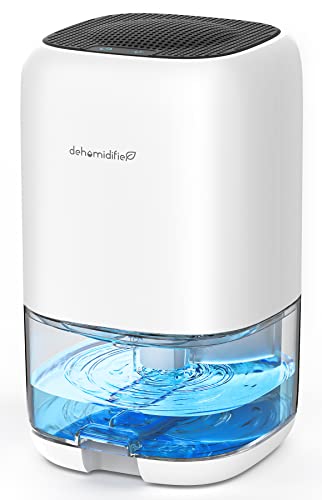
Dehumidifier, 35 OZ Small Dehumidifiers for Bedroom for Home, Quiet with Auto Shut Off, Dehumidifiers for Bedroom (280 sq. ft), Bathroom, RV, Closet, White
High Efficient Dehumidifiers for Home: Still annoyed about the muggy weather? Just Take it easy! have a try…
As an affiliate, we earn on qualifying purchases.
As an affiliate, we earn on qualifying purchases.

VIVOHOME Autoflow Bathroom Exhaust Fan with Light & Humidity Sensor (160-110-30CFM) – 2700K/4000K/5700K & EC Motor, Retrofit Ceiling Mount Bath Fan, No Attic Access Needed (Install Kit, 4-in Duct)
DURABLE & EFFICIENT: The bathroom exhaust fan is built with lightweight, rust-proof ABS and PP housing; Designed for…
As an affiliate, we earn on qualifying purchases.
As an affiliate, we earn on qualifying purchases.