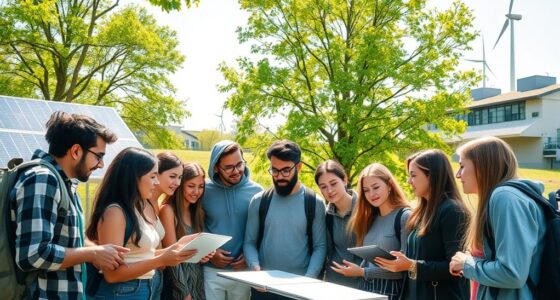
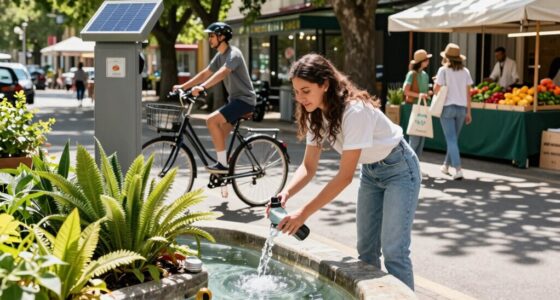
To design effective environmental lessons, focus on creating engaging, relevant content that highlights real-world applications like composting or water conservation. Use clear visuals and multimedia to help students understand complex data, and incorporate outdoor experiences for sensory engagement. Foster community involvement through projects and encourage active participation with discussions and hands-on activities. Tailor your approach to diverse learners and emphasize local actions to instill responsibility. Keep exploring ways to inspire meaningful student action as you continue your efforts.

Get garden gear delivered free with Prime
- Fast, free delivery on millions of items
- Prime Video, Amazon Music and more included
- Member-only deals all year
Key Takeaways
- Incorporate real-world, actionable examples like composting and water conservation to boost student engagement and relevance.
- Use visual aids with high contrast ratios and multimedia storytelling to clarify complex environmental data.
- Design activities that involve community participation to foster responsibility and demonstrate local environmental impact.
- Implement active learning through discussions, hands-on projects, and problem-solving to deepen understanding and retention.
- Adapt lessons to diverse learners with varied resources and inclusive methods to maximize participation and impact.

Have you ever wondered how to create engaging environmental lessons that truly inspire students to care about the planet? The key lies in designing lessons that are both informative and actionable, encouraging students to adopt sustainable practices and participate actively in their communities. When you focus on integrating real-world applications, you help students see the relevance of environmental issues in their daily lives, which boosts engagement and motivation. Incorporate examples of sustainable practices—like composting, water conservation, or renewable energy—so students can connect theory to tangible actions. By emphasizing these practices, you empower them to become responsible stewards of the environment, fostering a sense of agency and purpose. Additionally, understanding how contrast ratio influences visual clarity can help students better appreciate the importance of clarity and detail in environmental data presentations. Community engagement plays a vital role in effective environmental education. When students see how their actions can impact their local surroundings, they develop a deeper understanding and commitment. To achieve this, design lessons that include projects involving local parks, community clean-ups, or school gardens. These activities not only make lessons more interactive but also demonstrate the immediate benefits of sustainable choices. Encourage students to collaborate with local organizations or experts, which can deepen their understanding and create a sense of belonging and responsibility within their community. This approach transforms abstract concepts into meaningful experiences, making environmental issues feel personal and urgent.
Create engaging lessons that connect environmental issues to real-life actions and inspire student stewardship.
Creating a balanced lesson plan involves blending information delivery with opportunities for students to participate actively. Use discussions, debates, or problem-solving exercises that challenge them to think critically about sustainable practices. For example, you might have students analyze their own consumption habits or brainstorm eco-friendly solutions for local problems. Incorporate hands-on activities that illustrate sustainability principles, such as building rain gardens or designing eco-friendly products. These activities not only reinforce learning but also build skills and confidence. When students see how their ideas and efforts can lead to real change, their motivation to adopt sustainable practices skyrockets.
Finally, make sure your lessons are adaptable to diverse learning styles and backgrounds. Not all students will respond the same way, so providing a variety of activities and resources ensures everyone can engage meaningfully. Use multimedia, storytelling, or outdoor experiences to enrich the learning process. By fostering an environment where students feel their voices matter and their actions make a difference, you cultivate a sense of community and shared responsibility. With thoughtful planning that emphasizes sustainable practices and community engagement, you set the stage for a new generation of environmentally conscious individuals ready to make a difference.
environmental education teaching resources
As an affiliate, we earn on qualifying purchases.
As an affiliate, we earn on qualifying purchases.
Frequently Asked Questions
How Can I Adapt Lessons for Diverse Age Groups?
You can adapt lessons for diverse age groups by incorporating age-appropriate modifications that suit their developmental levels. Use engaging activities and language tailored to each age, ensuring concepts are understandable. Also, consider cultural considerations by including diverse examples and respecting different backgrounds. This approach helps make environmental lessons relevant and inclusive, fostering better understanding and participation across all age groups. It’s about balancing content complexity with cultural sensitivity.
What Are the Best Outdoor Activities for Environmental Education?
Like Thoreau wandering Walden Pond, you can inspire students through outdoor activities such as nature walks and bird watching. These experiences foster direct engagement with the environment, igniting curiosity and appreciation. During nature walks, students observe ecosystems firsthand, while bird watching teaches them about species diversity and habitats. These activities not only deepen understanding but also cultivate a lifelong connection to nature, essential for effective environmental education.
How Do I Assess Student Understanding Effectively?
You can assess student understanding effectively by gathering student feedback regularly and using formative assessments. Ask questions during lessons, observe their participation, and review their work to identify misconceptions. Incorporate quick quizzes or concept maps to gauge comprehension. This ongoing process helps you adjust your teaching methods in real-time, ensuring students grasp key environmental concepts and stay engaged throughout the lesson.
What Resources Are Available for Eco-Friendly Classroom Materials?
You have a treasure trove of eco-friendly classroom materials at your fingertips. Recycled supplies like paper, cardboard, and plastic can transform your space into a sustainability hub. Digital resources further boost your efforts, reducing waste and providing endless learning opportunities. Think of these tools as your secret weapons—helping you create an environmentally conscious classroom that inspires students to care for the planet while keeping costs low and impact minimal.
How Can I Incorporate Local Environmental Issues Into Lessons?
You can incorporate local environmental issues into lessons by engaging your community involvement and using local case studies. Start by researching nearby environmental challenges, like pollution or conservation efforts, and invite community members to share their experiences. Use local case studies to make lessons relatable and impactful. This approach helps students understand real-world issues, fosters a sense of responsibility, and encourages active participation in solving local environmental problems.
Conclusion
As you craft your environmental lessons, remember you’re planting seeds of awareness that will blossom in young minds. Like a skilled gardener tending to delicate blooms, your passion nurtures curiosity and responsibility. With each engaging activity, you weave a tapestry of understanding that can stretch across generations. By inspiring others, you become the architect of a greener future, turning the classroom into a garden where hope and change grow side by side, rooted in knowledge and care.
Fall yard work Picks
leaf blowers
As an affiliate, we earn on qualifying purchases.