
Engaging students in sustainability projects during Earth Day is a great way to inspire lifelong eco-conscious habits. You can organize outdoor activities like nature walks, litter cleanups, or tree planting, making learning hands-on and meaningful. Encourage student-led initiatives such as recycling campaigns or energy-saving challenges, fostering ownership and teamwork. Using technology to document projects or create interactive displays boosts engagement. Keep exploring ways to make Earth Day impactful, as there’s much more to discover on fostering student involvement.
Key Takeaways
- Organize student-led initiatives like recycling drives, cleanups, or energy-saving campaigns to foster ownership and active participation.
- Incorporate outdoor activities such as nature walks, tree planting, and ecological observations to connect students with the environment.
- Use digital tools and interactive technology to enhance experiential learning about sustainability and ecological systems.
- Set up recycling stations and promote waste reduction projects to teach resource conservation and environmental responsibility.
- Encourage ongoing eco-friendly habits by integrating sustainability practices into daily routines and long-term school programs.

Earth Day provides a perfect opportunity for schools to engage students in environmental awareness and action. This day encourages you to take meaningful steps toward sustainability, and one of the most effective ways to do that is through hands-on activities like recycling initiatives and outdoor learning. By involving students in recycling projects, you teach them the importance of reducing waste and conserving resources. You might set up recycling stations around the school, guiding students to sort plastics, paper, and metals properly. As they participate, they learn about the impact of waste on the environment and develop habits that can last a lifetime. Recycling initiatives also foster teamwork and responsibility, making students feel they’re part of a larger effort to protect the planet.
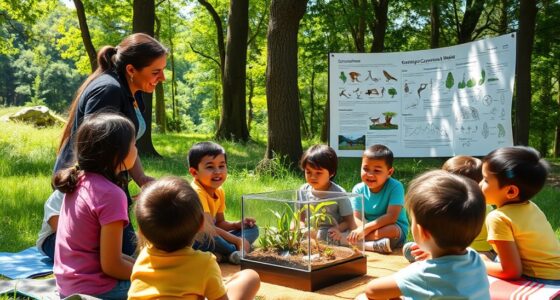
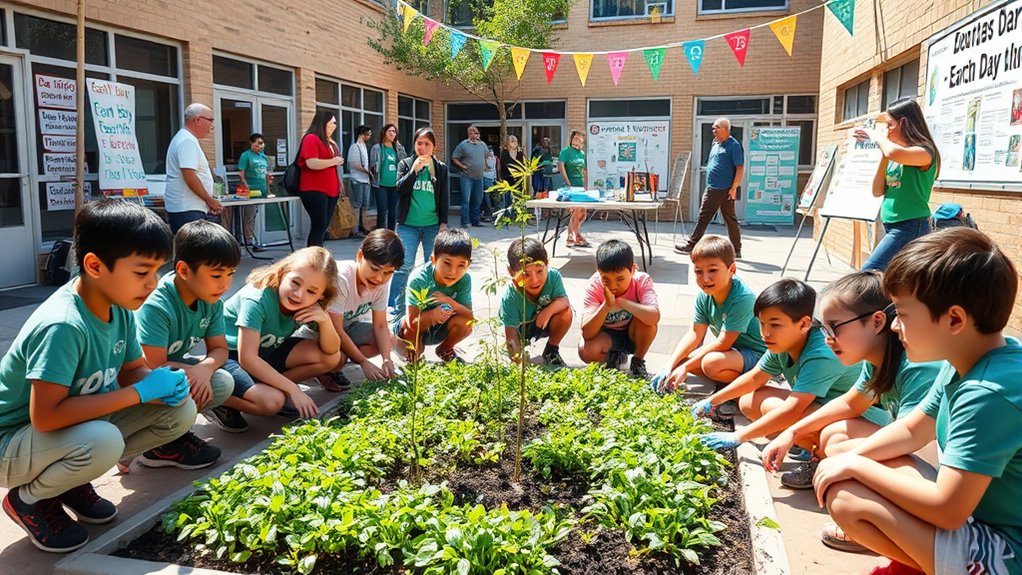
Outdoor learning amplifies these lessons by connecting students directly with nature. You can organize outdoor classes or nature walks where students observe local ecosystems, collect litter, or plant trees. These activities provide a tangible understanding of ecological balance and the importance of preserving natural habitats. When students learn outside the classroom, they engage their senses and curiosity, making environmental concepts more memorable. You might also create outdoor classrooms or gardens where students can grow native plants or vegetables, reinforcing the importance of biodiversity and sustainable agriculture. Outdoor learning isn’t just about instruction; it’s about creating a sense of stewardship and fostering a personal connection to the environment. Incorporating educational technology like digital cameras or tablets can enhance outdoor observations and documentation, enriching their learning experience. Additionally, integrating sustainable practices into classroom routines can deepen students’ understanding of environmental responsibility and encourage ongoing eco-friendly habits. Using interactive tools can further support experiential learning and help students visualize complex ecological systems.
Involving students in sustainability projects during Earth Day is more than just an activity; it’s an opportunity to instill lifelong environmental values. You can challenge students to come up with their own ideas for reducing waste or conserving energy, encouraging creativity and leadership. For example, they might design posters promoting recycling, organize a cleanup event, or develop a campaign to reduce plastic use on campus. These projects give students a sense of ownership and agency, making the lessons more impactful. Additionally, integrating outdoor learning into these initiatives helps them see the real-world effects of their actions, heightening their awareness and commitment. Incorporating student-led initiatives can further empower learners to take responsibility for environmental change and develop leadership skills.
Ultimately, Earth Day in schools should be about inspiring ongoing environmental responsibility. Recycling initiatives and outdoor learning are powerful tools that not only teach students about sustainability but also empower them to make a difference. When you create engaging, hands-on experiences, you help foster a generation that cares about the planet and understands that their actions matter. By making Earth Day meaningful and active, you set the stage for students to carry these lessons forward long after the celebrations end. Incorporating education about projector technology and its role in presentations can also enhance their understanding of how visual tools support communication and learning about sustainability.
Frequently Asked Questions
How Can Teachers Assess Student Engagement in Sustainability Projects?
To assess student engagement in sustainability projects, you can incorporate student reflection and peer assessment. Encourage students to share their thoughts on the project through journals or presentations, showing their understanding and enthusiasm. Use peer assessments to gather feedback on each other’s participation and effort. These methods give you insights into their engagement levels, helping you identify students who are deeply involved and areas where motivation might need boosting.
What Age-Appropriate Sustainability Activities Are Best for Elementary Students?
Imagine planting seeds of change—elementary students thrive with simple, hands-on activities. You can guide them in recycling crafts, turning discarded materials into creative art, or organize planting activities where they nurture tiny sprouts into flourishing plants. These age-appropriate projects spark curiosity, teach responsibility, and make environmental stewardship fun. With colorful crafts and growing greens, your students will see how small actions can blossom into big differences for our planet.
How Can Schools Involve Parents in Earth Day Initiatives?
You can involve parents in Earth Day initiatives by encouraging community participation and inviting parent volunteering. Host family-friendly events like clean-up days, planting activities, or sustainability workshops. Use newsletters and social media to share volunteer opportunities and project updates. When parents actively participate, they reinforce environmental values at home and strengthen community bonds. Engaging parents creates a collaborative effort that amplifies the impact of your Earth Day celebrations and sustainability goals.
What Are Cost-Effective Ways to Implement Sustainability Projects?
You can implement cost-effective sustainability projects by starting recycling initiatives and promoting energy conservation. Encourage students to create recycling stations around your school and educate them on reducing energy use through simple steps like turning off lights. These actions require minimal investment but make a big impact. Involving students in planning and monitoring these projects fosters responsibility and sustainability awareness, making your efforts both affordable and effective.
How Do Schools Measure the Long-Term Impact of Earth Day Programs?
You can measure the long-term impact by tracking changes in community involvement and environmental behaviors over time. Use surveys and feedback to assess students’ awareness and actions related to sustainability. Additionally, evaluate participation in ongoing projects and initiatives. Collecting data periodically helps you see trends and improvements, providing clear impact measurement. This approach guarantees you understand how your programs foster lasting engagement and positive environmental change in your community.
Conclusion
As you get involved in Earth Day activities at school, remember that over 90% of students say these projects make them more aware of environmental issues. By participating, you’re not only helping the planet but also inspiring others to take action. Your small efforts can lead to big changes, proving that every student has the power to make a difference. Keep engaging, learning, and caring—your actions truly matter for a healthier Earth.