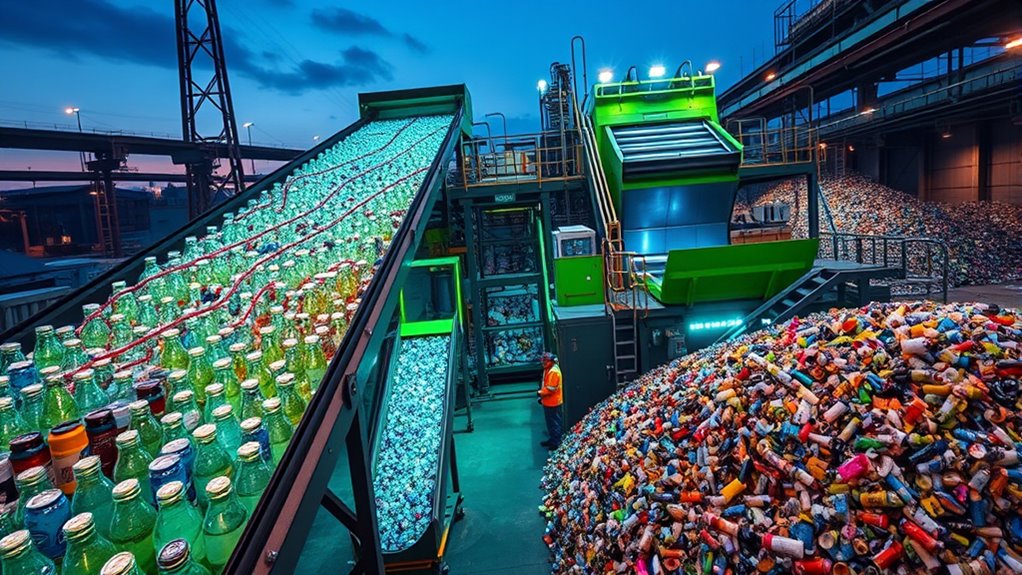

A circular economy takes recycling to the next level by focusing on keeping products and materials in use longer, designing for durability, and rethinking how we create and dispose of goods. Instead of just recycling, it promotes reuse, repair, and remanufacturing, turning waste into valuable resources. This approach minimizes environmental impact, saves costs, and fosters innovation. Keep exploring to discover how these principles can transform your approach to sustainability and business practices.
Key Takeaways
- Circular economy transforms recycling by designing products for reuse, repair, and upgrading, reducing waste and extending product lifecycles.
- It emphasizes resource efficiency, turning waste materials into new resources through innovative remanufacturing and closed-loop systems.
- Business models shift from traditional sales to product-as-a-service, promoting durability, reuse, and recycling on a larger scale.
- Recycling is enhanced with modular design, enabling easy disassembly and refurbishment, making recycling process more effective.
- The approach fosters collaboration across industries, creating sustainable resource cycles and minimizing environmental impact.
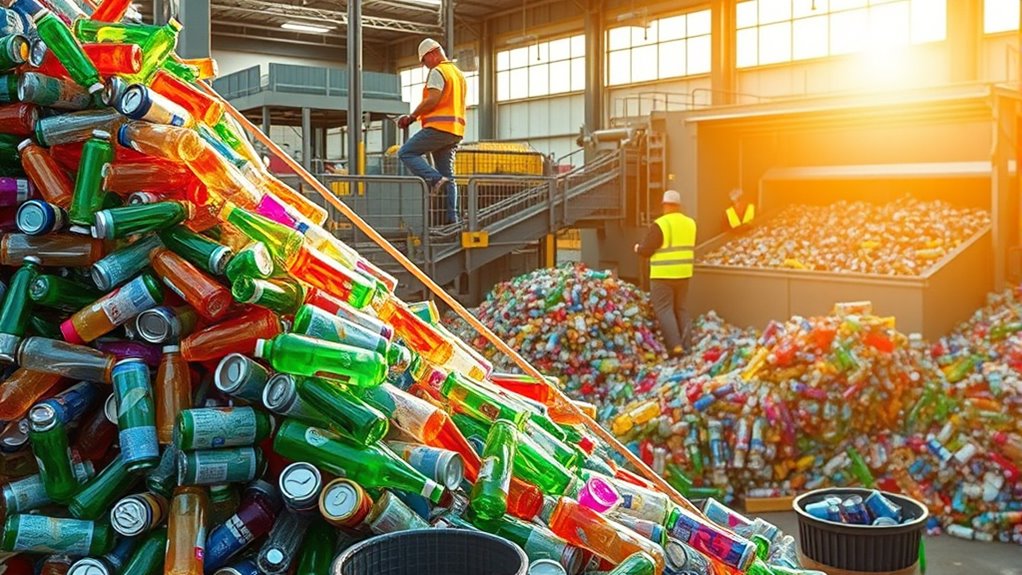
Have you ever wondered how we can reduce waste and make the most of our resources? It all starts with embracing the principles of a circular economy, where sustainability replaces the traditional linear model of take-make-dispose. Instead of extracting raw materials, using them once, and throwing away what’s left, a circular economy emphasizes resource efficiency. This approach aims to keep products, materials, and resources in use for as long as possible, minimizing waste and reducing environmental impact. To achieve this, businesses are adopting innovative business models that challenge the usual way of operating. These models focus on designing products for longevity, reuse, and easy recycling, instead of planned obsolescence that leads to quick disposal. By rethinking how products are created and maintained, companies can access new value streams and reduce costs in the process.
You’ll find that resource efficiency is central to this shift. It means making smarter use of materials, energy, and labor, so nothing goes to waste. For example, manufacturers might design modular products that can be easily repaired or upgraded, extending their lifespan. They may also implement take-back programs, where consumers return used items for refurbishment or recycling. These efforts not only cut down on waste but also create opportunities for saving money and reducing reliance on scarce raw materials. The move to innovative business models often involves collaboration across industries, sharing resources, and creating systems that support reuse and remanufacturing. It’s about moving away from the traditional ‘sell-and-forget’ mindset to a more circular one that values durability and adaptability.
This mindset fosters a proactive approach to resource management. Instead of viewing waste as a problem, you see it as a resource in disguise—think of discarded plastics turned into new products or old electronics refurbished for resale. Such ideas are powered by innovation, where startups and established firms develop creative solutions like closed-loop supply chains and product-as-a-service models. These models allow consumers to lease or rent products instead of owning them outright, ensuring that companies retain control and responsibility for their products throughout their lifecycle. The result is a system where waste is minimized, resources are conserved, and the environment benefits.
Frequently Asked Questions
How Can Individuals Contribute to the Circular Economy Effectively?
You can contribute to the circular economy by actively participating in community recycling programs and supporting upcycling initiatives. Recycle diligently, choose products with minimal packaging, and repurpose items whenever possible. Join local workshops or groups focused on upcycling to learn new skills and inspire others. Your efforts reduce waste, conserve resources, and promote sustainability, making a tangible difference in creating a more circular and eco-friendly economy.
What Are the Economic Benefits of Adopting Circular Practices?
They say, “A penny saved is a penny earned,” and adopting circular practices proves that. By extending the product lifecycle and improving resource efficiency, you can reduce costs, minimize waste, and create new business opportunities. These practices lead to economic benefits like lower material expenses, increased competitiveness, and innovation. When you embrace circularity, you’re not just saving money; you’re contributing to a sustainable future while boosting your bottom line.
How Do Businesses Transition From Linear to Circular Models?
You can shift from linear to circular models by analyzing your product lifecycle and redesigning products for durability and reuse. Focus on closing your supply chain loop, sourcing sustainable materials, and implementing take-back programs. Engage suppliers and customers in your circular approach, making collaboration key. This shift reduces waste, cuts costs, and boosts sustainability, ultimately transforming your business into a more resilient, eco-friendly enterprise.
What Challenges Hinder Widespread Implementation of Circular Economy Principles?
Like a house built on shifting sands, the widespread adoption of circular economy principles faces hurdles. You encounter supply chain complexities, where coordinating sustainable materials and recycling processes proves tough. Consumer behavior also acts as a barrier, as changing habits takes time. Resistance from traditional industries and high initial costs further slow progress. Overcoming these challenges requires collective effort and innovative solutions, turning these obstacles into opportunities for a sustainable future.
Are There Successful Case Studies Demonstrating Circular Economy Impacts?
You’ll find many successful case studies showcasing circular economy impacts. For example, companies using innovative materials like recycled plastics or bioplastics demonstrate significant sustainability gains. Policy incentives also play a vital role, encouraging businesses to adopt circular practices. These examples prove that with the right approach, including innovative materials and supportive policies, you can achieve meaningful environmental benefits and promote widespread circular economy adoption.
Conclusion
Just like the phoenix rising from its ashes, embracing the circular economy transforms waste into new opportunities. By thinking beyond traditional recycling, you become part of a powerful movement that sustains resources and reduces environmental impact. Remember, the journey of a thousand miles begins with a single step—so start today. Together, we can rewrite the story of consumption, turning it into a legacy of renewal, much like the eternal cycle of nature itself.