
You save more energy and money when your appliances work together as a smart, integrated system rather than relying on individual devices. This approach maximizes efficiency through coordinated operation, remote control, and scheduling, especially during off-peak hours. Regular maintenance and compatible technology help prevent waste and extend appliance life. By focusing on the whole system, you can achieve long-term savings and better performance. Keep exploring to discover how this holistic approach can transform your appliance use.

Get garden gear delivered free — and shop member deals
- Fast, free delivery on millions of items
- Access to Prime Big Deal Days deals on October 6–7
- Prime Video, Amazon Music and more included
Key Takeaways
- Integrated appliance systems optimize energy use more effectively than standalone devices, leading to greater savings.
- Smart technology enables coordinated control, reducing waste and improving overall system efficiency.
- Regular maintenance of interconnected appliances prevents unnecessary energy consumption and extends lifespan.
- Cohesive, compatible systems adapt to lifestyle and environmental factors for optimal performance.
- A holistic, system-based approach maximizes long-term cost savings versus isolated appliance upgrades.
Have you ever wondered how much energy your appliances consume and how it affects your bills? It’s a common question, and the answer lies not just in the efficiency of individual devices but in how you connect and manage them as part of a system. When you focus on appliance efficiency through integrated systems, you maximize savings and performance far more than by purchasing the most advanced single appliance. Smart technology plays a pivotal role here, allowing you to monitor and control your appliances remotely, optimize their operation, and reduce unnecessary energy use. Instead of leaving devices on or running at full capacity, you can schedule their operation during off-peak hours or when energy costs are lower, making your efforts more cost-effective.
Recognizing that appliances don’t operate in isolation is key. A well-designed system ensures each component works harmoniously, which improves overall efficiency. For example, a smart thermostat can communicate with your HVAC system, adjusting temperatures based on your usage patterns and weather conditions. This interconnected approach prevents energy waste and keeps your home comfortable. Similarly, smart appliances like refrigerators or washing machines can be programmed to run only when energy consumption is most economical, further lowering your bills. Understanding appliance systems helps you see how a cohesive setup can significantly enhance efficiency. Additionally, integrating smart home technology can streamline your energy management and make your home more responsive.
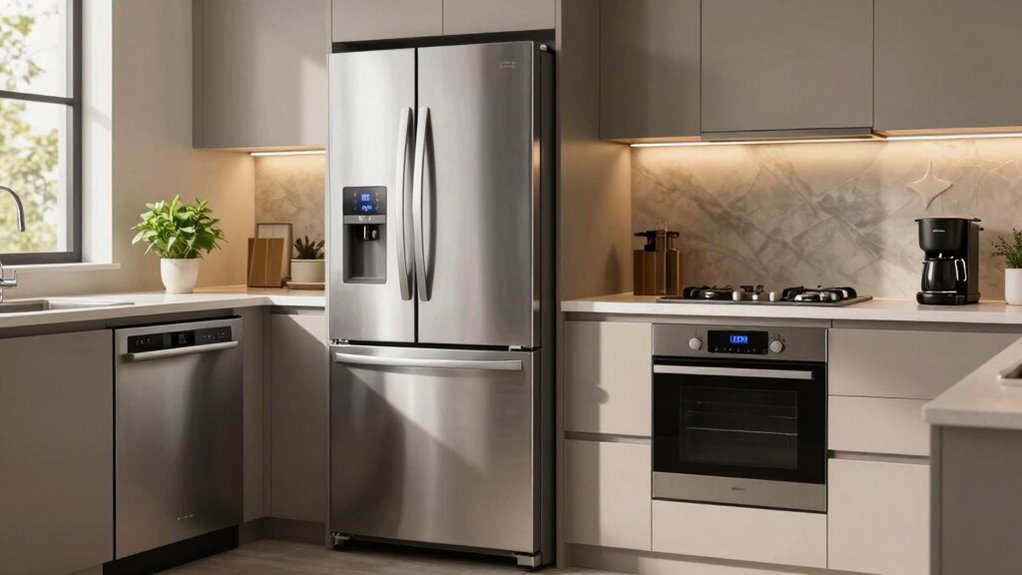
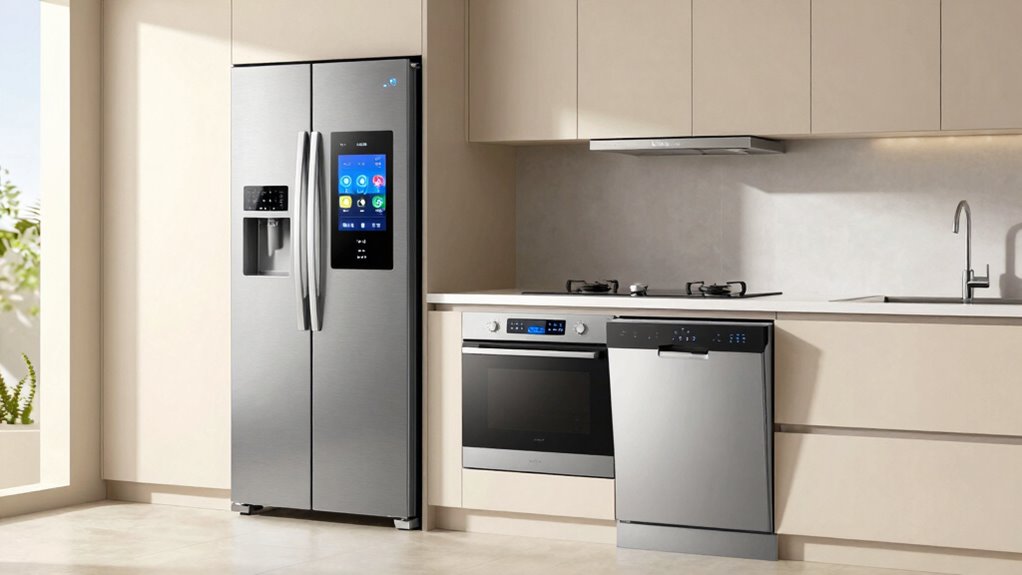
A connected system of smart appliances and thermostats enhances efficiency, reduces waste, and lowers energy bills.
Maintaining your appliances regularly is equally essential. Routine maintenance routines, such as cleaning filters, checking seals, and inspecting components, keep appliances running smoothly and efficiently. Neglecting maintenance can cause your devices to work harder than necessary, increasing energy use and reducing their lifespan. When you combine regular upkeep with smart technology, you gain a powerful tool for efficiency. Smart systems can alert you when maintenance is needed or detect early signs of malfunction, preventing costly repairs and energy waste. Furthermore, understanding system integration can help you optimize your entire home’s energy use more effectively. Incorporating energy management strategies into your routine ensures you’re making the most of your appliances’ capabilities. A comprehensive understanding of how appliances fit into home energy systems can lead to smarter choices and greater savings.
Building an efficient system involves choosing compatible appliances that can communicate with each other. When all your devices are connected, you can automate their operation based on your lifestyle, energy rates, and environmental conditions. This coordinated approach ensures your household runs more smoothly and saves more money in the long run. Instead of focusing solely on buying high-tech appliances, you should invest in creating a cohesive system that leverages smart technology and proper maintenance routines. Doing so allows your appliances to perform at their best, consume less energy, and markedly impact your energy bills over time.
In the end, appliance efficiency isn’t just about individual devices; it’s about how they work together within a system. By integrating smart technology and sticking to diligent maintenance routines, you set yourself up for ongoing savings and better performance. This holistic approach turns a simple purchase into a strategic investment that pays off through improved efficiency and reduced costs.
As an affiliate, we earn on qualifying purchases.
Frequently Asked Questions
How Do System Upgrades Compare to Individual Appliance Replacements?
System upgrades generally provide better energy optimization and smart integration compared to individual appliance replacements. When you upgrade your entire system, you optimize how appliances work together, reducing waste and improving efficiency. This interconnected approach allows smarter control, saving you more money in the long run. Instead of replacing one appliance at a time, investing in system upgrades creates a seamless, energy-efficient environment that maximizes savings and performance.
What Role Does Home Insulation Play in Overall Appliance Efficiency?
Home insulation is the superhero of appliance efficiency, drastically reducing your energy bills. It creates thermal barriers that lock in heat or cool air, making your appliances work less and last longer. When insulation effectiveness is maximized, your heating and cooling systems operate at peak performance, conserving energy. Without proper insulation, your appliances face constant strain, wasting power and money. Insulation truly transforms your home’s energy system into a well-oiled machine.
Are There Specific Brands Known for System-Wide Energy Savings?
You’ll find brands like LG, Samsung, and Bosch renowned for system-wide energy savings. Their strong reputation for quality and innovation is backed by energy certifications like ENERGY STAR, ensuring their appliances meet strict efficiency standards. Choosing these brands means you’re investing in appliances designed to work seamlessly together, reducing overall energy consumption. Their focus on system integration helps you save money on utility bills while supporting environmentally friendly practices.
How Can I Estimate Savings From Integrated Appliance Systems?
You can estimate savings from integrated appliance systems by starting with a baseline of your current energy use. Use smart controls to monitor and adjust system performance, and consider renewable integration to boost efficiency. Keep track of energy consumption over time, and compare it with projected savings from system upgrades. Remember, a little effort now can lead to big savings later—it’s about working smarter, not harder.
What Maintenance Practices Maximize System Efficiency Over Time?
You maximize system efficiency over time by conducting regular energy audits and sticking to preventive maintenance routines. Energy audits help identify inefficiencies early, allowing you to address issues before they worsen. Preventive maintenance, like cleaning filters, checking connections, and inspecting components, guarantees everything runs smoothly. By consistently applying these practices, you extend your system’s lifespan, reduce energy costs, and maintain peak performance, saving you money and ensuring reliable operation.
Conclusion
By focusing on systems rather than individual appliances, you open greater efficiency and savings. For example, upgrading your HVAC system to work seamlessly with smart thermostats and energy-efficient windows can reduce your energy bills markedly. Imagine a homeowner who invests in a coordinated system—cutting energy costs by 30%. When you think holistically about your home’s appliances, you’re not just making a single purchase; you’re creating a smarter, more sustainable environment that pays off in the long run.
Halloween Picks
halloween
As an affiliate, we earn on qualifying purchases.