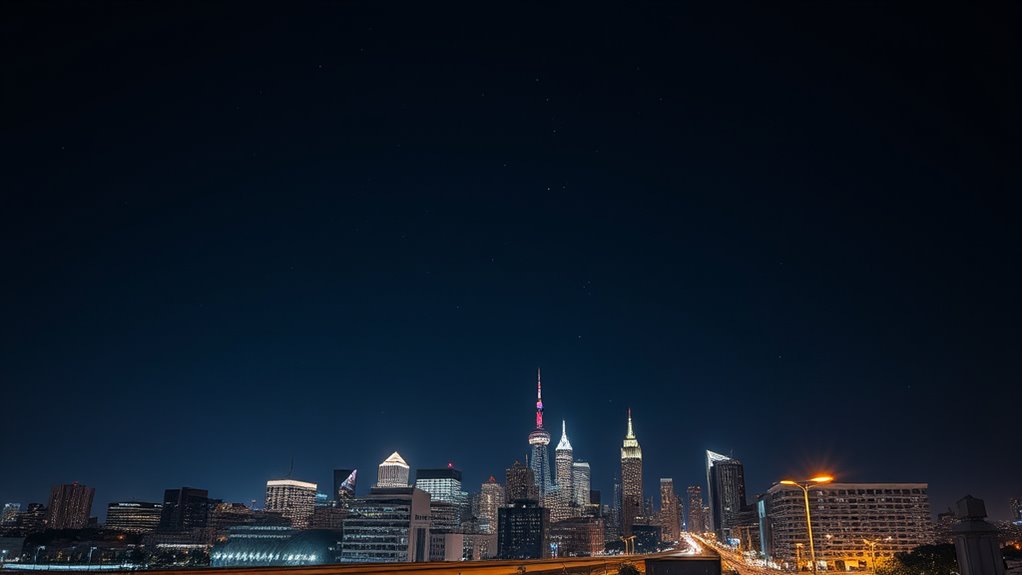

To follow urban lighting and dark-sky guidelines, focus on designing fixtures that direct light downward to minimize glare and spillover. Use shielded, full cutoff lights, and incorporate controls like dimmers and motion sensors to reduce unnecessary illumination. Opt for warmer light tones to lessen atmospheric scattering and skyglow. Municipal policies often require these features to balance safety with environmental preservation. Continuing with these practices will help you create safer, energy-efficient, and darker night environments.
Key Takeaways
- Dark-sky guidelines recommend using fully shielded fixtures that direct light downward to minimize spillover.
- Warmer, low-blue lighting reduces atmospheric scattering and skyglow, aligning with dark-sky principles.
- Municipal regulations often mandate compliance with dark-sky standards for streetlighting design.
- Implementing motion sensors and dimming controls conserves energy and limits unnecessary light pollution.
- Proper maintenance and retrofitting of fixtures support adherence to dark-sky and environmental sustainability goals.

Urban lighting plays a crucial role in shaping city environments, but it can also contribute to light pollution that obscures the night sky. When designed poorly, streetlights can cast excessive glare and unnecessary illumination beyond their intended areas, disrupting not only the visibility of stars but also affecting human health and local wildlife. To combat this, effective streetlight design becomes essential. Good design focuses on directing light downward, minimizing spillover, and reducing glare, which helps preserve the darkness of the night sky while still providing safety and security for pedestrians and drivers.
If you’re involved in urban planning or lighting design, understanding how light pollution occurs is key. Many traditional streetlights emit light in all directions, wasting energy and creating unnecessary skyglow. By implementing full cutoff fixtures and shielded luminaires, you can considerably reduce light trespass and skyglow. These fixtures direct light precisely where it’s needed—on the streets and sidewalks—cutting down on wasted light that would otherwise scatter into the atmosphere. This not only safeguards the night sky but also improves the quality of night-time environments for residents and nocturnal animals.
Designing with dark-sky principles in mind means considering the color temperature of the lights as well. Cooler, blue-rich lights tend to scatter more in the atmosphere, increasing skyglow, whereas warmer tones are less disruptive. Incorporating dimming capabilities and motion sensors further reduces unnecessary illumination during low-traffic periods, conserving energy and limiting light pollution. When you choose the right lighting fixtures and design strategies, you help foster a more sustainable, darker environment that benefits everyone.
Moreover, adhering to dark-sky guidelines influences policy and community standards. Many municipalities now require streetlight designs that prioritize dark-sky compliance, which encourages you to select fixtures that meet specific shielding and cutoff criteria. This proactive approach not only enhances the aesthetic appeal of neighborhoods but also aligns with broader environmental goals. As you plan or retrofit urban lighting, consider how streetlight design impacts both safety and the night sky. Thoughtful choices can make your city more visually connected to nature, reduce energy consumption, and improve residents’ quality of life. Additionally, understanding the importance of proper storage and maintenance of lighting fixtures can prolong their effectiveness and prevent light pollution issues.
Frequently Asked Questions
How Do Dark-Sky Guidelines Impact City Economic Development?
Dark-sky guidelines boost your city’s economic growth by attracting eco-conscious visitors and promoting sustainable tourism development. When you reduce light pollution, you create a more appealing environment for stargazing and outdoor activities, drawing tourists seeking unique experiences. This increased tourism supports local businesses and job creation. As a result, your city benefits from a thriving economy, enhanced reputation, and a commitment to environmental stewardship, making it a more attractive destination for both visitors and residents.
What Are the Best Fixtures to Reduce Urban Light Pollution?
You should choose fixture types like full cutoff or shielded fixtures to reduce urban light pollution. These fixtures direct light downward, minimizing glare and skyglow. Avoid open or unshielded fixtures that emit light in all directions. By focusing light where it’s needed and using proper light direction, you can effectively lessen light pollution, improve night sky visibility, and create a safer, more sustainable urban environment.
How Can Communities Enforce Dark-Sky Policies Effectively?
Ever wondered how to truly protect your night skies? You can enforce dark-sky policies effectively by fostering community engagement and implementing clear enforcement strategies. Encourage residents to report violations and educate them on proper lighting practices. Work with local authorities to establish penalties for non-compliance and conduct regular inspections. By actively involving your community and maintaining consistent enforcement, you’ll create a culture that values and preserves our precious dark skies.
Are Dark-Sky Initiatives Compatible With Urban Security Needs?
Yes, dark-sky initiatives can be compatible with urban security needs. You can improve public safety by using well-designed lighting that minimizes light pollution while providing adequate visibility. Engaging your community in planning guarantees the lighting meets safety concerns without excess. When residents understand the benefits of dark skies, they’re more likely to support measures that balance security with environmental preservation, fostering a safer and more sustainable urban environment.
What Are the Health Benefits of Reducing Urban Light Pollution?
Reducing urban light pollution benefits your health considerably. Studies show that excessive artificial light disrupts circadian rhythms, leading to sleep issues and increased mental health problems. When you lower light pollution, your body can better regulate sleep patterns, boosting mood and cognitive function. In fact, improved sleep quality from less light exposure can decrease depression and anxiety, making your daily life healthier and more balanced.
Conclusion
By embracing urban lighting and dark-sky guidelines, you become a guardian of both city life and celestial beauty. Don’t let bright lights drown out the stars—think of the night sky as a timeless story waiting to be told. When you prioritize responsible lighting, you’re not just illuminating streets; you’re preserving a universe of wonder for generations to come. After all, isn’t it our duty to keep the night’s secrets alive?

As a valuable member of the Two Green Leaves team, Julia’s expertise in sustainable living and their ability to convey complex concepts in a relatable manner make them an invaluable asset. Their passion for the environment and their dedication to empowering individuals to embrace green practices make them a driving force behind our platform’s mission.